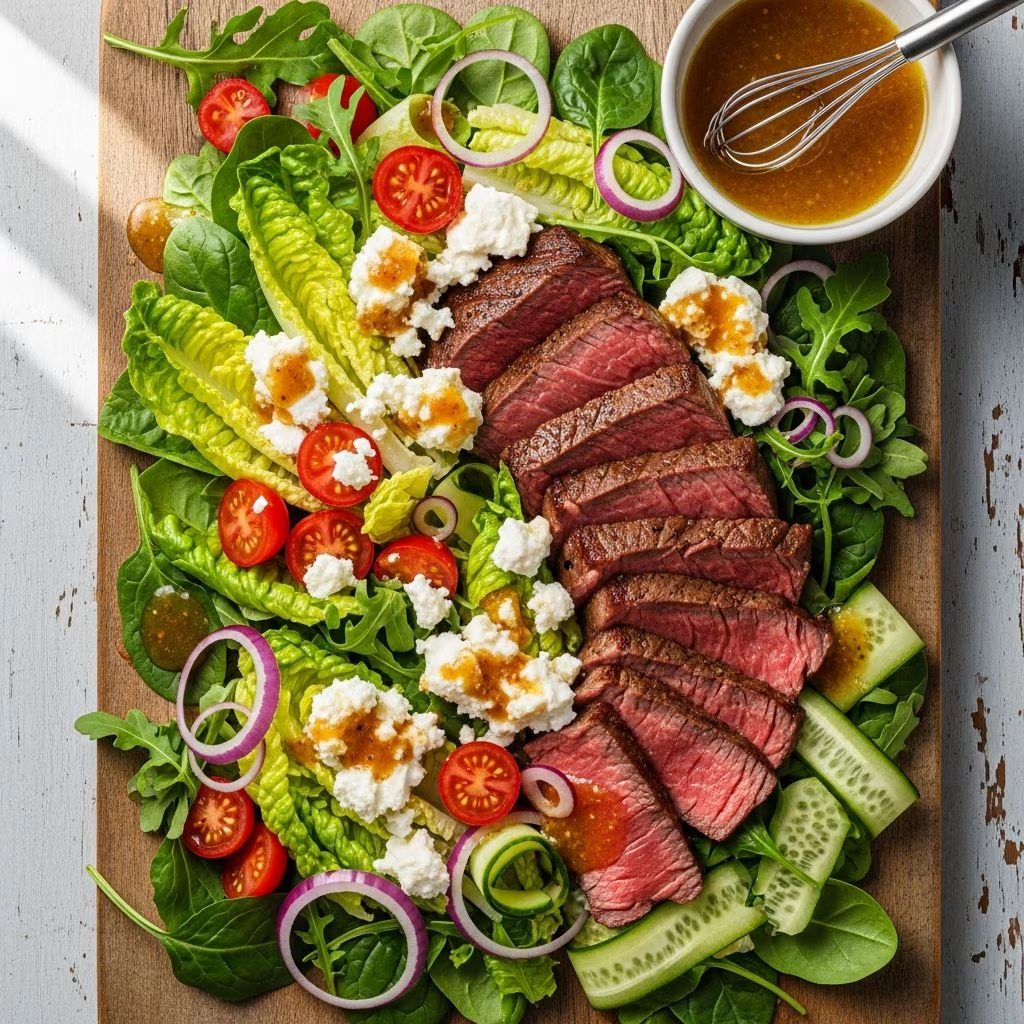
When you need to impress at the dinner table without spending hours in the kitchen, a well-executed salad featuring quality beef can deliver restaurant-caliber results in under half an hour. This particular composition combines the richness of properly seared steak with the brightness of a tangy feta-based dressing, creating a sophisticated main course that feels indulgent yet remains surprisingly accessible for everyday cooking. The interplay between warm, juicy beef, cool crisp greens, and a creamy dressing forms the foundation of a meal that satisfies both nutritionally and culinarily.
Understanding the Core Components
A memorable salad of this caliber relies on balancing several distinct textural and flavor elements. Each component serves a purpose beyond mere decoration, contributing to an overall dining experience that engages multiple senses. The foundation begins with selecting the right cut of beef, preparing it with proper technique, constructing a versatile dressing, and assembling supporting ingredients that enhance rather than overwhelm.
The Beef Foundation
The choice of beef cut dramatically influences the final dish. Thick-cut boneless rib-eye steaks represent an excellent selection, as their marbling provides natural fat distribution that keeps the meat tender and flavorful during the searing process. For this preparation method, you’ll want steaks measuring approximately one pound each, which allows for efficient cooking while maintaining consistent doneness throughout. The marbling inherent in rib-eye steaks also ensures that even when sliced and distributed across the salad, each piece retains succulence rather than becoming tough or dry.
If rib-eye proves unavailable or you prefer alternative cuts, sirloin, strip steak, or flank steak can work effectively. Each brings slightly different flavor profiles and textures—sirloin offers leaner meat with robust beef flavor, while flank steak provides a more pronounced beef taste with a distinctly different texture that some prefer.
The Feta Dressing Mechanism
Rather than relying on a standard vinaigrette, this salad features a creamy dressing that blends feta cheese with complementary acidic and emulsifying elements. The formula combines feta cheese, fresh lemon juice, mayonnaise, honey, extra-virgin olive oil, and garlic into a smooth, pourable consistency. This combination works because the mayonnaise and olive oil provide fat that creates creaminess, while the lemon juice and feta contribute tanginess, and honey adds subtle sweetness that balances the cheese’s saltiness.
When blending these ingredients, starting with the cheese and garlic ensures they break down properly before adding liquid components. A standard blender works well for this task, creating a uniformly smooth texture that coats greens evenly. The water addition—typically three tablespoons—adjusts the viscosity to the desired consistency without diluting flavor excessively.
The Vegetable Supporting Cast
While the beef and dressing drive the salad’s main appeal, supporting vegetables add nutritional value, textural contrast, and visual appeal. Romaine lettuce provides substantial structure and slight bitterness that complements the rich dressing. Fresh radishes contribute peppery crunch and bright visual interest. Additional vegetables such as cherry tomatoes, cucumbers, and thinly sliced red onion offer freshness and vary the flavor profile with their distinct characteristics.
The quantity of vegetables should allow them to serve as a foundation without overwhelming the more prominent ingredients. Approximately six to eight cups of mixed greens combined with complementary vegetables creates appropriate proportions for four servings.
Preparation Methodology and Technique
Beef Preparation and Searing
Successful steak searing begins with proper preparation. After selecting your steaks, pat them thoroughly dry with paper towels—this step proves crucial because moisture on the surface inhibits browning and can cause steaming rather than searing. Season the dried steaks generously with kosher salt and allow them to sit while you prepare other components. This resting period allows salt to penetrate the meat’s surface.
When searing commences, heat a large cast-iron skillet over medium-high heat until it becomes quite hot—you’ll see wisps of smoke when properly heated. A dry pan initially, once the steaks contact the surface, oil gets rubbed directly onto the meat to prevent sticking. Sear for approximately five minutes on the first side without moving the steaks, creating a deep brown crust through the Maillard reaction. This browning develops complex flavors that distinguish pan-seared beef from merely cooked beef.
After flipping, continue cooking the opposite side for three to four minutes, or until an instant-read thermometer inserted into the thickest portion registers 120°F for medium-rare doneness. Different thickness levels may require slight timing adjustments. Once cooked to target temperature, transfer steaks to a cutting board and allow them to rest undisturbed for approximately ten minutes. This resting period permits muscle fibers to relax and reabsorb juices, resulting in more tender meat throughout.
Dressing Creation
Prepare the feta dressing while steaks rest, combining grated garlic, feta cheese, lemon juice, mayonnaise, honey, olive oil, salt, and water in a blender. The garlic benefits from fine grating, which distributes it evenly throughout the dressing. Blend until completely smooth, then season with freshly ground pepper. This dressing can be prepared ahead of time and refrigerated for up to three days, making advance preparation convenient for busy schedules.
Pita Chip Preparation
Once steaks finish searing and rest on the cutting board, the cast-iron skillet becomes the vehicle for preparing pita chips. Remove the hot pan from the stovetop heat, tear two to three pitas into large pieces, and place them directly in the pan. Drizzle generously with olive oil, sprinkle with salt, and toss until evenly coated. Arrange in a single layer and transfer the skillet to a preheated 425°F oven. Bake for four to eight minutes, tossing halfway through, until the pita pieces achieve deep golden-brown color and complete crispness.
Assembly and Service
Once all components reach their optimal state, assembling the salad becomes straightforward. Transfer the toasted pita chips to a large mixing bowl, add coarsely chopped romaine, sliced radishes, and tender fresh herbs such as parsley, cilantro, or dill. Drizzle approximately half of the prepared feta dressing over the greens and toss thoroughly to ensure even coating.
Slice the rested steaks against the grain into strips, which shortens muscle fibers and promotes tenderness. Divide the dressed salad among serving plates, mounding it to one side. Arrange sliced steak alongside or atop each portion, season with freshly cracked pepper, and drizzle with remaining dressing. The warm beef contrasts beautifully with the cool salad components, and the residual heat slightly warms the greens without wilting them excessively.
Component Variations and Customizations
While the core recipe delivers excellent results, several modifications accommodate different preferences and dietary considerations. For those preferring additional creaminess, a few slices of avocado or creamy goat cheese complement the existing flavors. Adding roasted beets contributes earthiness, while fresh corn kernels bring sweetness that balances the feta’s saltiness.
The dressing formula itself admits customization. Some preparations substitute yogurt for a portion of the mayonnaise, reducing richness while maintaining creaminess. Additional fresh herbs can be incorporated directly into the blended dressing for enhanced herbaceous notes.
For vegetable components, any seasonal or preferred varieties work well. The key consideration involves maintaining textural contrast—soft elements paired with crispy components, and temperature variation between warm beef and cool vegetables.
Nutritional Considerations and Serving Suggestions
This composed salad delivers substantial protein from both the beef and cheese, making it suitable as a complete main course rather than an opening course. The portion of beef per serving—approximately four ounces of cooked meat—provides approximately 30 grams of protein, while the feta contributes additional protein and calcium. The abundance of fresh vegetables provides fiber, vitamins, and minerals that round out the nutritional profile.
Serving recommendations include pairing this salad with a crisp white wine such as Sauvignon Blanc or a light rosé, which doesn’t overpower the delicate balance of flavors. A sparkling water with fresh lemon offers a non-alcoholic alternative that complements the bright acidic notes in both the dressing and the beef preparation.
Timing and Make-Ahead Options
The entire preparation from ingredient assembly to plating typically requires thirty minutes, making this recipe well-suited for weeknight entertaining or quick weekday dinners. Several components adapt well to advance preparation. The feta dressing keeps refrigerated for three days, while the pita chips remain crisp in an airtight container for two days. Vegetables can be prepped several hours ahead and stored in separate containers.
The single element requiring last-minute attention is the beef searing, which proceeds quickly once the skillet reaches temperature. Steaks rest covered loosely with foil while other final touches occur, remaining warm and undisturbed.
Frequently Asked Questions
Can this salad be prepared with a different beef cut?
Yes, sirloin, strip steak, or flank steak work effectively. Cooking times may vary slightly depending on thickness and the particular cut’s characteristics, but the searing method remains consistent.
How can the dressing be modified for dietary restrictions?
Substitute Greek yogurt for mayonnaise to reduce fat while maintaining creaminess. For dairy-free preparations, cashew cream provides a suitable alternative base, though the feta cheese would need replacing.
What temperature should the steaks reach for different doneness preferences?
The recipe targets 120°F for medium-rare. Adjust to 125°F for medium or 130°F for medium-well, accounting for additional carry-over cooking during resting.
Can the feta dressing work with other salads?
This dressing complements vegetable-forward salads, grain bowls, or roasted vegetable arrangements. Its creamy nature makes it versatile across various applications.
How far in advance can components be prepared?
The dressing keeps for three days refrigerated. Vegetables can be prepped six hours ahead. The pita chips remain crisp for two days in airtight storage. Beef requires cooking within thirty minutes of service for optimal temperature and texture.
Conclusion: Elevating Everyday Dining
This steak salad demonstrates how fundamental cooking techniques combined with quality ingredients create meals that satisfy both immediate appetite and culinary appreciation. The interplay between seared beef, creamy feta dressing, and supporting components generates complexity that emerges from simplicity. Whether preparing this for a weeknight dinner or casual entertaining, the recipe proves forgiving enough for beginners yet refined enough to impress experienced cooks. The thirty-minute timeline removes barrier to preparation, while the nutritional completeness ensures this composed salad stands alone as a full meal rather than requiring additional courses.
References
- Steak Salad With Feta Dressing Recipe — Bon Appétit. 2025-05-28. https://www.bonappetit.com/recipe/steak-salad-with-feta-dressing
- The Best Steak Salad Recipe — Little Sunny Kitchen. Accessed 2026-04-07. https://littlesunnykitchen.com/steak-salad/