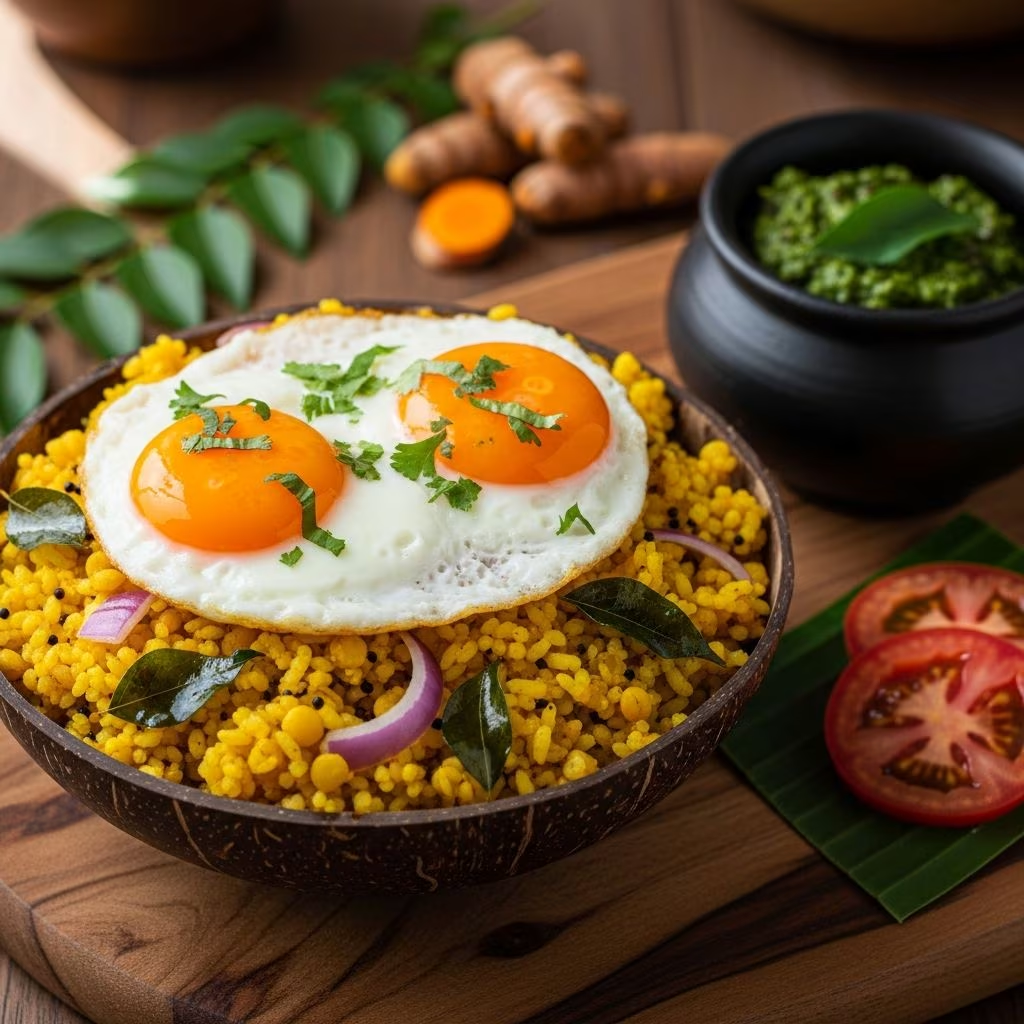
This vibrant dish combines the creamy comfort of pongal—a South Asian rice and lentil porridge—with the bold, earthy notes of turmeric and Sri Lankan spices, crowned with soft-boiled or fried eggs. Rooted in island traditions, it offers a nourishing meal that’s simple yet profoundly flavorful, ideal for any time of day.
The Essence of Sri Lankan Pongal
Pongal, meaning ‘boil over’ in Tamil, symbolizes abundance in South Indian and Sri Lankan cultures, where the rice bubbling over the pot signifies prosperity. In Sri Lanka, this dish evolves with local twists like turmeric for its golden hue and health benefits, alongside pandan, curry leaves, and coconut milk for authentic aroma. Unlike drier rice dishes, pongal’s porridge-like consistency comes from slow-cooked rice and lentils, making it a staple for breakfast or festival feasts.
Turmeric, the star ingredient, isn’t just for color—it’s revered for its curcumin content, which has potent anti-inflammatory properties. Sri Lankan kitchens use it liberally in ‘kaha’ (yellow) rice variations, enhancing both taste and wellness. Paired with eggs, it transforms into a protein-packed meal that’s sustaining and satisfying.
Key Ingredients and Their Roles
Gathering the right components is crucial for balance. Here’s a breakdown:
- Raw rice and moong dal: Short-grain rice like sona masoori or basmati absorbs flavors best; moong dal adds creaminess and nutrition.
- Turmeric powder: 1-2 teaspoons for that signature gold; fresh root can be grated for intensity.
- Aromatic spices: Cumin, black pepper, ginger, and green chilies for heat and digestion aid.
- Coconut milk and ghee: For richness; alternatives like cashew milk work for vegan versions.
- Eggs: 4-6, cooked sunny-side up or soft-boiled to soak up the pongal.
- Tempering elements: Mustard seeds, curry leaves, dried chilies, and cashews fried in ghee for crunch and punch.
| Ingredient | Quantity (Serves 4) | Substitutes |
|---|---|---|
| Raw rice | 1 cup | Basmati or jasmine |
| Moong dal | ½ cup | Split chickpeas |
| Turmeric | 1½ tsp | Saffron pinch |
| Coconut milk | 1 cup | Almond milk |
| Ghee | 4 tbsp | Coconut oil |
| Eggs | 4 | Tofu for vegan |
Step-by-Step Cooking Guide
Preparation takes about 10 minutes, cooking 30-40. Use a pressure cooker or heavy pot for best results.
Prep the base: Rinse 1 cup rice and ½ cup moong dal together until water runs clear. Soak for 15 minutes to speed cooking.
Pressure cook: Add soaked mix to cooker with 4 cups water, 1 tsp turmeric, 1 tsp cumin seeds, 1-inch grated ginger, 2 slit green chilies, salt to taste. Cook on high for 3 whistles, then simmer 5 minutes. Let pressure release naturally.
Mash and enrich: Open cooker, mash lightly with a ladle for porridge texture. Stir in 1 cup coconut milk and 2 tbsp ghee over low heat until creamy, about 5 minutes.
Cook the eggs: In a pan, heat 1 tsp ghee. Fry eggs to desired doneness—soft yolks mingle best with pongal.
Tempering: In same pan, heat 2 tbsp ghee. Add 1 tsp mustard seeds (let pop), 10-12 curry leaves, 2 dried red chilies, ¼ cup cashews, and ½ tsp remaining turmeric. Pour sizzling mix over pongal.
Assemble: Serve pongal in bowls, top with eggs, garnish with cilantro and a lime squeeze.
Health Benefits and Nutrition
This dish is a powerhouse: Turmeric fights inflammation, moong dal provides plant protein (about 14g per serving), and eggs add complete proteins (6g each). Coconut milk offers healthy fats for satiety. Per serving: ~450 calories, 20g protein, 15g fiber—ideal for balanced diets. Pepper enhances turmeric absorption, while ginger aids digestion.
For dietary tweaks: Veganize with tofu scramble; gluten-free naturally. Low-fat? Use less ghee, more broth.
Variations to Explore
- Vegetable pongal: Add carrots, peas, spinach during cooking for fiber boost.
- Spicy version: Increase chilies or add Sri Lankan roasted curry powder.
- Sweet pongal: Skip savory tempering; add jaggery, cardamom, nuts for dessert.
- Rice cooker method: Layer ingredients, cook on porridge setting—hands-off ease.
- Yellow rice fusion: Use basmati without dal for firmer texture, inspired by kaha bath.
Perfect Pairings and Serving Ideas
Serve hot with coconut sambol, mango chutney, or beetroot pickle for contrast. In Sri Lanka, it’s breakfast with string hoppers or dinner with curries. For feasts, pair with fish ambul thiyal or dhal. Portions: 1 cup pongal + 1 egg per person.
Tips for Perfection
- Ratio matters: 1:4 rice-to-water for porridge; less for firmer pongal.
- Fresh spices elevate—grind cumin/pepper on-site.
- Don’t skip tempering; it’s the flavor bomb.
- Leftovers? Refrigerate 2 days; reheat with milk splash.
Common Mistakes to Avoid
Overcooking makes mush; under-seasoning dulls it. Use measured water, taste before tempering. If too thick, thin with hot water gradually.
Frequently Asked Questions (FAQs)
What makes Sri Lankan pongal different from South Indian?
Sri Lankan versions emphasize turmeric, coconut, and curry leaves, often with eggs or seafood, versus Indian focus on black pepper or ghee-heavy tempers.
Can I make this vegan?
Yes—swap eggs for scrambled tofu or chickpeas, ghee for coconut oil.
Is turmeric rice pongal gluten-free?
Absolutely, using natural ingredients; check labels on store-bought coconut milk.
How to store leftovers?
Air-tight container in fridge up to 2 days; freeze portions up to a month.
Best rice type?
Short-grain for creaminess; basmati for fragrance.
Conclusion
Golden turmeric pongal with eggs captures Sri Lanka’s culinary soul—simple ingredients yielding profound comfort. Experiment, savor, and bring island sunshine to your table.
References
- Sri Lankan Turmeric Rice – Kaha Bath — Global Kitchen Travels. Accessed 2026. https://globalkitchentravels.com/sri-lankan-turmeric-rice-kaha-ba/
- Sri Lankan Egg Rice — Berrychik. Accessed 2026. https://berrychik.com/sri-lankan-egg-rice/
- Turmeric rice pongal with eggs and beetroot acharu pickle — Eat Your Books (from Rambutan cookbook). Accessed 2026. https://www.eatyourbooks.com/library/recipes/2830339/turmeric-rice-pongal-with-eggs
- Sri Lankan Yellow Rice — Rachel Phipps. 2023-03. https://www.rachelphipps.com/2023/03/sri-lankan-yellow-rice.html