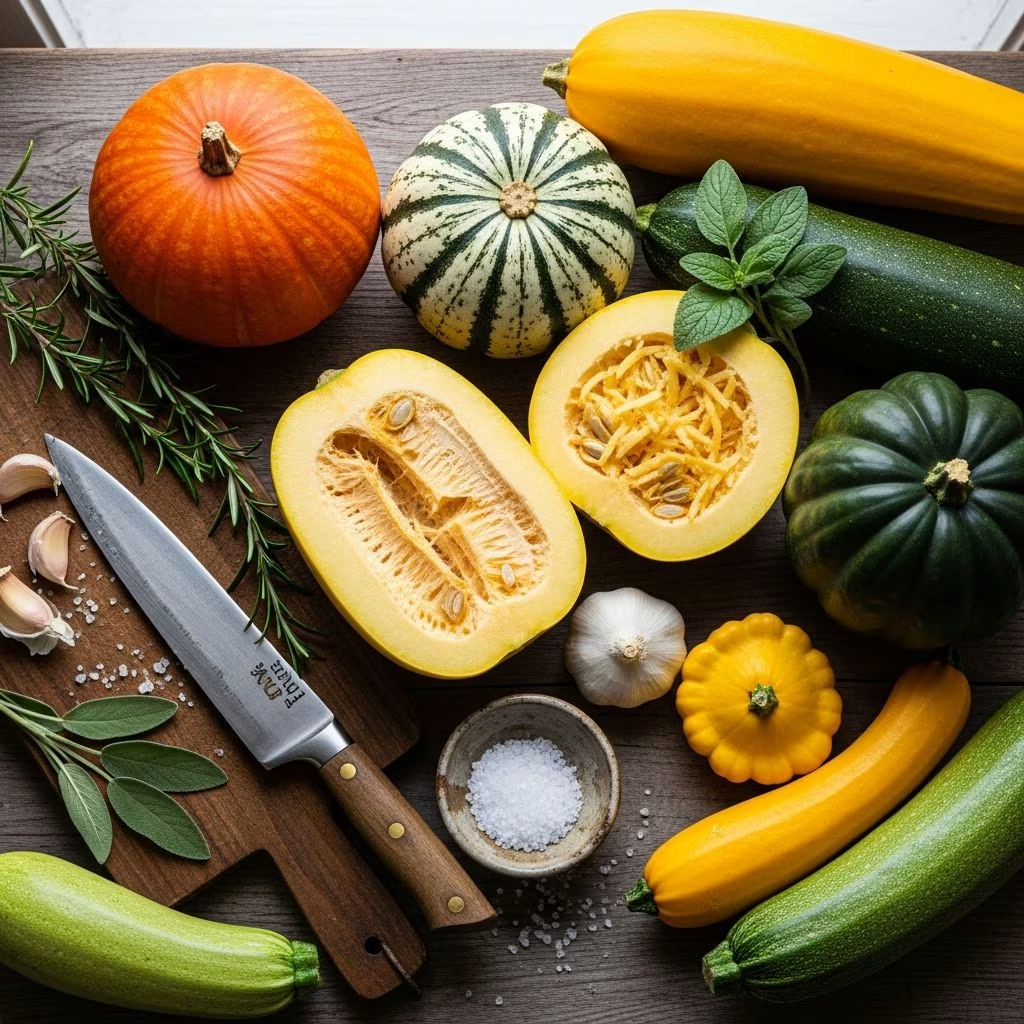
Squash belongs to the Cucurbitaceae family, offering a wide array of shapes, colors, and flavors that brighten meals year-round. Divided into summer and winter categories based on harvest time and skin texture, these versatile vegetables provide nutritional benefits like vitamins A and C, fiber, and antioxidants. This guide covers popular varieties, selection tips, storage advice, and cooking methods to help you make the most of them in your kitchen.
Understanding Summer vs. Winter Squash
Summer squash are harvested young with tender, edible skins and high water content, making them ideal for quick cooking like grilling or sautéing. Examples include zucchini and yellow squash. Winter squash, harvested mature with hard, protective rinds, store longer and develop denser, sweeter flesh suited for roasting, pureeing, or baking. Varieties like butternut and acorn fall here.
- Summer Squash Traits: Soft skin, moist flesh, best eaten soon after purchase.
- Winter Squash Traits: Thick rind, dry sweet interior, long shelf life up to months.
Top Summer Squash Varieties and Preparation Ideas
Summer squash thrive in warm months, delivering fresh, mild tastes perfect for light dishes.
Zucchini: The Kitchen Staple
This elongated green squash has a delicate flavor and firm texture. Straight or crookneck versions exist, but all cook quickly. Slice thinly for salads, grate into breads, or spiralize into noodles. Sauté with garlic and herbs for a simple side, or grill slices for tacos.
Yellow Straightneck and Crookneck
Pale yellow with a sweeter, fruitier profile than zucchini, these have tender skin. Cut into even pieces to roast uniformly at 400°F for 15-20 minutes. They pair well with butter, chili, and herbs in Mexican-inspired dishes or as a grilled accompaniment to fish.
Pattypan: The Scalloped Delight
These UFO-shaped squash come in white, yellow, or green. Their small size suits stuffing with grains and cheese, or slicing for quick sautés and roasts. Grill halved for smoky flavor.
Round Zucchini Varieties
Types like Eight Ball (green) or Ronde de Nice (striped) are perfect for stuffing due to their shape. Roast, grill, or sauté like regular zucchini.
Essential Winter Squash Varieties and Techniques
Winter squash offer hearty nutrition and storage ease, transforming into soups, sides, and mains.
Butternut Squash: Versatile Favorite
Bell-shaped with tan skin and bright orange flesh, it’s sweet and nutty. Peel and cube for roasting, or halve for purees in soups and ravioli. Roast at 400°F until caramelized.
| Variety | Flavor Profile | Best Cooking Methods |
|---|---|---|
| Butternut | Sweet, nutty | Roast, puree, soup |
| Acorn | Mild, tender | Bake, stuff, roast |
| Delicata | Sweet, creamy | Roast (skin-on), sauté |
Acorn Squash: Classic Ribbed Beauty
Dark green, acorn-shaped with edible ridges. Mild flesh softens beautifully when baked. Halve, seed, and roast cut-side down at 375-400°F for 45 minutes. Stuff with apples, lentils, or grains.
Delicata Squash: Edible Skin Star
Oblong with green-yellow stripes, its thin skin roasts to tender sweetness like sweet potato. Slice into rings, toss with oil, salt, and roast or air fry. Add to sheet pan meals or hashes.
Spaghetti Squash: Pasta Impersonator
Oval, pale yellow, with stringy flesh that forms strands post-roast. Bake halves at 400°F for 40-50 minutes, then fork out strands. Top with sauces like pesto or marinara.
Honeynut Squash: Mini Marvel
Small butternut hybrid with sweet, creamy orange flesh. Treat like butternut: peel, cube, roast, or puree into sauces.
Sweet Dumpling and Carnival Squash
Petite, cream-skinned with green flecks; sweeter than acorn. Roast wedges with maple-tahini glaze for sweet-savory balance. Difficult to peel, so cook skin-on.
Red Kuri (Hokkaido): Nutty Powerhouse
Onion-shaped, deep orange skin (edible). Robust, nutty flavor for soups, purees, breads. Steam or roast.
Buttercup and Turban Squash
Buttercup: Dark green, sweet, firm; steam or bake. Turban: Multicolored, nutty; puree for soups, use shell as bowl.
Selecting, Storing, and Prep Tips
Choose heavy-for-size squash with dull rinds (avoid shiny for winter). Summer types should be firm, unblemished. Store summer in fridge up to a week; winter in cool, dark spot for 1-6 months.
- Prep Basics: Wash all. Peel tough winter skins; summer skins edible.
- Cutting Hard Squash: Microwave 5 minutes to soften, or use a sharp knife with mallet.
Cooking Methods for All Squash Types
Roasting enhances natural sugars; steaming retains moisture; sautéing adds quick char.
- Roasting: 400°F, 20-50 min depending on size. Enhances flavor.
- Steaming: 10-15 min for tender results, ideal for purees.
- Sauté/Grill: Summer squash shine here, 5-10 min.
- Baking/Stuffed: Halve winter types, fill with meats, grains.
Recipe Inspirations Across Seasons
Summer Squash Sauté: Zucchini, yellow, pattypan with butter, chili, epazote for tacos.
Winter Squash Soup: Butternut or Red Kuri pureed with sage, topped with seeds.
Stuffed Delicata Rings: Coconut-crusted or simple roast.
Spaghetti Squash Primavera: Strands with pesto, veggies.
Nutrition and Pairing Guide
Squash boosts immunity with beta-carotene. Pair winter with sage, nuts; summer with herbs, citrus.
| Pairing | Squash Type | Suggested Flavors |
|---|---|---|
| Sweet | Delicata, Honeynut | Maple, tahini |
| Savory | Acorn, Butternut | Sage, garlic |
| Fresh | Zucchini, Yellow | Lemon, basil |
Frequently Asked Questions (FAQs)
Can you eat squash skin?
Yes, thin skins on delicata, summer varieties are edible and nutritious. Tough winter skins like butternut are usually peeled.
How long does winter squash last?
Up to 3-6 months in cool storage; check for soft spots.
Best way to cut hard squash?
Soften in microwave or cut with sturdy knife.
Is spaghetti squash low-carb?
Yes, strand-like flesh substitutes pasta effectively.
Can I freeze cooked squash?
Puree and freeze in portions for soups.
Seasonal Meal Planning with Squash
Incorporate summer squash into salads and grills for picnics; winter into hearty stews and holiday sides. Experiment with hybrids for new textures. Their adaptability makes them kitchen heroes.
References
- Winter Squash 101: A Deep Dive Into 13 Varieties — Running to the Kitchen. 2023. https://www.runningtothekitchen.com/guide-to-winter-squash/
- 21 Types of Squash — Love and Lemons. 2024. https://www.loveandlemons.com/types-of-squash/
- 18 Squash Types And The Best Ways To Cook Each One — Delish. 2024. https://www.delish.com/food/g69032240/types-of-squash-how-to-cook/
- Winter Squash Variety Guide — Veritable Vegetable. 2023. https://veritablevegetable.com/winter-squash-variety-guide/
- Types of Squash – Squash Varieties Guide — Nonna Box. 2023. https://www.nonnabox.com/types-of-squash/