Spring brings a bounty of tender greens, crisp vegetables, and sweet fruits that transform simple salads into culinary highlights. These dishes capture the essence of renewal, offering light yet satisfying options ideal for warmer days. From crunchy radishes and snap peas to juicy strawberries and roasted asparagus, spring salads balance textures and flavors while delivering essential nutrients like vitamins, fiber, and antioxidants.
Why Spring Salads Are Perfect for Every Meal
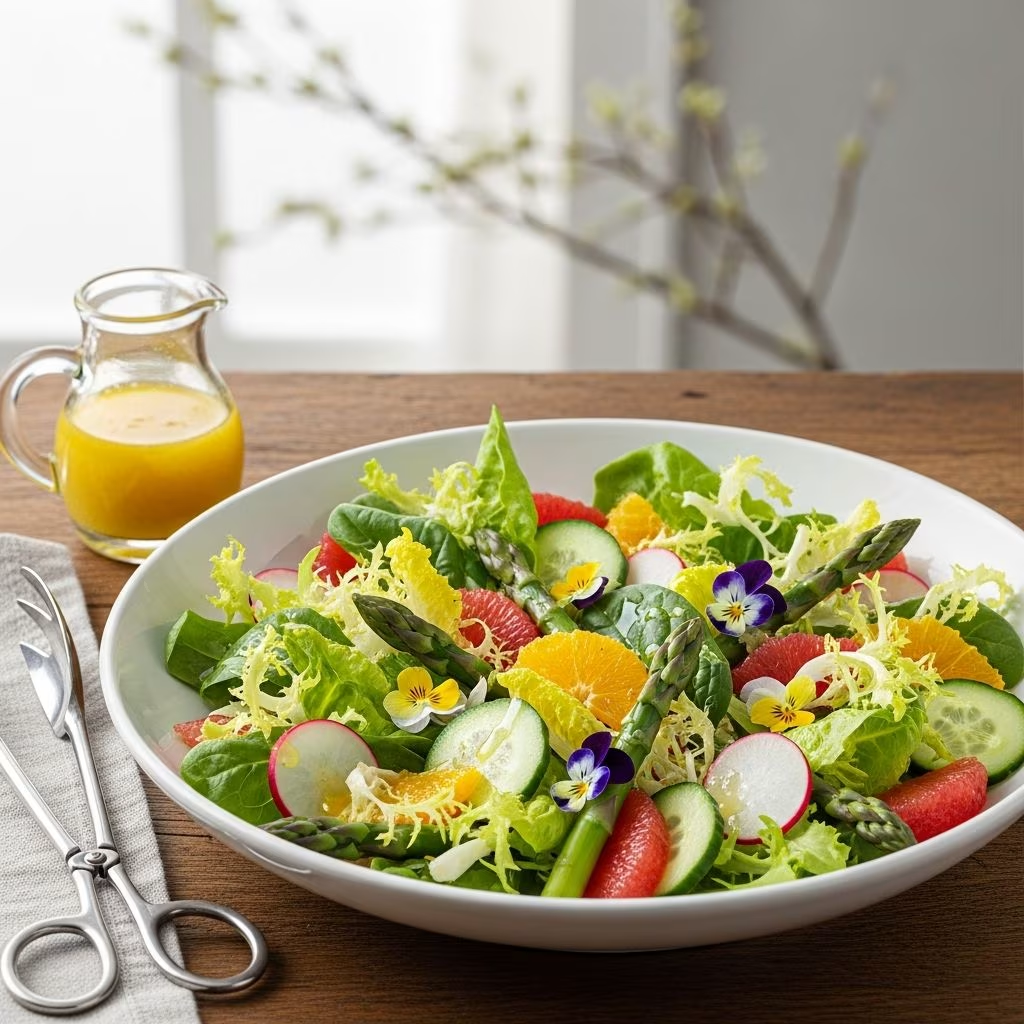
Spring salads stand out for their versatility. They serve as refreshing starters, hearty mains when boosted with grains or proteins, or light sides for gatherings. The season’s produce peaks in flavor and affordability, making it easy to create nutrient-dense meals. Tender lettuces like butterhead and arugula pair beautifully with blanched asparagus or fresh berries, providing a natural sweetness and earthiness that heavy winter roots can’t match.
Health benefits abound: leafy greens supply folate and vitamin K, while peas and radishes add crunch and vitamin C. Incorporating elements like nuts, seeds, or cheeses ensures balanced plates that keep you energized without heaviness.
Essential Spring Ingredients to Stock Up On
Building great salads starts with quality produce. Focus on these seasonal stars:
- Asparagus: Trim ends, blanch or roast for tender-crisp texture.
- Radishes: Slice thinly for peppery bite; watermelon varieties add color.
- Peas: Fresh or thawed frozen for sweet pops of flavor.
- Strawberries and Berries: Hulled and sliced for natural sweetness.
- Avocados: Creamy contrast to crisp elements.
- Fresh Herbs: Basil, mint, chives for aromatic lifts.
- Spring Greens: Spinach, arugula, butter lettuce for bases.
Grains like quinoa or farro add staying power, while toppings such as feta, nuts, or seeds enhance crunch and protein.
Mastering Dressings: The Key to Flavorful Salads
A great dressing elevates basic ingredients. Spring calls for bright, citrusy vinaigrettes over creamy ones. Here’s a simple formula: 3 parts oil to 1 part acid (lemon juice, vinegar), plus mustard, honey, and herbs for emulsification.
| Dressing Type | Key Ingredients | Best Pairing |
|---|---|---|
| Lemon Basil Vinaigrette | Lemon juice, olive oil, basil, garlic | Asparagus and pea salads |
| Strawberry Vinaigrette | Blended strawberries, balsamic, honey | Spinach and berry mixes |
| Mandarin Citrus | Mandarin juice, Dijon, olive oil | Seafood or nutty salads |
| Poppy Seed Yogurt | Yogurt, vinegar, poppy seeds, onion | Fruit-forward greens |
Whisk or shake in a jar; taste and adjust. Dress greens lightly to avoid sogginess.
Recipe 1: Roasted Asparagus and Chickpea Power Bowl
This hearty salad combines roasted asparagus with protein-rich chickpeas for a meal-worthy dish. Serves 4.
Ingredients
- 1 bunch asparagus, trimmed and halved
- 1 can (15 oz) chickpeas, drained and roasted
- 4 cups arugula
- 1 avocado, diced
- 1/4 cup feta crumbles
- 1/4 cup toasted pistachios
- Handful fresh basil and mint
Lemon Vinaigrette
- 1/4 cup olive oil
- 2 tbsp lemon juice
- 1 tsp Dijon mustard
- Salt and pepper
Instructions
- Preheat oven to 400°F. Toss asparagus and chickpeas with oil, salt; roast 15 minutes.
- Whisk dressing ingredients.
- Toss arugula with half the dressing; top with roasted veggies, avocado, feta, nuts, and herbs. Drizzle remaining dressing.
Prep time: 10 min. Cook time: 15 min. Per serving: ~350 calories, high in fiber and protein.
Recipe 2: Berry Spinach Delight with Yogurt Dressing
Sweet berries meet tender spinach in this quick, no-cook salad. Perfect for brunch. Serves 4.
Ingredients
- 6 cups baby spinach
- 1 cup strawberries, sliced
- 1/2 cup blueberries
- 1 avocado, sliced
- 1/4 cup walnuts, chopped
Yogurt Poppy Seed Dressing
- 1/2 cup plain yogurt
- 2 tbsp apple cider vinegar
- 1 tbsp honey
- 1 tsp poppy seeds
Instructions
- Mix dressing ingredients; chill.
- Toss spinach, berries, avocado, and walnuts.
- Drizzle with dressing just before serving.
Ready in 10 minutes. Antioxidant-rich for immune support.
Recipe 3: Quinoa and Kale Harvest Salad
A gluten-free, plant-based option with massaged kale for tenderness. Serves 4.
Ingredients
- 1 cup cooked quinoa
- 4 cups kale, massaged
- 1 cup roasted beets and carrots
- 1/2 cup chickpeas
- 1/4 cup almonds
- 1 avocado
Instructions
- Massage kale with salt and oil until softened.
- Combine with quinoa, roasted veggies, chickpeas, almonds, avocado.
- Toss with lemon vinaigrette from earlier.
Filling and grounding, ideal for lunch.
Recipe 4: Farro and Green Bean Medley
Chewy farro pairs with crisp green beans and eggs for protein punch. Serves 4.
Ingredients
- 1 cup cooked farro
- 2 cups blanched green beans
- 4 hard-boiled eggs, sliced
- 1 cup cherry tomatoes, halved
- 1/4 cup candied pecans
- 1 avocado
Instructions
- Blanch green beans 2 minutes; shock in ice water.
- Mix with farro, tomatoes, eggs, pecans, avocado.
- Dress with citrus vinaigrette.
Balanced macros for sustained energy.
Creative Twists and Pairing Ideas
Customize with proteins: Add salmon for omega-3s or lentils for vegan boost. For brunches, pair berry salads with quiche. Dinner sides? Asparagus bowls with grilled chicken. Make-ahead tip: Prep components separately; assemble fresh.
Storage: Undressed salads last 2-3 days in fridge. Dress portions as needed.
Frequently Asked Questions
Can I make these salads ahead?
Yes, store components separately. Greens wilt less undressed.
Are these recipes gluten-free?
Most are; swap farro for quinoa if needed.
What if I can’t find fresh peas?
Thawed frozen work perfectly, retaining sweetness.
How do I roast chickpeas crisply?
Dry thoroughly, toss in oil and spices, bake at 400°F for 20-25 minutes, shaking halfway.
Best substitutions for feta?
Goat cheese for tang or vegan alternatives for dairy-free.
Nutrition Highlights of Spring Salads
These recipes emphasize whole foods: High in vitamins A, C, K from greens; fiber from legumes; healthy fats from avocados and nuts. Aim for variety to cover nutritional bases.
References
- USDA FoodData Central: Asparagus Nutrition — United States Department of Agriculture. 2023-01-15. https://fdc.nal.usda.gov/fdc-app.html#/food-details/168390/nutrients
- Harvard T.H. Chan School of Public Health: The Nutrition Source – Leafy Greens — Harvard University. 2024-05-20. https://www.hsph.harvard.edu/nutritionsource/food-features/leafy-greens/
- Academy of Nutrition and Dietetics: Spring Produce Guide — Academy of Nutrition and Dietetics. 2025-03-10. https://www.eatright.org/food/planning/seasonal-produce/spring-produce
- Journal of Food Science: Antioxidant Activity in Berries — Institute of Food Technologists. 2022-07-12. https://doi.org/10.1111/1750-3841.12241
- CDC: Health Benefits of Legumes — Centers for Disease Control and Prevention. 2024-11-05. https://www.cdc.gov/nutrition/healthy-eating/legumes.html