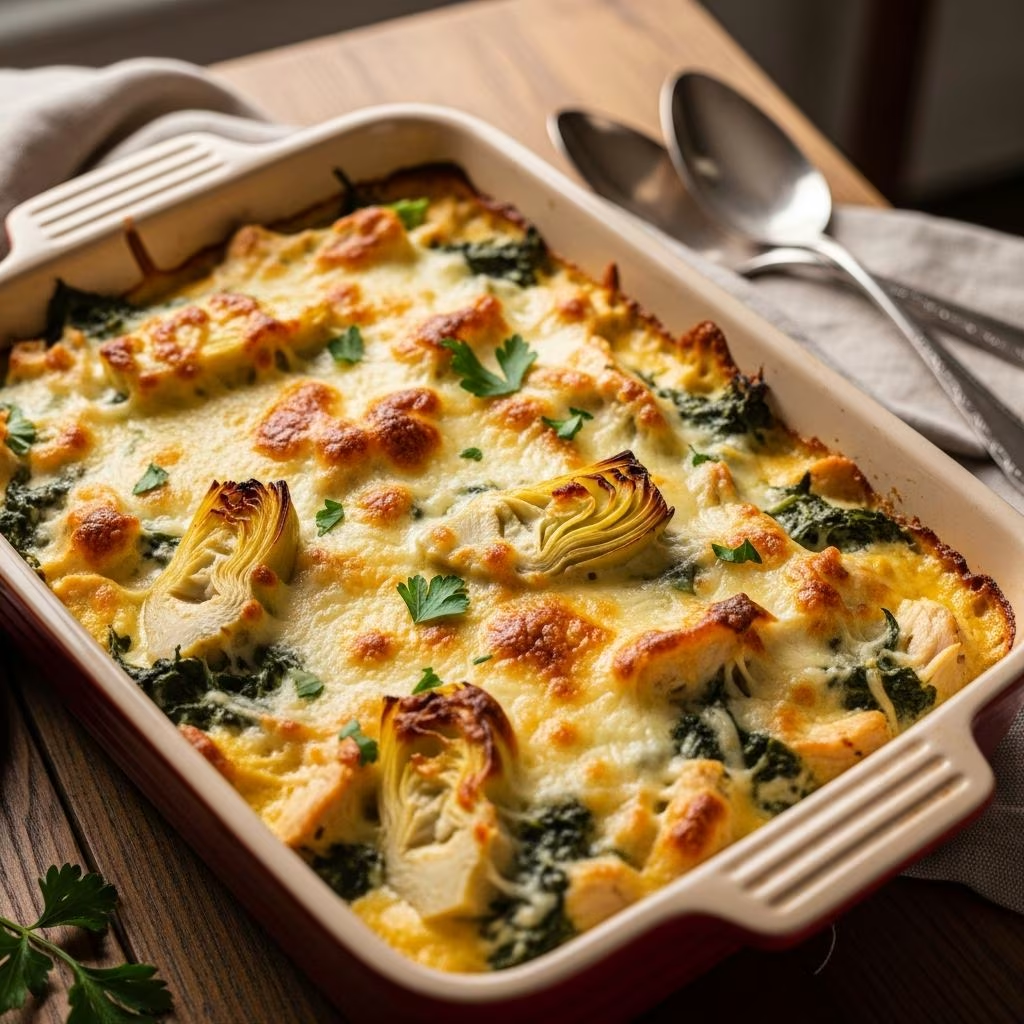
The combination of tender chicken, earthy spinach, and tender artichoke hearts enveloped in a rich, creamy cheese sauce represents the epitome of comfort food. This versatile dish draws inspiration from the beloved spinach artichoke dip but transforms it into a hearty, protein-packed main course that appeals to family dinners and entertaining occasions alike. Understanding the fundamentals of preparing this casserole will help you master a recipe that consistently delivers impressive results.
Understanding the Core Components
A successful spinach artichoke chicken casserole relies on the harmonious balance of several essential elements. The foundation begins with quality protein, typically shredded chicken that provides both texture and substance. The vegetables—frozen spinach and artichoke hearts—contribute earthiness and nutritional value while maintaining their structure through cooking. The binding agent consists of a creamy sauce built from dairy products and cheese that unites all components into a cohesive dish. Finally, a cheese topping creates a golden, crispy exterior that contrasts beautifully with the creamy interior.
Selecting and Preparing Your Protein
The choice of chicken significantly impacts the final result. Rotisserie chicken offers convenience and consistent flavor, requiring only shredding before use. For those preferring freshly cooked chicken, boneless skinless breasts can be poached, baked, or sautéed until fully cooked. Some recipes incorporate turkey as an equally valid protein option, particularly when utilizing Thanksgiving leftovers. The chicken should be cooked completely and cooled slightly before incorporation to ensure even distribution throughout the casserole.
- Rotisserie chicken: Ready-to-use convenience
- Freshly poached breasts: Superior moisture retention
- Leftover turkey: Economical alternative with similar flavor profile
- Bite-sized pieces: Ensures even cooking and texture distribution
The Vegetable Foundation
Proper vegetable preparation distinguishes a mediocre casserole from an exceptional one. Frozen spinach must be thoroughly thawed and squeezed dry to eliminate excess moisture that can create a watery, unappetizing texture. This step proves essential, as surplus liquid dilutes the cheese sauce and prevents proper browning of the top layer. Artichoke hearts, whether canned or frozen, should be drained completely and chopped into uniform pieces approximately one-half to three-quarter inches in size. This sizing promotes even distribution and prevents any single bite from being dominated by large artichoke chunks.
The combination of these vegetables creates a textural interplay—the tender spinach melts into the sauce while artichoke pieces maintain slight firmness. Together, they introduce earthy, slightly tangy flavors that complement the richness of the cheese base.
Crafting the Creamy Cheese Sauce
The sauce represents the casserole’s most critical component. Traditional preparations employ a combination of cream cheese and mayonnaise, creating a luxuriously smooth base. Cream cheese, when softened to room temperature, blends seamlessly with other ingredients and melts evenly throughout the dish. Mayonnaise contributes both richness and a subtle tang that brightens the overall flavor profile. Alternative preparations incorporate Greek yogurt, sour cream, or cottage cheese for varied textural qualities and nutritional considerations.
The cheese selection typically includes mozzarella for its melting quality and mild flavor, paired with Parmesan for its sharp, nutty complexity. Dividing the cheese between the sauce and topping ensures adequate flavor throughout while creating an appealing golden crust. A small amount of minced garlic adds aromatic depth, while salt and black pepper provide essential seasoning balance.
Sauce Preparation Method
Begin by heating olive oil in a medium skillet over medium-low heat. Add minced garlic and cook for approximately one minute, stirring constantly to prevent browning. Incorporate the cream cheese, stirring continuously until it achieves a smooth consistency. Blend in the mayonnaise thoroughly, then gradually introduce approximately two-thirds of the mozzarella and half of the Parmesan, stirring until the mixture reaches a cohesive, creamy texture. Remove from heat and set aside for assembly.
The Assembly Process
Successful assembly follows a logical layering sequence. Prepare a casserole dish by lightly coating it with cooking spray or butter to prevent sticking. Distribute the cooked chicken evenly across the dish bottom, creating a uniform layer. Scatter the thawed, drained spinach across the chicken, followed by the chopped artichoke hearts. Season this vegetable layer with salt and black pepper to taste. Pour the prepared cheese sauce over the vegetables, distributing it evenly and ensuring thorough coverage. Finally, sprinkle the remaining mozzarella and Parmesan across the top surface.
Baking Techniques and Timing
The baking process requires careful temperature management and timing observation. Preheat your oven to 375 degrees Fahrenheit, allowing the heating element to reach full temperature before inserting the casserole. Most recipes call for covering the dish with aluminum foil during the initial baking phase, which prevents the cheese topping from browning excessively while interior components reach appropriate temperatures.
Standard baking time ranges from 15 to 35 minutes, depending on the quantity of ingredients and individual oven characteristics. The dish should bubble noticeably around the edges, and the chicken should reach an internal temperature of 165 degrees Fahrenheit. For a golden-brown, crispy topping, remove the foil during the final minutes and either increase oven temperature slightly or use the broiler setting for 2-3 minutes. Watch carefully during this phase to prevent burning.
Ingredient Substitution Guide
Dietary preferences and ingredient availability frequently necessitate modifications to the basic recipe. Individuals following ketogenic or grain-free diets will appreciate this casserole’s inherent compatibility with such restrictions. Those seeking lighter versions can substitute Greek yogurt or cottage cheese for traditional cream cheese and mayonnaise. Individuals with dairy concerns can explore dairy-free cream cheese alternatives and cashew-based or nutritional yeast-based cheese substitutes, though results may vary.
| Traditional Ingredient | Lighter Alternative | Dairy-Free Option |
|---|---|---|
| Cream cheese | Greek yogurt | Dairy-free cream cheese |
| Mayonnaise | Sour cream | Vegan mayonnaise |
| Mozzarella cheese | Reduced-fat mozzarella | Cashew cheese or nutritional yeast |
| Parmesan cheese | Part-skim Parmesan | Nutritional yeast blend |
Flavor Enhancement Possibilities
While the classic version succeeds admirably on its own, numerous additions can elevate flavor complexity. Fresh or dried herbs such as thyme, oregano, or Italian seasoning complement the vegetable profile beautifully. Lemon zest and juice introduce brightness that cuts through the richness. Red pepper flakes add gentle heat, while crushed sun-dried tomatoes provide concentrated umami depth. Minced fresh parsley scattered across the finished dish offers visual appeal and subtle herbaceous notes.
Storage and Make-Ahead Strategies
This casserole demonstrates remarkable versatility for advance preparation. Complete assembly can occur up to 24 hours before baking; simply cover the dish with plastic wrap or aluminum foil and refrigerate. When ready to bake, remove from refrigeration and add approximately 5-10 minutes to the standard baking time to account for the cold temperature. Cooked leftovers store reliably in airtight containers for 3-4 days, though the texture of the cheese topping may soften slightly upon reheating. Reheat gently in a 350-degree oven for 15-20 minutes, covered with foil to prevent excessive browning.
Nutritional Considerations
This dish delivers substantial protein through both the chicken and cheese components, making it suitable for those prioritizing protein intake. The spinach and artichoke hearts provide dietary fiber, essential minerals, and vitamins. The creamy sauce contributes fat-soluble vitamins while providing satisfying richness. A single serving typically contains between 300-400 calories, depending on the specific ingredient quantities and additions used. This nutritional density makes the casserole suitable for various dietary approaches, from balanced nutrition plans to keto-compatible eating patterns.
Serving Recommendations
The versatility of spinach artichoke chicken casserole permits numerous serving accompaniments. Light sides such as steamed broccoli, roasted green beans, or a crisp garden salad provide textural contrast and nutritional balance. Garlic bread or crusty rolls complement the creamy sauce and allow diners to capture every bit of flavor. For more substantial plates, serve alongside mashed potatoes, cauliflower rice, or roasted root vegetables. The casserole’s richness pairs well with slightly acidic beverages like crisp white wines or sparkling water with lemon.
Common Challenges and Solutions
Several issues may arise during preparation or cooking. If the sauce appears grainy or separated, the cream cheese may have been cold when incorporated; gently reheating and whisking can often restore smoothness. Watery texture typically results from insufficient spinach drainage; always thoroughly squeeze thawed spinach before use. If the cheese topping fails to brown adequately, increase oven temperature slightly or extend the broiler time, though this requires careful monitoring to prevent burning. Conversely, excessive browning can be prevented by covering the dish with foil during the majority of the baking time.
Frequently Asked Questions
Can this casserole be frozen?
Yes, unbaked casseroles freeze successfully for up to three months. Freeze in the baking dish, covered tightly with plastic wrap and foil. Thaw overnight in the refrigerator before baking, adding 10-15 minutes to standard baking time.
What is the best casserole dish size?
A 9×13 inch ceramic or glass dish accommodates standard recipe quantities perfectly, providing approximately 2-3 inches depth for even cooking.
Can fresh spinach replace frozen?
Fresh spinach can substitute at roughly double the quantity, as it reduces significantly during cooking. Wilt fresh spinach in the skillet, drain thoroughly, and chop before use.
How does oven type affect cooking time?
Convection ovens cook faster than conventional ovens; reduce temperature by 25 degrees Fahrenheit or cooking time by 10-15 percent. Individual ovens vary, so check for doneness rather than relying solely on time.
Can this recipe be doubled?
Doubling quantities works well; use a 9×13 inch dish and a smaller supplementary dish, or prepare in batches. Baking time may increase slightly for larger volumes.
Conclusion: Mastering Your Casserole Technique
Creating an exceptional spinach artichoke chicken casserole involves understanding fundamental cooking principles and ingredient interactions. By carefully preparing vegetables, crafting a smooth cheese sauce, and timing the baking process appropriately, you’ll consistently produce a dish that impresses diners and satisfies hearty appetites. The recipe’s flexibility permits numerous adaptations to suit dietary preferences, ingredient availability, and flavor preferences, making it a valuable addition to any home cook’s repertoire. Whether preparing a simple weeknight meal or entertaining guests, this casserole delivers reliable, impressive results that honor the beloved spinach artichoke combination while elevating it into substantial, satisfying fare.
References
- An Edible Mosaic — Personal Food Blog. 2024. https://www.anediblemosaic.com/spinach-artichoke-chicken-casserole/
- Spend With Pennies — Food Recipe Blog. 2024. https://www.spendwithpennies.com/spinach-artichoke-chicken-casserole/
- Real Food Whole Life — Wellness and Recipe Resource. 2024. https://realfoodwholelife.com/recipes/spinach-artichoke-chicken-casserole/
- USDA FoodData Central — United States Department of Agriculture. 2024. https://fdc.nal.usda.gov/
- Downshiftology — Recipe and Cooking Blog. 2024. https://downshiftology.com/recipes/spinach-artichoke-chicken-bake/