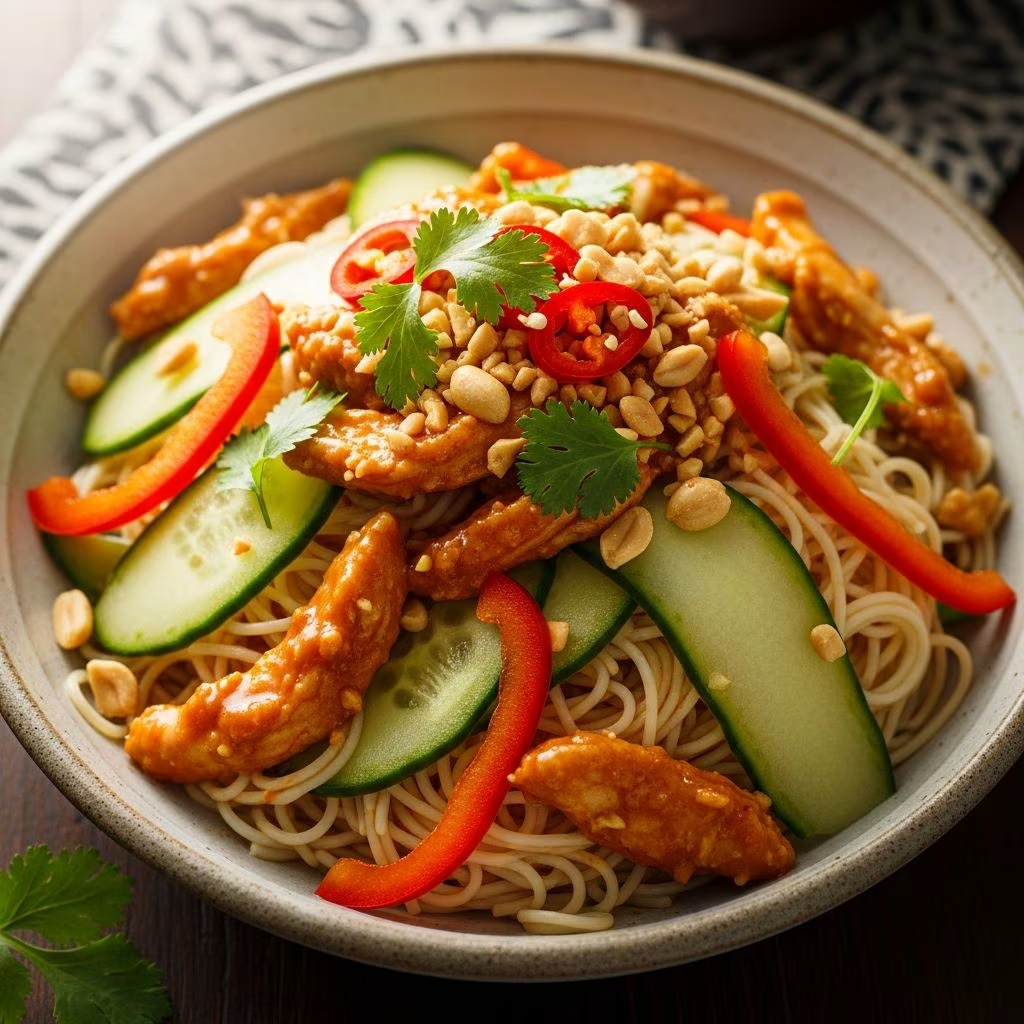
Imagine a dish that balances creamy richness with fiery heat, crunchy textures with tender proteins, all tied together in one satisfying bowl. The spicy peanut chicken noodle salad delivers exactly that. This recipe draws inspiration from Asian fusion flavors, featuring soba noodles or similar varieties tossed with shredded chicken, vibrant vegetables, and a homemade peanut sauce that’s both addictive and versatile. Whether you’re seeking a quick weeknight dinner, a make-ahead lunch, or a crowd-pleasing potluck option, this salad shines with its ease and bold taste profile.
At its core, the dish relies on pantry staples like peanut butter, soy sauce, and chili sauce, elevated by fresh ingredients such as lime, garlic, and ginger. It’s naturally gluten-free adaptable with tamari and soba noodles made from buckwheat. Prep time hovers around 20 minutes, with cooking adding just 10 more, making it ideal for busy schedules. Let’s dive into why this salad has become a staple in modern home cooking and how to perfect it.
Why This Noodle Salad Stands Out
What sets spicy peanut chicken noodle salad apart from ordinary salads? It’s the harmonious contrast of flavors and textures. The sauce clings to every noodle, delivering umami from soy, sweetness from honey, tang from lime, and heat from sriracha or chili-garlic sauce. Tender shredded chicken adds protein, while vegetables like cabbage, bell peppers, and carrots provide crunch and nutrition.
- Versatility: Serve cold for picnics or warm for cozy evenings.
- Customizable Heat: Adjust chili levels to suit mild or spicy palates.
- Meal Prep Friendly: Stores well in the fridge for up to 2 days.
- Nutrient-Dense: Packed with veggies, lean protein, and healthy fats from peanuts.
Health enthusiasts appreciate its balance: peanuts offer heart-healthy monounsaturated fats, while soba noodles provide complex carbs and fiber. A single serving delivers around 500 calories, with substantial protein to keep you full.
Essential Ingredients for Success
Gathering the right components is key to authentic flavor. Here’s a breakdown of what you’ll need, scaled for 4-6 servings.
| Component | Ingredients | Quantity | Notes |
|---|---|---|---|
| Sauce Base | Peanut butter (natural, creamy) Soy sauce or tamari Honey or maple syrup | 5 tbsp 5 tbsp 2 tbsp | Use natural PB for best texture; tamari for GF. |
| Flavor Boosters | Sesame oil Lime juice Garlic (minced) Fresh ginger (grated) | 2 tbsp 1 lime 1 clove 1-inch piece | Fresh lime is non-negotiable for brightness. |
| Heat Element | Sriracha or chili-garlic sauce | 1/4 cup (adjust to taste) | Start low if spice-averse. |
| Protein & Base | Chicken breast (cooked, shredded) Soba, rice, or linguine noodles | 1 lb 10 oz | Rotisserie chicken speeds things up. |
| Vegetables | Purple cabbage (shredded) Red bell pepper (sliced) Carrots (grated) Green onions or cilantro | 3-4 cups 1 large 1.5 cups 1/4 cup each | Crunch is crucial; add cucumber for extra freshness. |
| Toppings | Crushed peanuts Fresh herbs (basil, mint) | 1/2 cup + 1/4 cup 1/4 cup | Toasted peanuts amplify nuttiness. |
This lineup ensures a complete, colorful meal. Substitutions like ground chicken, shrimp, or tofu keep it flexible for dietary needs.
Mastering the Spicy Peanut Sauce
The heart of the dish is the sauce – a creamy emulsion that coats everything perfectly. Traditional versions blend peanut butter with water or broth to thin it, soy for saltiness, and sweeteners to mellow the heat.
- Combine peanut butter, soy sauce, honey, sesame oil, lime juice, garlic, ginger, and chili sauce in a blender or food processor.
- Add water gradually (start with 5 tbsp) until pourable but thick.
- Pulse in peanuts last for texture – chunky for bite, smooth for silkiness.
Pro Tip: Taste and tweak. Too thick? More water. Too sweet? Extra lime. This sauce doubles as a dip for veggies or drizzle for rice bowls, extending its utility beyond the salad.
Step-by-Step Cooking Guide
Assembly is straightforward, emphasizing efficiency.
Prepare the Chicken
Season 1 lb chicken breasts with salt, pepper, minced garlic, and ginger. Sear in a hot skillet with a drizzle of oil over medium-high heat, 5-6 minutes per side until internal temp reaches 165°F. Rest, then shred with forks. For speed, use pre-cooked rotisserie chicken.
Cook the Noodles
Boil soba noodles per package (usually 4-5 minutes). Rinse under cold water to halt cooking and prevent sticking – essential for cold salads. For warm versions, skip rinsing.
Prep Veggies
Shred cabbage finely for tenderness, slice peppers thinly, grate carrots. Chop herbs and green onions. This mise en place takes 10 minutes max.
Assemble and Toss
In a large bowl, combine noodles, chicken, veggies. Pour sauce over, tossing gently with tongs until evenly coated. Garnish with crushed peanuts and herbs. Serve immediately or chill.
Total time: 30 minutes. Yields 4 hearty servings.
Customization Ideas for Every Palate
Adapt this salad endlessly:
- Vegetarian Twist: Swap chicken for tofu, tempeh, or edamame.
- Gluten-Free: Tamari + 100% buckwheat soba.
- Spice Levels: Mild (1 tbsp sriracha), Medium (1/4 cup), Wild (add fresh chilies).
- Protein Swaps: Shrimp, pork, beef, or chickpeas.
- Extra Veggies: Snap peas, broccoli, avocado for creaminess.
For kids, reduce heat and add mango for sweetness. Bulk it up with quinoa for a superfood boost.
Nutrition and Health Benefits
This salad isn’t just tasty – it’s nourishing. Per serving (approx.):
- Calories: 480
- Protein: 32g
- Fiber: 6g
- Healthy Fats: 22g from peanuts
Peanuts provide vitamin E and magnesium; cabbage offers vitamin C and antioxidants. The sauce’s ginger aids digestion, while lime boosts immunity. It’s a balanced meal supporting muscle repair and sustained energy.
Storage, Make-Ahead, and Serving Tips
Storage: Refrigerate in airtight containers up to 2 days. Noodles may soften; stir in fresh veggies before eating.
Make-Ahead: Prep sauce and chop veggies day prior. Cook chicken and noodles fresh.
Serving Ideas:
- Wrapped in lettuce leaves for low-carb.
- Over greens for double crunch.
- With lime wedges and extra sriracha.
Frequently Asked Questions (FAQs)
Can I make this vegan?
Yes! Use maple syrup instead of honey, tofu or beans for chicken, and ensure tamari is vegan.
What if I don’t have soba noodles?
Linguine, rice noodles, or spaghetti work fine. Rice noodles are lightest.
How do I reduce the spice?
Halve the chili sauce and add more honey or lime for balance.
Is the sauce freezable?
Yes, freeze in portions up to 1 month. Thaw and whisk; may separate slightly.
Best peanuts for topping?
Roasted, unsalted for control over saltiness. Crush by hand or pulse in processor.
Pairing Suggestions
Complement with iced green tea, cucumber slices, or spring rolls. For wine, off-dry Riesling cuts the heat.
References
- Spicy Peanut Soba Noodle Salad with Chicken — Kitchen 511. 2025-02-19. https://www.kitchen511.com/blog/2025/2/19/spicy-peanut-soba-noodle-salad-with-chicken
- Spicy Peanut Noodles with Chicken — A Oregon Cottage. N/A. https://anoregoncottage.com/spicy-chicken-noodle-salad/
- Spicy Peanut Soba Noodle Salad — Pinch of Yum. N/A. https://pinchofyum.com/spicy-peanut-soba-noodle-salad
- Peanut Chicken Noodle Salad — The Floating Kitchen. N/A. https://www.floatingkitchen.net/peanut-chicken-noodle-salad/
- Asian Chicken Salad with Spicy Peanut Dressing — Aly Romero. N/A. https://www.alyromero.com/listing-recipes/asian-chicken-salad-with-spicy-peanut-dressing