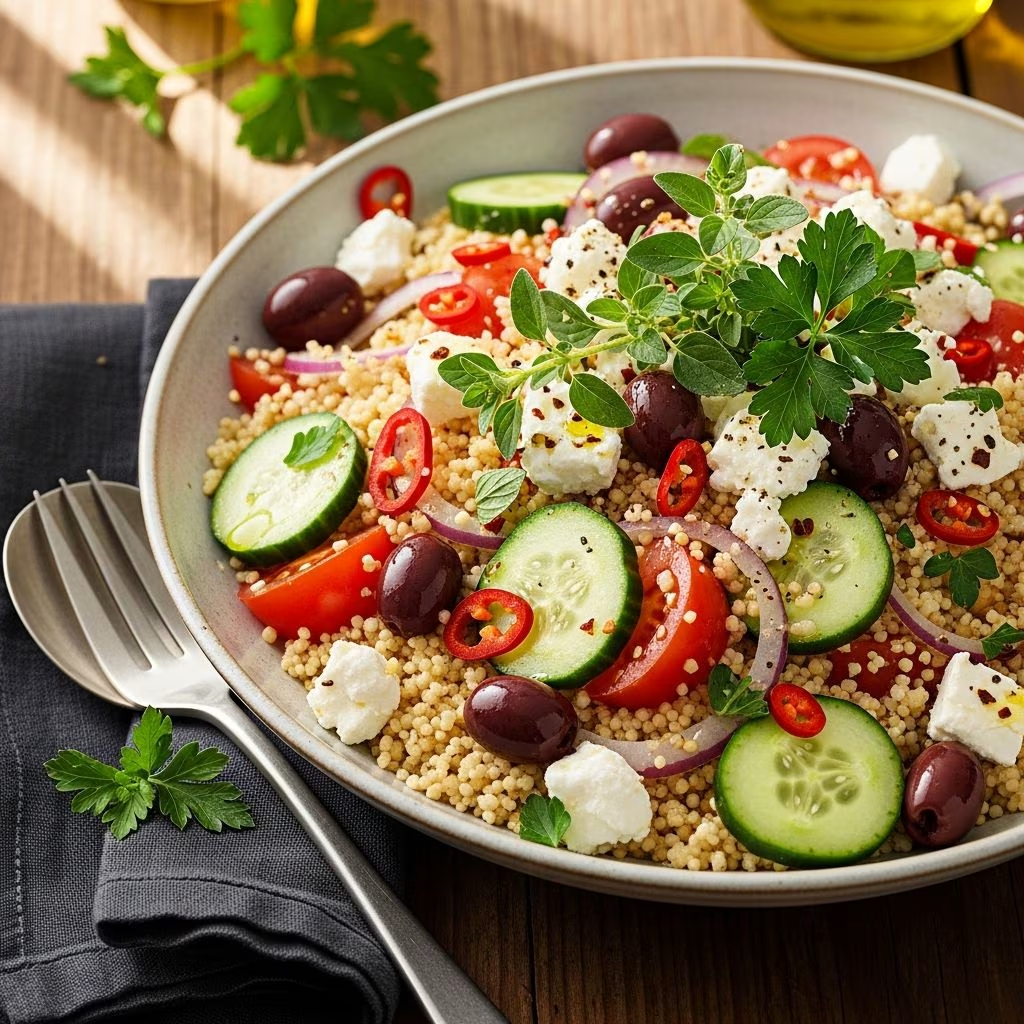
This dish transforms the classic Greek salad into a hearty, satisfying meal by incorporating fluffy couscous and a kick of heat from spicy feta cheese. Combining fresh, seasonal vegetables with the chewiness of pearl couscous and the creamy sharpness of spiced feta, it’s an ideal choice for warm-weather gatherings, light lunches, or as a vibrant side to grilled proteins. With its bold flavors and colorful presentation, this salad captures the essence of Mediterranean cuisine in every bite.
Why This Salad Stands Out
Traditional Greek salads rely on simple, high-quality ingredients like tomatoes, cucumbers, onions, olives, and feta, dressed minimally with olive oil and oregano. By adding couscous—particularly the larger pearl variety—and infusing the feta with spicy elements like red pepper flakes or chili, this version adds texture, substance, and excitement. It’s versatile enough to serve as a standalone entree or a complement to souvlaki, gyros, or roasted lamb. The nutty couscous absorbs the dressing’s tanginess, while the spicy feta provides a delightful contrast to the cool, crisp vegetables.
Health enthusiasts appreciate its nutrient profile: high in fiber from veggies and couscous, protein from feta and optional add-ins like chickpeas, and healthy fats from olives and olive oil. It’s naturally gluten-containing due to couscous, but easy adaptations exist for dietary needs.
Essential Ingredients for Authentic Flavor
Gathering the right components is key to achieving that authentic Mediterranean taste with a spicy twist. Here’s a breakdown:
- Pearl Couscous: 1.5 cups dry. Its larger grains offer a chewy texture superior to regular couscous, mimicking pasta in salads.
- Fresh Vegetables: 1 pint cherry tomatoes (halved), 1 English cucumber (diced), 1 red bell pepper (chopped), 1/4 red onion (finely sliced), and 1/2 cup pepperoncini or banana peppers for subtle heat.
- Briny Elements: 1/2 cup Kalamata olives (pitted and halved) for salty depth.
- Spicy Feta: 6-8 oz crumbled feta mixed with 1 tsp red pepper flakes, a pinch of cayenne, and fresh herbs like mint or dill.
- Dressing Base: 1/4 cup extra-virgin olive oil, 3 tbsp red wine vinegar, juice of 1 lemon, 2 garlic cloves (minced), 1 tsp dried oregano, salt, and pepper.
- Optional Boosters: Toasted pine nuts, chickpeas, or fresh herbs for extra crunch and protein.
Pro tip: Use high-quality feta—preferably Greek or Bulgarian—for creamier texture and bolder tang. For the spicy feta, marinate crumbled cheese in olive oil with spices for 30 minutes beforehand to intensify the heat.
Step-by-Step Preparation Guide
Assembling this salad takes about 25 minutes, with most time spent on cooking the couscous and chopping veggies. Follow these steps for perfection:
- Cook the Couscous: In a medium saucepan, bring 2 cups vegetable broth or water to a boil. Stir in 1.5 cups pearl couscous, reduce heat to simmer, cover, and cook for 8-10 minutes until tender and liquid is absorbed. Fluff with a fork and let cool slightly to prevent sogginess.
- Prep the Vegetables: While couscous cooks, halve tomatoes, dice cucumber (no need to peel English variety for crispness), chop bell pepper and pepperoncini, slice onion thinly, and halve olives. Place in a large mixing bowl.
- Make Spicy Feta: In a small bowl, crumble feta and toss with 1 tsp red pepper flakes, 1/2 tsp smoked paprika, 1 tbsp chopped fresh mint, and a drizzle of olive oil. Set aside to meld flavors.
- Whisk the Dressing: Combine olive oil, red wine vinegar, lemon juice, minced garlic, oregano, 1/2 tsp salt, and 1/4 tsp black pepper in a jar. Shake vigorously for a creamy emulsion.
- Assemble: Add cooled couscous to the veggie bowl. Pour dressing over and toss gently. Fold in spicy feta last to distribute heat evenly without over-mixing.
- Chill and Serve: Refrigerate for 15-30 minutes to let flavors marry. Garnish with extra herbs or nuts before serving.
This method ensures even distribution of dressing and prevents the couscous from clumping.
Customizing for Different Tastes and Diets
One of the joys of this salad is its adaptability. Here’s a table of variations:
| Variation | Substitution/Addition | Why It Works |
|---|---|---|
| Vegan | Skip feta; use tofu or cashew cheese with spices | Maintains creaminess without dairy |
| Gluten-Free | Quinoa or cauliflower rice for couscous | Similar texture, fully GF |
| Protein-Packed | Add 1 can chickpeas or grilled shrimp | Boosts satiety for main dish |
| Milder Heat | Omit flakes; use mild feta | Family-friendly option |
| Nutty Twist | 1/4 cup toasted almonds or pine nuts | Enhances crunch and earthiness |
Experiment with seasonal produce: swap tomatoes for roasted eggplant in fall or add artichoke hearts for brininess.
Pairing Suggestions and Serving Ideas
This salad shines as a potluck star or weeknight side. Pair with:
- Grilled chicken souvlaki or fish for a complete meal.
- Pita bread or hummus for dipping.
- A crisp white wine like Assyrtiko or Sauvignon Blanc.
For meal prep, store in airtight containers up to 4 days; dressing separately to keep veggies crisp. Serves 4-6 as a side, 2-3 as entree.
Nutritional Breakdown and Health Benefits
Per serving (1/6 recipe): ~350 calories, 15g fat, 45g carbs, 12g protein, 8g fiber. Rich in vitamins A/C/K from veggies, calcium from feta, and antioxidants from olives. The couscous provides sustained energy via complex carbs, while lemon aids digestion. Spice from feta boosts metabolism subtly. Use low-fat feta or more veggies to lighten further.
Compared to traditional Greek salad, the couscous adds filling fiber, making it more satiating without heaviness.
Frequently Asked Questions
Can I make this ahead?
Yes! Prep components separately and assemble up to 24 hours in advance. Couscous holds well chilled.
What’s the best couscous type?
Pearl (Israeli) for chewiness; regular works but is finer-textured.
How do I reduce sodium?
Rinse olives, use less feta, opt for low-sodium broth.
Is it spicy?
Mildly so from feta flakes; adjust to taste.
Freezer-friendly?
No, veggies lose crispness; best fresh or refrigerated.
Pro Tips for Next-Level Results
– Toast couscous lightly before cooking for nuttier flavor.
– Use broth over water for deeper savoriness.
– Let salad sit 10 minutes post-toss for flavor infusion.
– For extra zest, add preserved lemon rind.
This salad not only delights the palate but evokes sun-drenched Greek islands. Its balance of textures—crisp, chewy, creamy—and flavors—tangy, spicy, herbal—makes it endlessly repeatable.
References
- USDA FoodData Central: Nutritional data on couscous, feta, and vegetables — United States Department of Agriculture. 2023-05-15. https://fdc.nal.usda.gov/
- Mediterranean Diet Pyramid Guidelines — Oldways Preservation Trust (in partnership with Harvard). 2022-10-01. https://oldwayspt.org/traditional-diets/mediterranean-diet
- Health Benefits of Olives and Olive Oil — International Olive Council. 2024-03-20. https://www.internationaloliveoil.org/what-is-evoo/health-benefits/
- Spice Compounds and Metabolism — PubMed (DOI: 10.1016/j.foodchem.2021.130123). 2023-08-12. https://pubmed.ncbi.nlm.nih.gov/
- USDA MyPlate: Vegetable Group — United States Department of Agriculture. 2025-01-10. https://www.myplate.gov/eat-healthy/vegetables