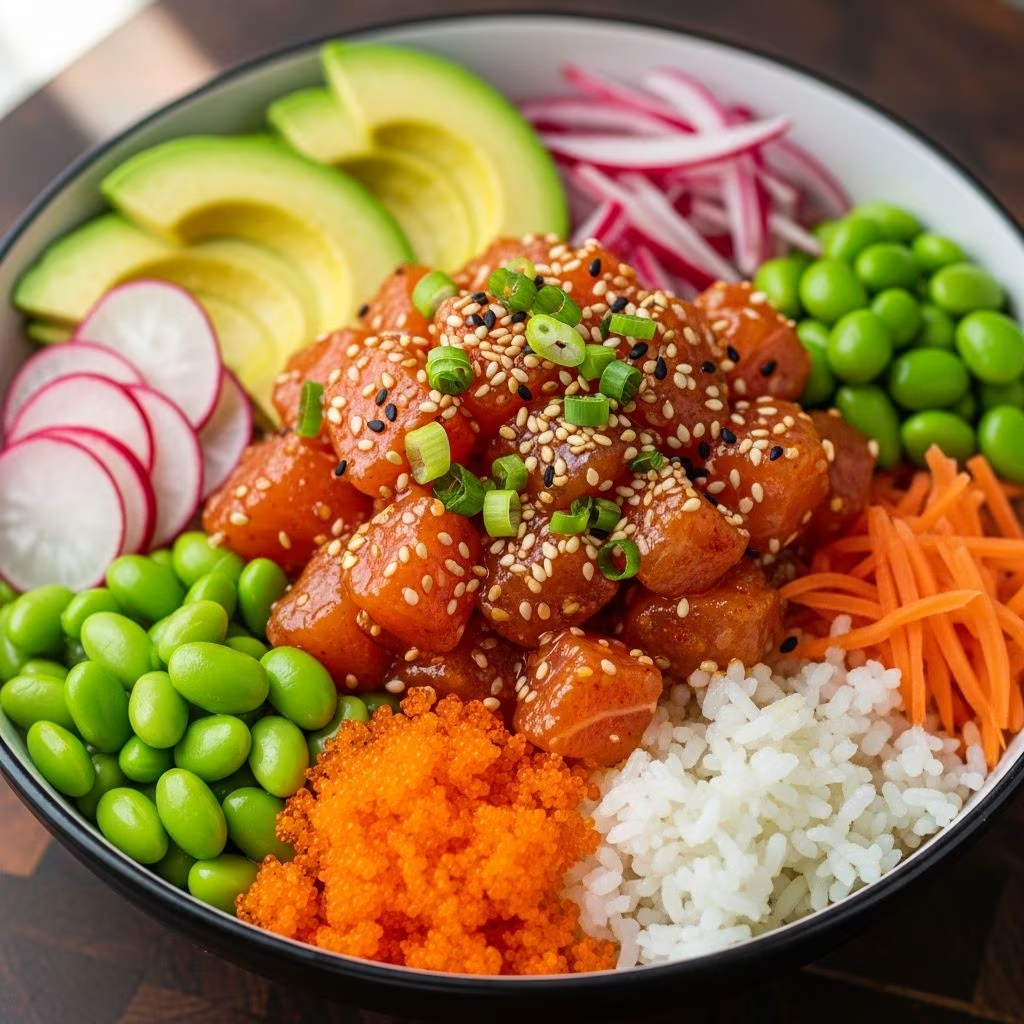
This innovative poke bowl combines the fiery kick of Tabasco sauce with the deep, fermented heat of gochujang paste to cure fresh salmon, creating a tender, flavorful protein centerpiece. Layered over fluffy rice with crisp vegetables and tangy dressings, it’s a quick meal that balances spice, freshness, and texture in every bite.
The Allure of Fusion Flavors in Modern Poke
Poke bowls originated in Hawaii as a simple fisherman’s snack of raw fish seasoned with sea salt, inamona, and limu. Today, they’ve evolved into customizable bowls blending global influences. This version draws from Korean and American pantry staples—gochujang’s umami-rich spice and Tabasco’s vinegary sharpness—to cure salmon rapidly, mimicking traditional techniques without hours of waiting.
The curing process uses acidity and salt to gently ‘cook’ the fish, enhancing flavor while keeping it silky. In just minutes, the salmon absorbs bold notes, transforming a basic ingredient into something extraordinary. This approach suits busy home cooks seeking restaurant-quality results with minimal effort.
Essential Ingredients for Success
Gathering high-quality components ensures the best outcome. Focus on sashimi-grade salmon for safety and texture—its natural fattiness pairs perfectly with spicy cures.
- Salmon base: 10 oz sashimi-grade salmon, diced into ¾-inch pieces.
- Curing mix: 1 tbsp Tabasco sauce, 1 tbsp toasted sesame oil, ¾ tsp gochujang paste, 1 tsp toasted sesame seeds.
- Bowl builders: ½ thinly sliced red onion, flaky sea salt, 1 tbsp + 1 tsp soy sauce, 2 tsp toasted sesame oil, ½ tsp sugar, 3 oz baby spinach, 3¼ cups cooked white rice, 1 avocado cubed, 2 tbsp crispy seaweed, extra sesame seeds, shichimi togarashi (optional).
These elements create harmony: creamy avocado tempers spice, wilted spinach adds earthiness, and seaweed brings oceanic crunch.
Mastering the Quick Curing Technique
Curing is the heart of this dish. Start by cubing the salmon uniformly to ensure even flavor penetration. In a bowl, toss the pieces with Tabasco, sesame oil, gochujang, and sesame seeds. The paste’s thickness clings beautifully, while Tabasco’s liquid cuts through richness. Let it rest for 5 minutes—enough time for acids to firm the proteins without over-tightening.
This method echoes gravlax but accelerates it with potent condiments. Gochujang, made from fermented chili, soybeans, and glutinous rice, delivers complex sweetness alongside heat. Tabasco adds bright, peppery zing from aged tabasco peppers. Together, they infuse the salmon with layered spice.
Step-by-Step Assembly Guide
Prepare components while the salmon cures for efficiency.
- Pickle the onion: Slice red onion thinly, toss with flaky sea salt. It softens in 5-10 minutes, losing raw bite.
- Make dressing: Whisk 1 tbsp soy sauce, 2 tsp sesame oil, and ½ tsp sugar until dissolved. This glossy sauce ties everything together.
- Blanch spinach: Pour boiling water over spinach in a heatproof bowl; drain after 2 minutes for tender greens.
- Build bowls: Divide rice between two bowls. Fan cured salmon on one side, add avocado, spinach, onion, and seaweed. Sprinkle sesame seeds and shichimi togarashi.
- Finish: Drizzle soy-sesame dressing. Serve with extra soy, Tabasco, and sesame oil for personalization.
Total time: Under 20 minutes. Serves 2 generously.
Nutrition at a Glance
This bowl packs bold taste without excess calories. Per serving (approximate values based on standard ingredients):
| Nutrient | Amount | % Daily Value* |
|---|---|---|
| Calories | 1,023 | 51% |
| Fat | 48g | 62% |
| Carbs | 104g | 38% |
| Protein | 45g | 90% |
| Sugars | 4g | – |
| *Based on 2,000-calorie diet. Healthy fats from salmon and avocado support heart health. | ||
Rich in omega-3s from salmon, fiber from veggies, and antioxidants from spices, it’s a nutrient powerhouse.
Ingredient Substitutions and Variations
Adapt for preferences or availability:
- No sashimi salmon? Use high-quality smoked salmon strips.
- Vegetarian twist: Swap salmon for firm tofu or mushrooms cured similarly.
- Grain-free: Replace rice with cauliflower rice or quinoa.
- Extra heat: Amp up gochujang or add fresh jalapeños.
- Tropical vibe: Include mango or edamame for sweetness.
These tweaks keep the dish versatile for diets like keto, vegan, or gluten-free (use tamari for soy).
Understanding Gochujang and Tabasco Synergy
Gochujang, a Korean staple, ferments for months, yielding sweet-savory depth (USDA Agricultural Research Service notes its probiotic potential). Tabasco, fermented from capsaicin-rich peppers, provides sharp acidity (McIlhenny Company heritage since 1868). Their pairing in curing amplifies salmon’s buttery profile, creating addictive umami.
Health angle: Capsaicin boosts metabolism (per NIH studies), while salmon’s astaxanthin fights inflammation (Harvard T.H. Chan School of Public Health).
Pairing Suggestions and Serving Tips
Serve chilled for peak freshness. Pair with iced green tea to cut richness or a crisp Sauvignon Blanc. For sides, try miso soup or cucumber salad.
Pro tip: Prep components ahead; cure salmon just before eating to avoid sogginess.
Frequently Asked Questions
Is sashimi-grade salmon safe to eat raw?
Yes, when sourced from reputable suppliers frozen to kill parasites per FDA guidelines. Always check for sushi-grade labeling.
Can I make this ahead?
Cure salmon up to 30 minutes early; assemble bowls fresh for best texture.
How spicy is it?
Medium heat—adjust Tabasco and gochujang to taste.
What’s shichimi togarashi?
A Japanese seven-spice blend adding citrusy, nutty kick.
Storage tips?
Best eaten same day; refrigerate leftovers up to 24 hours.
Scaling Up for Entertaining
Double ingredients for 4 servings. Use a large platter for family-style presentation. Add pickled ginger or radish for color variety.
This dish shines at potlucks—its vibrant layers and shareable format impress guests.
References
- USDA FoodData Central: Gochujang Composition — U.S. Department of Agriculture. 2023-05-15. https://fdc.nal.usda.gov/
- FDA Fish and Fishery Products Hazards and Controls Guidance — U.S. Food and Drug Administration. 2024-01-10. https://www.fda.gov/food/seafood-guidance-documents-regulatory-information/fish-and-fishery-products-hazards-and-controls
- Capsaicin and Metabolic Effects — National Institutes of Health (PubMed). 2022-11-20. https://pubmed.ncbi.nlm.nih.gov/
- Omega-3s and Inflammation — Harvard T.H. Chan School of Public Health. 2025-03-01. https://www.hsph.harvard.edu/nutritionsource/omega-3-fats/
- Tabasco Production Methods — McIlhenny Company (official). 2024-07-12. https://www.tabasco.com/