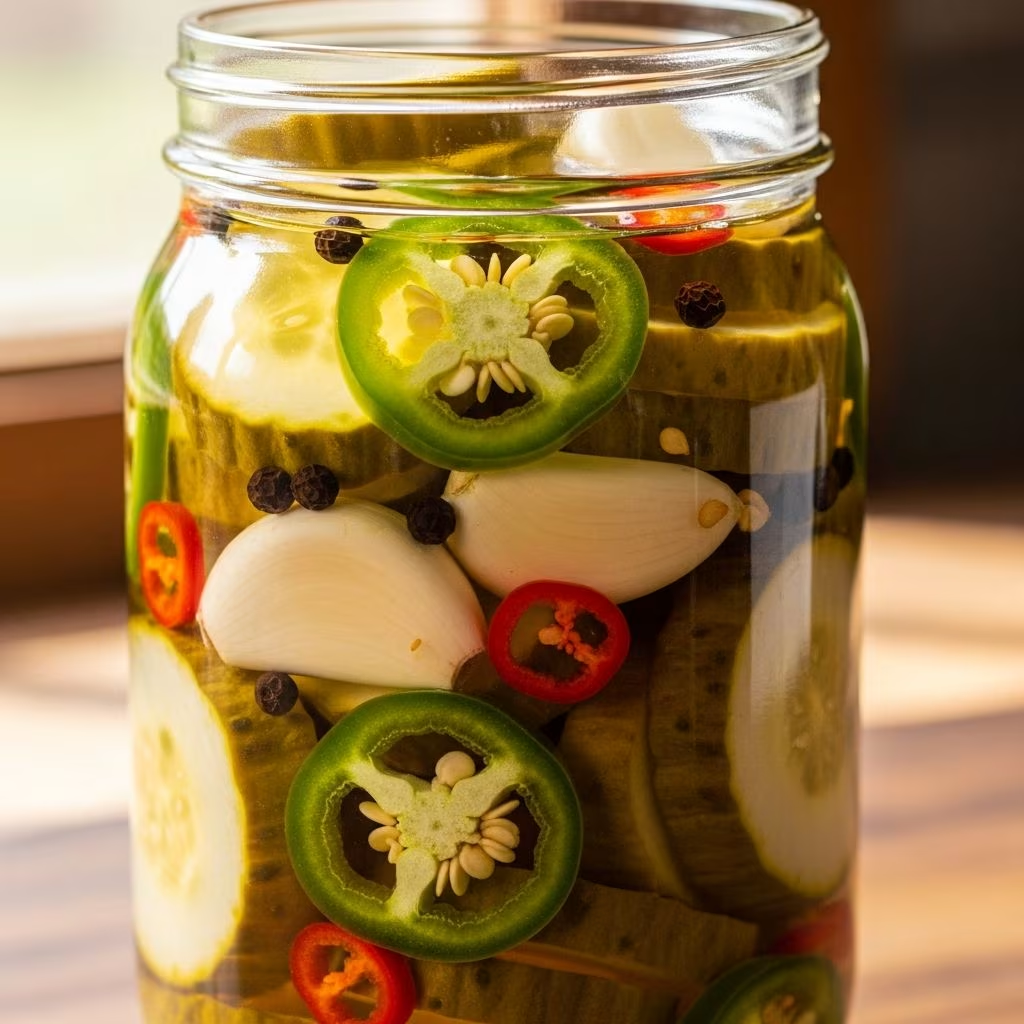
Homemade pickled jalapeños infused with garlic offer a perfect balance of heat, tang, and crunch, transforming simple peppers into versatile pantry staples. These preserves capture the fresh essence of jalapeños while extending their shelf life through time-tested pickling methods. Whether you’re a canning novice or a seasoned preserver, this comprehensive guide provides everything needed to create batches that rival store-bought versions.
Why Make Your Own Spicy Garlic Jalapeño Pickles?
Crafting pickles at home allows full control over ingredients, ensuring vibrant flavors without artificial additives. Fresh jalapeños provide superior taste and texture compared to commercial products, and adding garlic introduces savory depth that enhances every bite. These pickles are not only delicious but also nutritious, retaining vitamins from the peppers while the pickling process creates probiotics beneficial for gut health.
Beyond taste, homemade pickling is cost-effective. A single batch yields multiple jars, perfect for gifting or stocking your kitchen. The process is straightforward, requiring minimal equipment, and offers endless customization—from mild to extra spicy.
Essential Ingredients for Perfect Pickles
The foundation of great spicy garlic jalapeño pickles lies in high-quality, fresh components. Here’s a breakdown of key items:
- Jalapeño peppers: Select firm, bright green or red peppers for optimal heat and color. Look for those with white lines on the skin for extra spiciness.
- Garlic cloves: Use plump, unblemished bulbs. Peel and slice or smash for maximum flavor infusion.
- Vinegar: White or apple cider vinegar provides acidity essential for safe preservation. Opt for 5% acidity.
- Sugar and salt: These balance flavors; pickling salt is ideal as it lacks additives that cloud the brine.
- Spices: Peppercorns, mustard seeds, bay leaves, and pickling spice blends add complexity.
For a classic batch yielding 6-8 pint jars, gather about 5 pounds of jalapeños, 2-3 pounds of garlic cloves, 3 quarts vinegar, 1/2 to 1 cup sugar, 2-3 tablespoons salt, and assorted spices.
Step-by-Step Preparation Process
Follow these detailed instructions to ensure success. Always prioritize food safety by using proper canning techniques.
- Prepare the peppers and garlic: Wash jalapeños thoroughly. Wear gloves to slice into 1/4-inch rings, removing seeds for milder heat if desired. Peel garlic cloves, leaving whole or slicing thinly.
- Pack the jars: Sterilize pint jars by boiling for 10 minutes. Add 1/2 cup garlic cloves, a few peppercorns, and one jalapeño slice to the bottom of each jar. Fill with pepper rings.
- Make the brine: In a large pot, combine vinegar, water, sugar, salt, and spices (tied in cheesecloth). Bring to a boil, simmer for 5 minutes, then add jalapeño rings for 2 minutes to soften slightly.
- Fill and seal: Remove spice bag. Ladle hot brine into jars, leaving 1/2-inch headspace. Wipe rims, apply lids, and screw bands fingertip-tight.
- Process the jars: Place in a boiling water bath canner, ensuring 1-2 inches of water coverage. Process pints for 10-15 minutes (adjust for altitude). Cool undisturbed for 24 hours.
Check seals by pressing lids; store sealed jars in a cool, dark place for 3-4 weeks to develop flavors.
Safe Canning Practices to Avoid Risks
Proper canning prevents botulism and spoilage. Use tested recipes from reliable sources like the USDA. Key tips include:
- Maintain strict headspace and processing times.
- Test pH below 4.6 for safety.
- Inspect jars for cracks before use.
- Discard any jars with bulging lids or off odors.
For refrigerator pickles, skip processing; consume within 2 months.
Flavor Variations to Suit Every Palate
Experiment to personalize your pickles. Here’s a table of popular twists:
| Variation | Add-Ins | Flavor Profile |
|---|---|---|
| Honey-Sweetened | 1/2 cup honey, cinnamon stick | Sweet, aromatic heat |
| Dill-Infused | Fresh dill sprigs, mustard seeds | Herbaceous, tangy |
| Extra Spicy | Crushed red pepper, habaneros | Intense fire |
| Quick No-Cook | Room-temp brine, refrigerate | Fresh, crisp |
These adjustments keep the core garlic-jalapeño pairing while introducing new dimensions.
Creative Ways to Use Your Pickles
Spicy garlic jalapeño pickles shine in diverse dishes:
- Tacos and nachos: Top with chopped pickles for crunch and spice.
- Sandwiches and burgers: Layer slices for a zesty kick.
- Charcuterie boards: Pair with cheeses and cured meats.
- Salads and bowls: Dice into grain bowls or coleslaw.
- Cocktails: Skewer on Bloody Marys.
- Homemade salsas: Blend with tomatoes for fresh pico de gallo.
The brine doubles as a marinade for meats or vinaigrette base.
Storage, Shelf Life, and Troubleshooting
Sealed canned pickles last 12-18 months in the pantry. Once opened, refrigerate and use within a month. Cloudy brine often indicates harmless yeast; discard if mold appears.
Common issues:
- Soft pickles: Overprocessing or low acidity—use fresh produce next time.
- Failed seals: Reprocess or refrigerate immediately.
- Floating peppers: Normal due to air pockets; press down before sealing.
Nutrition and Health Benefits
These pickles are low-calorie (about 10-20 per serving) with vitamin C from peppers and allicin from garlic, supporting immunity. Fermentation enhances digestibility. Moderation is key due to sodium content.
Frequently Asked Questions (FAQs)
Can I reduce the heat level?
Yes, remove seeds and membranes, or mix with milder peppers like poblanos.
Is canning equipment necessary?
No for quick pickles; a large pot with rack suffices for water bath canning.
How long until they’re ready to eat?
Refrigerator versions in 24 hours; canned after 3 weeks for best flavor.
Can I reuse the brine?
Only for the same batch; discard after opening.
Are these gluten-free and vegan?
Yes, using standard ingredients.
Scaling Up for Gifts or Markets
Double or triple recipes for holidays. Pretty labels with dates make thoughtful presents. Ensure compliance with local regulations for selling preserves.
References
- Complete Guide to Home Canning — United States Department of Agriculture. 2023-01-15. https://nchfp.uga.edu/publications/publications_usda.html
- Pickling Guidelines — National Center for Home Food Preservation. 2024-05-20. https://nchfp.uga.edu/how/pickle.html
- So Easy to Preserve — University of Georgia Cooperative Extension. 2022-11-10.