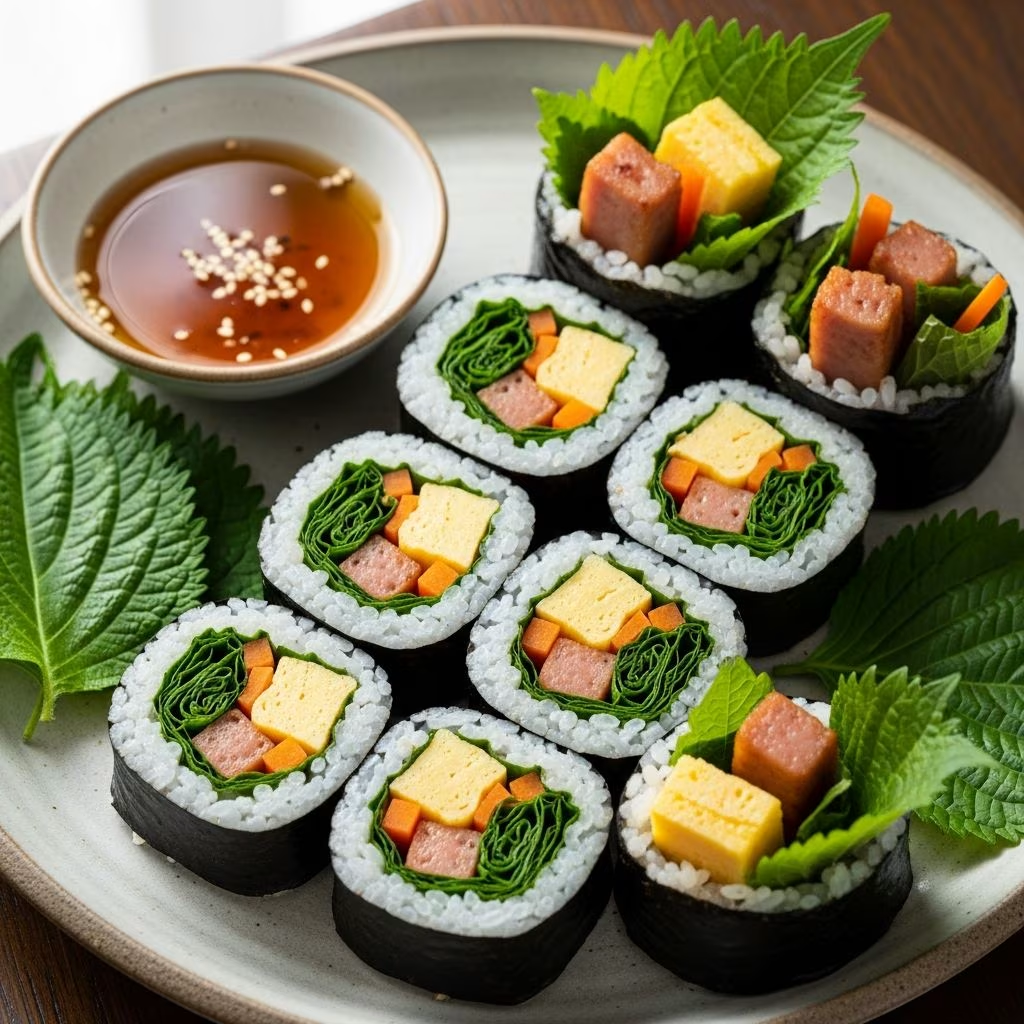
Spam Perilla Kimbap offers a modern twist on traditional Korean cuisine, combining the savory punch of caramelized spam with the fresh, herbaceous notes of perilla leaves, all encased in a neat seaweed roll. This dish stands out for its balance of sweet, garlicky, and earthy flavors, making it ideal for on-the-go meals or shared appetizers.
Why This Kimbap Captivates Home Cooks
Kimbap, often likened to sushi but distinctly Korean, has evolved from humble picnic food to a canvas for creative fillings. Introducing spam—a canned meat staple in Korean households post-WWII—paired with perilla (kkaennip), brings nostalgia and innovation. Perilla’s minty, licorice-like aroma cuts through spam’s richness, while seasoned rice ties everything together. Quick to prepare in under 30 minutes, it’s beginner-friendly yet impressive for gatherings.
Essential Ingredients Breakdown
Gathering the right components ensures success. Focus on quality for authentic taste.
- Short-grain rice (3 cups cooked): Its stickiness holds the roll intact; avoid long-grain varieties.
- Seaweed sheets (gim or laver): Opt for unroasted, unsalted types from Asian markets for flexibility.
- Spam (6-8 oz): Classic or gochujang-infused for spice; slice into uniform sticks.
- Perilla leaves (24 fresh): These aromatic greens are key; find them at Korean grocers.
- Sesame oil (2 tbsp), salt (½ tsp), garlic powder (½ tsp), maple syrup (2 tbsp): For seasoning rice and glazing spam.
- Optional: Kimchi for serving, adding tang.
These ingredients yield 4 servings, scalable for larger batches.
Step-by-Step Preparation Guide
Follow these instructions precisely for tight, flavorful rolls.
Season the rice: Mix cooked short-grain rice with 1 tbsp sesame oil and salt. Stir until grains glisten and separate slightly. This prevents mushiness.
Glaze the spam: Slice spam lengthwise into 8 sticks. Heat remaining sesame oil in a skillet over medium-high. Fry until edges caramelize. Whisk maple syrup and garlic powder, pour over spam, and cook 1 minute until syrupy glaze forms. Cool on an oiled plate.
Prep workspace: Lay a seaweed sheet shiny-side up on a board, short end toward you.
Assemble: Spread ¾ cup rice evenly over seaweed, leaving top inch bare. One-third from bottom, layer 6 perilla leaves (two stacks of 3), top with 2 spam sticks horizontally.
Roll tightly: From bottom, roll forward like a jelly roll, applying firm pressure. Squeeze ends to compact.
Slice: Use a sharp knife for ¾-inch pieces. Serve at room temp or warm with kimchi.
Total time: 20 minutes. Pro tip: Wet knife between cuts for clean slices.
Flavor Science: What Makes It Irresistible
The magic lies in contrasts. Spam’s umami from curing and frying pairs with perilla’s volatile oils like perillaldehyde, evoking anise and basil. Rice absorbs sesame’s nuttiness, while maple syrup’s sugars Maillard-react during glazing for caramel depth. This synergy creates bites where sweet meets herbal freshness.
| Component | Flavor Profile | Role in Dish |
|---|---|---|
| Spam | Savory, sweet glaze | Protein center |
| Perilla | Grassy, licorice | Fresh contrast |
| Rice | Neutral, sesame-infused | Binder |
| Seaweed | Oceanic crunch | Wrapper |
Customizations for Every Palate
Adapt to preferences or pantry staples.
- Spicy kick: Use gochujang spam or add sriracha to glaze.
- Vegetarian swap: Replace spam with fried tofu or mushrooms.
- Extra veggies: Add julienned carrots, spinach, or pickled radish.
- Sweet variation: Honey instead of maple for floral notes.
- Large batch: Double rice and fillings; rolls freeze well for 1 month.
For kids, tone down garlic and use regular spam.
Storage and Make-Ahead Strategies
Kimbap shines fresh but stores decently. Refrigerate uncut rolls up to 24 hours, wrapped tightly. Avoid sogginess by not slicing early. Reheat gently in microwave or eat cold. Freezer: Wrap individually, thaw overnight, slice fresh. Best within 2 days.
Nutritional Snapshot
Per serving (6 pieces): ~350 calories, 15g fat, 45g carbs, 10g protein. Balanced with rice for energy, spam for protein, perilla for antioxidants like rosmarinic acid. Pairs well in meal prep.
Pairing Ideas and Serving Occasions
Enjoy solo as a snack or with kimchi for probiotics. At parties, arrange slices colorfully on platters. Beverage matches: Green tea, soju, or iced barley water to refresh herbs.
Frequently Asked Questions
What if I can’t find perilla leaves?
Substitute shiso (similar profile) or a mix of basil and mint, though flavor shifts slightly.
Can I use brown rice?
Yes, but it’s less sticky; mix with white for best hold.
Why is my roll falling apart?
Ensure rice is evenly spread and thin; roll firmly and squeeze ends.
Is regular Spam okay?
Absolutely—users rave about it without spice.
How many calories per piece?
About 50-60, depending on portions.
Historical Roots and Global Appeal
Kimbap traces to 1960s Korea, popularized for portability. Spam entered via U.S. military influence, now a beloved staple. Perilla, native to Asia, adds indigenous flair. Globally, it’s trending in fusion scenes, from LA food trucks to NYC pop-ups.
Experiment confidently—this recipe demystifies kimbap while honoring its roots.
References
- Perilla Spam Kimbap – Beyond Sweet and Savory — Beyond Sweet and Savory. N/A. https://beyondsweetandsavory.com/perilla-spam-kimbap/