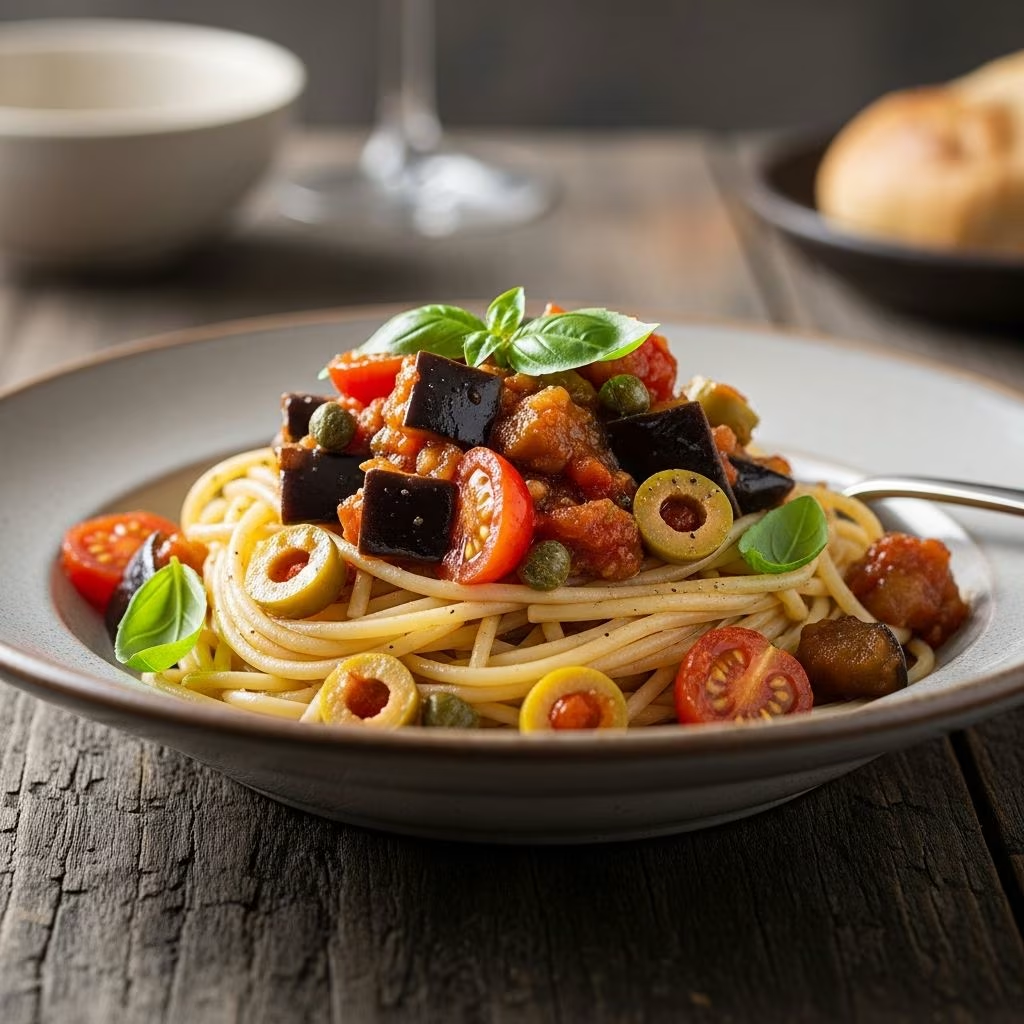
Eggplant caponata represents one of Sicily’s most celebrated culinary contributions to Italian cuisine. This traditional vegetable preparation has been enjoyed for centuries throughout the Mediterranean, and its transformation into a pasta sauce creates a dish that is both humble and sophisticated. The combination of tender spaghetti noodles with a deeply flavorful eggplant-based sauce offers a satisfying meal that showcases the natural sweetness and complexity of vegetables when properly prepared.
Understanding Eggplant Caponata: Origin and Tradition
Caponata originated in Sicily as a versatile dish that could be served in multiple ways—as a side dish, appetizer, or condiment. The name itself has uncertain etymology, though some food historians trace it to the Spanish word “caponada,” which referred to a type of seafood stew. Over time, the Sicilian version evolved to feature eggplant as its primary ingredient, combined with a distinctive blend of vegetables and seasonings that create its signature sweet-savory flavor profile.
The traditional preparation involves cooking finely diced vegetables until they reach a jammy consistency, at which point they become almost unrecognizable as individual components. This transformation occurs through patient cooking over moderate heat, allowing natural sugars to develop and meld with acidic and aromatic elements. When adapted to a pasta sauce, caponata maintains all of these desirable qualities while providing a rich, cohesive coating for the noodles.
Essential Ingredients and Their Roles
Creating authentic spaghetti with eggplant caponata requires understanding how each ingredient contributes to the final dish:
- Eggplant: The foundation of the dish, providing bulk, texture, and a subtle earthiness. Medium-sized eggplants work best, as they tend to have fewer seeds and a more delicate flavor than larger varieties.
- Onion and Garlic: These aromatics build the flavor base, with onions contributing natural sweetness and garlic adding pungent depth. Both should be finely diced to distribute evenly throughout the sauce.
- Bell Peppers and Celery: These vegetables add color, subtle sweetness, and structural interest. Celery provides a distinctive herbaceous quality that distinguishes caponata from other vegetable sauces.
- Tomatoes: Fresh or canned tomatoes provide acidity and moisture, helping to break down other vegetables and create the jammy texture. The acid also brightens the overall flavor profile.
- Capers: These brined flower buds deliver a briny, slightly tangy quality that prevents the sauce from becoming cloying.
- Red Wine Vinegar: This ingredient amplifies the acidic component and adds complexity to the flavor profile.
- Pine Nuts: When toasted and added near the end of cooking, pine nuts provide textural contrast and a subtle nutty richness that complements the soft vegetables.
- Fresh Herbs: Flat-leaf parsley, added just before serving, provides brightness and a fresh herbaceous note that cuts through the richness of the dish.
- Extra Virgin Olive Oil: High-quality olive oil serves as both a cooking medium and a finishing touch, contributing fruity notes and richness.
Preparation Strategy: Mise en Place Matters
The most time-consuming aspect of preparing spaghetti with eggplant caponata involves vegetable preparation rather than cooking. Properly organizing all ingredients before beginning the cooking process streamlines the preparation significantly. This method, known as “mise en place” in professional kitchens, ensures smooth execution and prevents burning or overcooking any component.
All vegetables should be finely and uniformly diced to ensure even cooking and proper integration into the final sauce. The eggplant requires particularly careful attention, as larger pieces may not cook through completely before other vegetables break down entirely. Aiming for roughly quarter-inch cubes provides the ideal size balance. Similarly, uniformly sized onion, garlic, celery, and bell pepper pieces promote consistent cooking and a cohesive texture throughout the sauce.
The Cooking Process: Building Layers of Flavor
Stage One: Establishing the Aromatic Base
Begin by heating extra virgin olive oil in a large skillet over medium-high heat. Once the oil shimmers, add the finely diced onion and garlic, allowing them to soften and become fragrant. This initial stage typically requires 2-3 minutes and establishes the foundational flavors upon which the rest of the dish develops. The goal is to cook these aromatics until they become translucent but not browned, as browning can impart an undesirably bitter quality.
Stage Two: Incorporating the Vegetables
Once the onion and garlic have softened, add the diced eggplant, bell pepper, and celery along with a generous pinch of salt. The salt serves multiple purposes: it seasons the vegetables, helps draw out excess moisture, and begins breaking down cell walls, promoting softer texture. Sauté this vegetable combination for approximately 15-20 minutes, stirring occasionally and reducing heat as needed to prevent sticking or burning.
During this stage, observe how the vegetables transform. The eggplant, initially firm and pale, gradually darkens as it absorbs oil and begins releasing water. The peppers and celery soften progressively. As the water content decreases and the vegetables begin to caramelize, their color deepens and their flavors concentrate. This patient cooking phase is crucial to developing the complex, savory character that distinguishes authentic caponata.
Stage Three: Adding Acidic Components
After the vegetables have softened and begun to caramelize, add the tomatoes (either fresh, quartered grapes or canned crushed tomatoes), capers, red wine vinegar, and a pinch of sugar. The sugar helps balance the acidity of the tomatoes and vinegar while promoting further development of the jammy texture. Continue cooking for another 8-10 minutes, allowing the tomatoes to break down and their acidity to permeate the vegetable mixture.
Taste the sauce at this point and adjust seasoning with salt and pepper as needed. The caponata should taste balanced, with neither acid nor salt overwhelming the other flavors. The consistency should resemble thick jam or chunky sauce, with minimal liquid remaining in the pan.
Finishing Touches and Assembly
While the caponata simmers to completion, prepare the spaghetti according to package directions until al dente. Reserve one cup of pasta cooking water before draining, as this starchy liquid helps bind the pasta and sauce together when combined.
Fold the hot drained spaghetti directly into the caponata, stirring gently but thoroughly to ensure even distribution of the sauce. Add a splash of the reserved pasta water if the mixture seems too thick. The starch in the pasta water emulsifies with the oil and other components, creating a cohesive, silky sauce that clings to each strand of pasta.
Just before serving, stir in fresh flat-leaf parsley and toasted pine nuts. These final additions provide textural contrast and fresh flavor notes that prevent the dish from becoming too heavy or one-dimensional.
Serving Suggestions and Variations
Traditional service involves transferring the spaghetti and caponata to individual bowls or plates, finishing with a drizzle of high-quality extra virgin olive oil and additional grated Parmigiano Reggiano. Some preparations include fresh mozzarella or other cheeses, though this varies by regional tradition and personal preference.
The dish pairs beautifully with simple accompaniments: a crisp green salad dressed with lemon vinaigrette, crusty bread for soaking up remaining sauce, and a glass of light, crisp white wine. The wine’s acidity and freshness complement the savory depth of the caponata without overwhelming it.
Leftover caponata demonstrates remarkable versatility. Served cold or at room temperature, it functions as an excellent crostini topping, sandwich spread, or component of antipasto platters. The sauce also freezes well, making it practical to prepare in larger batches for future meals.
Understanding Key Techniques
Why Uniform Cutting Matters
Vegetables cut to consistent sizes cook at uniform rates, preventing some pieces from becoming mushy while others remain raw. This uniformity contributes to the desired jammy texture, where all components are soft and well-integrated rather than containing inconsistent elements.
The Importance of Low, Slow Cooking
Rapid, high-heat cooking would burn the vegetables on the outside while leaving the interior undercooked. The moderate heat and longer cooking time allow moisture to gradually evaporate, sugars to caramelize, and flavors to concentrate and meld. This patient approach transforms simple vegetables into something far greater than the sum of their parts.
Salt’s Multiple Functions
Beyond flavor enhancement, salt draws out vegetable moisture through osmosis, concentrating flavors in the remaining liquid. It also helps break down cell structures, promoting softer texture. Adding salt in stages—at the beginning, middle, and end of cooking—allows for better flavor development and easier seasoning adjustment.
Nutritional Considerations
This dish offers significant nutritional benefits. Eggplant provides dietary fiber, potassium, and antioxidants, while bell peppers contribute vitamin C and additional antioxidants. Tomatoes contain lycopene, a beneficial compound associated with various health benefits. The olive oil provides monounsaturated fats and additional antioxidants. Whole grain or legume-based pastas increase protein and fiber content if preferred over traditional wheat pasta.
Troubleshooting Common Issues
Watery Sauce
If the caponata seems too liquid after cooking, increase the heat slightly and allow additional evaporation. Some home cooks strain excess liquid before combining with pasta, though this removes flavorful vegetable juices. Alternatively, reduce heat and simmer longer—patience usually resolves this issue.
Burnt Vegetables
Burnt spots indicate excessive heat or insufficient stirring. Lower the temperature and stir more frequently. A properly cooked caponata should have deeply caramelized vegetables without any burnt, blackened areas.
Overwhelming Acidic Flavor
If the caponata tastes excessively vinegary or tomato-forward, add a pinch of sugar to balance the acid. Conversely, if it seems flat, a small amount of vinegar or a squeeze of lemon can brighten the flavor profile.
Frequently Asked Questions
Can I prepare caponata in advance?
Yes, caponata actually improves after resting overnight, as flavors meld and develop further. Prepare it 1-2 days ahead, storing in an airtight container in the refrigerator. Simply reheat gently before tossing with fresh, hot pasta.
What pasta shapes work best with this sauce?
While spaghetti is traditional, any pasta shape works well. Short pastas like penne or rigatoni catch and hold the chunky sauce beautifully. Longer noodles like linguine or bucatini also pair nicely. Choose based on personal preference and what you have available.
Is this dish truly vegetarian?
In its traditional form, yes. However, some regional variations include anchovies or fish sauce for additional umami depth. Modern preparations typically remain vegetarian, making it excellent for plant-based diets.
Can I use frozen eggplant?
While fresh eggplant is preferable for texture and flavor, frozen eggplant works in a pinch. Thaw completely and squeeze out excess moisture before cooking, as frozen eggplant releases more water than fresh.
How long does this dish keep?
Cooked pasta and caponata are best eaten fresh, though leftovers remain good refrigerated for 2-3 days. The caponata component freezes well for up to 3 months, while cooked pasta becomes increasingly mushy with storage.
Conclusion: The Enduring Appeal of Sicilian Cooking
Spaghetti with eggplant caponata exemplifies why Sicilian cuisine continues captivating home cooks and professional chefs alike. The dish requires no exotic ingredients or complicated techniques, yet delivers complex flavors and satisfying substance. It proves that patient, thoughtful cooking of simple ingredients creates results that are simultaneously rustic and elegant, filling and light, familiar and memorable. Whether preparing this for a weeknight family dinner or a special occasion meal, this timeless preparation rewards the cook’s attention and effort with a genuinely exceptional dish.
References
- Eggplant Caponata Pasta with Smoked Mozzarella — Spices in My DNA. https://www.spicesinmydna.com/eggplant-caponata-pasta-with-smoked-mozzarella/
- Eggplant Caponata Pasta — Honest Cooking. https://honestcooking.com/eggplant-caponata-pasta/
- Pasta Alla Caponata | Sicilian Vegetable Pasta — Food Wishes. https://www.youtube.com/watch?v=S95KugXCFQo
- Eggplant Caponata Pasta — Shared Appetite. https://sharedappetite.com/recipes/eggplant-caponata-pasta/
- Pasta with Eggplant Caponata Recipe — Vegetarian Times. https://www.vegetariantimes.com/recipes/pasta-with-eggplant-caponata/