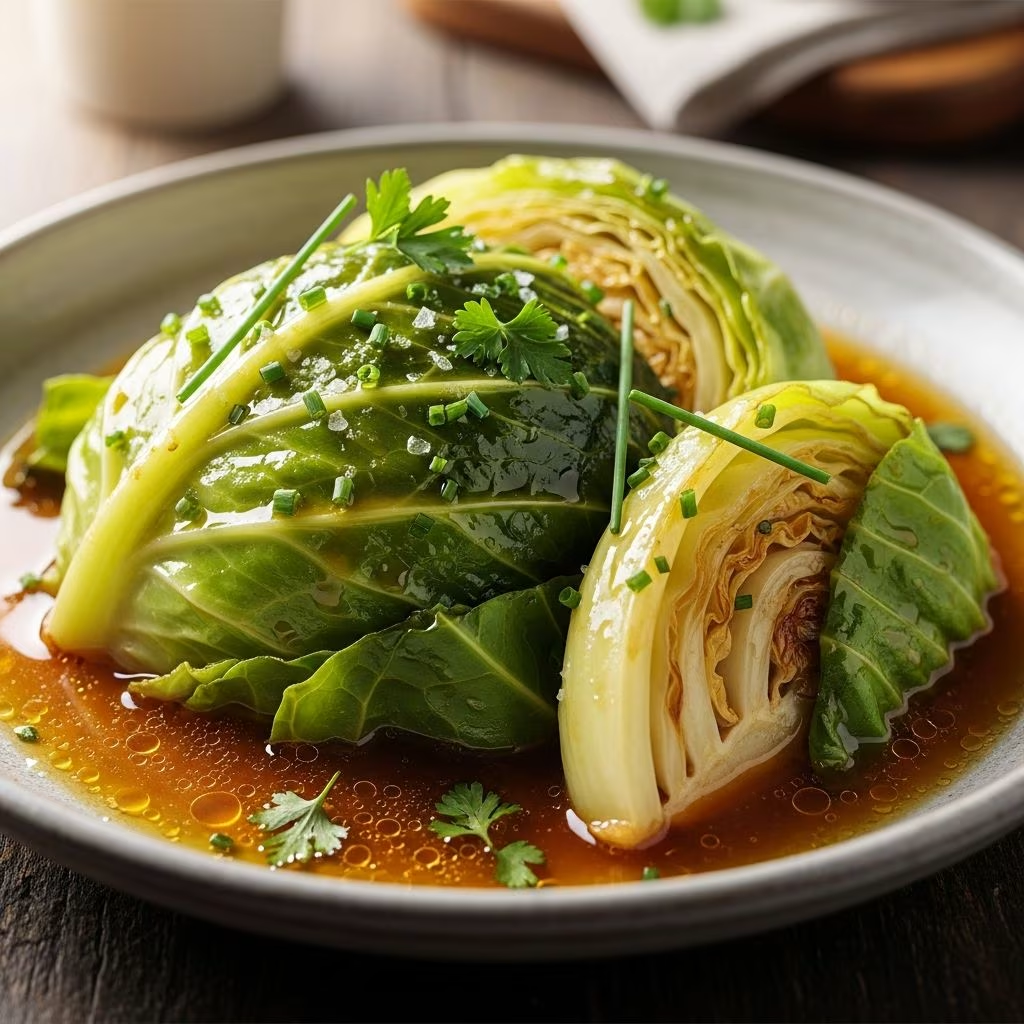
Simple yet profoundly tasty, soy butter cabbage elevates a basic vegetable into a standout side dish. This recipe combines the richness of butter with the umami punch of soy sauce, creating a glaze that clings to tender cabbage shreds. Ready in minutes, it’s ideal for busy cooks seeking flavor without fuss.
Why This Dish Wins Every Time
Cabbage often plays a supporting role in meals, but here it shines. The heat wilts the leaves just enough to soften their bite while keeping a pleasant crunch. Butter adds luxurious silkiness, and soy sauce brings salty depth with hints of fermentation. Together, they form a glossy coating that’s addictive. Versatile enough for Asian-inspired dinners or as a base for proteins, this preparation proves everyday ingredients can deliver restaurant-quality results.
Health enthusiasts appreciate cabbage’s low-calorie profile packed with vitamins C and K, fiber, and antioxidants. Paired with minimal fats, it supports digestive health and immunity without weighing down your plate. Cooks love the speed: no chopping marathons, just shred and stir.
Essential Ingredients for Success
Gather these basics for the classic version:
- Half a medium green cabbage, shredded into ½-inch strips for optimal texture
- 2 tablespoons unsalted butter for pure, clean flavor
- 2 tablespoons soy sauce (low-sodium if preferred)
- Freshly ground black pepper and flaky sea salt to taste
- Optional: Sliced green onions or sesame seeds for garnish
These yield 4 servings as a side. Scale up for crowds. Choose fresh cabbage with crisp, vibrant leaves; avoid wilted ones.
Step-by-Step Cooking Guide
- Prep the cabbage: Remove outer leaves, quarter the head, and slice into strips. No need for paper-thin shreds—thicker pieces hold shape better.
- Heat the pan: Use a wide skillet or wok over high heat. Add butter and let it foam without browning.
- Add cabbage: Toss in shreds, season lightly with salt and pepper. Stir-fry 2-3 minutes until edges soften and wilt slightly.
- Glaze it up: Drizzle soy sauce. Stir vigorously as it bubbles, coating everything in a shiny emulsion, about 1 minute.
- Finish and serve: Taste for seasoning. Garnish and plate hot.
Total time: 7 minutes. The key is high heat for quick cooking without sogginess.
Flavor Twists to Elevate Your Dish
Stick to basics or experiment:
| Variation | Key Additions/Substitutions | Cook Time Adjustment |
|---|---|---|
| Citrus Kick | Swap soy for ponzu; add lemon zest | Same |
| Umami Boost | Mix 1 tbsp oyster sauce + 1 tbsp soy | +30 seconds |
| Garlic Lover | Minced garlic sautéed in butter first | +1 minute |
| Spicy Edge | Red pepper flakes or chili oil | Same |
| Oven-Braised | Wedges, butter, soy; bake 350°F/30 min | 60 minutes total |
For oven style: Quarter cabbage, coat in butter-olive oil mix with garlic and onions, drizzle soy, cover, and bake. Baste midway for even flavor.
Pairing Ideas for Complete Meals
This dish complements grilled meats, fish, or tofu. Try with:
- Teriyaki chicken or salmon for Asian harmony
- Stir-fried noodles or rice bowls
- Roasted pork or steak for contrast
- Vegan mains like mapo tofu
Balance with fresh salads or pickled veggies to cut richness.
Pro Tips for Perfect Results
- Don’t overcrowd: Cook in batches if needed for even wilting.
- High heat is crucial: Medium heat steams; high sear creates fond.
- Shred uniformly: Inconsistent sizes lead to uneven cooking.
- Taste iteratively: Soy brands vary in saltiness.
- Make ahead: Prep shreds earlier; cook fresh for best texture.
Nutrition at a Glance
Per serving (1 cup):
- Calories: ~120
- Fat: 8g (mostly from butter)
- Carbs: 10g (fiber-rich)
- Protein: 3g
- Vitamin C: 50% DV
Gluten-free with tamari swap. Low-carb, keto-friendly.
Common Mistakes and Fixes
Avoid these pitfalls:
- Soggy cabbage: Use dry pan, high heat.
- Bitter notes: Remove tough core.
- Too salty: Low-sodium soy, season post-cook.
- Butter burns: Watch closely; clarify if needed.
Storage and Reheating
Refrigerate leftovers up to 3 days in airtight container. Reheat in skillet with splash of water to revive glaze. Freezes poorly due to texture loss.
Scaling for Different Needs
For 2: Halve everything. For 6-8: Double cabbage, adjust butter/soy proportionally. Great for potlucks.
Global Inspirations Behind the Recipe
This fusion nods to Japanese stir-fries where butter-soy pairs with veggies, and Western quick-sautés. Similar to okonomiyaki sides or German rotkohl shortcuts.
Frequently Asked Questions
Can I use red cabbage?
Yes, but it stays crunchier and adds color. Milder flavor.
Butter substitute?
Ghee or oil for dairy-free; flavor shifts slightly.
Make it vegan?
Plant-based butter + tamari.
How spicy can I make it?
Add gochujang or sriracha to soy mix.
Best cabbage type?
Green for classic; savoy for tenderness.
Reader Favorites and Tweaks
Users rave about adding sesame oil post-cook or topping with furikake. One twist: Char wedges first for smokiness.
References
- Quick Fix: Cabbage with Butter and Soy Sauce — 3jamigos. 2023-05-15. https://3jamigos.com/quick-fix-cabbage-with-butter-and-soy-sauce/
- Stir-fried Cabbage with Butter and Soy Sauce — Chef JA Cooks. 2024-02-10. https://chefjacooks.com/en/stir-fried-cabbage/
- Butter and Soy Braised Cabbage — Love is in my Tummy. 2017-09-20. https://loveisinmytummy.com/2017/09/butter-soy-braised-cabbage.html
- USDA FoodData Central: Cabbage, raw — United States Department of Agriculture. 2023-10-01. https://fdc.nal.usda.gov/fdc-app.html#/food-details/169975/nutrients
- Japanese Vegetable Cooking Techniques — Ministry of Agriculture, Forestry and Fisheries (Japan). 2022-11-05. https://www.maff.go.jp/e/policies/market/k_ryouri/search_menu/menu/veg_cabbage.html