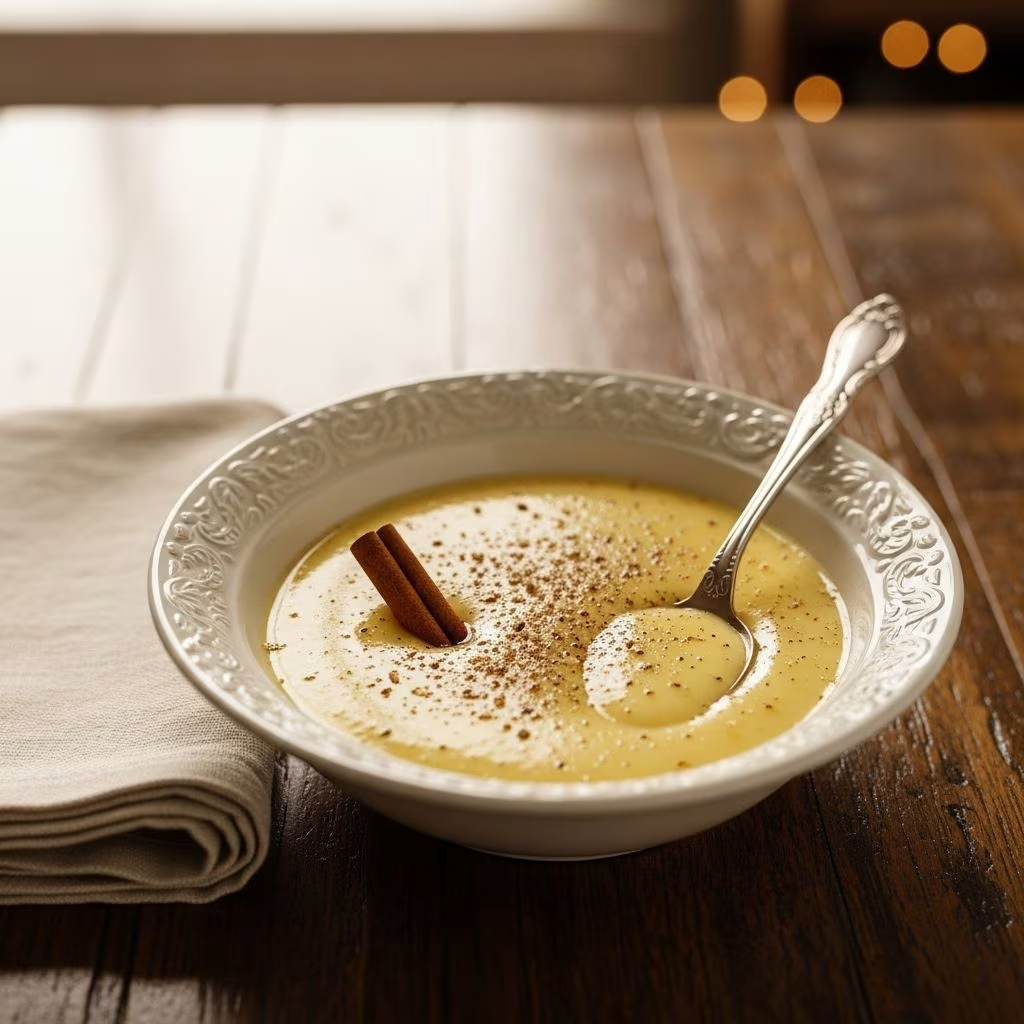
Indulge in the silky smoothness of Southern boiled custard, a cherished tradition that transforms simple ingredients into a luxurious, pourable delight. This classic preparation, often enjoyed chilled straight from the glass or as a base for richer desserts, embodies the essence of Southern hospitality with its gentle heating method and egg-enriched creaminess.
The Allure of This Timeless Southern Gem
Southern boiled custard stands out for its delicate balance of sweetness and subtle vanilla notes, crafted without actual boiling to preserve its tender texture. Rooted in family kitchens across the American South, it serves as a soothing beverage for the unwell or a festive holiday sipper spiked with spirits. Unlike thicker pudding-style custards, this version remains fluid enough for drinking, coating the spoon lightly while offering profound richness from fresh milk and yolks.
Its appeal lies in the alchemy of slow cooking: eggs thicken the milk into a glossy emulsion, evoking nostalgia for grandmother’s recipes. Prep is quick, but patience during simmering yields the hallmark sheen and body that distinguishes it from store-bought imitations.
Essential Ingredients for Authentic Flavor
Core components revolve around high-quality dairy, eggs, and minimal sweeteners to let natural flavors shine. Here’s a breakdown:
- Whole milk or half-and-half (4 cups/quart): Provides the creamy foundation; half-and-half amps up richness.
- Egg yolks or whole eggs (3-5): Deliver structure and golden hue; yolks alone make it silkier.
- Sugar (½-1 cup): Sweetens gently; adjust for taste, starting low.
- Vanilla extract or paste (1-2 tsp): Infuses aromatic depth; paste adds visual specks.
- Optional thickeners: Pinch of salt, cornstarch (1 tbsp), or flour for stability without heaviness.
Opt for fresh, local eggs and unprocessed sugar for superior results. Avoid ultra-pasteurized milk, as it can hinder thickening.
Step-by-Step Guide to Flawless Preparation
Achieving perfection demands precision in tempering and heat control. Use a double boiler or heavy saucepan to prevent curdling.
- Prepare the base: Heat milk with half the sugar and salt over medium until steaming (not boiling). This dissolves sugar evenly.
- Whisk eggs: Beat yolks (or whole eggs) with remaining sugar until pale and thick, about 2 minutes.
- Temper carefully: Ladle ½ cup hot milk into eggs while whisking vigorously. Gradually whisk this mixture back into the pot.
- Cook low and slow: Simmer, stirring constantly with a wooden spoon, until it reaches 160-175°F and coats the spoon (8-20 minutes). Bubbles should subside, leaving a glossy surface.
- Finish and strain: Off heat, stir in vanilla. Strain through cheesecloth or fine mesh to remove lumps.
- Chill: Cool rapidly in an ice bath, then refrigerate 4+ hours for peak texture.
Pro tip: Constant motion prevents scorching; a thermometer ensures safety past the egg-safe 160°F mark.
Ingredient Variations for Every Palate
Customize to dietary needs or bold flavors while keeping the Southern soul intact.
| Variation | Key Swap/Addition | Effect |
|---|---|---|
| Dairy-Free | Coconut or almond milk | Tropical twist with lighter body |
| Extra Rich | Heavy cream for half milk | Decadent thickness |
| Spiced Holiday | Nutmeg, bourbon post-cook | Eggnog vibe |
| Low-Sugar | ½ sugar + stevia | Same silkiness, less sweet |
| Cornstarch Boost | 1 tbsp in egg mix | Faster set, foolproof |
These tweaks maintain the pourable quality essential to boiled custard.
Critical Techniques to Avoid Pitfalls
Common errors like scrambled eggs or watery results stem from rushed heat. Key preventions:
- Tempering mastery: Drizzle hot liquid slowly into eggs to raise their temperature gradually.
- Double boiler advantage: Simmering water below provides even, indirect heat.
- Spoon test: Draw finger through coating; a clean line confirms doneness.
- Post-cook cooling: Ice bath halts carryover cooking, preserving smoothness.
- Straining ritual: Catches any cooked bits for velvet perfection.
Time investment: 5-10 min prep, 20-30 min cook, yielding 4-6 servings.
Historical Roots in Southern Kitchens
Tracing to 19th-century American South, boiled custard soothed fevers and celebrated holidays. Grandmothers used it as eggnog base, stirring over wood fires. Its ‘boiled’ name misleads—gentle cooking defines it. Today, it endures in family lore, bridging generations with comforting simplicity.
Creative Serving and Pairing Ideas
- Chilled sipper: Pour over ice with nutmeg dusting.
- Eggnog upgrade: Add rum or whiskey per glass.
- Dessert base: Layer in trifles or top banana pudding.
- Afloat in coffee for affogato twist.
- Frozen treat: Churn into no-churn ice cream.
Pairs beautifully with shortbread, pound cake, or fresh berries for contrast.
Storage, Nutrition, and Scaling Tips
Store airtight in fridge up to 3 days; stir before serving as it may separate slightly. Per ½-cup serving (classic recipe): ~200 calories, 12g fat, 15g sugar, 6g protein—indulgent yet balanced.
Scale up: Double ingredients for crowds, but cook in batches to control temperature. Freezes well up to 1 month; thaw slowly in fridge.
Frequently Asked Questions
What if my custard curdles?
Overheating caused it; strain and blend vigorously. Next time, use lower heat and temper thoroughly.
Can I use low-fat milk?
Yes, but expect thinner results; add cornstarch for body.
Is a double boiler necessary?
Not strictly, but it minimizes risk in heavy saucepan.
How do I know it’s thick enough?
It coats a spoon with a finger trail that holds.
Raw egg worries?
Cooking to 160°F pasteurizes safely.
Perfecting Your Signature Batch
With practice, boiled custard becomes intuitive. Experiment with vanilla qualities or infuse with citrus zest. This Southern staple rewards the patient cook with batches that vanish quickly, earning rave reviews at gatherings.
References
- Southern Style Boiled Custard — Brownie Bites Blog. Accessed 2026. https://www.browniebites.net/southern-style-boiled-custard/
- What the Heck is Boiled Custard? — Garden & Gun Magazine. Accessed 2026. https://gardenandgun.com/recipe/what-the-heck-is-boiled-custard/
- Boiled Custard — Pratesi Living. Accessed 2026. https://www.pratesiliving.com/boiled-custard/
- How to Make Old Fashioned BOILED CUSTARD, EASY! — YouTube (Kaye Kittrell Late Bloomer). Accessed 2026. https://www.youtube.com/watch?v=kqAsW7-5KfM
- Grandma’s Old Fashioned Boiled Custard Recipe and Eggnog Base — Deep South Dish. 2010-12-22. https://www.deepsouthdish.com/2010/12/grandmas-old-fashioned-boiled-custard.html