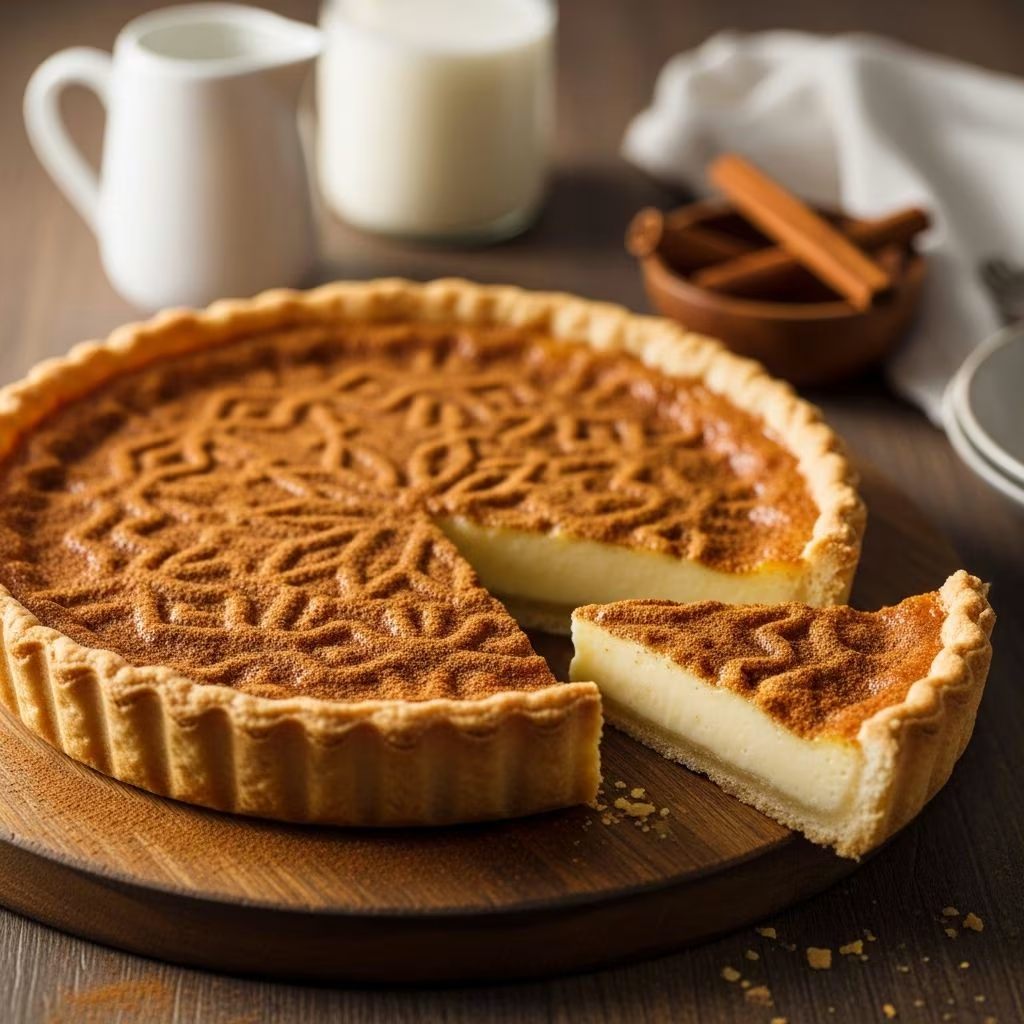
South African milk tart, known locally as melktert, stands as one of the nation’s most cherished desserts. This elegant treat combines a crisp, buttery pastry shell with a velvety custard-like filling finished with a dusting of warm cinnamon. The dessert represents a blend of Dutch and South African culinary traditions, passed down through generations and adapted with modern techniques. Whether served at family gatherings, tea time, or special occasions, milk tart remains a symbol of comfort and culinary heritage.
Understanding the Essence of Milk Tart
Milk tart distinguishes itself from other custard-based pastries through its unique balance of ingredients. Unlike Portuguese custard tarts or Chinese egg tarts, milk tart emphasizes a higher proportion of milk to eggs. This compositional difference creates a lighter, more delicate texture while allowing the milk flavor to shine through prominently. The filling relies on flour and cornstarch as thickening agents rather than relying solely on eggs, which gives the dessert its signature silky consistency without the heaviness associated with egg-dominant custards.
The tart’s appeal extends beyond its flavor profile. The contrast between the crisp, crumbly pastry exterior and the smooth, creamy interior creates a textural experience that makes each bite satisfying. This combination, along with the subtle warmth of cinnamon sprinkled across the top, contributes to milk tart’s enduring popularity across South Africa and beyond.
Essential Components: Pastry and Filling
Creating an authentic milk tart requires mastering two distinct components: the pastry crust and the custard filling. Each element demands attention to detail and proper technique to achieve the desired results.
The Pastry Foundation
The crust serves as the structural base for the entire dessert. A quality pastry crust requires cold butter, all-purpose flour, a small amount of sugar, salt, and an egg yolk for binding. The use of cold butter is paramount—it creates pockets of steam during baking, resulting in a light, flaky texture that shatters delicately when bitten. The flour provides structure, while sugar adds subtle sweetness that complements the creamy filling without overwhelming it.
Ice water facilitates the dough formation, bringing the ingredients together into a cohesive mixture without overworking the flour, which would develop excessive gluten and create a tough crust. Some variations employ cake flour instead of all-purpose flour, which produces an even more tender crumb due to its lower protein content.
The Custard Filling
The filling represents the heart of milk tart’s identity. The primary components include whole milk or full-fat milk, eggs, sugar, vanilla extract, and thickening agents such as cornstarch and flour. Full-fat milk proves essential to achieving a silky, luxurious texture; lower-fat alternatives may result in a thinner, less satisfying consistency.
Eggs provide structure and richness, though they typically comprise a smaller proportion than in traditional custard tarts. The sugar balances the milk’s natural flavor while contributing to the overall sweetness. Vanilla extract adds depth and complexity, creating layers of flavor that enhance the tart’s appeal. Ground cinnamon finishes the top layer, providing warmth and spice that has become synonymous with this dessert.
Ingredient Guide and Selection
| Component | Key Ingredients | Selection Tips |
|---|---|---|
| Pastry Crust | All-purpose flour, cold butter, sugar, salt, egg yolk, ice water | Use cold butter directly from the refrigerator and ensure water is as cold as possible for optimal flakiness |
| Filling | Whole milk, eggs, sugar, vanilla extract, cornstarch, flour, butter | Choose full-fat milk and fresh eggs; quality vanilla extract significantly impacts flavor |
| Topping | Ground cinnamon | Use freshly ground cinnamon when possible for maximum aroma and flavor intensity |
Some recipes incorporate sweetened condensed milk as an alternative or addition to regular milk, creating a richer, more indulgent filling. This variation adds caramel-like notes and deeper sweetness, appealing to those who prefer a more decadent dessert. Heavy cream or whipping cream may also be included for enhanced richness and texture.
Preparation Methods: Multiple Approaches
Milk tart can be prepared using several distinct techniques, each yielding slightly different results while maintaining the dessert’s essential character.
Method One: Single Bake with Uncooked Filling
This approach involves placing the filling into an unbaked pastry crust and baking both together in a single session. The filling is liquid or semi-liquid when poured, allowing it to set as the oven’s heat works through the tart. This method produces a more rustic result and requires careful attention to prevent the filling from overcooking while the pastry reaches desired doneness.
Method Two: Pre-Baked Crust with Cooked Filling
This technique involves blind baking the pastry shell first—partially baking it with weights to maintain its shape—before adding a pre-cooked filling. The filling is prepared separately on the stovetop until thickened, then poured into the already-baked crust. Some recipes then bake the filled tart briefly to set the custard further. This method provides greater control over both components and typically yields a more refined texture.
Method Three: Hybrid Technique
Contemporary recipes often blend these approaches, using a blind-baked pastry base while the filling partially cooks during preparation before being combined and baked again. This hybrid method offers the advantages of both techniques, producing a flaky crust while ensuring the filling achieves the ideal consistency and texture.
Step-by-Step Filling Preparation
Understanding the filling’s preparation process is crucial to achieving milk tart’s characteristic silky texture. The process begins with warming milk over medium heat until it reaches near-boiling temperature, though active boiling should be avoided.
While the milk heats, whisk together eggs, sugar, vanilla extract, cornstarch, and flour in a separate bowl until the mixture achieves a smooth paste consistency. This combination prevents lumps that could compromise the filling’s smoothness. Some recipes recommend separating eggs, folding in whipped egg whites at the end to create a lighter, airier texture.
The critical step involves tempering the egg mixture by gradually adding the warm milk while whisking continuously. Adding milk slowly prevents the eggs from cooking too rapidly, which would result in scrambled rather than custard-like consistency. Once properly tempered, the mixture is returned to the stovetop over medium heat, where it is stirred for approximately 10-12 minutes until thickened.
During this cooking phase, the cornstarch and flour activate, absorbing the milk and creating a thickened consistency. Butter is added near the end, enriching the filling and adding glossiness. The mixture should coat the back of a spoon when ready.
Variations and Creative Adaptations
While the traditional milk tart remains beloved, various adaptations have emerged throughout South Africa and internationally.
Alternative Crust Options
Some contemporary recipes utilize biscuit crumbs instead of traditional pastry, creating a no-bake or minimal-bake version. Tennis biscuits mixed with melted butter form a convenient and delicious base that requires no rolling or blind baking. This adaptation makes milk tart more accessible to home bakers with varying skill levels.
Filling Enhancements
Creative variations include the addition of flavored liqueurs, such as Amarula, which adds sophistication and subtle alcohol notes. Fruit versions incorporate fresh fruits as garnishes or additions to the filling, introducing tartness and visual appeal that contrasts with the creamy custard.
Individual Versus Family-Size Portions
Traditional milk tart can be prepared as a single large dessert or portioned into individual tartlets. Individual portions offer advantages for entertaining and portion control, while larger versions make impressive centerpieces for family gatherings.
Baking Considerations and Temperature Management
Successful milk tart preparation depends on proper oven temperature and baking time. Most recipes recommend baking at moderate temperatures, typically between 350-375°F (175-190°C), to allow the filling to cook gently while the pastry browns appropriately. Excessive heat may cause the crust to darken too quickly before the filling sets, while insufficient heat results in a soggy crust and undercooked filling.
Baking time varies based on whether the pastry is pre-baked and the filling’s initial temperature. A tart with pre-baked pastry and cooled filling may require 20-30 minutes, while a single-bake method might extend to 35-45 minutes. Visual cues matter more than exact timing—the filling should be set but still slightly jiggly in the very center when removed from the oven.
Cooling and Storage Guidance
Proper cooling ensures the milk tart sets to ideal consistency. After removal from the oven, the tart should rest at room temperature for at least 30 minutes before chilling. Refrigeration for several hours or overnight allows the filling to firm completely and flavors to meld. This advance preparation makes milk tart ideal for entertaining, as it can be prepared a day ahead and simply dusted with cinnamon before serving.
When stored in an airtight container in the refrigerator, milk tart maintains quality for 3-4 days. The dessert can be served chilled or at room temperature, depending on personal preference. Some people enjoy reheating slices briefly before serving for enhanced flavor release.
Frequently Asked Questions
Can I use alternative milks in milk tart?
While full-fat dairy milk produces optimal results, some bakers have experimented with alternatives like almond milk with varying degrees of success. Non-dairy options may produce a thinner filling or different flavor profile. For best results with alternative milks, choose full-fat varieties and consider adding extra cornstarch for proper thickening.
What causes a watery filling?
Insufficient thickening agents, inadequate cooking time, or using low-fat milk can result in a watery filling. Ensure all cornstarch and flour are fully cooked and activated before removing from heat. Cooking for the full 10-12 minutes at medium heat allows proper thickening.
How can I prevent a soggy crust?
Blind baking the pastry before adding filling significantly reduces sogginess. Additionally, ensuring the pastry is completely dry after blind baking and working quickly when adding filling helps maintain crust quality.
Is condensed milk necessary?
Condensed milk offers richness and additional sweetness but is not essential. Traditional recipes use regular milk with sugar, achieving excellent results. Condensed milk provides convenience and enhanced creaminess but represents an adaptation rather than a requirement.
Can milk tart be frozen?
While milk tart can be frozen for short periods, the custard filling may develop an grainy texture upon thawing. For best quality, consume within 3-4 days of preparation and store in the refrigerator rather than freezer.
Serving Suggestions and Occasions
Milk tart versatility allows it to shine in various settings. Serve as a dessert course after formal dinners, or present at afternoon tea time accompanied by coffee or tea. Individual tartlets work beautifully for dinner parties, while large format versions suit family gatherings and celebrations.
The tart’s mild flavor profile complements both fresh fruit and light beverages. A dusting of extra cinnamon just before serving enhances aroma and visual appeal. Some serve milk tart slightly warm with vanilla ice cream for a more indulgent variation.
Conclusion: Embracing Culinary Tradition
South African milk tart represents far more than a simple dessert—it embodies cultural heritage, family tradition, and the joy of home baking. The combination of crispy pastry, creamy filling, and warm cinnamon spice creates a dessert that appeals across generations and occasions. Whether following traditional methods or experimenting with modern adaptations, milk tart offers rewarding baking experiences that connect us to culinary traditions while allowing room for personal creativity. With proper technique and attention to ingredient quality, anyone can master this beloved South African classic.
References
- Milk tart (melktert) – Caroline’s Cooking — Caroline’s Cooking. Accessed April 2026. https://www.carolinescooking.com/milk-tart-melktert/
- Traditional South African Milk Tart (Melktert) – Tantalise My Taste Buds — Tantalise My Taste Buds. Accessed April 2026. https://www.tantalisemytastebuds.com/traditional-south-african-milk-tart/
- South African Milk Tart (Light & Fluffy Custard Pie) – Baking for Friends — Baking for Friends. Accessed April 2026. https://bakingforfriends.com/south-african-milk-tart/
- The Best Classic South African Unbaked Milk Tart – Drizzle and Dip — Drizzle and Dip. 2023-09-20. https://drizzleanddip.com/2023/09/20/classic-south-african-unbaked-milk-tarts/
- South African Milk Tart Recipe – Simply Delicious Food — Simply Delicious Food. Accessed April 2026. https://simply-delicious-food.com/south-african-milk-tart-recipe/