Sour cherry cheesecake represents an elegant convergence of culinary traditions, blending the dense creaminess of a classic dessert with the bright, tart notes of preserved fruit. This sophisticated treat has earned its place in both home kitchens and professional bakeries, offering bakers an opportunity to explore texture contrasts and flavor combinations. Whether you’re preparing this dessert for a special occasion or simply indulging a passion for baking, understanding the nuances of sour cherry cheesecake can transform your approach to this beloved classic.
Understanding Your Ingredient Foundation
Creating an exceptional sour cherry cheesecake begins with thoughtful ingredient selection. The base of this dessert typically incorporates digestive biscuits combined with melted butter, forming a sturdy foundation that supports the layers above. The filling demands full-fat cream cheese at room temperature, a critical factor that ensures smooth blending and prevents lumps from forming throughout the batter.
The inclusion of Greek-style yogurt or sour cream adds complexity to the filling texture, creating a lighter consistency compared to traditional New York-style cheesecakes while maintaining remarkable creaminess. Sugar serves not merely as a sweetener but as an integral component that influences both the texture and the flavor profile of the finished dessert. Eggs provide structural support, while vanilla extract and lemon zest contribute aromatic elements that enhance the overall sensory experience.
Sourcing Quality Sour Cherries
The star ingredient of this dessert deserves particular attention. Fresh sour cherries present a challenge in most markets, appearing only briefly during summer months in specific regions. Frozen sour cherries offer a practical alternative that delivers exceptional results, arriving pre-pitted and maintaining their tangy character throughout storage. These frozen fruits can be sourced from specialty health food retailers, international delis, and increasingly from mainstream supermarket frozen sections.
For those unable to locate traditional sour cherries, sweet frozen cherries provide an acceptable substitute, though they require formula adjustments. Sweet cherries contain significantly less acidity, necessitating a reduction in the sugar quantity used for the topping by approximately one-third to maintain the desired flavor balance. Understanding these substitutions empowers bakers to adapt recipes according to their regional availability and personal preferences.
Crafting the Perfect Base Layer
The foundation of your cheesecake deserves meticulous attention, as it determines whether your final product features the textural contrast between crumb crust and filling that distinguishes excellent cheesecake. Begin by processing digestive biscuits until they resemble coarse sand, or employ a more tactile approach by placing them in a sealed plastic bag and crushing them with a rolling pin. This manual method, while requiring more effort, offers a therapeutic quality that many home bakers appreciate.
Combine the crushed biscuits with melted unsalted butter, creating a mixture with the consistency of wet sand. Press this mixture firmly into your prepared springform pan, distributing it evenly across the bottom. A flat-bottomed cup or glass provides an ideal tool for evening out the surface and ensuring uniform density throughout the base layer. This step prevents uneven baking and creates the foundation for a cheesecake that slices cleanly without crumbling.
Refrigerate the prepared base before adding the filling mixture. This chilling period allows the butter to set, creating a more stable structure that can support the substantial weight of the cheesecake batter without shifting or crumbling during the baking process.
Building the Creamy Filling
The filling represents the heart of this dessert, where technique and ingredient quality converge to create the characteristic smooth texture that distinguishes exceptional cheesecake. Begin by ensuring that your cream cheese reaches room temperature—cold cream cheese resists smooth blending and creates lumps that persist throughout mixing. Using brick-form cream cheese rather than whipped spreads prevents the incorporation of excess air, which can lead to cracks forming on the surface during baking.
Combine the softened cream cheese with Greek yogurt or sour cream, beating until the mixture becomes uniformly smooth. Gradually incorporate sugar, mixing thoroughly before adding eggs one at a time. This sequential approach prevents overmixing while ensuring that each component fully integrates. The addition of cornstarch or plain flour serves to stabilize the filling, reducing the likelihood of cracking and contributing to the dense texture characteristic of quality cheesecake.
Vanilla extract and freshly grated lemon zest introduce aromatic complexity, while a small quantity of lemon juice adds subtle acidity that brightens the overall flavor profile without overwhelming the delicate cream cheese base. The precise balance of these elements distinguishes a well-executed cheesecake from one that falls flat on the palate.
Mastering the Baking Process
Temperature control throughout the baking process cannot be overstated. Preheating your oven to approximately 160°C (320°F) creates the low-temperature environment essential for gradual, even cooking. Baking at excessively high temperatures causes the exterior to set while the interior remains underbaked, resulting in that characteristic cracked surface that signals improper technique.
The baking duration typically extends between 60 and 75 minutes, though individual oven variations necessitate vigilance. The cheesecake has reached appropriate doneness when the filling jiggles slightly in the center when the pan is gently shaken—a small amount of movement indicates residual carryover cooking that will complete during the cooling phase. A completely set appearance suggests overbaking, resulting in a dense, slightly grainy texture.
Upon removal from the oven, allow the cheesecake to cool gradually at room temperature for approximately one hour. This slow cooling process prevents thermal shock, which can cause the filling to contract excessively and crack. Subsequently, refrigerate for a minimum of four hours, though overnight chilling produces superior results by allowing flavors to develop and the texture to firm completely.
Creating an Exceptional Sour Cherry Topping
The topping transforms a standard cheesecake into an elegant dessert worthy of special occasions. Whether preparing a simple cherry garnish or an elaborate compote, this component provides the tart contrast that distinguishes sour cherry cheesecake from its more conventional counterparts.
Simple Cherry Compote Method
Combine fresh or thawed frozen sour cherries with sugar and a small quantity of water in a saucepan. Heat the mixture over medium flame, stirring frequently until the liquid thickens sufficiently to coat the back of a spoon—typically requiring five to ten minutes of cooking. The cherries will gradually soften and release their juice, creating a thick, spoonable compote. A cornstarch slurry whisked into the compote at this stage further thickens the mixture without compromising the bright fruit flavor.
For more elaborate preparations, ground spices such as cinnamon and cloves contribute warmth and complexity. These warm spices complement rather than mask the sour cherry’s inherent tartness, creating nuanced flavor layers. Remove the compote from heat before incorporating vanilla extract, preserving its aromatic qualities. Allow the finished topping to cool completely before spreading across the chilled cheesecake surface, preventing heat from compromising the carefully set filling.
Spiced Cherry Variation
Advanced preparations incorporate aromatic spices that elevate the sour cherry topping into something more refined. Begin with the basic compote preparation, then introduce ground cloves, cinnamon, and a mere pinch of kosher salt to the mixture as it simmers. These spices create a flavor profile reminiscent of Scandinavian and Eastern European dessert traditions, where such combinations have been refined over centuries. The salt acts as a flavor amplifier, intensifying the cherry’s natural tartness while balancing any residual sweetness from the added sugar.
Presentation and Serving Considerations
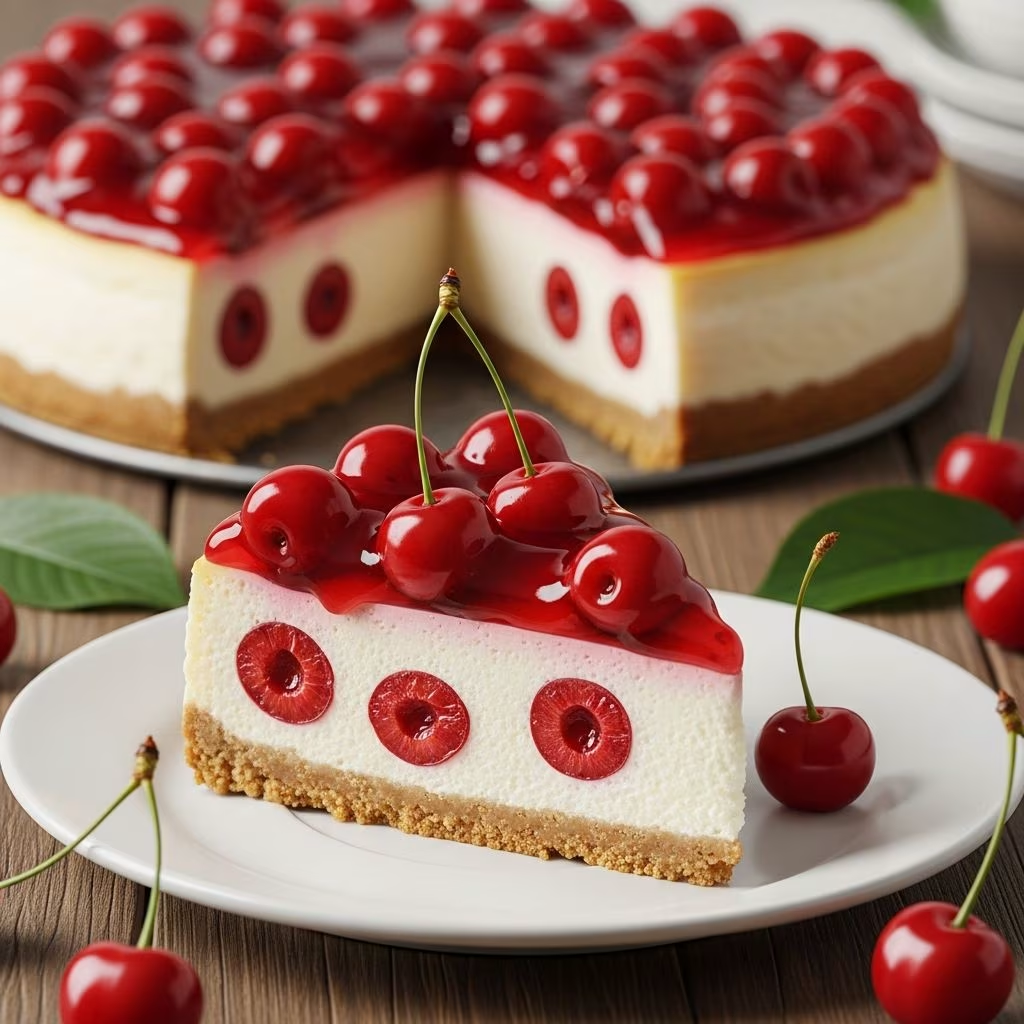
The visual presentation of your finished cheesecake significantly enhances the dining experience. A layer of glossy, jewel-toned sour cherry compote spread across the pale cream filling creates an appealing contrast that immediately suggests the flavor combination awaiting consumers. Chocolate shavings, when the recipe permits, add textural sophistication and visual drama.
Fresh mint leaves positioned atop individual servings introduce a pop of color while suggesting the dessert’s refined character. These garnishes extend beyond mere decoration, contributing subtle flavor notes that round out the overall sensory experience. Serve each slice at refrigerated temperature, allowing the cheesecake’s creamy texture to shine while the compote provides cool contrast.
Adaptations and Alternative Approaches
No-bake cheesecake variations offer an accessible entry point for bakers who prefer to avoid oven-based preparation. These versions rely on whipped cream folded into the cream cheese mixture, achieving a lighter, mousse-like texture. The technique involves beating heavy cream to stiff peaks before gently folding it into a sweetened cream cheese base, creating an aerated filling that sets through refrigeration rather than heat.
Such preparations prove ideal for summer entertaining or for those with oven limitations. The no-bake approach paradoxically requires more attention to detail regarding ingredient temperature and mixing technique, as the structure depends entirely on the incorporation of air and the setting power of refrigeration rather than the stabilizing effects of heat and eggs.
Troubleshooting Common Challenges
| Issue | Cause | Solution |
|---|---|---|
| Cracked surface | Rapid temperature changes or overbaking | Ensure gradual cooling and maintain moderate oven temperature |
| Runny filling | Insufficient baking time or cool interior | Extend baking period and verify oven temperature accuracy |
| Dense, grainy texture | Overmixing or excessive heat | Mix only until ingredients combine; reduce oven temperature by 10-15 degrees |
| Separating compote | Improper thickening or temperature shock | Use cornstarch slurry; allow compote to cool completely before application |
Frequently Asked Questions
Can I prepare sour cherry cheesecake in advance?
Cheesecake actually improves when prepared one to two days ahead of serving, as flavors meld and the texture firms completely. Store covered in the refrigerator for up to four days. Freezing is possible for up to one month, though the texture may become slightly grainy upon thawing.
What distinguishes sour cherries from sweet cherries in this context?
Sour cherries contain considerably more acidity and less natural sugar than their sweet counterparts. This tartness provides the flavor contrast essential to the finished dessert, preventing it from becoming cloying. Sweet cherries can substitute but require reduced added sugar to maintain appropriate balance.
Is it essential to use a springform pan?
Springform pans facilitate removal without compromising appearance, but regular cake pans work with additional care. Line a conventional pan with parchment paper, extending beyond the edges for easier extraction after the cheesecake cools completely.
How do I prevent my cheesecake from cracking?
Cracks result from rapid temperature changes or overbaking. Maintain moderate oven temperature, avoid opening the oven door during baking, allow gradual cooling at room temperature, and verify doneness by observing a slight jiggle in the center rather than complete rigidity.
Conclusion: Mastering This Elegant Dessert
Sour cherry cheesecake represents an achievable yet impressive dessert that rewards careful attention to technique and ingredient quality. The combination of tangy fruit and creamy filling creates flavor and texture contrasts that satisfy sophisticated palates while remaining accessible to home bakers willing to invest modest effort. Whether you follow traditional baked preparations or explore no-bake alternatives, the fundamental principles of proper temperature management, thoughtful ingredient selection, and patient cooling ensure success. Each element—from the butter-soaked biscuit foundation through the silky filling to the glossy cherry topping—contributes to a finished dessert worthy of celebration.
References
- Sour Cherry Cheesecake Recipe — Love Food / Yasmin Khan. 2024. https://www.lovefood.com/recipes/109760/yasmin-khan-sour-cherry-cheesecake-recipe
- Sour Cherry Topped New York Style Cheesecake — Gesine Prado. https://www.gesine.com/post/sour-cherry-topped-new-york-style-cheesecake
- Creamy Cheesecake with Sour Cherry Compote — The Eating Emporium. https://theeatingemporium.com/creamy-cheesecake-with-sour-cherry-compote/
- Sour Cherry Cheesecake Bars — Un’americana in Cucina / Samantha Seneviratne. 2016. https://www.unamericanaincucina.com/en/2016/05/sour-cherry-cheesecake-bars/
- No Bake Sour Cherries Cheesecake (agriovyssino) — Kopiaste. 2012. https://www.kopiaste.org/2012/07/agriovyssino-wild-sour-cherries-cheesecake/