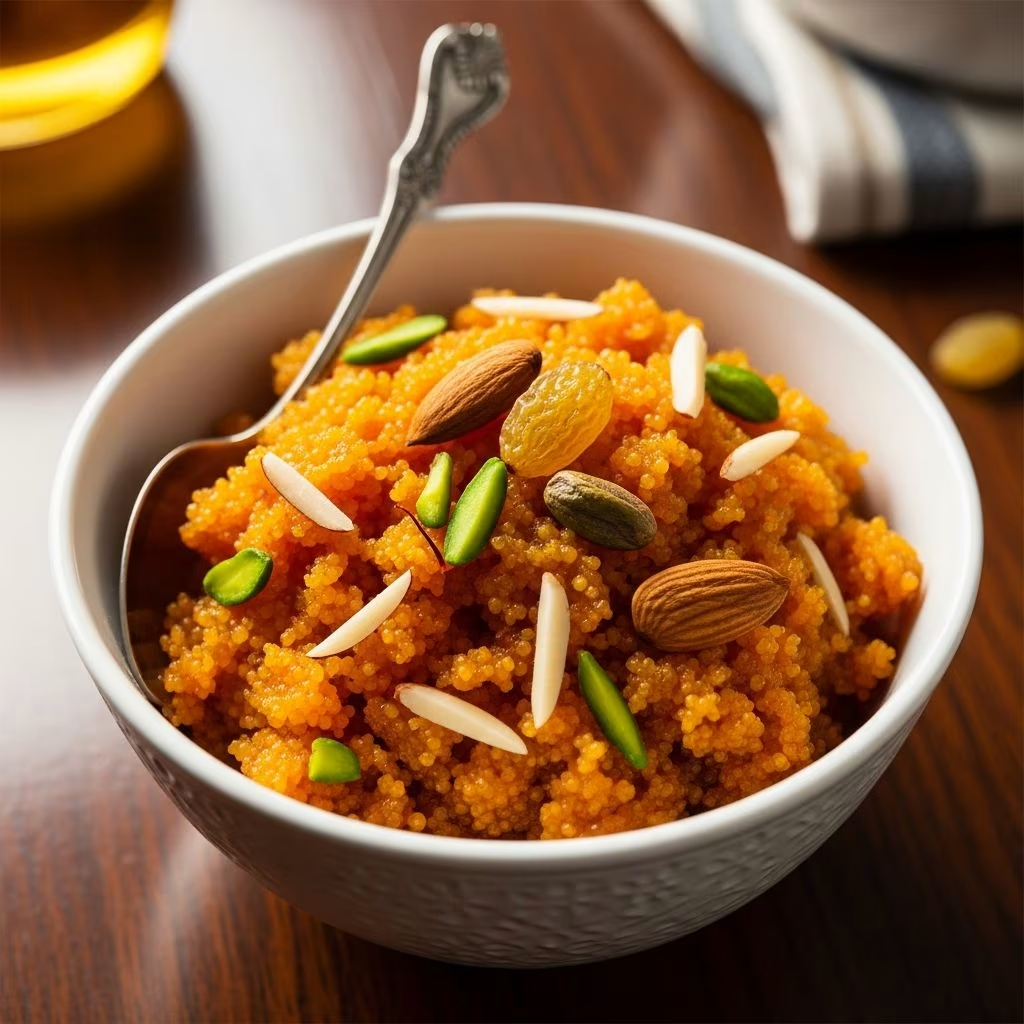
Sooji halwa, also known as suji ka halwa or rava sheera, stands as a cornerstone of Indian confectionery. This simple yet profound dessert transforms humble semolina into a luxurious treat through patient roasting in ghee, infusion with sugar syrup, and subtle aromatic enhancements. Revered in households and temples alike, it embodies comfort and celebration with its golden hue, nutty aroma, and velvety texture.
The Essence of Sooji Halwa
At its core, sooji halwa relies on a trio of pantry staples: semolina (sooji or rava), clarified butter (ghee), and sugar. These ingredients harmonize during cooking to create a pudding that is neither too dense nor overly loose. The roasting process caramelizes the semolina, developing deep flavors that elevate the dish beyond mere sweetness. Variations introduce milk for creaminess, nuts for crunch, or alternative sweeteners like jaggery for a rustic twist.
Originating from the Indian subcontinent, this dessert transcends regional boundaries, appearing in Pakistani, North Indian, and South Indian cuisines. It serves as prasad in temples, a festive offering during Diwali or Ganesh Chaturthi, and an everyday indulgence. Its appeal lies in its accessibility—requiring no ovens or fancy equipment—yet yielding restaurant-quality results with practice.
Essential Ingredients for Authentic Flavor
Selecting quality components is paramount for superior sooji halwa. Here’s a breakdown of key elements:
- Semolina (Sooji/Rava): Opt for fine or coarse varieties based on texture preference. Fine sooji yields a smoother pudding, while coarse adds delightful graininess. Use 1 cup (about 160g) as a base.
- Ghee: The flavor backbone, providing richness and aroma. Homemade or high-quality store-bought is ideal; ½ to 1 cup ensures the halwa doesn’t stick and releases glossy separation.
- Sugar: Balances sweetness; ¾ to 1 cup suffices for balanced taste. Adjust per palate, dissolving fully in hot water or milk.
- Liquid Base: Water for classic lightness, milk for opulence, or a 1:1 mix. 2 to 3 cups determines moisture—less for dense, more for porridge-like.
- Aromatics and Add-Ins: Cardamom powder (½ tsp), saffron strands, rose water, nuts (almonds, cashews), and raisins for fragrance and texture.
| Ingredient | Quantity (1 cup sooji) | Role |
|---|---|---|
| Semolina | 1 cup (160g) | Base structure |
| Ghee | ½-1 cup | Roasting fat, flavor |
| Sugar | ¾-1 cup | Sweetener |
| Water/Milk | 2-3 cups | Moisture |
| Cardamom | ½ tsp | Aroma |
Step-by-Step Guide to Perfection
Mastering sooji halwa demands attention to heat control and timing. This classic method serves 4-6 and takes 20-25 minutes.
Prepare Syrup: In a saucepan, combine 2.5 cups water (or milk-water mix) with sugar. Heat until dissolved and simmering. Infuse with cardamom, saffron, or rose water. Set aside hot.
Roast Nuts: Heat ½ cup ghee in a wide pan over medium flame. Fry chopped almonds, cashews (2 tbsp each), and raisins until golden and plump. Remove half for garnish.
Roast Semolina: Lower heat to low-medium. Add sooji, stirring continuously for 10-20 minutes until it turns deep golden-brown and emits nutty fragrance. Patience here prevents raw taste and ensures fluffiness.
Combine and Cook: Pour hot syrup gradually into roasted sooji, stirring vigorously to avoid lumps. The mixture will bubble—cover partially if needed. Cook 5-7 minutes until thickened, ghee separates, and halwa masses together.
Rest and Serve: Turn off heat, mix in remaining nuts. Cover for 5 minutes to steam. Serve warm, garnished with slivered pistachios or rose petals.
Pro Tips for Flawless Results
- Roast on low heat to avoid burning; color shift from pale to caramel signals readiness.
- Hot syrup into hot sooji prevents hardening; cold liquid causes graininess.
- For temple-style, incorporate 1-2 tsp besan (gram flour) with sooji for extra body.
- Vegan adaptation: Substitute ghee with coconut oil or neutral oil.
- Storage: Refrigerate up to 3 days; reheat with a splash of milk for freshness.
Delicious Variations to Explore
Sooji halwa’s versatility invites creativity while honoring tradition.
- Milk-Rich Version: Replace water with full-fat milk for creamy kesari-like texture. Evaporated milk adds concentration.
- Jaggery Twist: Dissolve 1 cup jaggery in 2.5 cups water, strain impurities. Pairs with wheat flour (¼ cup) for earthy depth.
- Besan-Infused: Blend 1-2 tsp gram flour during roasting for nuttier profile, popular in temple prasad.
- Fruit-Enhanced: Stir in pureed mango or pineapple post-cooking for tropical flair.
- Diet-Friendly: Use low-glycemic sweeteners like coconut sugar; opt for less ghee.
Cultural Significance and Serving Ideas
Beyond kitchens, sooji halwa symbolizes prosperity and devotion. In Hindu traditions, it’s offered as bhog during pujas, its simplicity reflecting purity. At weddings and births, it heralds joy. Pair with pooris for breakfast, as a ladoo by shaping portions, or layer in trifle with yogurt.
Serve warm in bowls, topped with nuts, or chilled for a fudgy bite. It complements chai perfectly, making it ideal for tea-time.
Common Mistakes and Fixes
| Issue | Cause | Solution |
|---|---|---|
| Lumpy texture | Cold liquid added | Use boiling syrup |
| Raw semolina taste | Insufficient roasting | Roast 15+ mins till brown |
| Too oily | Excess ghee | Drain or use measured amount |
| Not binding | Too much liquid | Cook longer on low heat |
Frequently Asked Questions
Can I make sooji halwa without ghee?
Yes, oil works, but ghee imparts authentic buttery essence. For vegan, coconut oil mimics richness.
How long does it last?
Up to 3 days refrigerated; freeze portions for a month. Reheat gently.
Is coarse or fine semolina better?
Coarse for texture, fine for smoothness. Both excel with proper roasting.
Why does my halwa turn hard?
Often from under-roasting or cold liquid. Ensure even browning and hot infusion.
Can I add flavors like vanilla?
Traditionalists prefer cardamom/saffron, but vanilla or cinnamon offer modern twists.
Nutritional Snapshot
Per serving (1/6 recipe): ~350 calories, rich in carbs for energy, with fats from ghee providing satiety. Nuts add protein and healthy fats. Moderation advised due to sugar content.
References
- My Grandmother’s Suji Halwa Recipe — Sinfully Spicy. 2023. https://sinfullyspicy.com/sooji-semolina-halwa/
- Sooji Halwa Recipe (Indian Halwa) — Swasthi’s Recipes. 2024. https://www.indianhealthyrecipes.com/halwa/
- Amazing Sooji Halwa — My Food Story. 2023. https://myfoodstory.com/sooji-halwa/
- Sooji Ka Halwa Recipe — Yummy Tummy Aarthi. 2022. https://www.yummytummyaarthi.com/sooji-ka-halwa-recipe/
- Perfect Seeroh (Sooji Halwa) — Sanjana Feasts. 2021-10-01. https://www.sanjanafeasts.co.uk/2021/10/perfect-seeroh-sooji-halwa/