Understanding This Iconic Hungarian Creation
Somlói Galuska represents one of Hungary’s most sophisticated and labor-intensive dessert traditions, a true testament to the country’s rich culinary heritage. This elegant creation transcends the simplicity of typical cakes, offering instead a complex interplay of textures, flavors, and meticulous construction techniques. The dessert earned its reputation not through chance but through decades of refinement at Budapest’s most prestigious dining establishments.
The name itself carries historical significance, rooted in Hungarian legend and regional pride. According to culinary folklore, a renowned confectioner from Hungary created this elaborate dessert as a tribute to his wife, who hailed from the Somló wine region. This romantic origin story has become intertwined with the dessert’s identity, elevating it beyond mere pastry to the status of cultural treasure. The dessert’s journey from a regional specialty to international recognition demonstrates how exceptional technique and thoughtful composition can transform humble ingredients into something truly extraordinary.
The Architectural Foundation: Three-Part Cake Construction
At its core, Somlói Galuska rests upon three distinct sponge cake layers, each engineered with different flavor profiles and textural qualities. This tripartite structure creates the foundational complexity that distinguishes this dessert from conventional layer cakes.
The Plain Vanilla Layer
The first layer maintains pure simplicity—eggs, sugar, and flour combined to create an airy, delicate sponge. This neutral canvas serves as an essential contrast to the more assertively flavored companions. The vanilla layer provides structural support while allowing other flavors to shine through without competition.
The Walnut-Enriched Tier
The second layer introduces ground walnuts into the batter, infusing the cake with nutty undertones and a slightly denser crumb structure. The walnuts contribute both flavor depth and textural complexity, preventing the dessert from becoming monotonously uniform. This layer demonstrates how complementary ingredients can enhance rather than dominate the overall composition.
The Chocolate Accent
The final cake layer incorporates unsweetened cocoa powder, creating a subtle chocolate presence without overwhelming the palate. This measured approach to chocolate integration distinguishes the Somlói from American-style chocolate desserts, which often rely on intensity rather than nuance. The cocoa layer provides visual interest and another flavor dimension to the final assembly.
The Essential Custard Foundation
Perhaps no component proves more critical to authentic Somlói Galuska than the vanilla custard cream. This silken sauce binds the three cake layers together while providing moisture, richness, and the dessert’s primary sweetness.
Traditional preparation begins with heating whole milk infused with vanilla beans, allowing the pod’s aromatic properties to fully permeate the liquid. Meanwhile, egg yolks combine with sugar and flour to create a stabilizing mixture. The tempering process—slowly introducing hot milk to the egg mixture while whisking constantly—requires patience and attention to prevent curdling. Once combined and returned to heat, the custard must reach a full boil while maintaining continuous agitation, typically requiring fifteen to twenty minutes of dedicated work. This extended cooking ensures both complete gelatinization of the flour and proper pasteurization of the eggs.
After cooking, the custard undergoes an ice bath cooling process, which halts the cooking and prepares it for assembly. This careful attention to temperature management throughout production ensures a custard with ideal consistency—thick enough to support the cake layers without being grainy or separated.
Building Flavor with Complementary Components
The Rum-Infused Syrup
A carefully constructed syrup provides the moisture that keeps the assembled dessert tender and connected. This mixture of sugar and water, enhanced with strips of citrus zest, simmers until reduced to approximately half its original volume. After cooling, the addition of quality rum creates a syrup with complex aromatics and subtle alcohol undertones that contribute significantly to the dessert’s sophisticated profile.
Walnuts and Raisins
Beyond the walnut layer itself, additional ground walnuts and plump raisins are distributed throughout the assembly, providing textural contrast and bursts of concentrated flavor. These additions connect each layer while maintaining the structural integrity of the finished dessert.
The Chocolate-Rum Sauce
The final sauce component combines high-quality bittersweet chocolate with a rum-sugar syrup, creating a glossy topping that adds visual drama and sophisticated flavor. Unlike American chocolate sauces that emphasize sweetness, this Hungarian version balances cocoa intensity with the subtle burn of alcohol, preventing excessive sweetness while maintaining proper sauce consistency.
Baking Process and Technical Considerations
| Cake Layer | Key Ingredients | Baking Temperature | Baking Duration |
|---|---|---|---|
| Vanilla Layer | Eggs, Sugar, Flour | 350°F (177°C) | 12-15 minutes |
| Walnut Layer | Eggs, Sugar, Ground Walnuts, Flour | 350°F (177°C) | 15 minutes |
| Chocolate Layer | Eggs, Sugar, Cocoa Powder, Flour | 350°F (177°C) | 12-15 minutes |
Each cake layer demands individual attention and careful timing. The batter for each variation uses identical proportions of eggs and sugar beaten to maximum volume, with additional components folded in gently to preserve the incorporation of air. Parchment paper lining prevents sticking while allowing easy inversion once baked.
The springback test—pressing the center of each cake layer gently with fingertips to assess doneness—provides the most reliable indication of readiness. Properly baked layers should bounce back to their original position while remaining tender. Overbaking risks creating a dry final product, while underbaking compromises structural integrity.
Assembly: Creating the Layered Masterpiece
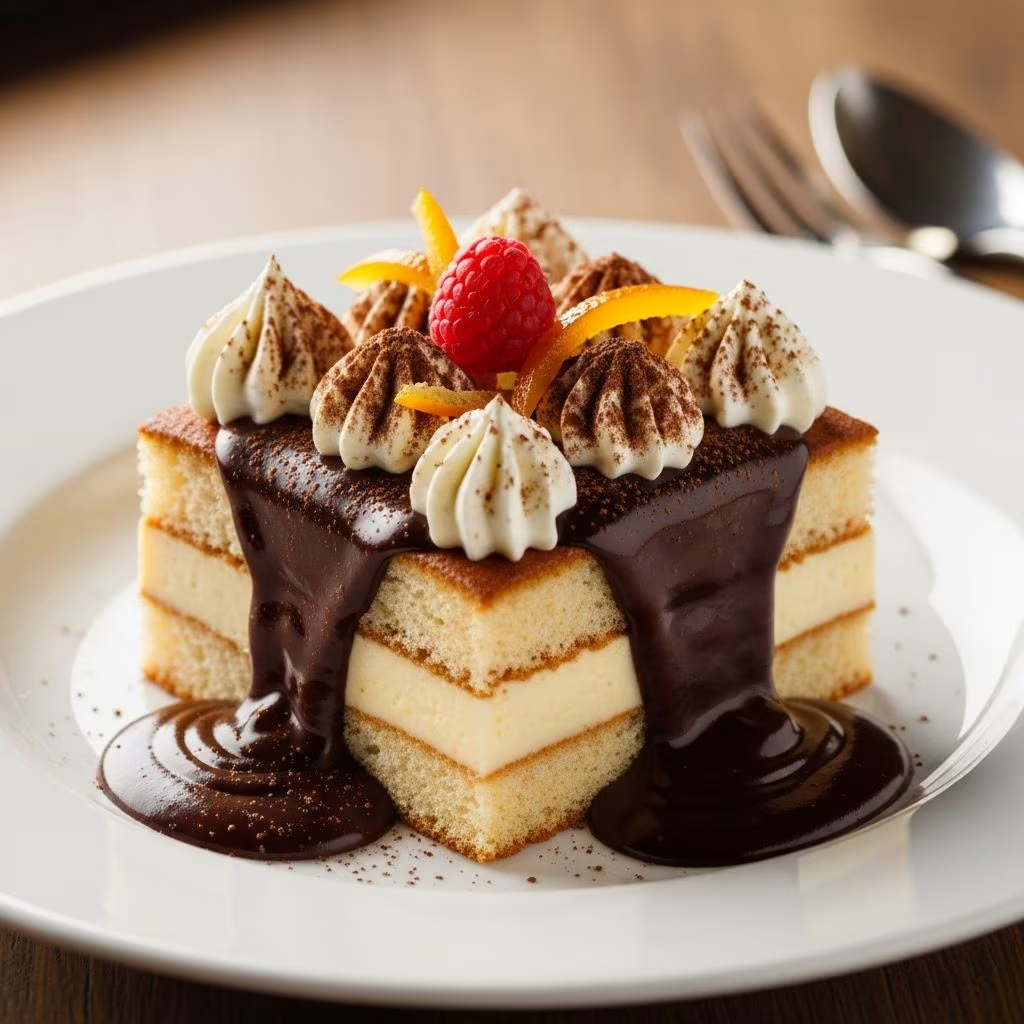
Assembly begins with careful arrangement of the three cooled cake layers, typically done by cutting each into rectangular portions matching the original baking pan dimensions. The layers are then reassembled, creating a new structure infused with custard, rum syrup, and other embellishments between each section.
Distribution of complementary ingredients—raisins, walnuts, and the rum syrup—occurs during this critical phase, ensuring even flavor distribution throughout the finished dessert. Traditional presentation involves cutting the assembled cake into portions and scooping using a two-inch ice cream scoop to create rounded balls that exemplify the dessert’s elegant character.
Following assembly, the dessert requires at least twenty-four hours of refrigeration before serving, allowing flavors to mature and meld into a cohesive whole. This essential resting period permits the custard to set properly while the rum syrup fully penetrates all layers, transforming distinct components into an integrated creation.
Presentation and Service Traditions
Unlike casual American desserts served on plates with minimal adornment, Somlói Galuska demands theatrical presentation befitting its sophisticated character. Individual portions are arranged in chilled bowls or on presentation plates, immediately providing visual context for what follows.
Whipped cream piped using a pastry bag with open star tip creates elegant rosettes crowning each portion, adding both textural contrast and visual sophistication. The final drizzle of room-temperature chocolate-rum sauce completes the composition, creating an interplay of warm sauce against cold cream and cake.
Serving temperature matters considerably; the contrast between chilled cake and cream against warm sauce creates a sensory experience that cannot be replicated if components fail to maintain proper temperatures. Some presentations include a light dusting of cocoa powder or finely grated chocolate as a final garnish.
Historical Recognition and Cultural Significance
The dessert’s international breakthrough occurred at the 1958 World’s Fair, where it garnered prestigious professional recognition and introduced this Hungarian specialty to audiences beyond Budapest’s dining elite. This validation elevated Somlói Galuska from regional specialty to globally acknowledged masterpiece, establishing it as an essential component of Hungarian culinary identity.
The dessert originated at Gundel, Budapest’s iconic restaurant, where maitre d’hôtel Károly Gollerits conceptualized the creation, and pastry chef József Béla Szőcs executed the vision through meticulous technique and thoughtful ingredient selection. This collaboration between front-of-house vision and back-of-house expertise demonstrates how great dishes emerge from unified culinary philosophy.
Ingredient Selection and Quality Considerations
Success with Somlói Galuska depends significantly on ingredient selection. Room-temperature eggs incorporate air more efficiently, supporting lighter cake layers. Unbleached all-purpose flour provides appropriate protein content for structure without creating toughness.
Quality vanilla beans offer superior flavor compared to vanilla extract alone, though the extract serves as a acceptable alternative for those with access limitations. Fresh citrus zests contribute aromatic complexity that dried or bottled versions cannot replicate.
The rum selection deserves careful consideration; golden rum with sufficient body provides warmth and complexity without harsh alcohol notes that detract from refined flavors. Similarly, high-quality bittersweet chocolate with sixty to seventy percent cocoa solids ensures the sauce contributes depth rather than cloying sweetness.
Frequently Asked Questions
How long does Somlói Galuska stay fresh?
Properly stored in refrigeration, this dessert maintains optimal quality for three to four days, though the custard-based component means extended storage eventually compromises texture. The assembled structure continues developing flavor during the first forty-eight hours, reaching peak complexity before subtle degradation begins.
Can Somlói Galuska be made without alcohol?
While possible, omitting rum eliminates a defining characteristic of the dessert’s flavor profile. Substituting with additional citrus zest or vanilla creates a different creation that may appeal to some but represents a departure from tradition. Some bakers reduce rather than eliminate alcohol, allowing heat to evaporate much of the ethanol while retaining the rum’s flavor compounds.
What makes this different from other trifles?
Unlike English trifles built with sponge fingers and jam, Somlói Galuska features custom-formulated cake layers combined with fewer but more deliberately selected components. The precision of construction and restraint in ingredient selection distinguish this Hungarian creation from its Western counterparts.
Can portions be made in advance?
The assembled dessert maintains quality when properly stored, but individual portions scooped from the main structure should be served within one to two hours of plating to ensure optimal presentation and textural contrast between components.
Mastering the Technique
Creating exceptional Somlói Galuska demands patience, precision, and respect for each component’s role within the larger composition. The dessert rewards careful attention at every stage—from egg preparation through final plating—with results that justify the investment of time and effort.
This is not a dessert for rushed preparation or ingredient substitution driven by convenience. Instead, it represents a deliberate choice to engage with culinary tradition, to honor techniques refined over decades, and to create something genuinely transcendent for discerning palates. For those willing to undertake the journey, Somlói Galuska offers rewards that extend far beyond simple satisfaction.
References
- Hungarian Trifle – Somlói Galuska — Sweet Thought. Accessed April 7, 2026. https://sweetthought.ca/recipe/hungarian-trifle-somloi-galuska/
- SOMLO TRIFLE – SOMLÓI GALUSKA — Zsuzsa Is In The Kitchen. August 2011. https://zsuzsaisinthekitchen.blogspot.com/2011/08/somlo-trifle-somloi-galuska.html
- Hungarian Recipe Of The Week: Somlói Galuska — XpatLoop.com. December 2021. https://xpatloop.com/channels/2021/12/hungarian-recipe-of-the-week–somloi-galuska.html