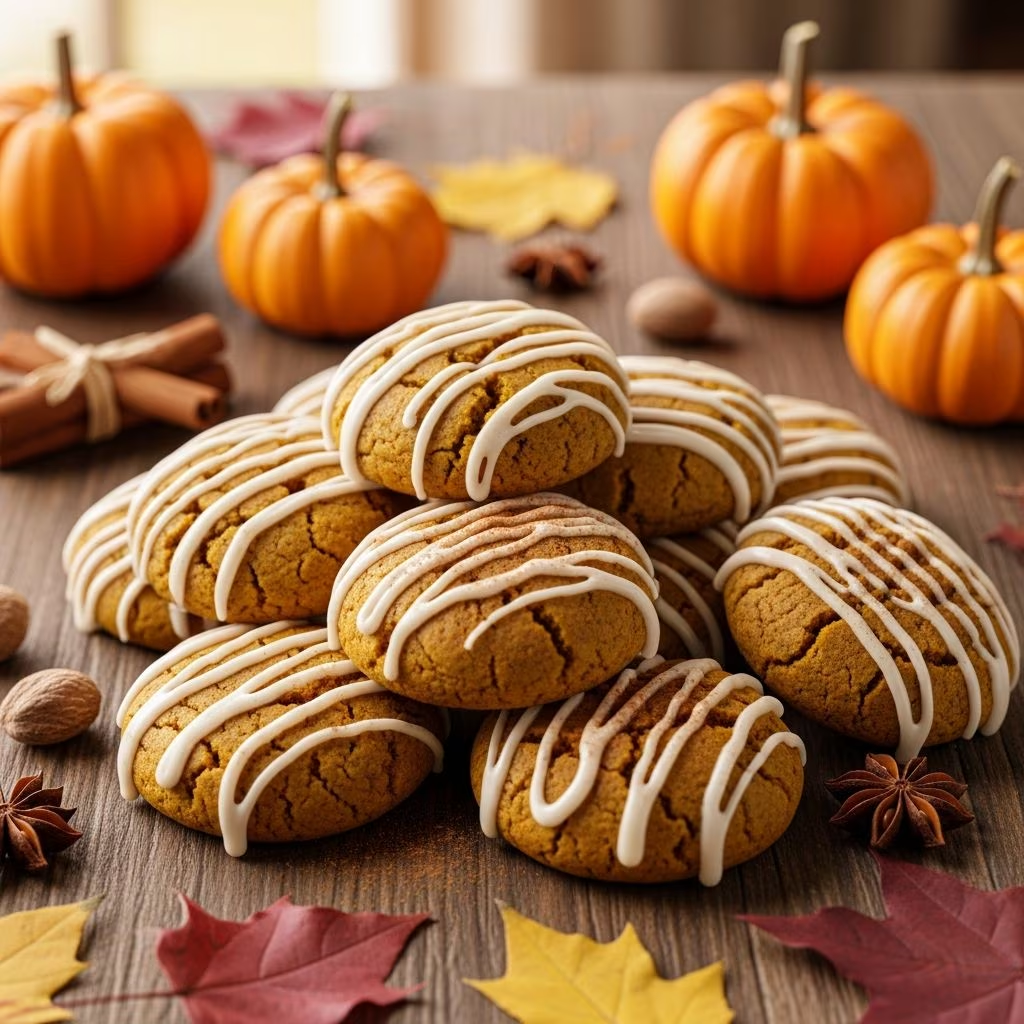
As the autumn season arrives, home bakers often search for that quintessential fall dessert that captures the warmth and comfort of the changing season. One timeless favorite that consistently delights both experienced bakers and novices alike is the soft, cake-like pumpkin cookie topped with smooth, creamy icing. These treats combine the earthy sweetness of pumpkin puree with warming spices, creating a dessert that feels both indulgent and seasonally appropriate.
The appeal of pumpkin-based baked goods extends beyond mere flavor. The vibrant orange hue of pumpkin puree adds visual appeal to any dessert spread, while the spices used—cinnamon, nutmeg, ginger, and cloves—evoke memories of fall gatherings and festive celebrations. Whether you’re preparing treats for a family gathering, bringing a contribution to a social event, or simply craving something special on a quiet afternoon, understanding how to craft these cookies from scratch empowers you to create something far superior to store-bought alternatives.
Understanding Your Ingredients and Their Roles
The foundation of exceptional pumpkin cookies begins with understanding each ingredient’s contribution to the final product. Unlike cookies that rely on a single dominant flavor, pumpkin cookies require a delicate balance of components working in concert.
The Fat Component
Unsalted butter serves as the primary fat, and using it softened at room temperature is essential. Softened butter creams more effectively with sugars, incorporating air that creates a light, fluffy texture in the finished cookie. Some bakers choose to combine softened butter with melted coconut oil, which adds moisture and creates a particularly tender crumb. The choice between using butter exclusively or incorporating coconut oil depends on your texture preference—pure butter yields a slightly firmer cookie, while coconut oil produces a more delicate, almost cake-like result.
Sweeteners and Structural Elements
The combination of granulated sugar and brown sugar creates complexity in flavor while affecting texture differently. Granulated sugar promotes spreading and crispness at the edges, while brown sugar, with its molasses content, adds moisture and encourages a softer, chewier interior. The ratio between these two sugars influences whether your cookies will have crispy edges with soft centers or remain uniformly tender throughout.
The Pumpkin Puree Foundation
Canned pumpkin puree provides consistency, moisture, and authentic pumpkin flavor. Pure pumpkin puree—not pumpkin pie filling—is essential, as the latter contains added sugars and spices that would unbalance your recipe. The pumpkin contributes significantly to the cookies’ moisture content, which is why these cookies remain soft rather than crispy, even after baking.
Dry Ingredients and Leavening
All-purpose flour provides structure, while baking powder and baking soda work together to create lift. Baking powder offers gentle, reliable leavening throughout the baking process, while baking soda works with acidic elements in the recipe (the brown sugar and pumpkin) to create additional rise. The combination of both leavening agents ensures cookies that rise properly without becoming tough or dense.
Spice Selection
The spice profile distinguishes pumpkin cookies from ordinary sugar cookies. Ground cinnamon, nutmeg, cloves, and ginger combine to create the warm, complex flavor profile associated with autumn baking. Some recipes feature these spices individually, while others use prepared pumpkin pie spice, which offers a convenient premixed alternative that still delivers excellent results.
Preparing Your Workspace and Equipment
Successful baking begins with proper preparation. Gather all ingredients and allow them to reach room temperature before beginning. This seemingly simple step significantly impacts mixing and incorporates moisture more evenly throughout the dough. Room-temperature ingredients combine more smoothly, creating a uniform batter that bakes consistently.
Line your baking sheets with parchment paper rather than greasing them. Parchment paper prevents sticking without altering the cookies’ texture and allows for easy transfer to cooling racks. Have all your equipment ready: mixing bowls, measuring cups and spoons, an electric mixer or sturdy whisk, a cookie scoop, and cooling racks.
The Mixing Process and Dough Preparation
Combining Dry Ingredients
Begin by whisking together your flour, baking powder, baking soda, salt, and spices in a medium bowl. Whisking rather than merely stirring incorporates air and ensures even distribution of leavening agents. This step prevents streaks of baking soda or pockets of unmixed spice in your finished cookies. If you prefer an extra-fine texture, sifting the flour before measuring can reduce density, though whisking typically suffices for most home bakers.
Creaming Butter and Sugars
In a large bowl, combine softened butter with both granulated and brown sugar. Using an electric mixer on medium speed, beat for 2-3 minutes until the mixture transforms from a dense combination into something light and fluffy. This creaming process aerates the mixture, creating tiny air pockets that expand during baking, resulting in a lighter texture. The mixture should appear noticeably lighter in color and increase slightly in volume when properly creamed.
Incorporating Wet Ingredients
Add your egg to the creamed butter mixture, beating until fully incorporated. The egg contributes moisture, fat, and binding properties. Follow with pumpkin puree and vanilla extract, mixing on low speed until just combined. This is not the stage for vigorous mixing—you simply want to ensure even distribution without overworking the batter.
Bringing It Together
Gradually add your dry ingredient mixture to the wet ingredients, mixing on low speed with each addition. Adding ingredients gradually prevents flour clouds and ensures even distribution. Mix only until the dry ingredients disappear into the batter—overmixing develops gluten, which toughens cookies and creates a dense, cake-like texture in an undesirable way. The dough should come together without visible flour streaks.
Shaping and Baking Your Cookies
Portioning the Dough
Use a small cookie scoop to portion dough onto prepared baking sheets, spacing portions approximately 2 inches apart. A cookie scoop ensures uniform sizing, which promotes even baking. Unlike some cookie doughs, pumpkin cookie dough typically doesn’t require chilling, though refrigeration for 15-20 minutes is never detrimental if you prefer firmer dough that spreads less.
Oven Temperature and Baking Time
Preheat your oven to 350°F before placing cookies inside. This moderate temperature prevents the bottoms from browning too quickly before the interior sets. Bake for 12-15 minutes, checking at the 12-minute mark. Properly baked pumpkin cookies should appear set on top with lightly golden edges. The centers may still appear slightly soft when hot but will firm as they cool.
Cooling Process
Allow cookies to cool on the baking sheet for 2-3 minutes after removal from the oven. This resting period allows the structure to set sufficiently for safe transfer. Using a spatula, move cookies to a cooling rack where air circulation prevents steam from softening the bottoms. Complete cooling is essential before applying icing, as warm cookies cause icing to melt and slide off.
Crafting the Perfect Icing
Icing Ingredients and Ratios
The icing transforms basic cookies into something special. Sifted powdered sugar forms the base, providing sweetness and structure. Melted butter adds richness and helps achieve the proper consistency. Milk—preferably 2% for optimal texture—creates fluidity, while vanilla extract adds depth. Ground cinnamon completes the profile with autumnal spice that complements the cookies without overwhelming them.
Achieving the Ideal Consistency
Combine sifted powdered sugar with melted butter, milk, vanilla, and cinnamon in a medium bowl. Whisk until smooth and fully combined. The consistency should be thick enough to stay on top of cookies without immediately sliding off, yet thin enough to spread smoothly. If your icing appears too thick, gradually add additional milk one teaspoon at a time until reaching the proper consistency. Conversely, if icing seems too thin, incorporate additional sifted powdered sugar gradually.
Application Techniques
Transfer icing to a piping bag fitted with a small round tip for elegant presentation, or simply use a spreading knife for a more casual look. Drizzle icing across the top of each cookie or cover completely, depending on your preference. Allow iced cookies to rest at room temperature for 45-60 minutes, permitting the icing to set fully before serving or storing.
Storage and Longevity
Properly stored pumpkin cookies remain fresh and delicious for several days. Keep them in an airtight container at room temperature, placing parchment paper between layers to prevent sticking. Cookies will remain soft and flavorful for 3-4 days. For longer storage, freeze uniced cookies for up to three months in a freezer-safe container, icing them after thawing if desired. Some bakers prefer to freeze iced cookies, which preserve their presentation perfectly.
Customization Possibilities
Texture Variations
While the traditional recipe produces soft, cake-like cookies, slight modifications create different textures. Reducing pumpkin puree slightly and adding an additional egg produces fluffier results. Decreasing sugar and increasing flour creates denser, less sweet cookies. Adding rolled oats contributes nutty texture and additional fiber, creating a more substantial treat.
Flavor Enhancements
Beyond the standard spice profile, consider additions like finely chopped crystallized ginger for extra bite, or a pinch of cayenne pepper for subtle heat. Maple extract substituted partially for vanilla extract adds autumnal depth. Some bakers incorporate chopped pecans or walnuts into the dough for added texture and richness.
Troubleshooting Common Issues
| Problem | Likely Cause | Solution |
|---|---|---|
| Cookies spread too much | Butter too warm or oven too hot | Chill dough 15 minutes; verify oven temperature with thermometer |
| Cookies too dry | Overbaked or too much flour | Reduce baking time; weigh ingredients rather than measuring by volume |
| Icing too runny | Insufficient powdered sugar or cookies too warm | Add more sifted powdered sugar; ensure cookies completely cooled |
| Cookies dense and heavy | Overmixed dough | Mix only until dry ingredients just combined |
| Flat cookies without rise | Expired leavening agents | Check baking powder and baking soda expiration dates |
Frequently Asked Questions
Can I make this recipe without canned pumpkin puree?
While fresh pumpkin puree can substitute for canned, it requires more preparation. Roast sugar pumpkins or pie pumpkins, scoop out seeds, puree the flesh, and strain to remove excess moisture. The consistency should match canned puree. Using fresh pumpkin works beautifully but demands additional time and effort.
What is the difference between pumpkin puree and pumpkin pie filling?
Pumpkin puree is pure pumpkin with no additives, while pumpkin pie filling contains added sugars and spices. Using pie filling would alter your recipe’s flavor balance and sweetness level. Always select pure pumpkin puree for this recipe.
Can I prepare the dough in advance?
Yes, pumpkin cookie dough can be refrigerated in an airtight container for up to 48 hours. The cold dough will spread less during baking. Simply scoop and bake directly from the refrigerator, adding 1-2 minutes to the baking time as needed.
How should I store these cookies long-term?
Uniced cookies freeze beautifully for up to three months. Place cooled cookies in a freezer-safe container with parchment between layers. Thaw at room temperature, then ice if desired. Fully iced cookies also freeze well when stored in a single layer initially, then transferred to containers once solid.
Why does my icing separate or become grainy?
Over-whisking or temperature fluctuations can cause icing issues. Mix just until combined, and ensure melted butter has cooled slightly before combining with powdered sugar. If separation occurs, stop mixing and let the mixture sit briefly before resuming.
References
- All-Purpose Flour and Baking Chemistry — King Arthur Baking Company. 2025. https://www.kingarthurbaking.com/learn/baking-basics
- Pumpkin Puree Nutrition and Uses — U.S. Department of Agriculture (USDA). 2024. https://www.fsis.usda.gov/food-safety/safe-food-handling-and-preparation/produce-safety
- Leavening Agents in Baking: Baking Soda and Baking Powder — America’s Test Kitchen. 2024. https://www.americastestkitchen.com/guides/cooking-basics-guides
- Oven Temperature Accuracy and Baking Success — The Culinary Institute of America. 2024. https://www.ciachef.edu/publications/
- Food Storage Guidelines: Refrigerator and Freezer Times — U.S. Food and Drug Administration. 2024. https://www.fda.gov/food/food-safety-during-emergencies/food-safety-during-power-outages