The combination of soft-boiled eggs and pickled chiles represents one of the most straightforward yet remarkably sophisticated pairings in contemporary cooking. This dish bridges the gap between everyday breakfast fare and restaurant-quality plating, offering home cooks an opportunity to create something memorable without excessive complexity. The interplay between the delicate, creamy yolk and the sharp, fermented heat of preserved peppers creates a balanced dish that appeals to both traditionalists and adventurous eaters alike.
Understanding the Foundation: The Perfect Soft-Boiled Egg
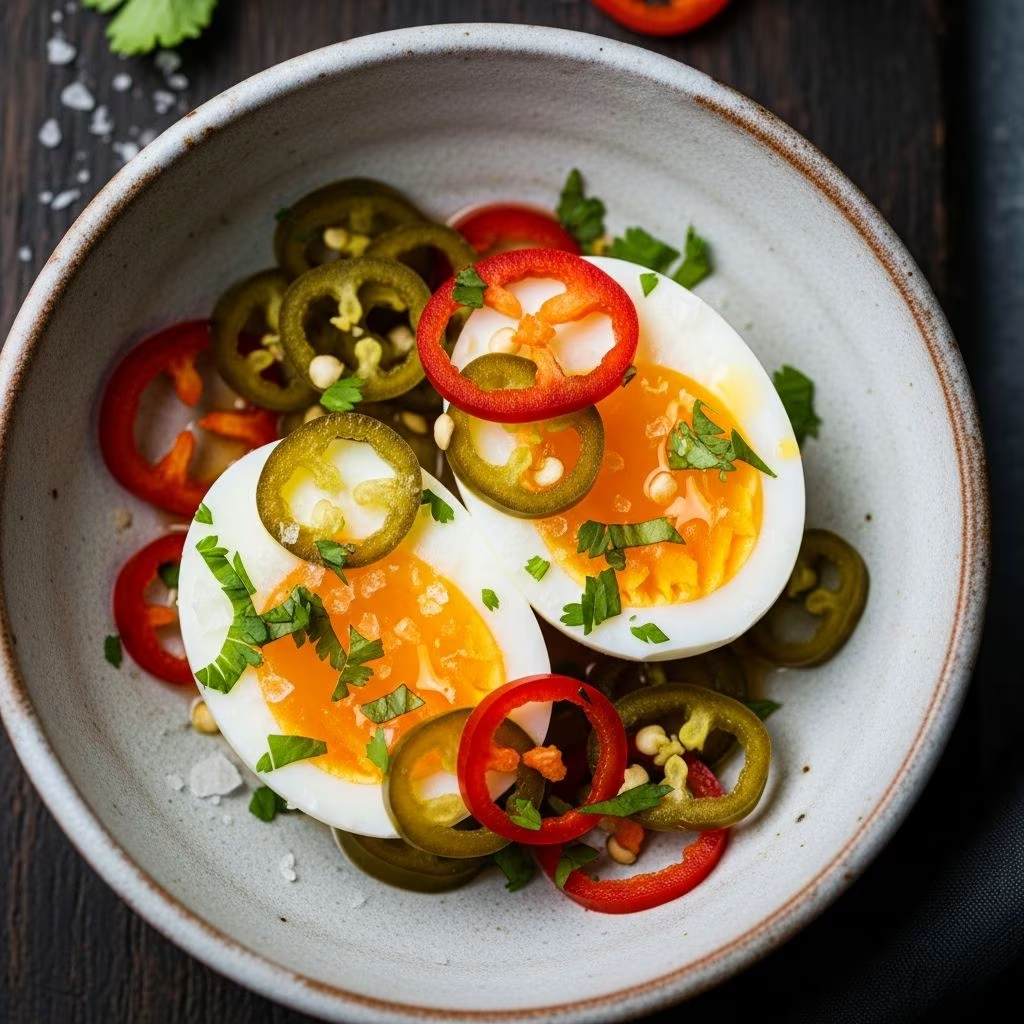
Achieving the ideal soft-boiled egg requires precision in timing and technique. The goal is to reach a state where the egg white has set completely while the yolk remains liquid or barely thickened, creating that prized jammy center that many home cooks struggle to accomplish. This textural contrast is what makes soft-boiled eggs so appealing—the firm exterior combined with the flowing interior creates multiple layers of sensation in a single bite.
The cooking process begins with placing eggs into already-boiling water rather than starting them in cold water. This method provides greater control over the final texture. For eggs with a jammy yolk—the most popular preparation—seven minutes of cooking time produces consistent results. The exact timing may vary slightly depending on factors such as egg size, altitude, and the precise temperature of the water, but seven minutes serves as a reliable baseline for most home cooks.
Once the cooking time has elapsed, immediate cooling is essential. Transferring the eggs to cold running water halts the cooking process and prevents the yolk from overcooking. This crucial step distinguishes between a soft-boiled egg and a medium-boiled egg. Many people neglect this cooling phase and end up with firmer yolks than intended, so prioritizing this step ensures consistency.
Peeling Technique and Presentation
Peeling soft-boiled eggs differs from peeling hard-boiled eggs due to their delicate nature. The shell must be removed carefully to avoid damaging the tender white. A common approach involves gently tapping the egg all over to create cracks, then carefully rolling it to loosen the membrane between the shell and the white. Peeling under running water helps separate the shell more easily without compromising the texture.
Some cooks prefer to crack the top of the egg and serve it in an egg cup, allowing diners to scoop out the contents with a small spoon. This presentation method maintains the warmth of the egg and creates an elegant serving style. Others peel the egg completely for incorporation into other dishes or for standalone plating. Both approaches are valid depending on the desired presentation and eating experience.
The Art and Science of Pickling Chiles
Pickled chiles add dimension and complexity to soft-boiled eggs through their combination of heat, acidity, and umami. The pickling process involves preserving fresh peppers in a brine solution typically composed of vinegar, water, salt, and various spices. This preservation method not only extends the shelf life of peppers but transforms their flavor profile into something more intense and multifaceted than fresh peppers alone.
The choice of chile peppers significantly impacts the final dish. Smaller varieties such as Thai bird’s eye chiles or serrano peppers offer sharp heat that cuts through the richness of the egg yolk. Larger options like jalapeños or Fresnos provide a more approachable spice level with additional fruity notes. Some recipes incorporate multiple varieties to create complexity in heat and flavor.
Brine Composition and Flavor Development
The brine itself determines much of the pickled chile’s character. White vinegar provides clean acidity, while apple cider vinegar contributes subtle sweetness and depth. Rice vinegar offers a gentler acidity, making it suitable for preservation without overwhelming the natural pepper flavor. Seasoning the brine with garlic, mustard seeds, coriander seeds, or dried herbs like oregano and thyme creates layers of flavor that permeate the peppers over time.
The ratio of vinegar to water affects both the preservation potential and the final taste. A higher vinegar concentration creates a more intensely acidic product with longer shelf life, while a gentler ratio produces pickles with more nuanced flavor. The addition of sugar balances the acidity and creates a more complex taste profile. Experimentation with different ratios allows home cooks to customize pickled chiles to their personal preferences.
Flavor Pairing Theory: Why This Combination Works
The success of soft-boiled eggs with pickled chiles lies in understanding complementary flavors and textures. Eggs are relatively neutral in flavor, making them an ideal canvas for bold accompaniments. The fat content in the yolk provides richness that benefits from acidic contrast, which pickled chiles deliver excellently. This principle explains why pickled vegetables generally pair well with egg dishes across many culinary traditions.
The heat from the chiles stimulates the palate and cleanse between bites, preventing flavor fatigue. The acidity from the pickling brine cuts through the richness of the yolk, creating balance on the plate. The textural contrast between the smooth, creamy yolk and the firm, chunky peppers adds complexity to each bite. These elements work in concert to create a dish greater than the sum of its parts.
Preparation and Plating Considerations
While the components of this dish are simple, thoughtful preparation elevates the final presentation. Soft-boiled eggs should be served while still warm, as the temperature contributes to the eating experience. The pickled chiles can be served at room temperature or slightly warmed, depending on preference. Some cooks arrange the eggs on a bed of greens, toast, or grain to create a more substantial dish.
Complementary Ingredients
Additional elements enhance the core pairing without overwhelming it. A light coating of good quality olive oil adds richness and helps bind flavors. Fresh herbs such as cilantro, parsley, or chives provide brightness and visual appeal. A sprinkle of fleur de sel highlights the natural saltiness of the egg and the brine. Toasted bread provides textural contrast and can be used for scooping or supporting the eggs.
Some cooks incorporate creamy elements like avocado or Greek yogurt to temper the heat of the chiles. Others add acidic components such as fresh lemon juice or vinaigrettes to amplify the pickle’s sharpness. These additions should remain secondary to the main components, supporting rather than overshadowing the soft-boiled egg and pickled chile pairing.
Frequently Asked Questions
How can I ensure my eggs are consistently jammy?
Consistency comes from controlling variables. Use eggs at room temperature or close to it when possible, as this reduces the variance in cooking time. Use a timer set for exactly seven minutes, and place eggs into vigorously boiling water rather than adding them gradually. Immediately transfer to an ice bath upon completion. Record your results and adjust timing by thirty-second increments in future attempts if needed.
Can I make pickled chiles in advance?
Yes, pickled chiles actually improve with time as flavors meld and develop. Prepare them several days before serving for optimal flavor. Store in an airtight container in the refrigerator, where they will keep for several weeks. The brine prevents spoilage and the chiles become progressively more flavorful as they sit.
What if I prefer harder yolks?
Simply extend the cooking time beyond seven minutes. Eight to nine minutes produces a yolk that is mostly set but with a slightly creamy center. Ten to twelve minutes results in a yolk that is nearly completely set with just a hint of softness in the very center. Experiment to find your preferred doneness.
Are there dietary considerations with this dish?
Eggs are protein-rich and nutrient-dense, containing choline, selenium, and lutein among other compounds. The pickling process preserves the nutritional value of the peppers while adding sodium from the brine. Those monitoring sodium intake should consume moderate portions of the pickled chiles or rinse them before serving to reduce salt content.
Variations and Adaptations
This foundational pairing accommodates numerous variations without losing its essential character. Different cultures have embraced soft-boiled eggs with spicy or acidic accompaniments throughout culinary history. Adapting regional approaches allows home cooks to explore new flavors while maintaining the core technique.
Some variations incorporate fermented elements like kimchi or sauerkraut alongside or instead of pickled chiles, introducing probiotic benefits and complex sour notes. Others combine the eggs with roasted peppers that have been marinated in vinegar and oil, creating a warmer, softer texture contrast. Experimenting with these variations keeps the dish fresh and exciting despite its simplicity.
Conclusion
Soft-boiled eggs with pickled chiles exemplify how restraint and precision in cooking create satisfying results. The dish requires minimal ingredients and straightforward technique yet delivers flavors and textures that reward attention to detail. Whether served as a simple breakfast, a light lunch, or as part of a larger meal, this pairing demonstrates that excellence in cooking often comes not from complexity but from understanding the fundamental principles of flavor balance and texture contrast. The beauty of this dish lies in its accessibility—anyone with basic equipment can create something truly delicious by respecting the ingredients and mastering the timing.
References
- Egg Cooking Methods and Food Safety — U.S. Department of Agriculture (USDA). 2024. https://www.fsis.usda.gov/food-safety/safe-food-handling-and-preparation/eggs-and-egg-products
- Pickling and Food Preservation Guide — National Center for Home Food Preservation, University of Georgia. 2024. https://nchfp.uga.edu/how/can_vegetables.html
- Nutritional Composition of Eggs — U.S. Department of Agriculture (USDA) FoodData Central. 2024. https://fdc.nal.usda.gov/
- Capsaicin and Culinary Heat — Journal of Experimental Botany. Oxford Academic Press. 2023. https://academic.oup.com/jxb/
- Vinegar Types and Culinary Applications — Institute of Food Technologists. 2024. https://www.ift.org/