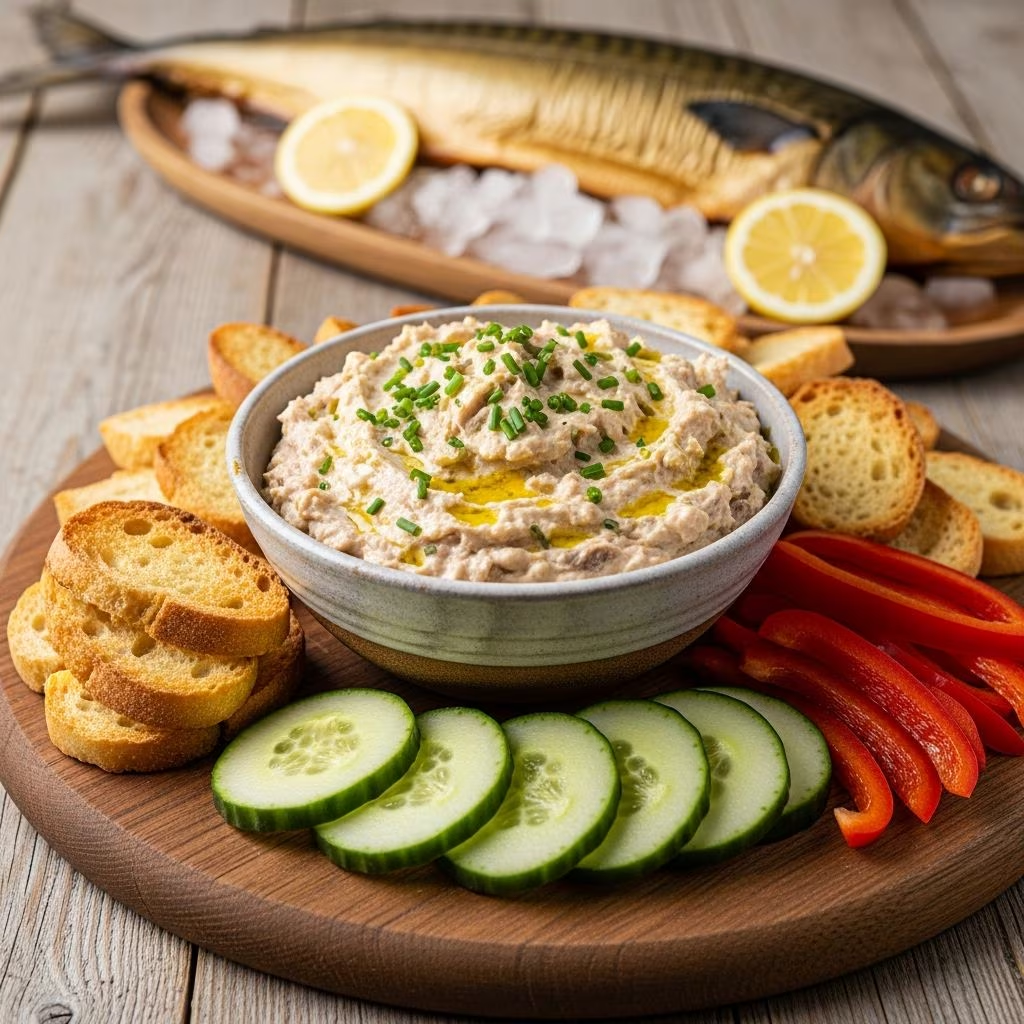
Smoked fish dip stands as a timeless appetizer that combines sophisticated flavors with remarkable simplicity in preparation. This creamy, savory creation transforms humble smoked fish into an elegant spread that impresses guests at gatherings, casual dinners, or formal events. The appeal of this dish lies not only in its rich, complex taste profile but also in its versatility—adapting easily to various ingredient preferences while maintaining its essential character.
Understanding the Foundation: Core Ingredients
The architecture of a successful smoked fish dip rests on several foundational components that work in harmony. The cream cheese and mayonnaise serve as the binding base, creating a rich, smooth texture that carries the smoky fish flavors throughout.Cream cheese, typically ranging from 4 to 8 ounces depending on desired creaminess, provides structural integrity and subtle tang, while mayonnaise contributes richness and helps achieve the ideal consistency. These dairy elements form the neutral canvas upon which other flavors build.
The smoked fish itself—whether smoked trout, whitefish, mackerel, or salmon—comprises the recipe’s soul, delivering the characteristic smoky depth that defines the dish. Using 8 ounces to 1 pound of boneless, skinless smoked fish allows adequate flavor impact without overwhelming other ingredients. Selecting high-quality smoked fish ensures superior results; look for varieties that have been properly smoked and contain minimal additives.
Acidic components, particularly fresh lemon juice, brighten the heavy cream base and balance the smokiness. Approximately 1 to 2 tablespoons of freshly squeezed lemon juice cuts through richness while adding freshness. Some preparations incorporate lemon zest for additional citrus notes and visual appeal.
Supporting Ingredients That Enhance Complexity
- Sour cream—adds tanginess and lightens the overall richness, typically used in 1/4 to 1/3 cup quantities
- Fresh dill—provides herbaceous notes that complement smoked fish naturally; use 2 to 3 tablespoons finely chopped
- Red onion—delivers sharpness and textural contrast; dice finely and use 2 to 3 tablespoons
- Worcestershire sauce—contributes umami depth and savory complexity with just 1/2 to 1 teaspoon
- Dijon mustard—adds subtle heat and tangy sophistication, typically 1 tablespoon
- Smoked paprika—reinforces smokiness and provides warm color; use 1/2 teaspoon
- Fresh parsley—offers mild herbal notes and garnish appeal; sprinkle approximately 2 tablespoons chopped
- Celery—contributes mild vegetal notes and gentle crunch; finely dice 1 stalk
- Hot sauce or horseradish—brings subtle heat and complexity; adjust to taste preference
- Old Bay seasoning—traditional maritime seasoning that harmonizes all elements; use 1/4 to 1/2 teaspoon
Preparation Techniques and Methods
The preparation method significantly influences the final texture and eating experience of smoked fish dip. Two primary approaches dominate recipe variations, each producing distinctly different results.
The Blended Method
Using a food processor or blender offers efficiency and consistency. Begin by combining cream cheese, mayonnaise, lemon juice, zest, and Worcestershire sauce, blending until the base becomes completely smooth. This initial step ensures even distribution of flavors throughout the foundation. Subsequently, add the smoked fish along with onion and dill, pulsing carefully to achieve desired texture. The advantage of this method lies in controlled consistency—you maintain authority over whether the final product remains slightly chunky or becomes entirely uniform and spreadable.
The pulsing technique proves essential in this approach. Overblending can create a paste-like consistency that loses textural interest, while insufficient blending leaves noticeable chunks that may feel unpleasant. Typically, 4 to 6 pulses after adding fish provides optimal balance, though personal preference should guide final adjustments.
The Hand-Mixed Method
For a more hands-on approach with greater textural control, whisk together cream cheese, mayonnaise, and seasonings in a medium bowl until smooth. Finely chop smoked fish using a sharp knife on a cutting board, breaking it into small, uniform pieces. This manual preparation encourages texture preservation and allows immediate assessment of consistency. Fold the chopped fish into the creamy base using a spatula, combining thoroughly without aggressive mixing that might make the dip dense.
Hand-mixing often produces a more interesting, rustic texture that some enthusiasts prefer. The slight irregularity in fish pieces creates pleasant variety in each spoonful, and visible ingredients suggest freshness and quality.
Timing and Flavor Development
While smoked fish dip can be served immediately after preparation, refrigeration significantly enhances flavor development. Covering the dip and chilling for at least 2 hours allows flavors to meld, seasonings to penetrate the fish, and the overall texture to firm appropriately. Extended refrigeration up to 3 days actually improves the dish, as ingredients continue marrying and developing complexity. This make-ahead quality makes smoked fish dip exceptionally convenient for entertaining.
Customization and Flavor Variations
Regional and Personal Interpretations
Smoked fish dip welcomes creative adaptations based on regional traditions or personal taste preferences. The Florida Keys interpretation incorporates red bell pepper alongside traditional ingredients, adding sweetness and color. This variation creates visual interest while subtly altering the flavor profile to include slight fruity notes beneath the smoky base.
Some preparations intentionally leave chunky pieces of smoked fish throughout, creating texture variation and emphasizing the fish ingredient. Others puree everything into a smooth, spreadable consistency suitable for crackers or vegetable crudités. Adjusting the ratio of sour cream to cream cheese modulates richness—more sour cream produces lighter, tangier results, while additional cream cheese intensifies creaminess and richness.
Seafood Options
The recipe’s flexibility accommodates various smoked fish varieties. Smoked trout provides a milder, more delicate flavor profile suitable for those preferring subtlety. Smoked whitefish offers robust smokiness without excessive intensity. Smoked mackerel delivers deeper, fishier character appealing to adventurous palates. Smoked salmon provides familiar flavor and elevated elegance, though higher cost may limit accessibility for casual entertaining.
Serving Strategies and Accompaniments
The vessel and presentation context significantly influence the dip-eating experience. Traditional serving vessels include ceramic bowls, small crocks, or attractive dishes that complement the dip’s rich color. Garnishing with additional smoked paprika, fresh dill fronds, or finely chopped parsley adds visual appeal and reinforces flavor expectations.
Pairing Options
| Accompaniment Type | Specific Examples | Serving Characteristics |
|---|---|---|
| Crackers | Water crackers, rye crisps, sesame crackers | Neutral vehicles that don’t compete with dip flavor |
| Vegetables | Celery, cucumber slices, bell pepper strips, cherry tomatoes | Fresh, crisp options that refresh palate between bites |
| Bread | Toasted baguette slices, rye bread rounds, pumpernickel | Hearty bases that transform dip into substantial appetizer |
| Specialty Items | Cured fish chips, seaweed crackers, herb flatbread | Complementary seafood or gourmet options |
Serve the dip slightly cooler than room temperature, allowing flavors to remain distinct while maintaining spreadability. A small bowl of hot sauce alongside permits guests to customize heat levels according to individual preference.
Storage and Food Safety Considerations
Properly stored smoked fish dip maintains quality for extended periods. Refrigeration in an airtight container preserves freshness for up to one week. The dairy components and preserved fish create an environment resistant to rapid spoilage, though careful handling prevents cross-contamination. Never leave the dip at room temperature for longer than two hours, especially when serving at gatherings where the dish remains accessible throughout an event.
When preparing dip in advance, cover it securely to prevent absorption of refrigerator odors and maintain moisture. Freezing is technically possible but not recommended, as the texture becomes grainy and less appealing upon thawing due to dairy component separation.
Ingredient Selection and Quality Considerations
Choosing Superior Smoked Fish
The quality of smoked fish directly determines the final dish’s character. Seek fish that appears moist rather than dry, with no off-putting odors suggesting poor storage or aging. Purchase from reputable fishmongers or quality grocery stores where inventory turnover ensures freshness. Avoid pre-packaged smoked fish that has languished in cases; optimal selections exhibit color consistency and intact texture without excessive flaking or deterioration.
Dairy Product Selection
Using room-temperature cream cheese ensures smooth blending and even distribution. Cold cream cheese resists incorporation and creates lumpy texture despite vigorous mixing. Similarly, sour cream at appropriate temperature incorporates more readily. High-quality mayonnaise containing egg yolks produces richer, more stable emulsions than commercial variants with vegetable oils and additives.
Frequently Asked Questions
Can I prepare smoked fish dip without a food processor?
Absolutely. The hand-mixed method described above works perfectly, requiring only a sharp knife, cutting board, bowl, and spatula. This approach actually provides superior textural control and eliminates over-processing risks.
What if my dip seems too thick?
Add small amounts of sour cream or additional lemon juice gradually, stirring thoroughly after each addition. These liquids thin the mixture while preserving flavor balance.
Can I substitute the cream cheese?
Mascarpone produces a richer, slightly sweeter result. Ricotta creates lighter texture with less tang. Greek yogurt reduces creaminess but adds brightness. Each alternative shifts flavor profile slightly, requiring taste adjustments after substitution.
How far in advance can I prepare this dish?
Prepare it up to three days ahead, storing in an airtight container in the refrigerator. The advance preparation actually improves flavor integration, making it ideal for entertaining planning.
Is this dip suitable for dietary restrictions?
The dairy content makes it unsuitable for vegan diets. However, it accommodates most other preferences. Those avoiding gluten simply need to pair with gluten-free crackers or vegetables. Shellfish-allergic individuals may safely consume it, as smoked fish contains no shellfish.
Conclusion: Mastering the Craft
Smoked fish dip represents accessible sophistication—a dish that appears impressive yet requires minimal culinary skill or expensive equipment. By understanding ingredient roles, mastering basic preparation techniques, and respecting flavor balance, anyone can produce restaurant-quality results at home. The versatility to accommodate personal preferences, advance preparation capabilities, and universal appeal make smoked fish dip an essential recipe for entertaining. Whether served at casual gatherings or formal occasions, this elegant appetizer consistently satisfies discerning palates while impressing even seasoned food enthusiasts.
References
- Smoked Fish Dip Recipe — Wild Game & Fish. Accessed April 2026. https://wildgameandfish.com/smoked-fish-dip-recipe/
- Smoked Fish Dip Recipe — Lena’s Kitchen. Accessed April 2026. https://lenaskitchenblog.com/easy-creamy-smoked-whitefish-dip/
- Best Smoked Fish Dip Recipe for an Easy Appetizer — Chef Denise. Accessed April 2026. https://www.chefdenise.com/all/smoked-fish-dip-recipe
- Smoked Fish Dip Recipe — Andrew Zimmern. Accessed April 2026. https://andrewzimmern.com/recipes/smoked-fish-dip-recipe/
- The Best Smoked Fish Dip Recipe | Easy Homemade — Food Fidelity on YouTube. Accessed April 2026. https://www.youtube.com/watch?v=VP1zP–QPvA