Hawaiian cuisine brings a sense of island warmth and flavor to any dining table, and one of the most beloved dishes from the islands is kalua pork. Traditionally prepared in an underground imu oven, this iconic dish has been adapted for modern kitchens with remarkable success. The slow cooker version captures the essence of authentic Hawaiian flavors—smoky, salty, and incredibly tender—without requiring specialized equipment or extensive culinary expertise.
What makes this dish particularly appealing is its straightforward approach. Rather than spending hours tending to a traditional underground oven, home cooks can achieve restaurant-quality results by simply combining a few select ingredients in a slow cooker and allowing time to work its magic. This democratization of Hawaiian cooking allows anyone to enjoy this beloved dish regardless of their skill level or access to traditional cooking methods.
Understanding the Foundation: Key Ingredients and Their Roles
The beauty of slow cooker kalua pork lies in its elegant simplicity. The recipe relies on just three essential components, each playing a crucial role in developing the final dish’s characteristic flavors and textures.
The Protein: Selecting Your Pork
The foundation of this dish begins with choosing the right cut of pork. A pork shoulder or pork butt is the ideal selection, as these cuts contain abundant marbling and fat throughout the meat. This intramuscular fat is essential—as the pork cooks low and slow, this fat gradually renders and melts into the surrounding meat, creating natural moisture and richness without requiring additional liquids. The fat keeps the meat incredibly juicy and prevents it from drying out during the extended cooking process.
Leaner cuts of pork will not produce the same results, as they lack the fat necessary to maintain moisture during hours of slow cooking. The amount of pork you select will directly influence cooking time; a smaller three-pound roast may be ready in approximately eight hours, while larger roasts of six pounds or more can require ten to sixteen hours.
The Smoke: Liquid Smoke Flavoring
Liquid smoke serves as the primary flavoring agent that gives kalua pork its distinctive character. This ingredient is derived from actual smoke and provides authentic smoky notes that would traditionally come from cooking over wood fires. A little goes a long way—typically one tablespoon per three to six pounds of pork provides sufficient flavor without overwhelming the dish. The liquid smoke should be drizzled evenly across the meat’s surface to ensure consistent flavor distribution.
The Seasoning: Hawaiian Sea Salt
Hawaiian sea salt brings mineral complexity and essential seasoning to the dish. Unlike refined table salt, Hawaiian sea salt contains trace minerals that contribute subtle depth to the flavor profile. The typical ratio is approximately one teaspoon per pound of pork, though this can be adjusted based on personal preference. The salt begins drawing flavors into the meat immediately upon application, creating a flavorful crust that develops during cooking.
Preparation: Setting the Stage for Success
Proper preparation, though minimal, significantly impacts the final result. The process requires only five minutes of active work before the slow cooker takes over.
Piercing the Meat
Begin by using a fork or knife to pierce the pork roast all over, creating small holes throughout the meat. This seemingly simple step serves an important function: it helps the liquid smoke and salt penetrate deeper into the meat, ensuring that smoky, salty flavors reach beyond the surface to develop a consistent taste throughout the entire roast.
Positioning and Arrangement
Place the prepared pork into the slow cooker with the fat cap facing upward. This positioning allows the rendered fat to continuously baste the meat as it cooks, creating exceptionally tender and moist shreds. Some cooks choose to lightly grease the slow cooker crock with nonstick spray before adding the meat, though this step is optional.
Seasoning Application
Drizzle the liquid smoke evenly across the meat’s surface, then sprinkle the Hawaiian sea salt generously over all sides. Watch as the salt clings to the surface—this immediate response indicates that osmosis is beginning, pulling flavoring compounds into the meat. Resist the temptation to add extra liquid smoke; the concentrated flavor already present provides exactly the right amount without creating an overpowering or unpleasant taste.
The Cooking Process: Timing and Technique
Once ingredients are combined, the cooking process requires minimal intervention. Cover the slow cooker with its lid and set the temperature to the low setting.
Cooking Duration
The typical cooking time on low ranges from eight to ten hours, though roasts weighing six pounds or more may require up to twelve hours. Smaller roasts sometimes finish in approximately eight hours. The exact duration depends on the pork’s thickness, the slow cooker’s heating characteristics, and the initial temperature of the meat when cooking begins.
For those preferring faster results, the high setting can be used for approximately four to six hours, though low-and-slow cooking generally produces superior tenderness and flavor development.
Determining Doneness
The pork is ready when it reaches a state of extreme tenderness. A fork should slide into the meat with minimal resistance, and the meat should nearly fall apart at the slightest touch. The surface should develop a light brown color, and the cooking liquid should bubble gently around the edges. For those who prefer precision, an internal meat thermometer reading of 145 degrees Fahrenheit confirms the pork has reached a safe temperature.
Finishing Touches: Shredding and Serving
Once cooking is complete, several finishing steps transform the cooked pork into the perfect texture and flavor.
Shredding the Meat
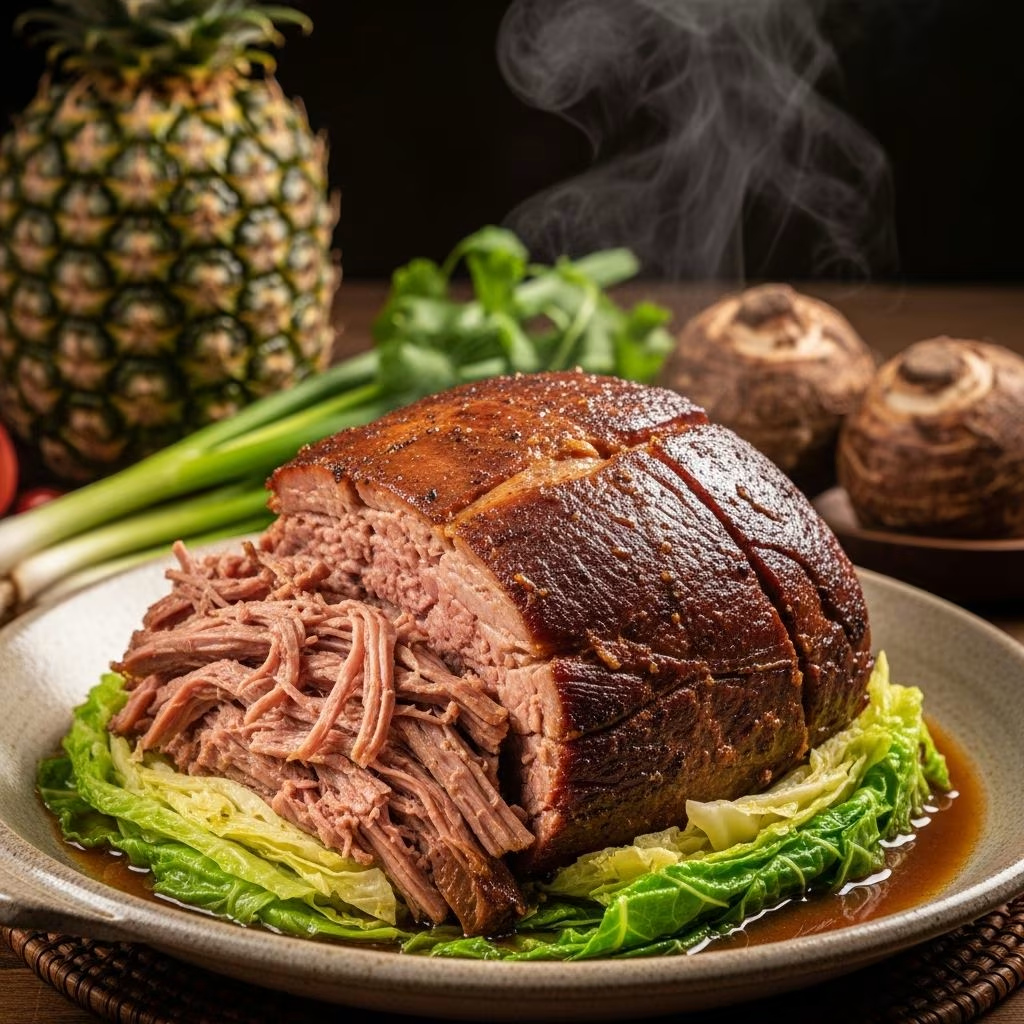
Transfer the cooked pork to a large plate or cutting board. Using two forks, shred the meat into bite-sized pieces, pulling in opposite directions to break down the tender fibers. Remove any large fat pieces if desired, though leaving some fat throughout adds richness and moisture.
Moistening and Flavoring
Spoon the rendered cooking juices back over the shredded meat until it appears glossy and moist. These juices contain concentrated flavors and help prevent the meat from drying during serving. For those who prefer more pronounced smokiness, an additional one-quarter to one-half teaspoon of liquid smoke can be stirred in after shredding, though this is optional and should be added gradually while tasting.
Serving Suggestions and Versatility
Slow cooker kalua pork transcends simple preparation by offering remarkable versatility in how it can be served and incorporated into various dishes.
- Traditional Hawaiian plates: Serve alongside white rice, macaroni salad, and steamed vegetables for an authentic island dinner
- Sandwich applications: Layer onto soft rolls with coleslaw and drizzle with the cooking juices for Hawaiian-style pulled pork sandwiches
- Taco fillings: Use the shredded pork as a protein base for Hawaiian-inspired tacos with pineapple salsa and crispy fried onions
- Salad components: Top fresh garden salads with warm kalua pork for added protein and smokiness
- Cabbage combination: Add sliced cabbage to the slow cooker during the final two to three hours of cooking to create a complete one-pot meal
- Appetizer options: Serve small portions on crispy wonton wrappers or lettuce cups as party starters
Practical Tips for Optimal Results
Size Considerations
The amount of pork selected should match your needs and serving size. For smaller households, a three-pound roast yields approximately six servings, while six-pound roasts serve twelve to sixteen people. Larger roasts require proportionally longer cooking times, so planning ahead ensures dinner timing works with your schedule.
Make-Ahead Advantages
This dish adapts well to advance preparation. The pork can be cooked the evening before and refrigerated overnight, then gently reheated before serving. Alternatively, cooked kalua pork freezes exceptionally well for up to three months, making it convenient for meal planning or entertaining on short notice.
Leftover Applications
Leftover kalua pork maintains excellent quality for three to four days when properly refrigerated. Beyond the serving suggestions mentioned, leftovers work beautifully in breakfast scrambles, on pizza as an unconventional topping, mixed into rice bowls, or incorporated into casseroles.
Frequently Asked Questions
Can I cook kalua pork on high instead of low?
Yes, the high setting works for approximately four to six hours, though low-and-slow cooking generally produces more tender results with better flavor development.
What if my pork isn’t tender after eight hours?
Continue cooking, checking at one-hour intervals. Thickness and the slow cooker’s heating characteristics affect timing. Larger roasts routinely need ten to twelve hours.
Can I adjust the saltiness or smokiness?
Absolutely. Start with the recommended amounts, then adjust after shredding and tasting. Additional liquid smoke and salt can be stirred in gradually to reach your preferred intensity.
Is Hawaiian sea salt necessary, or can I substitute?
While Hawaiian sea salt adds mineral complexity, quality kosher salt or sea salt produces acceptable results if Hawaiian salt is unavailable.
How do I prevent the pork from drying out?
Ensure adequate fat remains on the meat, position with the fat cap up, and always moisten the shredded meat with rendered cooking juices before serving.
Nutritional Information and Servings
A typical serving of slow cooker kalua pork (approximately three ounces of shredded meat) contains roughly 150 calories, making it a relatively lean protein option when excess fat is trimmed. The dish provides substantial protein content supporting satiety and muscle maintenance. Sodium content reflects the salt used in preparation, so those monitoring sodium intake may reduce the quantity slightly.
Conclusion: Bringing Island Flavors Home
Slow cooker kalua pork represents the perfect intersection of authenticity and convenience. By respecting traditional Hawaiian flavors while embracing modern cooking technology, home cooks can create genuinely impressive dishes with minimal time investment or culinary experience. The combination of quality ingredients, proper technique, and patience produces results that rival restaurant preparations, making this an ideal choice for weeknight dinners, entertaining guests, or meal-prep projects that yield dividends throughout the week.
References
- Easy Slow Cooker Kalua Pork (Just 3 Ingredients!) — Savory Spice Rack. 2024. https://savoryspicerack.com/easy-slow-cooker-kalua-pig/
- Slow Cooker Kalua Pork — Downshiftology. 2024. https://downshiftology.com/recipes/slow-cooker-kalua-pork/
- Slow Cooker Kalua Pork — Creme De La Crumb. 2024. https://www.lecremedelacrumb.com/slow-cooker-kalua-pork/
- Hawaiian Slow Cooker Kalua Pork — Pineapple and Coconut. 2024. https://www.pineappleandcoconut.com/slow-cooker-kalua-pork/