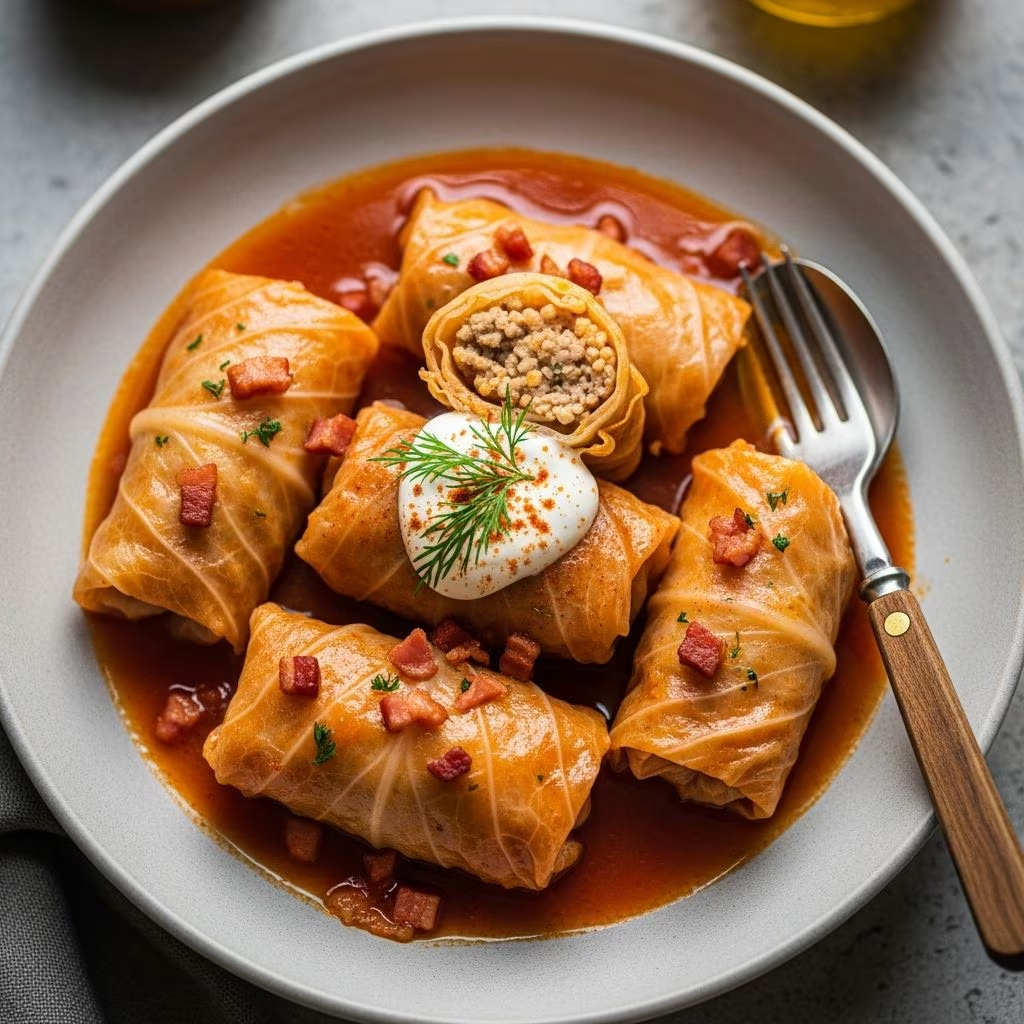
Traditional Hungarian stuffed cabbage rolls, known as töltött káposzta, bring together layers of flavor from seasoned ground meat, rice, and cabbage enveloped in a tangy tomato-sauerkraut sauce. This slow cooker adaptation simplifies preparation while preserving the dish’s rich heritage, making it accessible for modern kitchens. Whether you roll the cabbage leaves individually or opt for a deconstructed casserole, the result is tender, aromatic, and deeply satisfying.
Understanding Hungarian Stuffed Cabbage
Hungarian cuisine celebrates hearty, slow-cooked dishes that highlight cabbage’s versatility. Stuffed cabbage rolls trace back to Central European traditions, where cabbage leaves are blanched, filled with a mixture of meat and grains, and simmered in a sauce infused with paprika—a staple spice lending smoky sweetness. The slow cooker method reduces hands-on time, allowing flavors to meld over hours without constant monitoring.
This dish balances acidity from sauerkraut and tomatoes with the earthiness of cabbage and meat, creating a comforting meal suited for cold evenings or family gatherings. Variations exist across regions, but the core remains: cabbage as a wrapper or base, protein-packed filling, and a robust sauce.
Key Ingredients for Authentic Flavor
Selecting quality ingredients ensures the dish’s success. Focus on fresh cabbage, quality meats, and authentic Hungarian paprika for that signature taste.
- Cabbage: One large head of green cabbage provides about 12-15 leaves for rolling or chopped pieces for casserole-style. Choose firm heads with vibrant leaves.
- Meat: Ground pork offers traditional richness, but turkey, beef, or a mix works. Use 1.5-2 pounds for 6-8 servings.
- Rice: Long-grain white or jasmine rice (1-2 cups cooked or uncooked) binds the filling and absorbs flavors.
- Sauerkraut: 1-2 pounds, fresh or refrigerated, drained but with some juice for tanginess.
- Tomatoes: Diced tomatoes (14 oz can), tomato sauce or paste (28 oz total), for the base sauce.
- Spices: Hungarian sweet paprika (2-4 tsp), salt, black pepper, garlic powder. Onion and garlic (1 onion, 2-4 cloves) add depth.
- Binders: Eggs (1-2) for rolled versions to hold filling together.
These components create harmony: cabbage tempers richness, sauerkraut adds fermentation notes, and paprika provides warmth without heat.
Two Easy Slow Cooker Methods
Choose between classic rolled cabbage or an unstuffed casserole based on time and preference. Both yield similar results in 4-8 hours.
Method 1: Classic Rolled Cabbage Rolls
- Prepare Cabbage: Core the cabbage and blanch in boiling water for 7-10 minutes. Peel off 12 softened leaves, trim thick veins, and shock in ice water.
- Make Filling: Brown 2 lbs ground pork with diced onion and minced garlic. Mix with 1 cup cooked rice, 1 tsp paprika, salt, pepper, and 2 beaten eggs.
- Assemble Rolls: Place 1/3 cup filling at the base of each leaf, fold sides, and roll tightly. Layer in slow cooker with sauerkraut and sauce between layers.
- Sauce: Combine 28 oz tomato sauce, 14 oz diced tomatoes, 2 cups water, remaining paprika, and extra sauerkraut. Pour over rolls.
- Cook: Low 6-8 hours or high 4-6 hours until tender.
Method 2: Unstuffed Casserole Variation
Ideal for beginners, this skips rolling for layered simplicity.
- Brown 2 lbs ground turkey or beef with onion, garlic, salt, pepper, and garlic powder.
- Layer half chopped cabbage in 6-qt slow cooker, top with half meat, spices, diced tomatoes, remaining cabbage, meat, spices, and sauerkraut.
- Pour tomato sauce mixed with water over top.
- Cook high 4 hours. Stir in 2 cups cooked rice 30 minutes before done.
Both methods serve 6-8 generously, with leftovers freezing well.
Pro Tips for Perfect Results
- Crock Size: Use at least 6 quarts to avoid overflow.
- Meat Choice: Pork for authenticity; turkey for lighter fare.
- Rice Handling: Pre-cook for rolls; add uncooked to unstuffed if you prefer it to absorb sauce fully.
- Blanching Hack: Freeze cabbage head overnight, thaw, and leaves peel easily without boiling.
- Flavor Boost: Add a teaspoon of sugar to sauce to balance acidity.
- Make-Ahead: Assemble rolls day before and refrigerate, or freeze prepped layers.
| Issue | Solution |
|---|---|
| Soggy rolls | Cook on low; don’t overfill slow cooker. |
| Bland taste | Increase paprika; season layers individually. |
| Undercooked rice | Use parboiled or pre-cooked rice. |
| Too acidic | Rinse sauerkraut lightly; add sugar or sour cream topping. |
Nutrition and Serving Suggestions
Per serving (1/6 recipe, rolled version): Approximately 450 calories, 25g protein, 30g carbs, 25g fat, high in vitamin C from cabbage and fiber from sauerkraut. Low-carb by skipping rice.
Serve with crusty bread, sour cream dollop, or rye bread. Pairs with pickled veggies or a simple green salad for balance.
Variations for Every Diet
- Vegetarian: Swap meat for lentils or mushrooms; use vegetable broth.
- Gluten-Free: Naturally so; confirm rice and labels.
- Spicy: Add hot paprika or cayenne.
- Low-Carb: Omit rice; use cauliflower rice.
Frequently Asked Questions
Can I use a different meat?
Yes, beef, turkey, or plant-based crumbles work; adjust cooking time if needed.
How long do leftovers last?
Refrigerate up to 4 days or freeze 3 months. Reheat gently with extra sauce.
Is Hungarian paprika essential?
It provides authentic smokiness; substitute sweet paprika if unavailable.
Can I cook on stovetop or oven?
Yes, simmer covered 2-3 hours or bake at 350°F for 1.5-2 hours.
Why sauerkraut?
It tenderizes cabbage and adds probiotic tang traditional to the dish.
Historical Roots and Cultural Significance
Hungarian stuffed cabbage evolved from peasant fare, utilizing cabbage’s winter hardiness. Influenced by Turkish dolma via Ottoman rule, it became a staple in Jewish-Ashkenazi and Eastern European cuisines too. Slow cooking mirrors old methods using clay pots over open fires, now modernized for convenience.
In Hungary, it’s a holiday dish, symbolizing abundance with its layered abundance. Families pass recipes down, tweaking with local ingredients.
References
- Hungarian Stuffed Cabbage — The Beach House Kitchen. 2023-10-15. https://thebeachhousekitchen.com/hungarian-stuffed-cabbage/
- Slow Cooker Hungarian Stuffed Cabbage Casserole — The Super Mom Life. 2022-05-20. https://thesupermomlife.com/hungarian-stuffed-cabbage-casserole/
- Slow Cooker Cabbage Rolls Recipe — Simple Slow Cooker Recipes. 2024-01-12. https://www.simpleslowcookerrecipes.com/slow-cooker-cabbage-rolls/