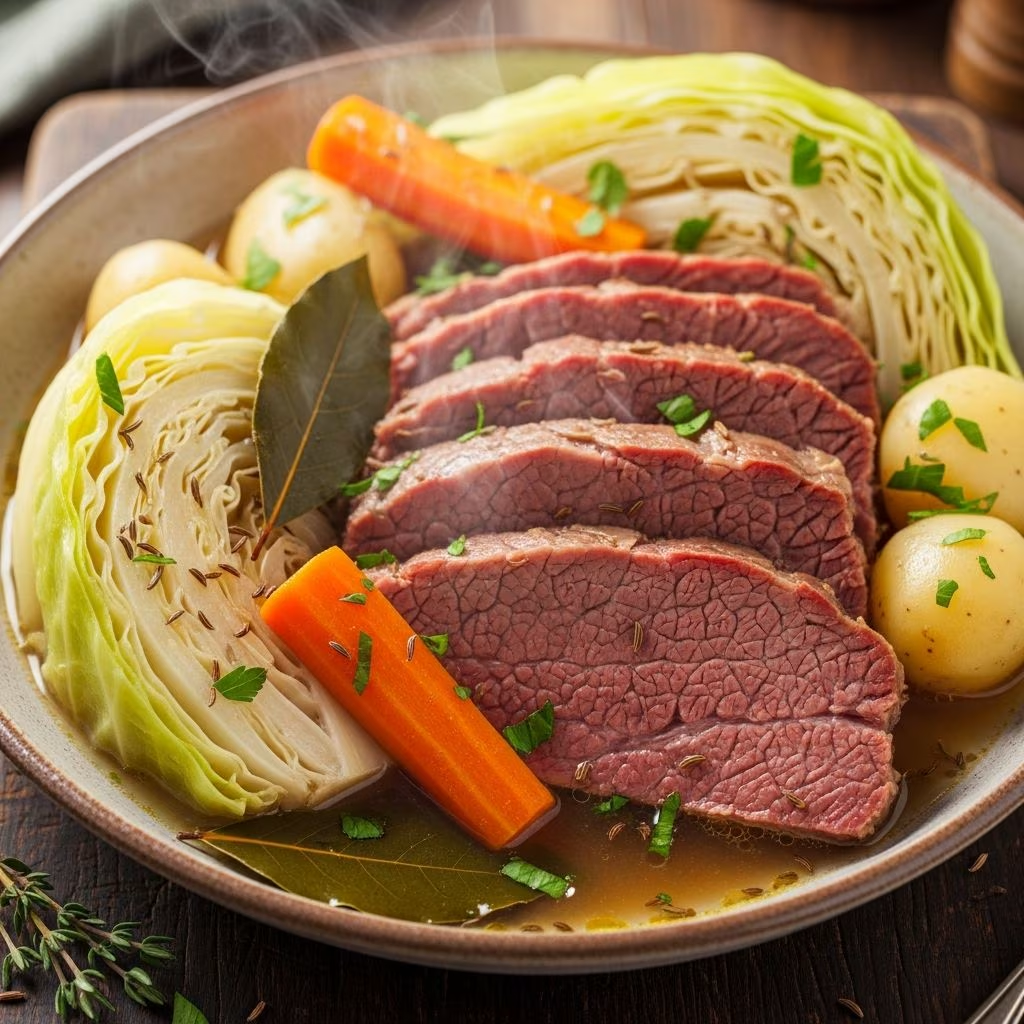
Experience the timeless appeal of corned beef and cabbage without the fuss of constant monitoring. This slow cooker version transforms a simple brisket into a melt-in-your-mouth masterpiece, paired with vibrant vegetables that soak up every bit of savory flavor. Ideal for St. Patrick’s Day feasts or weeknight comfort food, this recipe requires just minutes of prep for hours of delicious results.
Why Choose the Slow Cooker for This Traditional Dish?
The slow cooker excels at breaking down tough cuts like corned beef brisket, which is brined and spiced for bold taste. Low, steady heat ensures even cooking, preventing dryness while infusing vegetables with the meat’s rich juices. Unlike stovetop methods, there’s no need to watch the pot or adjust flames—set it and forget it until dinnertime.
Key benefits include:
- Tender results every time, as the low temperature (around 190-200°F) gently tenderizes the meat over 8-10 hours.
- Layered flavors from the included spice packet, aromatics, and brining liquid.
- One-pot convenience that minimizes cleanup and maximizes meal prep efficiency.
Essential Ingredients for Success
Gather these staples for a 6-quart slow cooker serving 6-8 people. Scale up or down as needed, but maintain the 3-4 lb brisket for optimal cooking times.
| Ingredient | Quantity | Purpose |
|---|---|---|
| Corned beef brisket (with spice packet) | 3-4 lbs | Main protein; brined for salty, savory depth |
| Yellow onion, quartered | 1 large | Aromatic base for flavor infusion |
| Carrots, peeled and chunked | 4-6 large | Sweet contrast to salty beef |
| Potatoes, quartered (Yukon Gold or red) | 2-3 lbs | Hearty, filling side that absorbs broth |
| Green cabbage, wedged | 1 medium head | Classic tender vegetable; added last |
| Garlic cloves, smashed | 3-4 | Enhances umami |
| Bay leaves | 2 | Subtle herbal notes |
| Water or beef broth | 3-4 cups | Cooking liquid; broth adds richness |
Pro Tip: Always use the spice packet included with the brisket—it’s a blend of mustard seeds, coriander, peppercorns, and bay for authentic taste. Rinse the brisket lightly to control saltiness if preferred.
Step-by-Step Cooking Guide
Prep time: 20 minutes. Cook time: 8-10 hours. Follow these timed steps to avoid mushy veggies or tough meat.
- Layer the base (0 hours): Place onion quarters, smashed garlic, bay leaves, and carrot chunks in the slow cooker bottom. This creates a flavorful bed that elevates the brisket off direct heat.
- Add the brisket (0 hours): Position fat-side up on vegetables. Sprinkle the spice packet evenly. Pour in water or broth to just cover the meat—about 3 cups for most models.
- Cook low and slow (first 5-6 hours): Cover and set to low. Resist peeking to maintain heat. The brisket should reach 195°F internally for sliceable tenderness.
- Incorporate potatoes (after 5-6 hours): Nestle quartered potatoes around the sides. Continue on low for 2-3 more hours until fork-tender.
- Finish with cabbage (last 1-2 hours): Core and wedge the cabbage (4-6 pieces). Arrange on top without stirring. Cover until wilted and soft but still holds shape.
- Rest and slice (post-cook): Transfer brisket to a board, tent with foil for 15-20 minutes. Slice against the grain for maximum tenderness—look for the muscle fibers and cut perpendicular.
Serve family-style with juices spooned over top. Total yield: 6-8 hearty portions.
Mastering Texture and Timing
Timing is crucial: overcooking turns potatoes to mush and cabbage to sludge. General rule: Brisket needs 50-60 minutes per pound on low. For a 4 lb cut, aim for 9 hours total.
- Check doneness: Beef should shred easily with a fork but hold slices. Veggies fork-tender, not falling apart.
- Slow cooker size matters: Use 6+ quarts to prevent overcrowding, which steams instead of braises.
- High vs. low: Low yields better results; high can dry out edges. If rushed, high for 4-5 hours then switch to low.
Flavor Variations to Elevate Your Meal
Customize without straying from tradition:
- Beer braise: Swap half the water for Guinness or lager for malty depth.
- Honey mustard glaze: Mix 1/4 cup Dijon with 2 tbsp honey; brush on last 30 minutes.
- Extra spice: Add pickling spice blend or fresh thyme sprigs.
- Root veggie boost: Include parsnips or turnips with carrots.
- Low-sodium: Use low-salt broth and rinse brisket thoroughly.
Perfect Pairings and Serving Suggestions
Round out the plate with Irish soda bread, horseradish cream, or whole grain mustard. For sides:
- Steamed carrots with parsley.
- Colcannon (mashed potatoes with cabbage and scallions).
- Pickled beets for tang.
Drinks: Green beer, Irish whiskey, or a crisp lager. For dessert, pair with shamrock shakes or apple crumble.
Storage, Reheating, and Freezing Tips
Leftovers shine! Refrigerate in airtight containers up to 4 days. Reheat gently in microwave with damp paper towel or stovetop in broth.
- Freezing: Slice beef, portion with veggies in freezer bags up to 3 months. Thaw overnight, reheat low.
- Repurpose: Hash, Reuben sandwiches, or shepherd’s pie.
Food safety note: Cool rapidly post-cook; reheat to 165°F.
Common Mistakes and How to Avoid Them
| Mistake | Fix |
|---|---|
| Slicing with the grain | Identify fibers; cut perpendicular for tenderness |
| Mushy vegetables | Add potatoes mid-cook, cabbage last hour |
| Tough brisket | Cook to 195°F; low and slow minimum 8 hours |
| Too salty | Rinse meat; use broth over water |
| Dry meat | Fat-side up; cover fully with liquid |
Nutritional Profile Per Serving
Approximate for 1/8 recipe (using water, no extras): 450 calories, 25g protein, 30g fat, 25g carbs. High in protein, vitamin C from cabbage/carrots, potassium from potatoes. Balance with lighter sides.
Frequently Asked Questions
Can I cook on high the whole time?
Possible but less tender; prefer low for 8-10 hours. High totals 5-7 hours max.
What if I don’t have the spice packet?
Make your own: 1 tbsp mustard seeds, 1 tsp coriander, 1 tsp peppercorns, 2 bay leaves, pinch allspice. Simmer in cheesecloth first.
Is beer necessary?
No—water or broth works. Beer adds subtle bitterness and tenderizes.
Can I use a different cut?
Stick to flat-cut brisket; point-cut is fattier, needs trimming.
How do I know when cabbage is done?
Fork pierces easily, leaves wilted but not disintegrated—about 1 hour.
Alternative Cooking Methods
Instant Pot: Brisket 60-90 min high pressure + natural release; quick-cook veggies after.
Oven: Dutch oven at 325°F for 3-4 hours, covered; add veggies last hour.
Stovetop: Simmer 45 min/lb; par-cook veggies separately.
Slow cooker remains easiest for beginners.
References
- USDA Food Safety Guidelines for Slow Cookers — United States Department of Agriculture. 2023-05-15. https://www.fsis.usda.gov/food-safety/safe-food-handling-and-preparation/food-safety-basics/slow-cookers-and-food-safety
- Beef Brisket Cooking Temperatures — National Cattlemen’s Beef Association. 2024-01-10. https://www.beefitswhatsfordinner.com/cuts/cut/2788/brisket-flat-half
- Slow Cooker Safety and Best Practices — FDA Center for Food Safety. 2022-11-20. https://www.fda.gov/food/buy-store-serve-safe-food/slow-cookers-and-food-safety
- Nutritional Data for Corned Beef — USDA FoodData Central. 2025-03-01. https://fdc.nal.usda.gov/fdc-app.html#/food-details/168879/nutrients