Chicken thighs have become the preferred cut for slow cooker enthusiasts seeking consistently moist and flavorful results. Unlike their leaner counterparts, thighs contain higher fat content that prevents drying out during extended cooking times, making them ideal for low-and-slow preparation methods. This guide explores multiple approaches to transforming this humble poultry cut into restaurant-quality dinners using just a crock pot and minimal active preparation time.
Understanding Why Chicken Thighs Excel in Slow Cooker Preparation
The superiority of chicken thighs in slow cooking stems from their anatomical composition. The dark meat contains more collagen and connective tissue compared to white meat portions, which convert into gelatin during prolonged heating. This transformation creates an inherently tender product with enhanced mouthfeel and depth of flavor. Additionally, the natural fat content within thighs maintains moisture throughout the cooking process, eliminating the common problem of dry poultry encountered with breast meat preparation.
When selecting thighs for slow cooking, bone-in and skin-on varieties deliver superior results compared to boneless options. The bone contributes valuable minerals and collagen to the cooking liquid, enriching the overall sauce and broth. The skin, whether left attached or removed before serving, adds another layer of flavor complexity and permits superior browning during the initial searing phase.
Foundational Techniques for Superior Results
Success with slow cooker chicken thighs begins with understanding fundamental preparation methods that set the stage for exceptional flavor development.
The Critical Searing Step
Professional cooks consistently advocate for preliminary pan-searing before transferring chicken to the slow cooker. This technique, known as developing a fond, creates a flavorful crust through the Maillard reaction—a chemical process where proteins and sugars interact under heat to produce complex flavor compounds. The process involves:
- Patting chicken thighs completely dry using paper towels to maximize surface moisture removal
- Applying a dry spice mixture directly to the meat surface
- Heating olive oil in a large skillet over medium-high temperature
- Placing chicken skin-side down for 3-5 minutes until the surface achieves golden-brown coloration
- Flipping and cooking an additional 1-2 minutes on the opposite side
- Transferring seared thighs to the slow cooker in a single layer
This preliminary step requires only 10-15 minutes but dramatically amplifies the final dish’s depth and complexity. The fond—browned bits left in the skillet—can be incorporated into accompanying sauces by deglazing the pan with broth or wine.
Strategic Seasoning Application
Rather than relying on salt added directly to the cooking liquid, applying dry seasonings before searing allows flavors to permeate the meat structure. Common spice combinations include:
- Mediterranean blend: garlic powder, paprika, Italian seasoning, salt, and black pepper
- Asian-inspired: garlic powder, ginger powder, five-spice powder, and white pepper
- Latin influence: cumin, oregano, garlic powder, chili powder, and lime zest
Diverse Flavor Profiles for Every Palate
Garlic-Forward Preparations
A classic approach combines minced fresh garlic, butter, chicken broth, and paprika to create a savory braising liquid. Fresh garlic cloves mellow significantly during the 4-hour slow cooking process on low heat, developing a sweet, almost caramelized character. The butter emulsifies with the cooking liquid to create a glossy, rich sauce suitable for serving over rice or crusty bread. This preparation style yields thighs so tender they literally fall away from the bone with minimal effort.
Mediterranean and Tuscan Styles
Italian-influenced preparations incorporate sun-dried tomatoes, fresh spinach, and cream-based sauces. These recipes typically begin with browning shallots and garlic in the same skillet used for searing the chicken, creating a flavor foundation that anchors the dish. Sun-dried tomatoes contribute intense umami qualities and subtle sweetness, while finishing with spinach and a cream-cornstarch slurry adds textural contrast and richness. Cooking times vary between 2-2.5 hours on high heat or 4-5 hours on low heat, with the sauce finishing at the recommended internal temperature of 165°F.
Asian-Inspired Glazes
Sweet and savory Asian preparations combine soy sauce, ginger, garlic, and honey into complex glazes that coat each piece of chicken. Some variations incorporate sriracha for gentle heat, while others add lime juice for brightness and ketchup for subtle sweetness and acidity. These preparations can cook on low for 5-6 hours or on high for approximately 2 hours, with the cooking time primarily dependent on scheduling preferences rather than quality variations.
Caramelized Onion Foundations
A sophisticated preparation technique involves slowly caramelizing sliced onions and substantial quantities of fresh garlic before combining with seared chicken thighs. The caramelization process—typically requiring 10-15 minutes of patient stirring—transforms the natural sugars in onions into deep, complex compounds that provide the dish’s flavor foundation. Brown sugar added during this phase contributes additional sweetness that balances the savory elements, creating a remarkably balanced result despite the seemingly simple ingredient list.
Building Complete One-Pot Meals
Rather than preparing chicken in isolation, many slow cooker preparations incorporate vegetables that cook alongside the protein, creating balanced, nutrient-complete meals.
Root Vegetable Integration
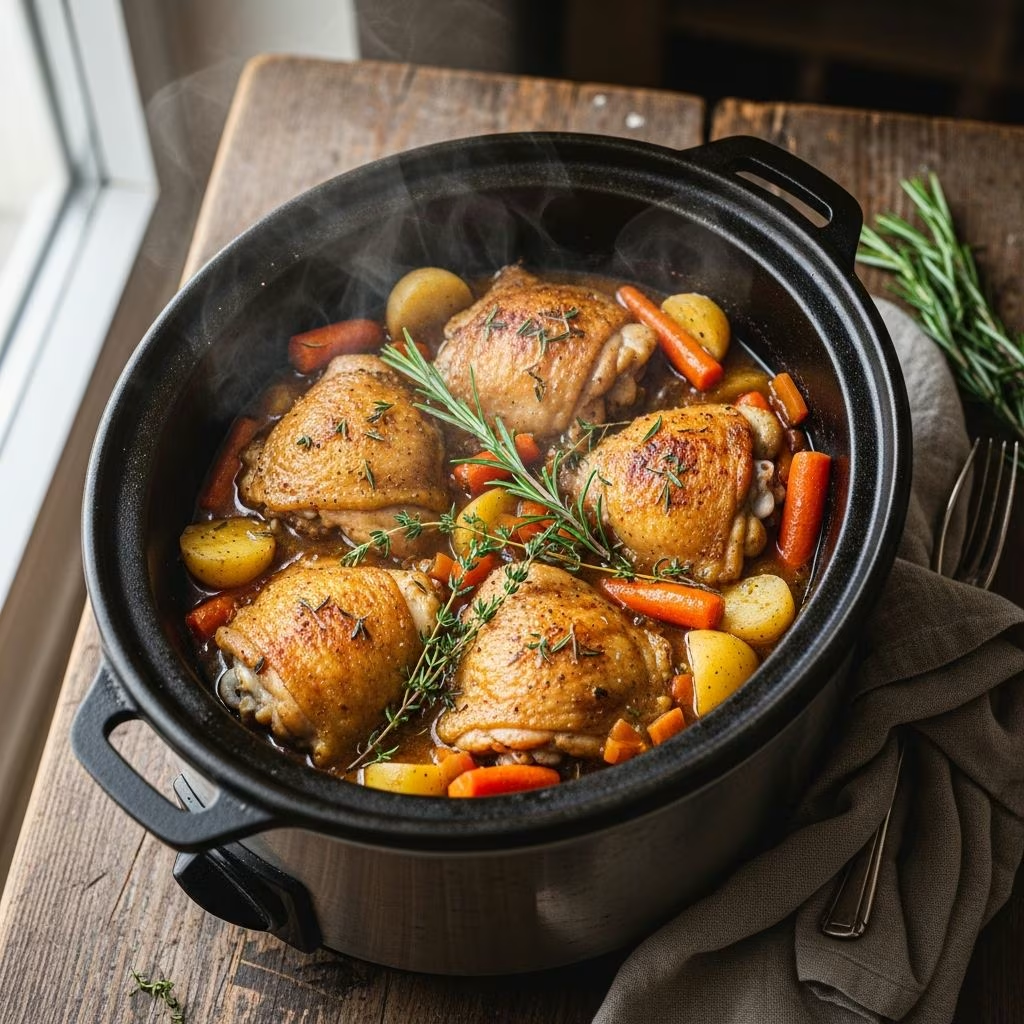
Carrots and potatoes cut into uniform pieces cook beautifully in the moist environment created by chicken thighs. These vegetables should be arranged in a single layer on the slow cooker bottom before adding the seared chicken thighs and broth. The potatoes soften to a fork-tender consistency while absorbing flavors from the surrounding liquid, while carrots maintain slight firmness and natural sweetness. This approach eliminates the need for side dish preparation while ensuring vegetables cook at the same rate as the protein.
Aromatics and Herbs
Fresh thyme sprigs, bay leaves, and whole shallots nestled around the chicken thighs contribute aromatic complexity without requiring active chopping or additional cooking steps. These elements infuse their flavors into the braising liquid while remaining largely invisible in the finished dish, providing sophisticated flavor development that guests often struggle to identify.
Sauce Development and Finishing Techniques
Natural Sauce Reduction
Many slow cooker chicken preparations rely on the natural reduction of cooking liquids to achieve proper consistency. For slightly thicker sauces, a slurry made from cornstarch and cold water whisked together can be stirred into the hot cooking liquid, typically requiring 5-10 minutes of cooking time on high heat to achieve proper thickening without the starchy flavor associated with uncooked cornstarch.
Cream and Richness Additions
Finishing sauces with heavy cream creates silky, luxurious textures that elevate the entire dish. Cream should be whisked with cornstarch before stirring into the slow cooker to prevent curdling, and the mixture requires only brief cooking to thicken properly without damaging the delicate emulsion.
Cooking Duration Considerations
| Cooking Method | Duration | Internal Temperature Target | Best For |
|---|---|---|---|
| Low Heat | 4-6 hours | 165°F | Daytime preparation, maximum tenderness |
| High Heat | 2-2.5 hours | 165°F | Quick preparation, weeknight efficiency |
The extended low-heat cooking produces slightly more tender results compared to high-heat preparations, though both methods yield acceptable products. High-heat cooking provides scheduling flexibility for those with limited time availability. Overcooking—whether on low or high settings—produces minimal negative effects since chicken thighs remain tender and flavorful even after extended cooking periods.
Frequently Asked Questions
Should I remove chicken skin before or after cooking?
Leaving skin attached during cooking maximizes browning during the searing phase and allows the skin to crisp slightly, though it softens during the moist slow cooking environment. Some cooks remove skin before serving for aesthetic presentation, while others find the skin contributes valuable flavor and can be left in place. This represents a personal preference rather than a technique requirement.
Can boneless chicken thighs substitute for bone-in varieties?
Boneless thighs cook slightly faster and require less finishing time, but bone-in preparations deliver superior flavor through the collagen-rich bone and enhanced browning of the thigh structure. Boneless options work acceptably if bone-in thighs are unavailable, though cooking times may reduce by 30-45 minutes depending on thickness.
What liquid ratios work best?
Most successful preparations use between 1/3 to 1/2 cup liquid per pound of chicken. This ratio provides sufficient moisture for braising without producing excessive sauce. Vegetable-inclusive recipes may require additional liquid to account for vegetable moisture absorption.
Can these recipes be adapted for meal preparation?
Slow cooker chicken thighs cool and refrigerate exceptionally well, remaining moist and flavorful for 3-4 days when stored in airtight containers. Most preparations also freeze successfully for up to 3 months, though cream-based sauces may separate slightly upon thawing. Reheating gently in a low oven or on the stovetop over medium heat restores optimal texture and sauce consistency.
Ingredient Quality and Selection
Purchasing decisions significantly impact final results. Fresh chicken thighs from reliable sources exhibit pale pink color and firm texture, while frozen options thaw completely before searing to ensure proper browning. Organic or pasture-raised varieties, while more expensive, often provide superior flavor compared to conventionally raised poultry.
Fresh garlic, onions, and herbs substantially outperform their dried counterparts in these preparations, though dried herbs suffice when fresh options are unavailable. Real butter rather than margarine creates noticeably superior sauce texture through its natural emulsifying properties.
Nutritional Considerations
Chicken thighs contain approximately 15 grams of protein per 3-ounce serving along with B-vitamins and essential minerals like selenium and zinc. While darker meat contains more fat than white meat, these fats consist primarily of unsaturated varieties and contribute to improved satiety and flavor development. Serving these preparations over vegetables or brown rice rather than refined carbohydrates optimizes nutritional value.
Conclusion
Slow cooker chicken thighs represent an accessible entry point for home cooks seeking restaurant-quality results with minimal active preparation. The combination of proper searing technique, thoughtful seasoning, and diverse flavor profiles permits endless variation while maintaining consistent excellence. Whether preparing Mediterranean-inspired creamy sauces, Asian-influenced glazes, or classic garlic butter preparations, this humble poultry cut transforms into memorable dinners through the patient application of time and heat.
References
- The Maillard Reaction in Food Chemistry — McGill University Department of Chemistry. 2023. https://www.mcgill.ca/foodscience
- Safe Minimum Internal Temperature Chart — United States Department of Agriculture Food Safety and Inspection Service. 2024. https://www.fsis.usda.gov/food-safety
- Slow Cooker Cooking Times and Temperature Guidelines — National Center for Home Food Preservation, University of Georgia. 2023. https://nchfp.uga.edu/how/slow_cooker.html