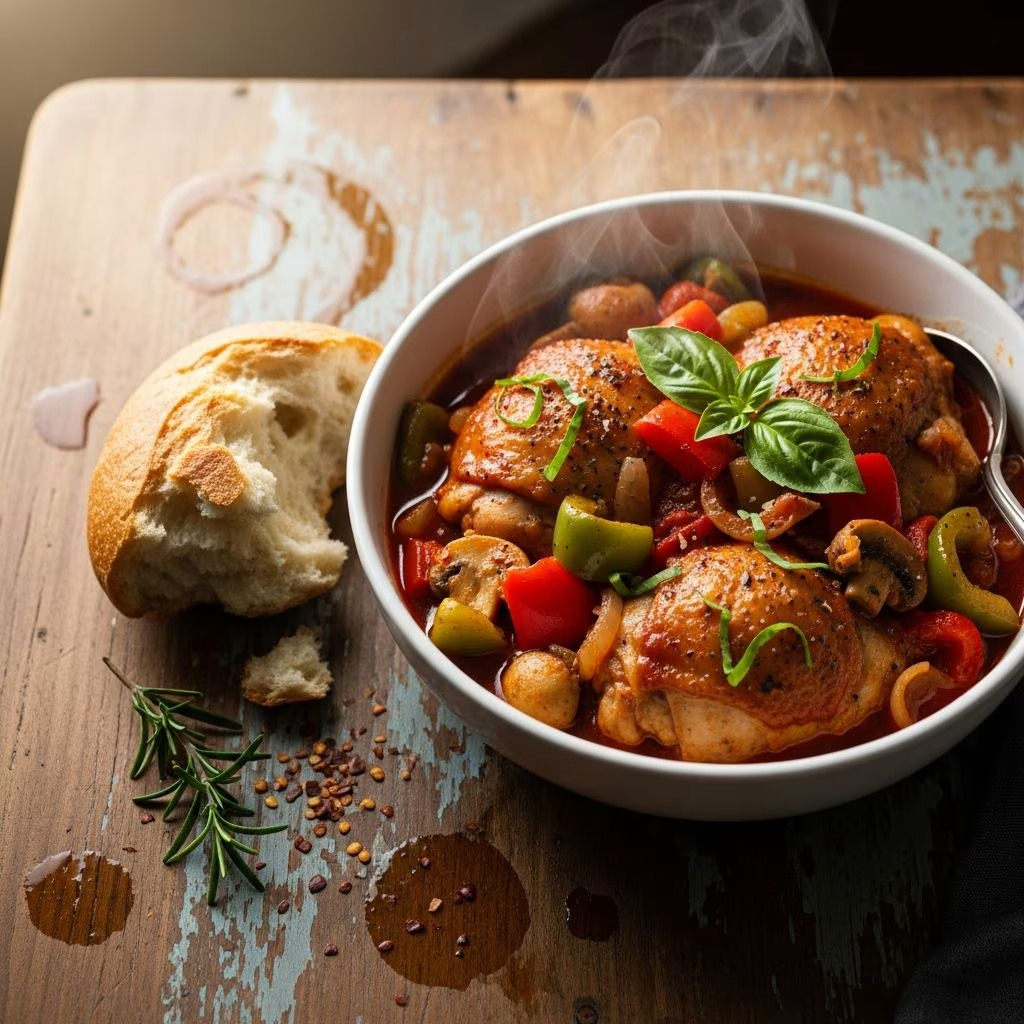
Chicken cacciatore, meaning “hunter’s style” in Italian, represents one of the most cherished dishes in Mediterranean cuisine. This traditional preparation features poultry braised in a robust sauce enriched with tomatoes, vegetables, and aromatic herbs. While conventional recipes require careful monitoring on the stovetop, the modern slow cooker transforms this labor-intensive dish into an effortless weeknight staple that develops deep, complex flavors through extended, gentle cooking.
Understanding the Origins and Appeal of Cacciatore
The cacciatore technique emerged from Italian hunter traditions, where game birds were prepared using readily available ingredients: tomatoes, garlic, onions, and mushrooms. This rustic approach emphasized simplicity and resourcefulness, creating a dish that could be prepared in a single pot over moderate heat. Today, the slow cooker carries forward this philosophy while offering modern conveniences that allow busy home cooks to enjoy restaurant-quality results without extensive hands-on time.
The appeal of slow cooker chicken cacciatore lies in its ability to transform relatively humble ingredients into something extraordinary. Extended cooking times allow the chicken to become remarkably tender, while flavors meld and intensify as the sauce gently reduces. The combination of acidity from tomatoes, earthiness from mushrooms, and brightness from fresh herbs creates a balanced, satisfying dish that pairs beautifully with various accompaniments.
Selecting the Right Chicken for Your Preparation
The choice between chicken thighs and chicken breasts significantly impacts the final dish. Chicken thighs, being fattier and more flavorful, remain juicier throughout the extended cooking process and contribute richer body to the sauce. These cuts contain more connective tissue, which breaks down during slow cooking, creating a naturally gelatinous, luxurious sauce. For those prioritizing leanness, boneless, skinless chicken breasts work adequately but require careful monitoring to prevent drying.
When using bone-in, skin-on chicken, remove the skin before cooking as it becomes unpleasantly soggy during the slow cooking process. If working with frozen chicken, ensure complete thawing in the refrigerator before cooking, as slow cookers cannot safely bring frozen poultry to proper temperatures quickly enough. For bone-in varieties, add approximately 30 minutes to your cooking time when preparing on high heat settings.
Essential Ingredients and Their Roles
The Flavor Foundation
Every successful chicken cacciatore begins with quality tomatoes, which provide the sauce’s structural foundation. Crushed canned tomatoes offer convenience and consistent flavor year-round, while tomato paste concentrated the umami qualities that make the sauce deeply satisfying. Many recipes combine both forms to achieve optimal depth and body.
Aromatics—garlic, onions, and sometimes shallots—form the flavor base that supports the entire dish. These ingredients should be minced or finely chopped to distribute evenly throughout the sauce and dissolve into it as cooking progresses. The garlic particularly benefits from being added to a hot skillet before transferring to the slow cooker, which mellows its sharpness and develops subtle sweetness.
Vegetables and Textural Elements
Bell peppers provide natural sweetness and bright color, while their firm structure maintains integrity during extended cooking. Mushrooms contribute earthy depth and develop a silky texture as they slowly soften. Onions break down almost completely, thickening the sauce naturally without requiring flour or cornstarch.
Some recipes incorporate olives or capers for briny complexity, though these remain optional depending on personal preference. The variety of vegetables also determines whether the finished dish leans toward lighter, fresher profiles or richer, more rustic interpretations.
Herbs and Seasoning Profile
Dried oregano and basil form the traditional herbal backbone of Italian cacciatore. Oregano’s peppery, slightly minty character provides warm earthiness, while basil adds gentle anise notes. These dried herbs should be added during cooking to allow their flavors to fully extract into the sauce.
Fresh basil, reserved for garnishing at the finish, brightens the dish and prevents the herb flavor from becoming one-dimensional. Red pepper flakes introduce gentle heat, while balsamic or red wine vinegar adds subtle acidity that balances the tomatoes’ natural tang. Salt and freshly ground black pepper round out the seasoning, though these should be adjusted to taste after the initial cooking completes.
Preparation Techniques: From Skillet to Slow Cooker
The Browning Step
While some slow cooker recipes skip this step entirely, browning the chicken in a hot skillet beforehand develops rich, savory flavors through the Maillard reaction. This technique requires heating olive oil in a large skillet over medium-high heat until shimmering, then adding seasoned chicken pieces in a single layer.
Cook without disturbing for 3-4 minutes to develop a golden crust, then flip and brown the opposite side for 2-3 additional minutes. The goal involves achieving visual browning rather than cooking the chicken completely—the slow cooker will finish the cooking process gently over several hours. Transfer the browned chicken to a clean plate and set aside.
Building Flavors in the Skillet
After removing the chicken, reduce heat to medium and add finely chopped onions to the same skillet, allowing them to soften in the residual fat for approximately 3 minutes. Add minced garlic and cook until fragrant—approximately 1 minute—ensuring the garlic doesn’t burn. Some recipes introduce balsamic vinegar at this stage, allowing it to reduce slightly and concentrate.
Scrape the skillet’s bottom to release flavorful browned bits stuck to the surface—these concentrated flavors significantly enhance the final sauce. Transfer this aromatic mixture, along with any pan drippings, to the slow cooker to form the flavor base.
Layering and Cooking Instructions
Two Primary Approaches
Recipes generally follow one of two organizational methods. The layering approach involves placing vegetables in the slow cooker’s bottom, topping them with browned chicken, and pouring tomato sauce over everything. This method ensures vegetables become very soft and partially dissolve into the sauce, creating a naturally thickened consistency.
The combined approach involves adding all ingredients simultaneously after browning the chicken, stirring everything together to distribute flavors evenly. This technique produces a more cohesive sauce where ingredients remain more distinct and identifiable.
Cooking Times and Temperature Settings
| Chicken Type | High Setting | Low Setting | Target Temperature |
|---|---|---|---|
| Boneless, Skinless Breasts | 1.5–2.5 hours | 4–5 hours | 165°F |
| Bone-In Thighs | 3–4 hours | 5–7 hours | 165°F |
| Boneless Thighs | 3–4 hours | 4–6 hours | 165°F |
The low setting produces more tender, flavorful results as ingredients cook gently and flavors develop more completely. However, the high setting accommodates busier schedules when necessary. Regardless of setting chosen, chicken must reach an internal temperature of 165°F for food safety.
Once the chicken reaches proper temperature, remove it from the slow cooker immediately to prevent overcooking and drying. If desired at this point, the chicken can be chopped into bite-sized pieces or shredded for different textural presentations. Mushrooms typically require an additional 30-60 minutes of cooking if added partway through to prevent them from becoming mushy.
Serving Suggestions and Complementary Sides
Traditional Italian preparations pair chicken cacciatore with pasta, allowing diners to coat strands with the flavorful sauce. Spaghetti, penne, or egg noodles all work beautifully. For lower-carbohydrate options, spiralized vegetables like zucchini noodles or spaghetti squash provide vegetable-forward alternatives that maintain authenticity while reducing refined carbohydrate content.
Creamy polenta offers luxurious richness that contrasts wonderfully with the sauce’s acidity. Crusty bread serves as an excellent vehicle for soaking up every drop of liquid. Simple green salads with vinaigrette provide refreshing contrast to the dish’s richness, while roasted vegetables add nutritional density and visual appeal to the plate.
Common Variations and Customizations
Regional Italian traditions produce numerous cacciatore interpretations. Some versions incorporate white wine or red wine vinegar to add complexity. Others include olives or capers for briny elements. Mediterranean versions sometimes feature bell peppers in multiple colors for visual interest and subtle flavor variations.
For those seeking lighter profiles, reduce the olive oil and use low-sodium broth. Spice lovers can increase red pepper flakes substantially or incorporate fresh chili peppers. Creative cooks might experiment with additional vegetables like carrots, celery, or bell pepper varieties not typically included in traditional recipes.
Storage and Make-Ahead Strategies
Chicken cacciatore actually improves over time as flavors continue developing. Refrigerate leftovers in airtight containers for up to four days, or freeze for up to three months. When freezing, leave approximately one-half inch headspace in containers as liquids expand during the freezing process.
For make-ahead convenience, combine all ingredients except the browned chicken in the slow cooker insert the evening before, refrigerate overnight, and simply add the browned chicken in the morning before plugging in the slow cooker. This approach allows you to enjoy homemade meals despite hectic weekday schedules.
Nutritional Considerations
Chicken cacciatore provides excellent protein content, particularly when prepared with chicken thighs that offer additional iron and B vitamins compared to breast meat. The tomato-based sauce delivers lycopene, a potent antioxidant linked to cardiovascular health benefits. Mushrooms contribute selenium and various B vitamins.
To enhance nutritional value, use low-sodium broth and tomato products, then adjust salt at the table based on individual preference. Adding extra vegetables beyond traditional ingredients increases fiber and micronutrient density without significantly altering preparation procedures.
Troubleshooting Common Issues
Watery Sauce: Extend cooking time on the low setting, allowing excess liquid to reduce. Alternatively, remove the chicken, set the slow cooker to high, and cook uncovered for 20-30 minutes to concentrate sauce.
Tough Chicken: Ensure you’re using the low setting rather than high, and avoid cooking beyond the point when chicken reaches 165°F internally. Chicken thighs prove more forgiving than breasts for extended cooking.
Bland Flavor: Taste the finished sauce and adjust seasoning with additional salt, pepper, or herbs. Sometimes fresh basil added at the end dramatically improves perceived flavor complexity.
Frequently Asked Questions
Can I use chicken breasts instead of thighs?
Yes, boneless, skinless chicken breasts work, though they require shorter cooking times (1.5–2.5 hours on high or 4–5 hours on low) to prevent drying. Monitor internal temperature carefully and remove immediately upon reaching 165°F.
Must I brown the chicken beforehand?
Browning is optional but highly recommended, as it develops deep, savory flavors through the Maillard reaction that enhance the final dish considerably. Without browning, the chicken will still cook properly but with less flavorful results.
Can I prepare this recipe without a slow cooker?
Absolutely. After browning the chicken and vegetables, transfer everything to a Dutch oven and braise in a preheated 325°F oven for 1.5 hours, or continue cooking on the stovetop over low heat for approximately 45 minutes to 1 hour.
How far in advance can I prepare ingredients?
Chop vegetables and prepare the sauce components up to 24 hours ahead, storing them separately in the refrigerator. Brown the chicken the morning of serving for optimal texture and flavor development.
What if my slow cooker lacks a browning function?
Use a separate skillet for browning the chicken and vegetables, then transfer everything to the slow cooker with any pan drippings. This remains the most common approach across various recipes.
References
- Slow Cooker Chicken Cacciatore Recipe — Valerie’s Kitchen. Accessed April 2026. https://www.fromvalerieskitchen.com/slow-cooker-chicken-cacciatore/
- Slow Cooker Chicken Cacciatore — Jo Cooks. Accessed April 2026. https://www.jocooks.com/recipes/slow-cooker-chicken-cacciatore/
- Best Slow-Cooker Chicken Cacciatore Recipe — Delish. Accessed April 2026. https://www.delish.com/cooking/recipe-ideas/a23106011/slow-cooker-chicken-cacciatore-recipe/
- Easy Slow Cooker Chicken Cacciatore — The Suburban Soapbox. Accessed April 2026. https://thesuburbansoapbox.com/slow-cooker-chicken-cacciatore-recipe/
- Slow Cooker Chicken Cacciatore: Easy, Healthy Recipe — Well Plated. Accessed April 2026. https://www.wellplated.com/slow-cooker-chicken-cacciatore/
- Slow Cooker Chicken Cacciatore — Cultured Table. Accessed April 2026. https://culturedtable.com/slow-cooker-chicken-cacciatore/
- Slow Cooker Chicken Cacciatore & Veggie-Packed Tomato Sauce — Fannetastic Food. Accessed April 2026. https://www.fannetasticfood.com/slow-cooker-chicken-cacciatore/