Chicken bone broth stands out as a cornerstone of nourishing home cooking, offering a wealth of minerals, collagen, and flavor from simple ingredients. Using a slow cooker transforms this process into a hands-off affair, ideal for busy schedules. This guide walks you through creating a golden, jiggly broth that elevates everyday meals.
Why Choose Bone Broth Over Regular Stock?
Bone broth differs from standard stock by simmering bones longer to release gelatin, amino acids like glycine and proline, and minerals such as calcium and magnesium. This results in a thicker consistency that gels when cooled, signaling high collagen content. Health enthusiasts prize it for supporting joint health, gut integrity, and skin elasticity, though benefits vary by individual diet and preparation.
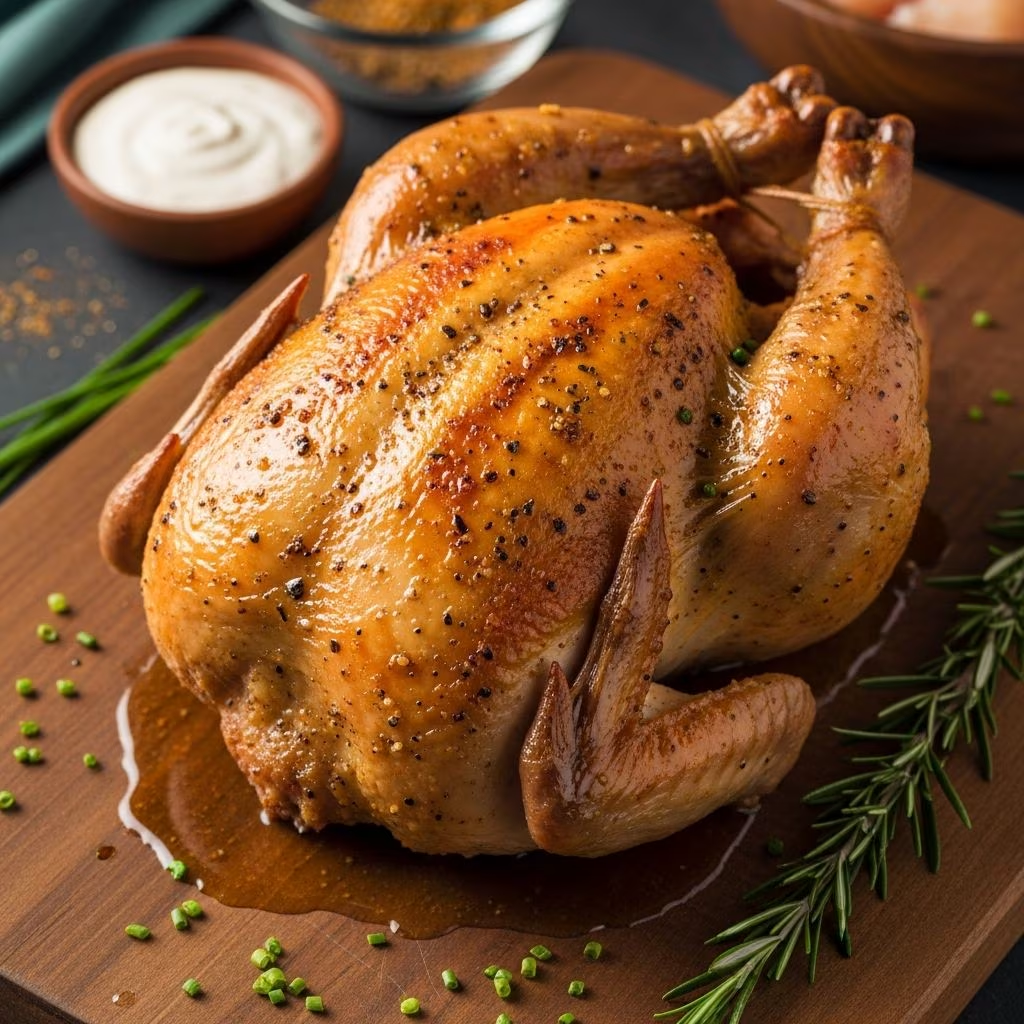
In a slow cooker, low heat over 12-24 hours mimics traditional methods without constant monitoring. It’s economical too—repurpose rotisserie or roasted chicken remnants instead of buying cartons of broth.
Essential Ingredients for Success
Gather these basics for a 6-quart slow cooker batch yielding about 8-10 cups:
- 2-3 lbs chicken bones or carcasses (roasted or raw, with skin and cartilage for richness)
- 2 carrots, roughly chopped (unpeeled for extra nutrients)
- 2 celery stalks, chopped
- 1 onion, quartered (skin on for color)
- 4-6 garlic cloves, smashed
- Handful of fresh parsley or thyme
- 2 bay leaves
- 1 tbsp apple cider vinegar (draws out minerals)
- 1 tsp sea salt
- 1/2 tsp black peppercorns
- 10-12 cups filtered water (enough to cover ingredients by 2 inches)
Optional add-ins: ginger slices for warmth, turmeric for anti-inflammatory properties, or veggie scraps from your fridge.
Step-by-Step Preparation Guide
- Prep the bones: If using a whole roasted chicken, strip meat for another meal and save the carcass, wings, and feet if available. Roast raw bones at 400°F for 30 minutes to deepen flavor.
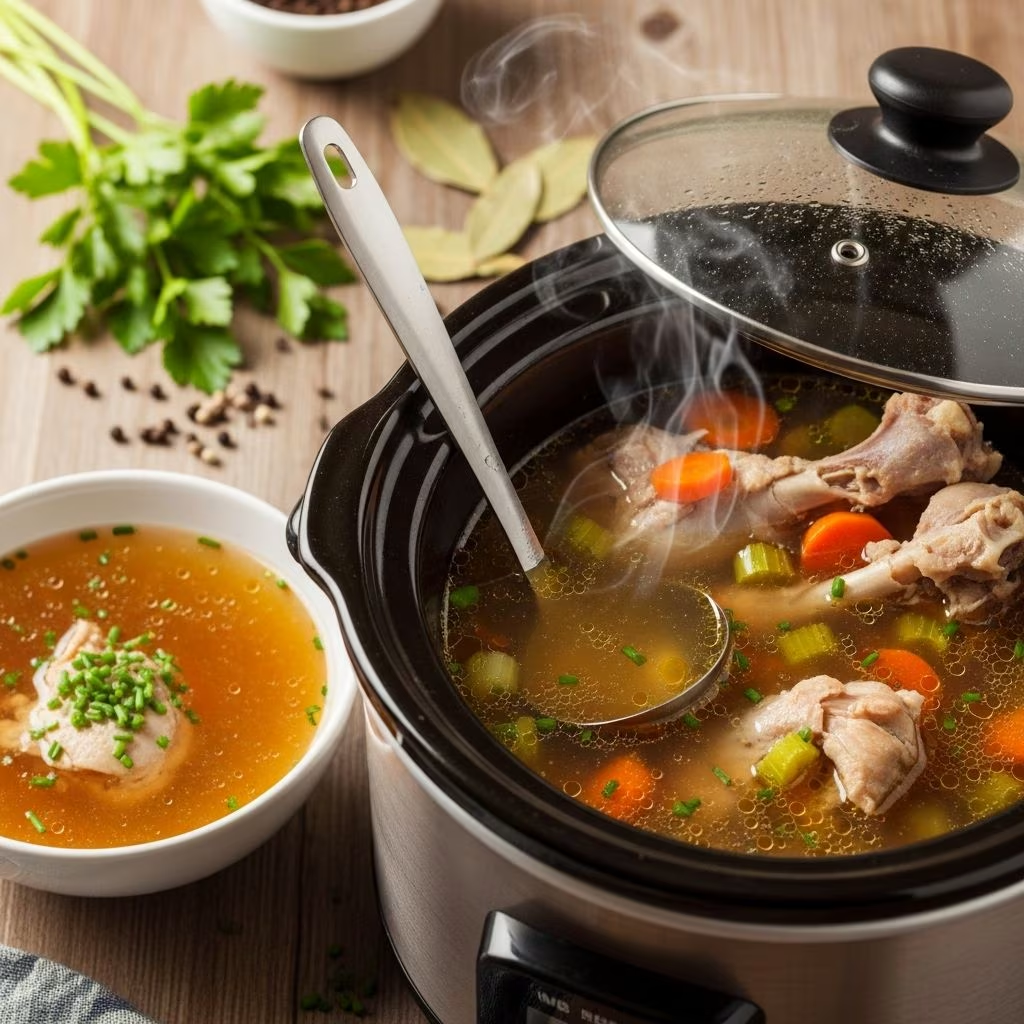
- Layer in the slow cooker: Place bones at the bottom, followed by vegetables, herbs, vinegar, salt, and peppercorns. Pour in water until 2 inches from the top.
- Cook low and slow: Set to low for 12-24 hours. For overnight convenience, start before bed. Skim foam after 2-3 hours if desired.
- Strain meticulously: Use tongs to remove large pieces, then pour through a fine-mesh sieve lined with cheesecloth into bowls or jars. Discard solids or compost them.
- Cool and store: Let broth cool to room temperature, then refrigerate. A fat layer (schmaltz) will form—skim for cooking or leave for extra flavor.
Expect a fragrant, amber liquid that jiggles when chilled, indicating proper extraction.
Customizing Your Broth for Different Needs
Tailor the recipe to preferences:
| Variation | Key Changes | Best For |
|---|---|---|
| Light Daily Broth | 12 hours cook time, fewer bones | Sipping or light soups |
| Rich Collagen Boost | 24 hours, add chicken feet | Joint support recipes |
| Immune Support | Extra garlic, ginger, turmeric | Cold-season tonics |
| Low-Sodium | Omit salt, add post-cook | Restricted diets |
| Vegetarian Alternative | Mushroom stems, kombu instead of bones | Plant-based stocks |
Experiment with beef or turkey bones for variety, adjusting cook times accordingly.
Health Benefits Backed by Science
Bone broth’s appeal lies in its nutrient profile. Collagen breaks down into gelatin, aiding digestion and reducing inflammation. Studies link glycine to better sleep and proline to skin repair. Minerals leach from bones, enhanced by vinegar’s acidity.
While not a cure-all, incorporating it into diets supports hydration and provides electrolytes. Use in place of water for rice or oats to boost nutrition subtly.
Smart Storage and Freezing Tips
Fresh broth lasts 5 days in the fridge. For longer storage:
- Portion into ice cube trays, then transfer to freezer bags (1-2 tbsp per cube for versatility).
- Mason jars with 1-inch headspace prevent cracking; thaw overnight.
- Frozen lasts 6-12 months; boil to refresh after thawing.
Label with dates. Avoid metal containers to prevent reactions.
Delicious Recipe Ideas to Use Your Broth
Transform broth into meals:
- Soup Base: Add noodles, veggies, and shredded chicken for quick ramen.
- Grain Cooker: Replace water in rice or quinoa for infused flavor.
- Sauces: Simmer into gravies or risottos.
- Smoothies: Blend with fruits for a savory twist (start small).
- Braising Liquid: Tenderize tougher cuts of meat.
For pho-inspired bowls: Sauté ginger and star anise, add broth, rice noodles, herbs, and lime.
Troubleshooting Common Issues
Encounter problems? Here’s how to fix:
- Not Gelling? Use more connective tissue next time or simmer longer.
- Cloudy Broth? Fine strain or chill to settle particles.
- Off Flavors? Fresh ingredients and filtered water prevent this.
- Too Salty? Dilute with water before use.
- Slow Cooker Overflow? Cook with lid slightly ajar or use less water.
Quality bones make the biggest difference.
Equipment Recommendations
A 6-8 quart slow cooker with programmable timer is ideal. Cheesecloth or nut milk bags aid straining. Wide-mouth jars simplify pouring.
Frequently Asked Questions
Can I make this in an Instant Pot?
Yes, use high pressure for 120 minutes with natural release, but slow cooker yields milder flavor.
Is apple cider vinegar necessary?
It helps mineral extraction but can be skipped; taste won’t suffer much.
What if I don’t have carcasses?
Buy chicken backs or wings cheaply; roast first for best results.
Can I reuse the bones?
Once, after 12 hours; second simmer for stock, not full broth.
Is it safe to leave overnight?
Absolutely—slow cookers are designed for extended safe operation.
How do I know it’s done?
Deep golden color, bones crumbling, and rich aroma signal readiness.
This method empowers home cooks to produce professional-grade broth effortlessly, enhancing meals with nutrition and taste.
References
- Nutritional Profile of Bone Broth — Harvard T.H. Chan School of Public Health. 2023-05-15. https://www.hsph.harvard.edu/nutritionsource/bone-broth/
- Collagen and Gelatin in Broths — National Institutes of Health (PubMed). 2022-11-10. https://pubmed.ncbi.nlm.nih.gov/35252359/
- Slow Cooker Safety Guidelines — USDA Food Safety and Inspection Service. 2024-01-22. https://www.fsis.usda.gov/food-safety/safe-food-handling-and-preparation/food-safety-basics/slow-cookers-and-food-safety
- Mineral Extraction in Bone Broths — Journal of Food Science (Wiley). 2021-08-05. https://doi.org/10.1111/1750-3841.15845
- Glycine Benefits Review — Mayo Clinic Proceedings. 2023-03-12. https://www.mayoclinicproceedings.org/article/S0025-6196(23)00123-4/fulltext