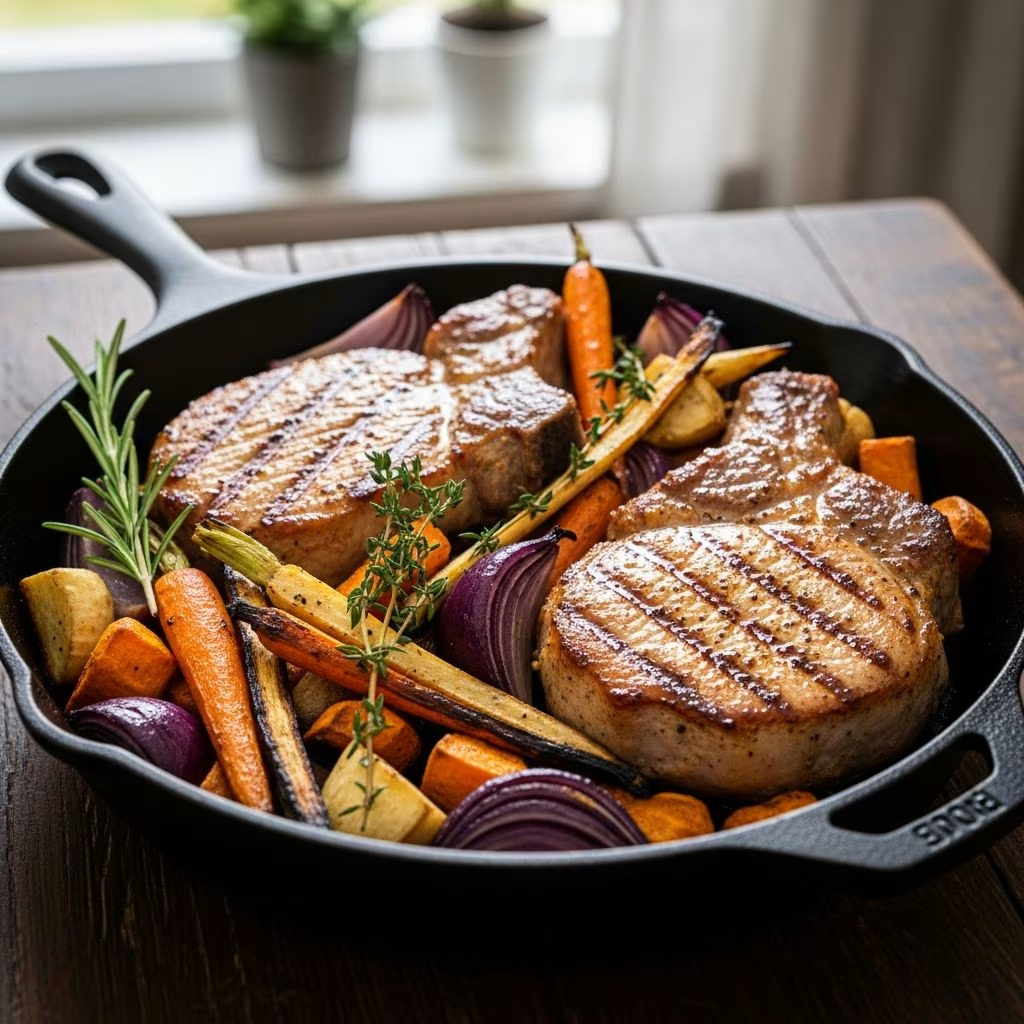
One-pan meals have become essential in modern home cooking, particularly for busy weeknights when time and energy are limited. A skillet featuring pork chops, potatoes, and onions represents an ideal solution for those seeking nutrition, flavor, and convenience in a single dish. This combination of proteins and vegetables creates a complete meal that requires minimal cleanup while delivering restaurant-quality results in your own kitchen.
Understanding the Foundation of Skillet Cooking
Cooking proteins and vegetables together in a single vessel requires understanding how different ingredients interact during the cooking process. The pork chops serve as the primary protein source, while potatoes and onions act as both flavor enhancers and substantial side components. When combined properly, the rendered fat from the pork creates a flavorful medium that seasons the vegetables naturally, eliminating the need for excessive added fats or seasonings.
The key to successful skillet cooking lies in timing and temperature management. Each ingredient has a different cooking duration, so layering them strategically ensures everything reaches optimal tenderness simultaneously. The pork should reach an internal temperature of 145°F for food safety, while potatoes require approximately 30-40 minutes of cooking time depending on their size.
Selecting Quality Ingredients
The quality of your finished dish depends significantly on ingredient selection. For pork chops, opt for cuts that are at least one inch thick, as thinner cuts tend to dry out during cooking. Bone-in varieties add extra flavor through marrow and connective tissue, while boneless cuts offer easier consumption and more uniform cooking.
Potatoes form the textural foundation of this dish. Yukon Gold varieties provide a naturally buttery flavor and maintain their shape better during extended cooking compared to starchy russets. Cut potatoes into consistent sizes—typically quarters or half-inch rounds—to ensure even cooking throughout the cooking period.
For onions, yellow or sweet varieties work best, offering a gentle sweetness that complements pork without overwhelming the palate. Cut them into rings or wedges depending on your preference for texture and ease of eating.
Preparation Techniques That Matter
Proper preparation significantly impacts the final dish’s success. Remove pork chops from refrigeration 15-20 minutes before cooking to allow them to reach closer to room temperature, promoting more even cooking throughout the meat. Pat the surface dry with paper towels before cooking—moisture on the surface prevents proper browning through a process known as steaming.
For vegetables, uniformly sized pieces cook at similar rates. Potatoes should be cut into roughly equal sizes, with pieces no larger than three-quarter inch to one inch to avoid undercooked centers. Onions cut into similar-sized pieces cook more predictably than irregular cuts.
The Cooking Process Explained
Begin by heating your skillet over medium-high heat. For cast iron, this process might take 3-5 minutes to reach the proper temperature. Add a small amount of oil or butter—approximately one tablespoon—allowing it to heat until it shimmers visibly.
Place pork chops in the hot skillet without moving them immediately. Allow 3-5 minutes of undisturbed cooking for proper browning to develop. This Maillard reaction creates a flavorful crust through complex chemical interactions between proteins and sugars. Flip only once and repeat on the other side for another 3-5 minutes.
After both sides brown, remove the pork temporarily and set aside. Add additional butter or oil if needed, then introduce onions to the skillet. Cook for 2-3 minutes, stirring occasionally, to begin softening the onion’s structure and releasing its sugars. Next, add potatoes, tossing them to coat with the fat in the pan.
Return the pork chops to the skillet, positioning them on top of or nestled among the potatoes. This arrangement allows the potatoes to benefit from pork drippings while cooking. Add liquid—typically broth, wine, or even water—to create a braising environment that keeps the meat moist during the extended cooking period that vegetables require.
Reduce heat to low or medium-low, cover the skillet, and allow everything to simmer for 30-45 minutes. The covered environment creates steam, which accelerates vegetable cooking while preventing moisture loss from the pork.
Seasoning Strategies
Traditional approaches rely on salt and pepper as primary seasonings, applied before cooking. This method allows salt to penetrate the meat through osmosis during the resting and cooking phases, enhancing flavor throughout rather than just on the surface.
Additional seasoning options include garlic powder, onion powder, paprika, and Italian seasoning. These dry seasonings adhere better to moist surfaces than fresh herbs and distribute evenly across the meat. Fresh herbs like rosemary or thyme can be added during the braising phase for a more subtle flavor that develops gradually.
Parmesan cheese offers an umami dimension that deepens the dish’s overall complexity. A light dusting applied before adding liquid helps create a subtle crust on the potatoes as they cook.
Variations and Flavor Modifications
| Variation Type | Key Ingredients | Cooking Adjustment |
|---|---|---|
| Creole-Inspired | Tony Chachere’s seasoning, fresh basil, garlic | Add garlic and basil during braising phase |
| Herb-Forward | Fresh rosemary, thyme, lemon juice | Add herbs at beginning; lemon juice at end |
| Broth-Based | Beef or chicken broth, carrots, bay leaf | Increase liquid to 1 cup; extend cooking to 45 minutes |
| Buttery Classic | Increased butter, Parmesan, minimal seasoning | Use butter as primary fat; reduce braising liquid to ½ cup |
Different regional cuisines suggest various flavor profiles. Creole adaptations incorporate smoked paprika, cayenne, and fresh basil for depth and slight heat. Mediterranean versions feature lemon juice and fresh herbs that brighten the rich pork and potatoes. French-influenced preparations might include white wine in place of broth and shallots instead of onions.
Temperature and Doneness Guidelines
Understanding proper doneness prevents both undercooking and overcooking. Pork has evolved regarding safe internal temperatures. Modern recommendations suggest 145°F as the safe minimum, allowing for a slight pink center that maintains juiciness. Use an instant-read thermometer inserted into the thickest part of the meat, away from bone if present.
Potatoes reach optimal tenderness when they can be pierced easily with a fork but still maintain their shape. This typically occurs 30-40 minutes into cooking, depending on size and cut. Smaller, thinner pieces finish cooking faster than larger chunks.
If potatoes finish before the pork reaches safe temperature, remove them to a separate plate and keep them warm. You can increase heat slightly during the final minutes to encourage browning on the pork’s exterior without risking overcooking.
Common Challenges and Solutions
Dry pork often results from overcooking or insufficient fat in the cooking medium. Prevent this by using a meat thermometer rather than time estimates, as thickness and cut variations affect cooking duration significantly. Ensure adequate braising liquid—at minimum, ½ cup—to maintain a moist cooking environment.
Unevenly cooked potatoes typically indicate inconsistent sizing. Uniformly cut pieces eliminate this problem. If some potatoes finish before others, remove the finished pieces early and return them briefly at the end for reheating.
Stuck food suggests insufficient fat or inadequate skillet temperature before adding ingredients. Ensure the skillet is properly preheated and coated with sufficient fat before the initial searing phase.
Serving and Presentation
Transfer the pork chops to serving plates first, arranging potatoes and onions around them. Spoon any accumulated pan juices over the top, adding both moisture and concentrated flavor. This au jus enhances the presentation while providing additional seasoning.
Garnish with fresh parsley, chives, or herb microgreens for color contrast and freshness that balances the rich, cooked components. A light squeeze of fresh lemon juice just before serving brightens the overall flavor profile.
Serve with crusty bread for soaking up the pan juices, which many consider the most flavorful component of the meal. Cornbread offers a slightly sweet complement to savory pork. Simple vegetables like steamed broccoli or green beans add nutritional balance without competing for attention on the plate.
Storage and Reheating
Properly stored leftovers maintain quality for 3-4 days in the refrigerator. Transfer the entire dish to an airtight container, ensuring the pork remains submerged in its juices to prevent drying. The gelatin from cooking bonds coat the meat, providing moisture during storage.
Reheat gently using low to medium heat in a skillet, adding a splash of broth or water to restore moisture lost during storage. Alternatively, reheat in the oven at 325°F covered with foil for 15-20 minutes. Avoid high-heat reheating, which can toughen the meat.
Equipment Recommendations
Cast iron skillets excel for this preparation, retaining heat effectively and developing excellent browning. Their seasoned surface prevents sticking and adds iron to the diet, though well-maintained stainless steel pans work equally well. Select a skillet large enough to accommodate ingredients without crowding—typically 12 inches for four pork chops and vegetables.
Ensure your skillet has a tight-fitting lid to trap steam effectively during braising. A non-vented lid maintains moisture better than vented alternatives. If lacking a proper lid, aluminum foil pressed firmly over the pan rim provides an adequate temporary solution.
Nutritional Considerations
Pork provides significant protein content—approximately 25-30 grams per three-ounce serving—essential for muscle maintenance and tissue repair. Potatoes contribute complex carbohydrates and potassium, supporting sustained energy and cardiovascular health. Onions provide fiber and quercetin, a beneficial compound with anti-inflammatory properties.
The fat rendered during cooking contains both saturated and monounsaturated varieties. While saturated fat consumption should remain moderate, modern research indicates that fat within whole food meals affects body differently than equivalent amounts isolated in processed foods.
Frequently Asked Questions
Can I prepare this dish in advance?
Yes, you can prepare ingredients hours ahead. Cut vegetables and store them separately in the refrigerator. Season the pork chops and leave them covered at room temperature for 20-30 minutes before cooking. This preparation method reduces active cooking time significantly.
What broth works best for braising?
Beef broth creates the richest flavor complement to pork, though chicken broth provides a lighter option. Vegetable broth works adequately for vegetarian adaptations. In all cases, use low-sodium varieties to control salt levels throughout the cooking process.
How do I prevent potatoes from becoming mushy?
Cut potatoes into uniform, moderately-sized pieces and maintain adequate braising liquid without excessive moisture. Avoid overcooking by checking for doneness at 30 minutes rather than cooking the full 40-45 minutes if pieces are particularly small.
Can I use boneless pork chops successfully?
Boneless chops cook slightly faster than bone-in varieties and work well in this preparation. Pound them slightly to ensure even thickness, promoting uniform cooking. Reduce cooking time by 5-10 minutes compared to bone-in chops.
What vegetables can I substitute or add?
Carrots work excellently alongside potatoes and onions, adding sweetness and color. Celery provides subtle vegetable flavor. Garlic cloves offer concentrated pork-friendly seasoning. Avoid delicate vegetables like green beans, which overcook quickly and become mushy.
References
- USDA Food Safety and Inspection Service: Pork Food Safety — United States Department of Agriculture. 2023. https://www.fsis.usda.gov/food-safety/safe-food-handling-and-preparation/meat-poultry-seafood-and-eggs/pork-food-safety
- The Maillard Reaction in Food Chemistry — American Chemical Society. 2022. https://www.acs.org/content/acs/en/careers-and-jobs/career-resources/chemistry-careers/careers-in-food-chemistry.html
- Nutritional Composition of Pork and Potatoes — USDA FoodData Central. 2024. https://fdc.nal.usda.gov/
- Cast Iron Cookware Safety and Maintenance — FDA Consumer Updates. 2023. https://www.fda.gov/consumers/consumer-updates/cooking-cookware
- Quercetin in Onions: Nutritional Benefits and Bioavailability — Journal of Agricultural and Food Chemistry. 2021. https://pubs.acs.org/doi/10.1021/acs.jafc.0c08083