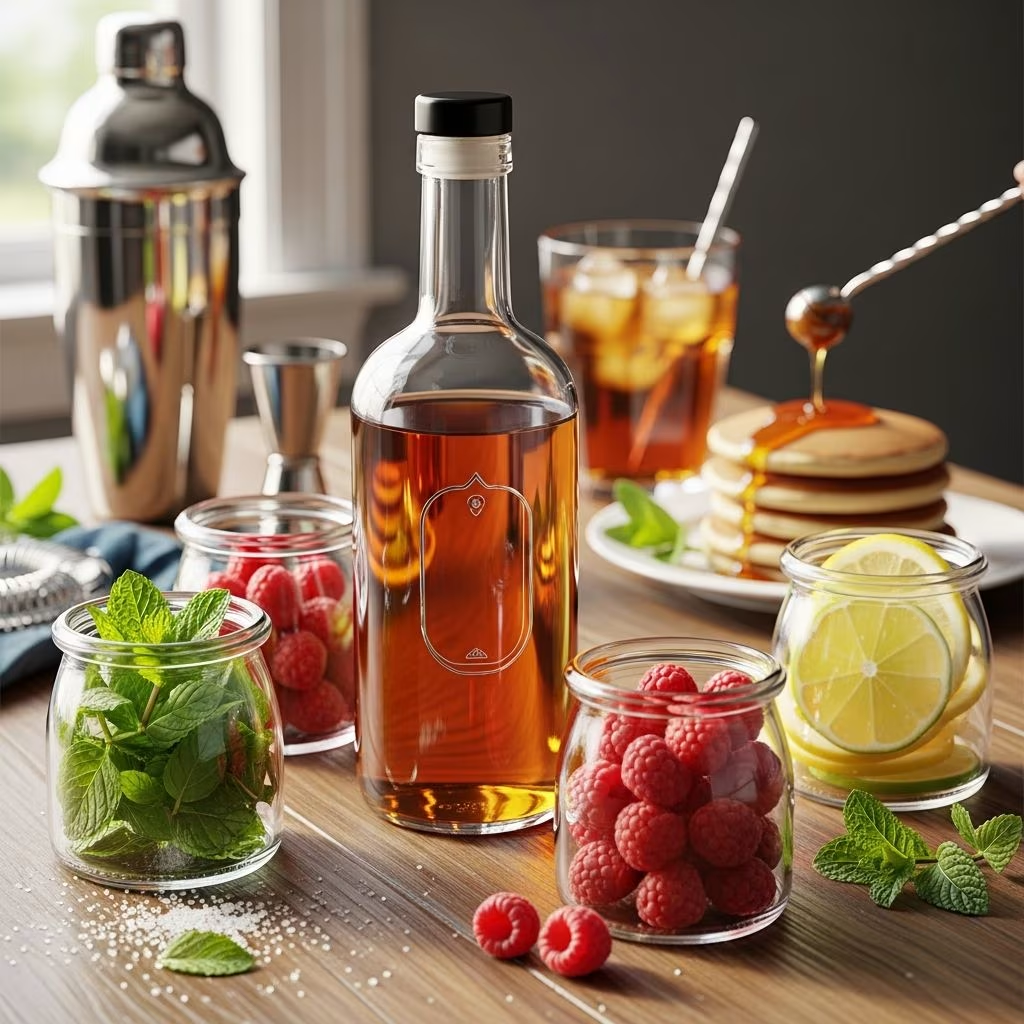
Simple syrup stands as a cornerstone ingredient in kitchens worldwide, offering a versatile sweetener that dissolves seamlessly into liquids. Unlike granulated sugar, which can leave gritty residues in cold drinks, this liquid form blends effortlessly, making it ideal for everything from morning coffee to evening cocktails. Home cooks appreciate its ease of preparation, requiring just two staple pantry items: sugar and water. But its true magic lies in customization—infuse it with herbs, fruits, or spices to create signature flavors that transform ordinary recipes into extraordinary creations.
Whether you’re a budding mixologist crafting signature drinks or a baker seeking smoother frostings, understanding simple syrup opens doors to culinary creativity. In this comprehensive guide, we’ll dive deep into its preparation, variations, practical applications, and expert techniques to ensure flawless results every time.
Understanding the Basics of Simple Syrup
At its core, simple syrup is a 1:1 ratio mixture of sugar and water, heated until the sugar fully dissolves. This process, known as simple saturation, prevents crystallization and ensures even distribution in recipes. The origins trace back to 19th-century bartending, where it became essential for balancing sour and spirit-heavy cocktails. Today, it’s a staple in professional and home settings alike.
Scientifically, sugar’s solubility increases with temperature, allowing more to dissolve in hot water than cold. A standard batch yields about 1.5 cups of syrup from basic ingredients, scalable to any quantity. Key benefits include extended shelf life when stored properly and the ability to intensify flavors without altering textures.
Step-by-Step Guide to Classic Simple Syrup
Creating the foundational version is straightforward, taking mere minutes. Gather equal parts white granulated sugar and water—start with 1 cup each for a manageable batch.
- Combine sugar and water in a small saucepan over medium heat.
- Stir gently until the sugar granules disappear completely, typically 3-5 minutes. Avoid boiling to prevent caramelization.
- Once clear, remove from heat and cool to room temperature.
- Transfer to a clean glass jar or bottle for storage.
This method ensures a thin, pourable consistency perfect for most uses. Pro tip: Use filtered water to avoid impurities affecting taste.
Rich Syrup Variations for Decadent Results
For applications needing more body, like certain desserts or strong cocktails, opt for rich syrup using a 2:1 sugar-to-water ratio. This denser version clings better to ingredients and delivers intensified sweetness.
- Preparation: Follow the same heating process but expect 5-7 minutes for dissolution due to higher sugar volume.
- Uses: Ideal for glazes, sorbets, and old-fashioned cocktails where balance is key.
Experiment with ratios: 1:1 for light sweetness, 2:1 for robust profiles.
Flavor Infusions: Elevating Your Syrup Game
Infused syrups add complexity and aroma. Steep fresh ingredients post-dissolution for 20-30 minutes, then strain.
| Flavor | Ingredients | Steeping Time | Best Uses |
|---|---|---|---|
| Vanilla | 1 split pod per cup | 30 min | Coffee, pancakes |
| Mint | Handful fresh leaves | 20 min | Mojitos, iced tea |
| Lavender | 2 tbsp dried buds | 25 min | Lemonade, cakes |
| Ginger | 2-inch sliced root | 30 min | Stir-fries, cocktails |
| Berry | 1 cup mashed fruit | 40 min | Smoothies, yogurt |
These infusions preserve vibrant colors and scents, far surpassing store-bought options laden with preservatives.
Essential Tools and Ingredients
Minimal equipment suffices: a saucepan, wooden spoon, and airtight container. Opt for cane sugar for purity or brown sugar for molasses notes in baked goods. Avoid high-fructose corn syrup substitutes, as they alter flavor profiles undesirably.
- Sugar types: Granulated (neutral), demerara (caramel-like), turbinado (robust).
- Storage: Refrigerate up to 1 month; freeze in ice cube trays for 6 months.
Creative Applications in Cocktails
Bartenders rely on simple syrup for harmony in drinks. In a classic daiquiri, it tempers lime’s acidity against rum. For margaritas, a rich version balances tequila and citrus. Recipe: Herbal Gin Fizz — Mix 2 oz gin, 1 oz lemon juice, 0.75 oz basil syrup, top with soda. Shake and strain for effervescence.
Experiment with spicy infusions like chili for margaritas or rosemary for gin tonics, creating seasonal signatures.
Enhancing Baking and Desserts
In baking, brush syrup on cakes for moisture retention—sponge cakes absorb it eagerly, staying tender longer. Poach fruits in flavored versions for tarts or compotes. Quick Recipe: Syrup-Soaked Cake — Bake vanilla sponge, poke holes, drizzle with orange syrup, chill overnight.
For frostings, incorporate into buttercream for silkier spreads without graininess. Use in meringues to stabilize peaks.
Everyday Uses Beyond the Bar and Oven
Sweeten iced coffee or tea without sediment. Drizzle over yogurt parfaits or fresh fruit salads. In savory dishes, a ginger syrup glaze elevates grilled chicken. Homemade granola gets a boost when tossed with cooled syrup before baking.
Troubleshooting Common Issues
Graininess? Overstir after cooling—sugar recrystallizes. Too thin? Increase sugar ratio next time. Mold growth signals improper storage; always use sterile jars and skim foam during cooking.
Cloudiness from impurities? Double-strain infusions. For longevity, add a vodka splash as a preservative.
Storage and Shelf Life Mastery
Room temperature lasts 1-2 weeks; refrigeration extends to 4 weeks. Freezing in portions preserves quality. Label with dates and flavors to track freshness. Thaw overnight in fridge for best texture.
Nutritional Insights and Customizations
A tablespoon offers about 50 calories, all from sugar. For lighter options, use a 3:1 water-sugar “lite” syrup, though less stable. Natural sweeteners like honey work but require adjusted ratios to avoid overpowering.
FAQ
What is the ideal sugar-to-water ratio for beginners?
Start with 1:1 for versatility in most recipes.
Can I make simple syrup without heat?
Yes, but it takes hours of shaking; heat is faster and surer.
How do I fix crystallized syrup?
Gently reheat with a splash of water, stirring until smooth.
Is simple syrup gluten-free and vegan?
Absolutely, using standard sugar and water.
Can I use it in hot drinks?
Yes, it dissolves instantly, perfect for lattes or hot toddies.
What’s the best container for storage?
Glass jars with tight lids, sterilized for safety.
References
- The Bar Book: Elements of Cocktail Technique — Jeffrey Morgenthaler. 2014-10-07. https://www.chroniclebooks.com/products/the-bar-book
- Sugar Confectionery and Chocolate Manufacture — E.B. Jackson. 2023 (reprint). https://www.springer.com/gp/book/9789401175771
- USDA FoodData Central: Sugar Syrup Composition — United States Department of Agriculture. 2025-01-15. https://fdc.nal.usda.gov/fdc-app.html#/food-details/169661/nutrients
- International Bartenders Association Official Cocktails — IBA. 2024-06-01. https://iba-world.com/iba-official-cocktails/
- Food Chemistry: Solubility of Sugars — Springer (peer-reviewed). 2022-03-10. https://doi.org/10.1007/978-3-030-85492-7