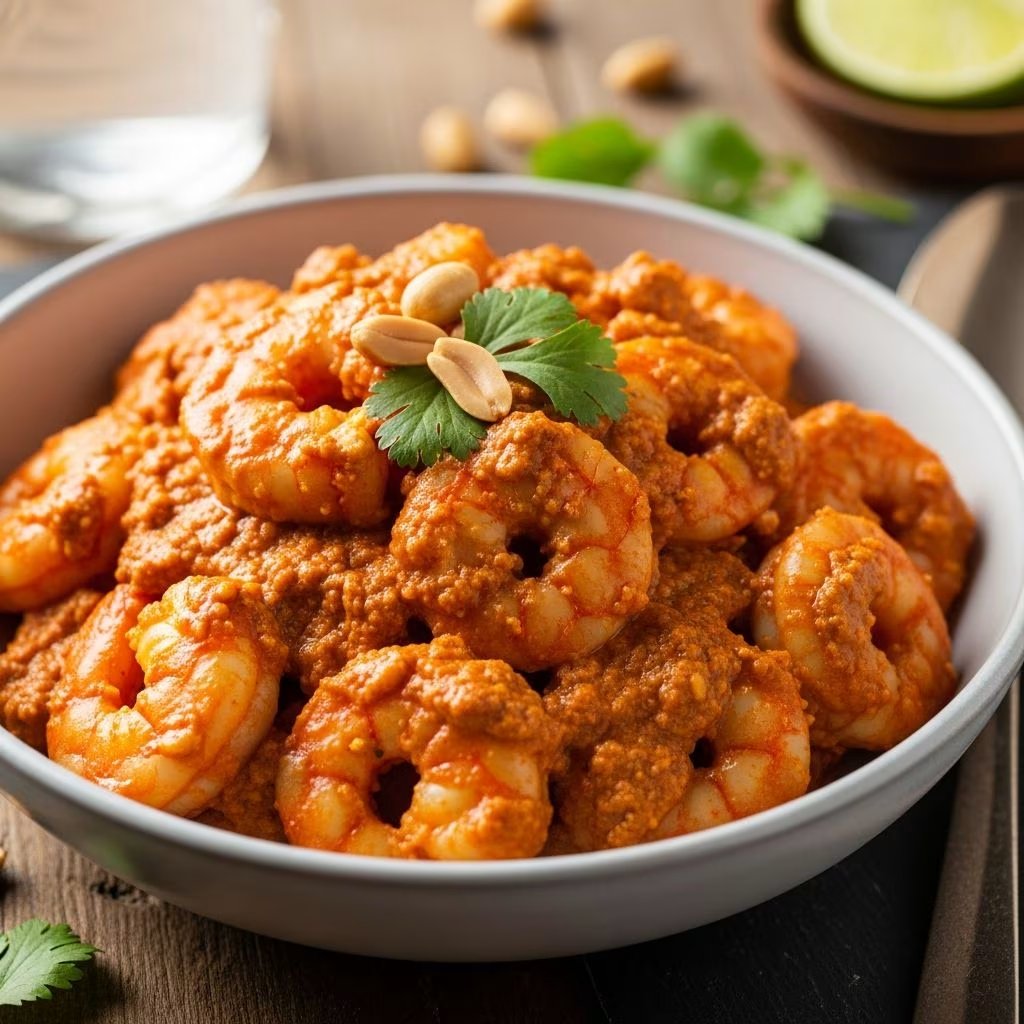
Imagine tender shrimp sizzling in a pan, then draped in a velvety sauce that blends the earthy depth of peanuts, the warm hue and subtle bitterness of achiote, and the richness of melted butter. This dish reimagines the beloved Filipino kare-kare stew into a quick, elegant seafood preparation. Rooted in tradition but streamlined for modern kitchens, it captures the essence of Filipino comfort food with a luxurious twist.
The Roots of Kare-Kare and Its Modern Twist
Kare-kare is a staple in Filipino cuisine, known for its thick, peanut-based broth that coats oxtail, tripe, or vegetables. Traditionally simmered for hours, it relies on ground peanuts or peanut butter, achiote seeds for color, and bagoong (fermented shrimp paste) for umami. This shrimp version lightens the stew into a butter sauce, making it faster to prepare while preserving those signature nutty and tangy notes.
The fusion here draws from Filipino heritage, adapting the stew’s core elements into a pan sauce. Shrimp provide a delicate, sweet contrast to the robust sauce, creating balance in every bite. This approach honors the dish’s origins while appealing to global palates seeking bold flavors without complexity.
Essential Ingredients for Success
Gathering the right components ensures the sauce emulsifies smoothly and the shrimp stay juicy. Focus on fresh seafood and quality pantry items.
- Large shrimp: 1 pound, peeled and deveined. Pat dry for optimal searing.
- Neutral oil: Grapeseed or vegetable, 3 tablespoons total, for high-heat cooking.
- Aromatics: 3 thinly sliced garlic cloves and 1 teaspoon chopped fresh thyme for fragrance.
- Kare-kare base: ¼ cup prepared kare-kare sauce or substitute with peanut butter mixed with achiote powder.
- Liquid elements: ¼ cup low-sodium chicken broth (or water) to deglaze.
- Butter: 12 tablespoons (1½ sticks) unsalted, cut into pieces for emulsification.
- Acid and heat: 2 teaspoons hot sauce and 1 teaspoon fresh lemon juice for brightness.
- Garnishes: Sliced chives and lemon wedges.
Season generously with kosher salt and black pepper. These ingredients yield 4 servings and come together in about 20 minutes.
Step-by-Step Cooking Guide
Precision in timing prevents overcooked shrimp and a broken sauce. Follow these steps for restaurant-quality results.
- Prep the shrimp: Season both sides with salt and pepper. Heat 2 tablespoons oil in a large skillet over medium-high. Sear shrimp 2 minutes per side until pink and opaque. Remove to a plate; no need to clean the pan fully—those browned bits add flavor.
- Build the base: Lower heat to medium-low. Add remaining 1 tablespoon oil, garlic, and thyme. Stir 30 seconds until aromatic. Deglaze with broth, scraping the pan. Whisk in kare-kare sauce until smooth.
- Emulsify the butter: Add butter one piece at a time, whisking vigorously. Each piece must melt fully before the next. This creates a glossy emulsion. Finish with hot sauce and lemon juice; taste and adjust seasoning.
- Assemble and serve: Spoon sauce over shrimp, garnish with chives, and offer lemon wedges. Serve immediately with crusty bread or rice to sop up the sauce.
| Step | Time | Key Tip |
|---|---|---|
| Seared Shrimp | 4-5 min | Don’t overcrowd the pan. |
| Sauce Base | 1 min | Low heat prevents burning garlic. |
| Butter Emulsion | 3-4 min | Constant whisking is crucial. |
| Plate | 1 min | Serve hot to maintain sauce texture. |
Pro Tips for Perfect Texture and Flavor
Achieve pro-level results with these techniques:
- Shrimp selection: Choose 16/20 count per pound for meaty texture. Wild-caught offer superior flavor.
- Emulsion mastery: If sauce breaks, blend in an immersion blender off-heat or whisk in ice water droplets.
- Make-ahead sauce: Prepare base up to the butter stage; reheat gently before finishing.
- Heat control: Medium-low for sauce prevents separation; off-heat addition of acid preserves freshness.
- Scaling: Double ingredients for crowds, but use a wider pan to maintain heat distribution.
Customizations and Dietary Adaptations
This recipe is versatile for various preferences.
- Vegetarian swap: Use tofu or mushrooms instead of shrimp; vegetable broth for the base.
- Spice levels: Amp up with fresh chilies or sriracha; mild with just a dash of sauce.
- Gluten-free: Ensure kare-kare sauce and broth are certified; tamari for any soy elements.
- Low-carb: Skip rice; pair with cauliflower mash or zucchini noodles.
- Protein variations: Scallops, chicken, or firm white fish work beautifully.
For authentic Filipino flair, serve bagoong on the side as a dip, mimicking traditional kare-kare pairings.
Pairing Suggestions for a Complete Meal
Elevate the dish with thoughtful sides and drinks.
- Sides: Steamed rice, garlic fried rice, or blanched bok choy to cut richness.
- Wines: Crisp Riesling or off-dry Chenin Blanc balances nuttiness; sparkling rosé for seafood pop.
- Cocktails: Ginger beer highball or calamansi margarita echoes citrus notes.
- Starters: Fresh lumpia or ensalada for a full Filipino menu.
Nutritional Profile and Health Notes
Per serving (about ¼ lb shrimp + sauce): Approximately 550 calories, 45g fat (25g saturated from butter), 25g protein, 5g carbs. Rich in omega-3s from shrimp, vitamin E from peanuts. Moderation advised due to butter content; lighter versions use half the butter with extra broth.
Common Mistakes and How to Avoid Them
- Overcooking shrimp: Aim for just opaque; residual heat finishes cooking.
- Sauce separation: Whisk relentlessly and keep heat low.
- Under-seasoning: Taste at end; salt amplifies flavors.
- Skipping pat-dry: Moisture prevents browning.
Storage and Reheating Guidelines
Leftovers keep 2 days in airtight container in fridge. Reheat gently in skillet over low heat, adding a splash of broth to revive sauce. Not freezer-friendly due to butter emulsion.
Frequently Asked Questions
What is kare-kare sauce made of?
It’s a peanut-based sauce colored with achiote, often including bagoong for savoriness. Commercial versions simplify with peanut butter and annatto.
Can I make this without prepared kare-kare sauce?
Yes: Mix 3 tbsp peanut butter, ½ tsp achiote powder, and 1 tsp bagoong or fish sauce.
Is this dish spicy?
Mild by default; hot sauce adds adjustable heat.
How many calories per serving?
Around 550, mostly from butter and shrimp.
Best shrimp size?
Large (16/20 per lb) for easy handling and sauce pooling.
Exploring Kare-Kare’s Cultural Significance
Beyond the recipe, kare-kare symbolizes Filipino resilience, blending indigenous peanuts with Spanish achiote influences. Regional variations abound—from Pampanga’s meat-heavy stews to lighter Visayan takes. This shrimp adaptation democratizes the dish, making it accessible for home cooks worldwide while nodding to its Kapampangan roots.
Experiment with add-ins like baby eggplant or string beans, simmered briefly in the sauce for veggie texture. It’s a canvas for creativity rooted in tradition.
References
- Shrimp Kare-Kare Recipe Documentation — Fila Manila. 2023-05-15. https://filamanila.com/blogs/recipes/seared-shrimp-with-kare-kare-butter
- Kare-Kare Variations with Shrimp — Recepedia. 2022-11-20. https://www.recepedia.com/ph/r/kare-kare-made-lighter-with-shrimp.html/239673
- Traditional Kare-Kare Preparation — Philippine Department of Tourism (official culinary heritage guide). 2024-01-10. https://www.tourism.gov.ph/kare-kare-cultural-recipe