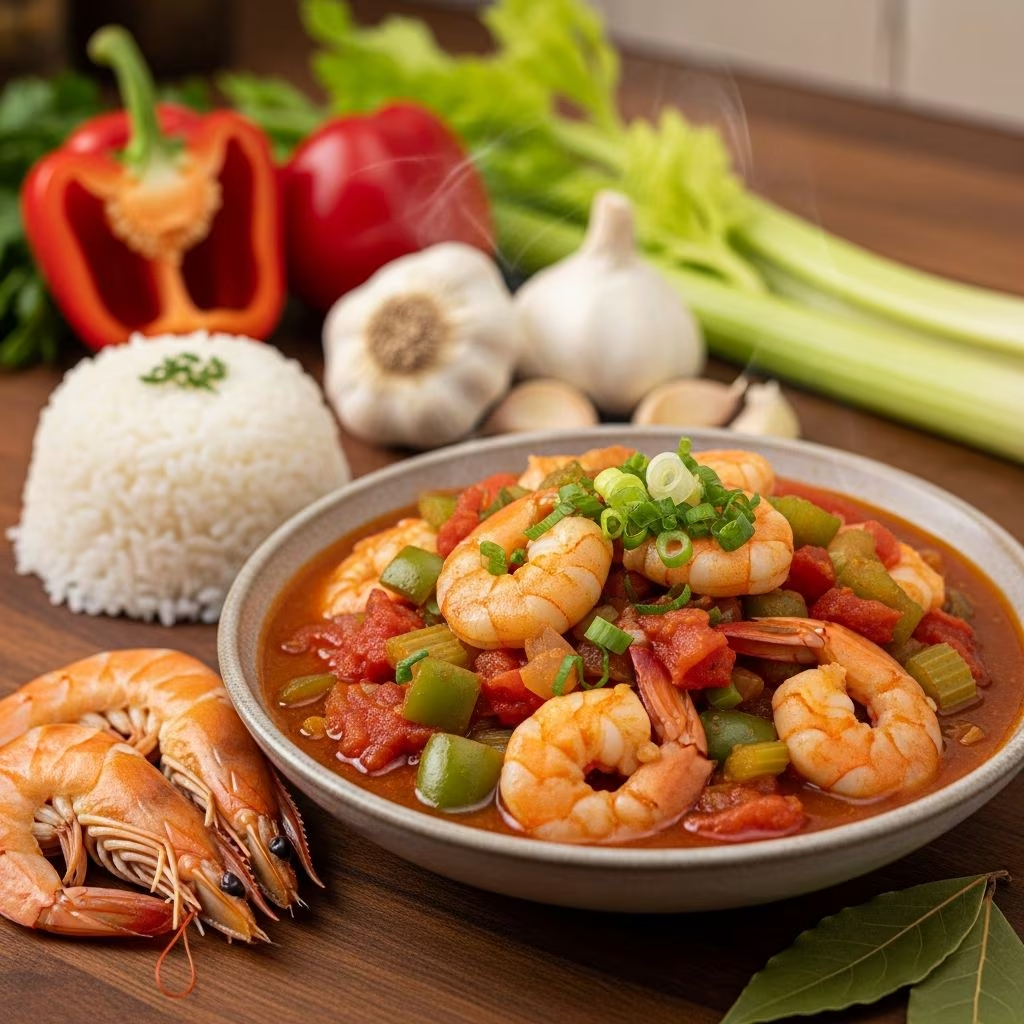
Shrimp Creole stands as a cornerstone of Louisiana’s vibrant culinary landscape, blending fresh seafood with a robust tomato-based sauce infused with aromatic vegetables and spices. This dish captures the essence of Creole cooking, offering a balance of heat, acidity, and savory depth that pairs perfectly with steamed rice.
The Roots of Shrimp Creole in Louisiana Kitchens
Emerging from the cultural melting pot of New Orleans, Shrimp Creole reflects influences from French, Spanish, African, and Native American traditions. Unlike thicker stews like gumbo, it features a lighter, spicier sauce that highlights the natural sweetness of Gulf shrimp. Historical accounts trace its popularity to South Louisiana, where abundant shrimp from local waters made it a staple in home and restaurant cooking.
The dish’s simplicity belies its complexity—layers of flavor build from carefully sautéed ingredients, creating a symphony of tastes that evolved over generations. Chefs like Paul Prudhomme elevated it with techniques such as shrimp stock and light roux, ensuring a rich base without heaviness. Today, it remains a go-to for weeknight dinners or festive gatherings, adaptable yet true to its origins.
Mastering the Holy Trinity: Foundation of Flavor
At the heart of Shrimp Creole lies the ‘holy trinity’—onions, celery, and green bell peppers—a vegetable base akin to France’s mirepoix but with peppers replacing carrots for a brighter profile. This trio provides structure, sweetness, and subtle bitterness that anchors the sauce.
- Onions (2 parts): Finely chopped yellow or white onions soften to release natural sugars, forming the sweet backbone.
- Celery (1 part): Adds crisp earthiness and cuts through richness.
- Green Bell Peppers (1 part): Deliver grassy notes and color; avoid red for authenticity.
Sauté these in butter or oil over medium heat until translucent and ‘melty soft,’ about 7-10 minutes. This step, known as sofrito in other cuisines, is crucial for depth—rushing it results in raw vegetable bite. Garlic joins late to prevent burning, minced and stirred in for fragrance.
Essential Ingredients for Authentic Taste
A successful Shrimp Creole hinges on quality components. Fresh, peeled Gulf shrimp (medium to large, 21-30 count per pound) cook quickly and stay tender. Canned tomato sauce or diced tomatoes provide acidity and body; opt for no-salt-added to control seasoning.
| Ingredient | Quantity (Serves 4-6) | Role |
|---|---|---|
| Shrimp, peeled/deveined | 1.5-2 lbs | Star protein, adds briny sweetness |
| Holy Trinity (onion, celery, bell pepper) | 1 each, diced | Aromatic base |
| Tomato sauce or diced tomatoes | 15-28 oz | Sauce body and tang |
| Creole/Cajun seasoning | 1-2 Tbsp | Heat and complexity |
| Butter or oil | 3 Tbsp | Sauté medium |
| Garlic | 3-4 cloves | Aroma boost |
| Worcestershire, hot sauce, thyme, bay leaf | To taste | Umami and spice layers |
Stock (shrimp, chicken, or water) thins the sauce; wine or broth deglazes for extra dimension. Spices like cayenne, thyme, and bay leaf build heat gradually.
Step-by-Step Recipe: Foolproof Shrimp Creole
This 30-45 minute recipe yields tender shrimp in a velvety sauce, serving 4-6 over rice.
Prep holy trinity: Dice 1 onion, 1 celery stalk, 1 green bell pepper. Mince 4 garlic cloves. Pat dry 1.5 lbs shrimp; season lightly with salt.
Sauté base: Heat 3 Tbsp butter in a large skillet over medium. Add trinity; cook 8-10 minutes until soft. Stir in garlic, 1 Tbsp Creole seasoning, 1 tsp thyme, ½ tsp cayenne, 1 bay leaf; cook 1 minute.
Build sauce: Stir in 15 oz tomato sauce, 1 cup stock/water, 1 tsp Worcestershire. Boil, then simmer 10-15 minutes until thickened.
Cook shrimp: Add shrimp; stir 2-3 minutes until pink and firm, flipping once. Discard bay leaf. Taste; adjust with hot sauce, salt.
Serve: Ladle over hot rice, garnish with green onions or parsley.
Total time: 40 minutes. Pro tip: Use medium heat to avoid overcooking shrimp, which toughen quickly.
Perfecting Texture and Flavor Balance
Achieving the right consistency—neither soupy nor pasty—is key. Simmer uncovered to reduce liquids; if too thick, add stock incrementally. For silkiness, some recipes incorporate a light flour roux post-sauté, whisked in and cooked 2 minutes.
Flavor calibration: Start with 1 Tbsp seasoning, tasting post-simmer. Cayenne builds heat subtly; Worcestershire adds umami depth. Fresh shrimp release juices, enhancing sauce naturally. Balance acidity with a pinch of sugar if tomatoes overpower.
Common Pitfalls and How to Avoid Them
- Overcooked shrimp: Add last and cook just until opaque (1-3 minutes); residual heat finishes them.
- Watery sauce: Use quality canned tomatoes; simmer longer to concentrate flavors.
- Flat taste: Don’t skip holy trinity sauté—raw veggies dull the dish.
- Too spicy: Adjust cayenne/hot sauce incrementally; Creole blends vary in heat.
Test doneness by shrimp curl: C-shaped for perfect, O-shaped for overdone.
Creative Variations to Elevate Your Dish
While traditional, Shrimp Creole invites tweaks:
- Andouille addition: Sauté ½ lb diced sausage with trinity for smoky protein boost.
- Okra twist: Stir in 1 cup sliced okra post-simmer for gumbo-like thickness.
- Seafood medley: Mix in crawfish tails or crabmeat last 1 minute.
- Low-carb: Serve over cauliflower rice or zucchini noodles.
- Spicy kick: Infuse with fresh jalapeños or double cayenne.
For elegance, deglaze with dry white wine before tomatoes. Pair with cornbread or crusty bread for sopping.
Pairing Suggestions and Serving Ideas
Serve piping hot over long-grain white rice, which absorbs sauce without mushiness. Accompany with cold beer, iced tea, or crisp Sauvignon Blanc to cut richness. Sides like coleslaw, hushpuppies, or grilled okra complement the heat.
For crowds, scale up and keep warm in a chafing dish; shrimp hold well briefly. Leftovers reheat gently with a splash of water, maintaining tenderness up to 2 days.
Health Notes and Nutritional Profile
Per serving (1 cup sauce + 4 oz shrimp over ½ cup rice): ~350 calories, 30g protein, 40g carbs, 10g fat. Shrimp provide lean protein, omega-3s, and selenium; tomatoes offer lycopene. Use olive oil and low-sodium stock for heart-healthy tweaks.
Frequently Asked Questions
Can I use frozen shrimp?
Yes, thaw fully and pat dry to prevent excess moisture. Medium peels work best.
What’s the difference between Creole and Cajun?
Creole uses tomatoes and is city-influenced (New Orleans); Cajun is roux-based, rural, often spicier.
How do I make homemade Creole seasoning?
Mix paprika, garlic powder, onion powder, cayenne, thyme, oregano, salt, pepper (2:1:1 ratio spices to salt).
Is a roux necessary?
Not always—many skip for lightness, but a light one adds body.
Can I make it ahead?
Prepare sauce up to 1 day ahead; add shrimp fresh to avoid toughness.
Storage and Freezing Tips
Refrigerate in airtight containers up to 3 days. Freeze sauce (sans shrimp) up to 3 months; thaw and reheat, adding fresh shrimp. Avoid refreezing cooked shrimp.
References
- The Best Shrimp Creole Recipe — From A Chef’s Kitchen. 2023-05-15. https://www.fromachefskitchen.com/best-shrimp-creole/
- Easy Shrimp Creole Recipe — Pinch and Swirl. 2022-08-10. https://pinchandswirl.com/shrimp-creole/
- Easy Shrimp Creole Recipe — FoodieCrush. 2024-01-22. https://www.foodiecrush.com/shrimp-creole/
- Easy Shrimp Creole recipe — Tastes Better from Scratch. 2023-11-08. https://tastesbetterfromscratch.com/shrimp-creole/
- Louisiana Shrimp Creole — Acadiana Table. 2025-10-13. https://acadianatable.com/2025/10/13/louisiana-shrimp-creole/