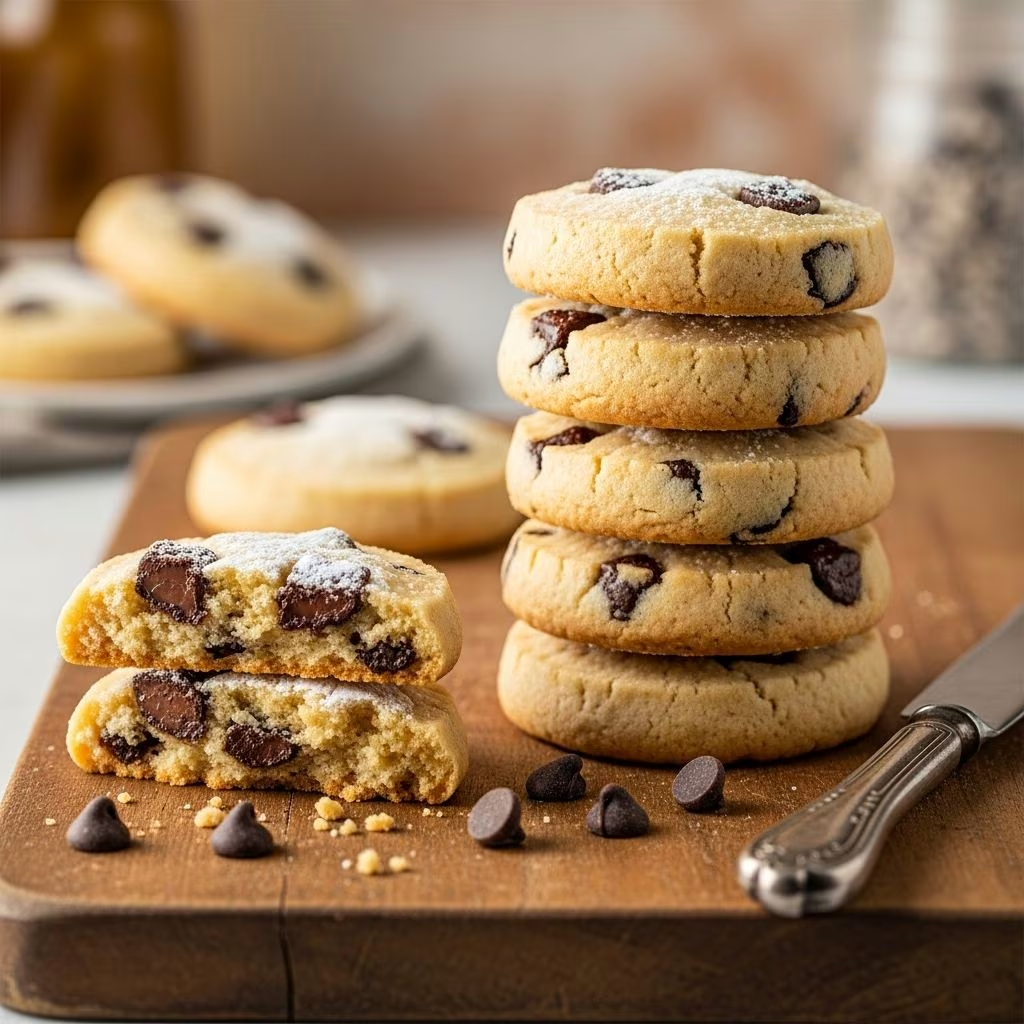
Shortbread cookies represent one of the most elegant and satisfying treats you can bake from scratch. Their rich, buttery flavor combined with the sweet indulgence of chocolate chips creates a cookie that appeals to both casual snackers and dessert connoisseurs alike. What makes these cookies particularly special is their distinctive texture—crisp on the edges yet tender throughout, with a delicate crumb that dissolves almost instantly on your tongue. Whether you’re a seasoned baker or someone just beginning to explore homemade cookie recipes, mastering shortbread chocolate chip cookies opens up a world of baking possibilities.
Understanding the Foundation: What Makes Shortbread Unique
Shortbread occupies a special place in the cookie world because of its fundamentally different construction compared to typical cookie recipes. While most cookies rely on creaming butter and sugar together to incorporate air and create a lighter texture, shortbread takes the opposite approach. The name “shortbread” itself comes from the baking term “short,” which refers to dough with a high fat content that produces a crumbly, tender texture. This distinction is crucial to achieving the authentic shortbread experience.
The secret to proper shortbread lies in how the butter is incorporated into the flour mixture. Rather than beating the ingredients together, you work cold butter chunks into the dry ingredients using a cutting motion, similar to preparing pie crust or biscuit dough. This technique creates small pockets of fat throughout the dough, which results in that characteristic tender crumb that shatters pleasantly when you bite into it. When you add chocolate chips to this base recipe, they complement the buttery foundation without overwhelming the delicate flavor profile.
Essential Ingredients and Their Roles
Creating exceptional shortbread chocolate chip cookies begins with understanding each ingredient’s purpose and selecting high-quality components.
Butter: The Star Ingredient
Butter forms the foundation of any shortbread recipe, typically representing the largest ingredient by volume. For this recipe, you’ll need unsalted butter that’s been cut into small cubes and kept very cold throughout the mixing process. Cold butter is essential because it resists blending completely with the flour, maintaining those small pockets that create the desired texture. Using unsalted butter gives you control over the final salt content and allows the pure buttery flavor to shine through. Most traditional shortbread recipes call for approximately one cup of butter, which provides the richness necessary for that melt-in-your-mouth quality.
Flour Selection and Measurement
All-purpose flour works beautifully for shortbread chocolate chip cookies, though some bakers prefer cake flour for an even more delicate crumb. Accurate flour measurement makes a significant difference in your results. Rather than scooping flour directly from the bag, which can pack excess flour into your measuring cup, spoon the flour into your measuring cup and level it off with a knife. This method ensures consistent results batch after batch. Most shortbread recipes use between 1.5 to 2 cups of flour, creating a dough that holds together without becoming tough or dense.
Sugar: Sweetness and Texture
Shortbread recipes traditionally use powdered sugar rather than granulated white sugar. Powdered sugar contains cornstarch, which helps create a more tender cookie and contributes to the characteristic sandy texture of the dough. Using approximately 0.5 to 0.75 cups of powdered sugar provides adequate sweetness while maintaining the proper dough consistency. The reduced amount of sugar compared to other cookie recipes allows the buttery flavor to remain the dominant taste experience.
Chocolate Chips: The Perfect Addition
Semi-sweet chocolate chips represent the most popular choice for shortbread cookies, offering a balanced chocolate flavor that complements rather than overpowers the buttery base. However, you can experiment with dark chocolate chips for a more intense flavor or milk chocolate chips for added sweetness. Approximately 0.75 to 1 cup of chocolate chips provides visible chocolate in every bite without making the dough too difficult to work with. Some bakers fold chocolate chips into the finished dough, while others prefer to press them into the surface of the cookies before baking for a more dramatic presentation.
Supporting Ingredients
Baking powder, typically 0.5 teaspoon, provides minimal lift and helps the cookies develop a slightly more cake-like crumb if desired. Salt, usually 0.25 teaspoon, enhances the overall flavor profile by bringing out the buttery notes. Vanilla extract adds depth and complexity, with 1 teaspoon being a standard measure. Some recipes also incorporate almond extract for an additional layer of flavor sophistication.
The Mixing Method: A Departure from Typical Cookie Recipes
The mixing technique for shortbread chocolate chip cookies differs significantly from standard cookie preparation, and this difference is what creates the distinctive texture these cookies are known for.
Step One: Prepare the Dry Mixture
Begin by combining your flour, powdered sugar, baking powder, and salt in a medium to large mixing bowl. Whisk these dry ingredients together thoroughly to distribute the leavening agent and salt evenly throughout. This step ensures that every bite of cookie contains consistent seasoning and structure.
Step Two: Cut in the Cold Butter
Cut your unsalted butter into small cubes approximately 0.5 inches in size and keep it as cold as possible. If your kitchen is particularly warm, consider chilling your mixing bowl as well. Using the flat beater attachment on your stand mixer, add the butter pieces a few at a time to the dry ingredients. Turn the mixer to low speed and allow it to work the butter into the flour mixture. You’re aiming for a texture resembling coarse sand or breadcrumbs, with no butter pieces larger than a small pea. This process typically takes 3 to 5 minutes and requires patience—rushing this step or allowing the mixture to warm up too much compromises the final texture. If you don’t have a stand mixer, you can accomplish this using a pastry cutter, two knives, or even your fingertips, working quickly to prevent the butter from warming.
Step Three: Incorporate Chocolate Chips and Mix
Once your butter and flour mixture reaches the desired sandy consistency, add the chocolate chips and any vanilla extract or other flavorings. Mix on low speed just until everything is evenly distributed, being careful not to overmix. The dough should barely hold together when squeezed but should still appear somewhat crumbly. At this point, some bakers find the dough comes together better with a brief rest or gentle hand-mixing to bring everything into a cohesive mass without overworking the gluten.
Formation Methods: Three Approaches to Shaping Your Cookies
Once your dough is prepared, you have flexibility in how you form and bake your shortbread chocolate chip cookies. Each method produces slightly different textures and presentations.
| Formation Method | Process | Baking Time | Best For |
|---|---|---|---|
| Slice and Bake | Roll dough into a log, chill, slice into portions | 10-13 minutes | Uniform cookies, minimal hands-on work |
| Roll and Flatten | Form dough into balls, flatten with glass | 10-13 minutes | Rustic appearance, individual portions |
| Pan Press and Wedge | Press dough into square pan, cut into wedges | 25-30 minutes | Thicker, crispier cookies |
Method One: Slice and Bake Approach
This method offers convenience and consistency. Form your dough into an evenly shaped log approximately the diameter you want your finished cookies to be, as shortbread doesn’t spread significantly during baking. Wrap the log in plastic wrap or parchment paper and refrigerate until quite firm, typically at least one hour. For added visual appeal and texture, you can roll the chilled log in granulated sugar before slicing. Using a sharp knife, cut slices to your desired thickness, typically between 0.25 and 0.5 inches. Arrange the slices on parchment-lined baking sheets and bake at 325 degrees Fahrenheit for 10 to 13 minutes, depending on the thickness of your cookies.
Method Two: Roll and Flatten Technique
For a more rustic, individual-cookie appearance, prepare your dough log and chill it as described above. Cut the chilled log into 16 equal portions and roll each into a smooth ball. Place the balls on parchment-lined baking sheets and flatten each one using the bottom of a glass dipped in sugar. Flatten to approximately 0.125 to 0.25 inches thick and 3 to 3.5 inches in diameter. These cookies will puff slightly during baking and require 10 to 13 minutes at 325 degrees Fahrenheit. Watch for them to just begin turning golden at the edges, which indicates they’re done.
Method Three: Pan Press and Wedge Format
For those who prefer thicker, crispier shortbread, this method delivers excellent results. Press your entire dough portion evenly into a greased 9-by-9-inch square baking pan. Using a fork, prick or “dock” the surface all over—this helps release steam and prevents excessive puffing. Cover with plastic wrap or foil and chill until firm. Bake at 325 degrees Fahrenheit for 25 to 30 minutes until the edges become lightly golden. Remove from the oven while still warm and cut into wedges or squares on a cutting board. The cookies will firm up considerably as they cool, making them easier to serve once completely cooled.
Baking Temperature and Timing Considerations
The relatively low baking temperature of 325 degrees Fahrenheit distinguishes shortbread from many other cookie recipes. This lower heat allows the butter to meld with the flour gradually, creating the tender crumb without browning the cookies too quickly. Shortbread shouldn’t develop a dark golden color; instead, it should be pale to light golden, particularly at the edges. Baking times vary based on thickness and your specific oven’s characteristics, so begin checking a few minutes before the minimum recommended time. Cookies will feel slightly soft when removed from the oven but will firm up as they cool.
Cooling and Storage for Maximum Freshness
Allow your shortbread chocolate chip cookies to cool on the baking sheet for several minutes before transferring to a cooling rack. Cookies formed using the pan method should cool slightly in the pan before turning out onto a cutting board, as they’re extremely fragile when warm. Once completely cooled, store your cookies in an airtight container with parchment paper between layers to prevent sticking. Shortbread maintains its quality for up to one week at room temperature, though many people find them disappear more quickly.
Troubleshooting Common Challenges
Cookies Spreading Too Much During Baking: This typically indicates your butter was too warm during mixing or your oven temperature is running high. Use colder butter and consider using an oven thermometer to verify temperature accuracy.
Cookies Turning Out Too Dry or Crumbly: Too much flour or overmixing can cause this issue. Measure flour carefully using the spoon-and-level method, and avoid mixing longer than necessary.
Dough Won’t Hold Together: Your kitchen may be too warm or your butter too soft. Chill your mixing bowl, ingredients, and dough before shaping, and work quickly during the mixing process.
Uneven Browning: Rotate your baking sheet halfway through the baking time for more consistent results, particularly if your oven has hot spots.
Frequently Asked Questions
- Can I make this recipe ahead of time?
- Yes, you can prepare the dough up to two days in advance and refrigerate it, or freeze it for up to three months. Bake directly from the refrigerator or freezer, adding a minute or two to the baking time if baking from frozen.
- What’s the difference between using salted and unsalted butter?
- Unsalted butter gives you control over the salt content, allowing you to adjust to your preference. Salted butter adds flavor but makes it harder to control the final saltiness of your cookies.
- Can I substitute the chocolate chips with other mix-ins?
- Absolutely. Try nuts, dried fruit, toffee bits, or a combination of add-ins. Keep the total amount of mix-ins around 0.75 to 1 cup for best results.
- Why does my shortbread taste greasy?
- This usually means too much butter was used or the dough was overmixed, which can cause excess butter to separate. Measure carefully and mix only until combined.
- How do I know when my shortbread is done baking?
- The edges should be lightly golden, and the cookies should feel just set but still slightly soft when removed from the oven. They’ll firm up considerably as they cool.
Variations and Creative Adaptations
Once you master the basic shortbread chocolate chip cookie recipe, you can explore numerous variations. Add a light glaze made from powdered sugar and milk for elegance, or drizzle melted white chocolate over cooled cookies. Incorporate brown butter for nuttier depth, or add espresso powder to enhance the chocolate flavor. Some bakers press a chocolate chip or candied fruit into the center of each cookie before baking for an attractive presentation.
Shortbread chocolate chip cookies represent an achievable yet impressive baking project that yields professional-quality results. By understanding the techniques involved and following the guidelines provided, you’ll create cookies that impress both family and friends while enjoying the satisfaction of homemade baking.
References
- Chocolate Shortbread Cookies — Epicuricloud (Tina Verrelli). Accessed April 2026. https://www.epicuricloud.com/recipe/chocolate-shortbread-cookies/
- Shortbread Cookies Recipe — Tina’s Chic Corner. October 2013. https://tinaschic.com/2013/10/shortbread-cookies/
- Tina’s Shortbread Chocolate Chip Cookies — Freshy Recipes. https://cooking.freshy.com/recipe/909a79ae-a991-94e0-54de-e5bbd39fd32a
- Tina’s Shortbread Chocolate Chip Cookies — Republican Nonpareil. https://www.republicannonpareil.com/lifestyle/tinas-shortbread-chocolate-chip-cookies