The Japanese culinary tradition has long emphasized balance and refinement in flavor profiles, yet sometimes dishes benefit from an added dimension of heat and complexity. This is where shichimi togarashi, commonly known as Japanese seven spice, plays an essential role in both home kitchens and professional establishments across Japan. This versatile seasoning blend represents centuries of culinary innovation, transforming simple ingredients into a powerhouse condiment that enhances everything from noodle dishes to grilled proteins.
Understanding the Foundations of Japanese Seven Spice
The name itself provides insight into the blend’s composition and cultural significance. “Shichi” translates to the number seven in Japanese, while “togarashi” refers to chili peppers or spicy elements. Together, these terms describe a sophisticated spice mixture that has graced Japanese tables since at least the 17th century, when merchants in Edo (present-day Tokyo) first began crafting these blends systematically. The blend emerged from the herb dealers of that era, who recognized that combining multiple spices could create a seasoning far more nuanced than any single ingredient alone.
What distinguishes shichimi togarashi from other global spice blends is its deliberate balance between heat and aromatic complexity. Unlike Chinese five-spice blends, which emphasize warm spices like cinnamon and aniseed, Japanese seven spice focuses on creating a multisensory experience—combining fiery chili with citrus brightness, nutty sesame undertones, and the subtle numbing sensation of Japanese peppercorns. This composition makes it particularly suited to Japanese cuisine’s philosophy of enhancing rather than overwhelming the base ingredients.
The Seven Essential Components
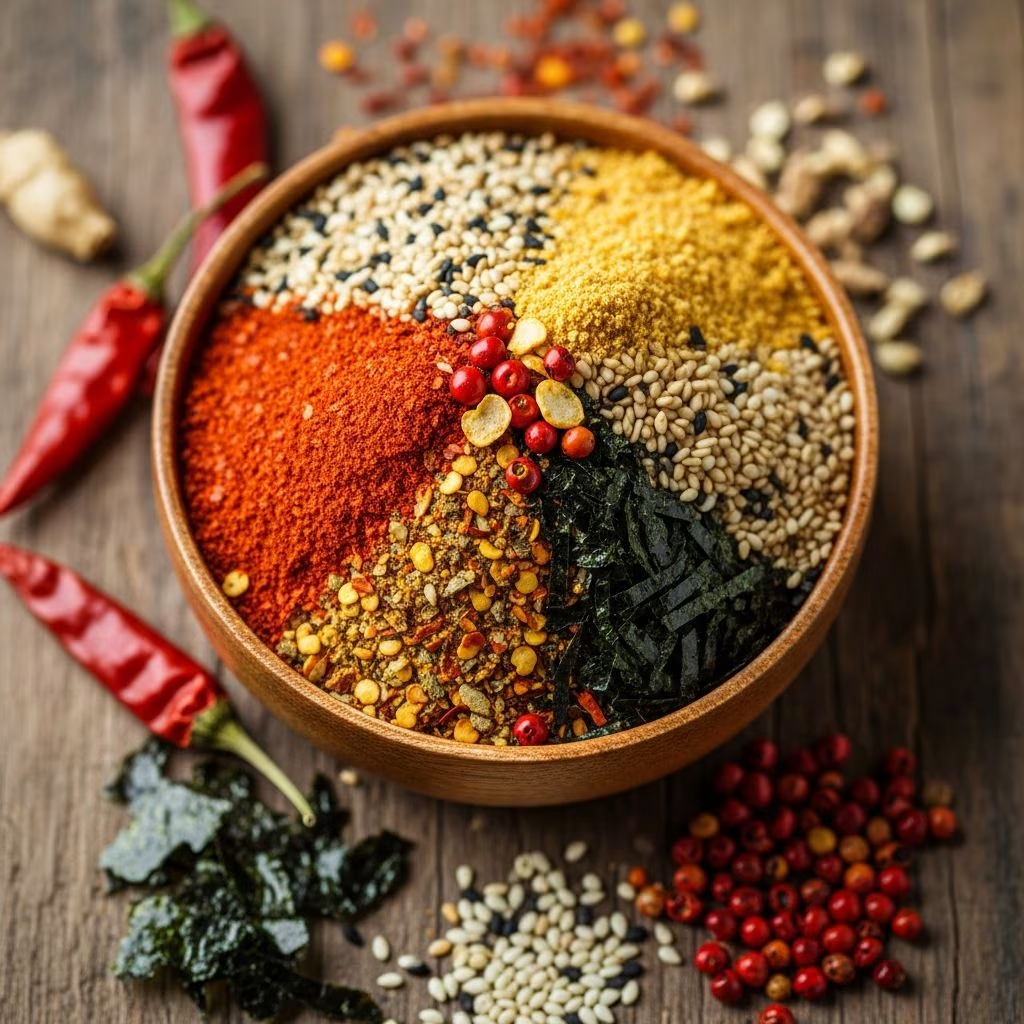
While variations exist among different regions and families in Japan, authentic shichimi togarashi typically incorporates seven primary ingredients, each contributing distinct flavor characteristics:
- Red Chili Flakes — The foundation of the blend, providing the characteristic heat and vibrant crimson color. Most recipes call for two to three tablespoons of dried red chili flakes, though personal preference for spice intensity should guide adjustments.
- Sanshō (Japanese Peppercorns) — Often called Japanese green pepper or Sichuan peppercorn, this ingredient delivers a distinctive numbing, tingling sensation that adds complexity beyond simple heat.
- Dried Citrus Peel — Typically composed of dried orange, tangerine, or yuzu peel, this component introduces bright, citrusy notes that cut through richness and add freshness to dishes.
- White Sesame Seeds — These provide nutty undertones and a subtle texture element while contributing nutritional value and richness to the blend.
- Black Sesame Seeds — Adding visual contrast and a slightly earthier flavor profile compared to white sesame, these seeds enhance both flavor and aesthetic appeal.
- Hemp Seeds or Poppy Seeds — Offering additional textural complexity and nutritional components, these seeds contribute subtle flavor dimensions that tie the blend together.
- Nori (Seaweed) — This umami-rich ingredient elevates the blend’s savory depth, connecting it to the ocean’s flavor and adding an authentic Japanese element.
Some variations may include ground ginger, adding warmth and mild spice to complement the other components. The beauty of this blend lies in how these individual elements work in concert, each flavor enhancing and balancing the others to create something greater than the sum of its parts.
Step-by-Step Guide to Creating Your Own Blend
Making shichimi togarashi at home offers numerous advantages over purchasing pre-made versions. Freshly prepared blends deliver superior flavor intensity, as the volatile oils in spices begin degrading the moment they’re ground or heated. Additionally, homemade versions allow for personalization and typically cost significantly less than retail alternatives.
Preparation Phase
Begin by gathering your ingredients, ensuring they’re as fresh as possible. Purchase whole spices when feasible, as whole ingredients maintain their aromatic qualities longer than pre-ground versions. If using dried citrus peel, you can purchase it premade or prepare it yourself by drying fresh orange or tangerine peel in a low oven or food dehydrator until completely brittle.
Toasting Process
The toasting stage transforms the blend’s flavor profile significantly. In a dry skillet over medium heat, toast your sesame seeds until fragrant, approximately two to three minutes, stirring constantly to ensure even heating and prevent burning. The seeds should become noticeably golden and release their nutty aroma. Simultaneously, you may lightly toast the seaweed pieces to intensify their umami characteristics, though this step requires careful attention to prevent over-toasting.
Grinding and Combining
Using a spice grinder, blender, or mortar and pestle, grind the toasted sesame seeds to break them down partially—you want some texture remaining rather than complete pulverization. Process the chili flakes and sanshō peppercorns together until they reach your desired consistency. Grind the dried citrus peel into small, fragrant pieces. Finally, combine all components in a small glass container, stirring thoroughly to ensure even distribution throughout the blend. The result should be a vibrant, aromatic mixture with visible texture variation.
Ingredient Sourcing and Substitutions
Locating authentic ingredients for shichimi togarashi has become increasingly accessible, though substitutions are possible when specific components prove difficult to find. For sanshō peppercorns, regular black peppercorns offer a substitute, though they lack the characteristic numbing quality. Korean gochugaru (red chili flakes) work excellently as red chili alternatives, providing slightly different flavor notes while maintaining appropriate heat levels.
Dried citrus peel can be sourced from specialty grocers, Asian markets, or created at home. Fresh orange, tangerine, or lemon peel dried thoroughly works effectively. Nori sheets from any sushi supplier suffice, and you can simply chop or grind dried sheets as needed. This flexibility means that individuals with limited access to specialty ingredients can still create an authentic-tasting blend using locally available alternatives.
Storage and Shelf Life Considerations
Properly stored shichimi togarashi maintains peak flavor for approximately three to four weeks in an airtight container at room temperature, though the blend remains usable for longer periods. Store your blend in a cool, dark place away from direct sunlight and heat sources, as light and warmth accelerate flavor degradation. Glass jars with tight-sealing lids work best, preventing moisture absorption and protecting the blend from ambient odors. For extended storage, refrigeration can help preserve the blend’s vibrant color and aromatic qualities for several months.
Culinary Applications Beyond Traditional Dishes
While shichimi togarashi traditionally garnishes Japanese noodle dishes, broiled eel (unagi), grilled chicken (yakitori), and tempura, modern culinary creativity has expanded its applications significantly. The blend enhances rice bowls, scrambled eggs, roasted vegetables, and even pizza, adding complexity that elevates simple preparations. The combination of heat, citrus, and umami makes it surprisingly versatile across different cuisines and cooking styles.
| Dish Type | Application Method | Quantity Guide |
|---|---|---|
| Noodle Dishes | Sprinkle generously over finished bowl | 1/2 to 1 teaspoon per serving |
| Grilled Proteins | Dust before or after cooking | 1/4 to 1/2 teaspoon per portion |
| Rice Bowls | Season rice directly or sprinkle on top | 1/4 to 1 teaspoon per bowl |
| Soups and Broths | Add as final garnish | Pinch to 1/4 teaspoon |
| Vegetable Dishes | Mix into oils or sprinkle over roasted items | 1/4 to 1/2 teaspoon per portion |
Exploring Variations and Regional Differences
Japan’s diverse regions have developed their own interpretations of seven spice, creating variations that reflect local preferences and available ingredients. Nanami togarashi, sometimes called five-spice, represents a simplified version using fewer ingredients but maintaining the essential balance of heat, citrus, and umami. Some regional blends emphasize different citrus varieties—yuzu in certain areas provides distinctive floral notes compared to more common orange or tangerine versions.
These variations demonstrate how a foundational recipe can be adapted while maintaining its essential character. Home cooks can experiment with ingredient ratios, exploring their personal preferences for spice intensity, citrus brightness, or sesame prominence. Such experimentation often leads to discovering a personalized blend that becomes a kitchen staple.
Historical Context and Cultural Significance
The development of shichimi togarashi in 17th century Edo represents a pivotal moment in Japanese culinary refinement. Herb merchants recognized that strategic blending could enhance the natural flavors of Japanese cuisine without overwhelming delicate ingredients. This philosophy aligns with broader Japanese aesthetic principles emphasizing balance, subtlety, and the importance of complementary rather than dominant flavors.
Over centuries, this humble spice blend has remained relatively unchanged in its core composition and purpose, a testament to its effectiveness and cultural integration. It has become so fundamentally embedded in Japanese food culture that most Japanese kitchens contain at least one container of shichimi togarashi, whether homemade or store-purchased.
Nutritional Profile and Health Considerations
Beyond flavor, shichimi togarashi offers noteworthy nutritional components. Sesame seeds provide healthy fats and minerals including calcium and iron. Chili peppers contain capsaicin, a compound associated with various health benefits. The seaweed component contributes iodine and other minerals. However, the typical serving size—a light sprinkle of approximately 1/4 teaspoon—means nutritional contribution is more about enhancement than substantial dietary impact.
Individuals with specific dietary restrictions or sensitivities should note that this blend is predominantly spicy, and those unaccustomed to significant heat should introduce it gradually into their diet. The presence of sesame means those with sesame allergies must avoid this blend entirely.
Comparison with Store-Bought Alternatives
Commercially produced shichimi togarashi often includes preservatives and may use lower-quality ingredients or older spices that have begun losing their volatile aromatic compounds. Homemade versions, prepared fresh and stored properly, deliver noticeably superior flavor intensity and aroma. The financial savings—producing a batch typically costs one-third to one-half of retail prices—combined with superior quality and customization options make home preparation worthwhile for regular users.
Troubleshooting Common Preparation Issues
If your blend tastes flat or lacks aromatic complexity, the issue typically stems from using older, pre-ground spices. Whole spices maintain potency far longer and should be your first choice. If the blend tastes predominantly bitter or burnt, the toasting phase may have been too aggressive or prolonged. Toast sesame seeds until just fragrant, typically 2-3 minutes at moderate heat. If the blend seems excessively hot, increase the dried citrus peel proportion and reduce the red chili flakes in future batches according to your heat preference.
Recommended Ingredient Quantities for Standard Batch
- 2 tablespoons red chili flakes
- 1 tablespoon dried orange or tangerine peel
- 2 teaspoons white sesame seeds
- 2 teaspoons black sesame seeds
- 1 teaspoon sanshō peppercorns or Sichuan peppercorns
- 1 teaspoon hemp seeds or poppy seeds
- 1/2 teaspoon ground ginger (optional)
- 1/2 sheet nori, finely chopped
This batch yields approximately one-third cup of finished blend, sufficient for numerous culinary applications over several weeks when stored properly.
Frequently Asked Questions
Can shichimi togarashi be made without nori?
Yes, the blend remains flavorful without nori, though it loses some umami depth. Nori contributes the distinctive umami quality but isn’t essential for basic functionality.
What’s the best way to grind the ingredients?
A dedicated spice grinder offers the best results, though a clean coffee grinder or high-powered blender works adequately. A mortar and pestle requires more effort but allows precise control over texture consistency.
How can I adjust the heat level?
Simply reduce the red chili flakes for a milder blend or increase them for greater intensity. Most recipes provide flexibility here to accommodate individual spice tolerance levels.
Can I make this blend in larger quantities?
Absolutely, scale recipes proportionally. However, larger batches may not maintain peak freshness as long, so consider making multiple smaller batches spread across several weeks.
References
- Shichimi Togarashi (Japanese 7 Spice) – My Quiet Kitchen — My Quiet Kitchen. https://myquietkitchen.com/shichimi-togarashi-seasoning/
- Shichimi Togarashi, the Japanese Seven Flavour Spice Mix — Lin’s Food. https://www.linsfood.com/shichimi-togarashi-japanese-chilli-spice-mix/
- Make Your Own Shichimi Togarashi (Japanese 7 Spice) and La-Yu — Japanese Food Simply. https://japanesefoodsimply.substack.com/p/shichimi-togarashi-japanese-seven-spice
- Make Your Own Shichimi Togarashi (Japanese 7 Spice) and La-Yu Chilli Oil — Yuki’s Kitchen. https://www.yukiskitchen.com/journal/shichimi-togarashi-japanese-seven-spice
- Shichimi Togarashi (Japanese 7 Spice Blend) – The Daring Gourmet — The Daring Gourmet. https://www.daringgourmet.com/shichimi-togarashi-and-nanami-togarashi-japanese-seven-spice-blend/
- Shichimi Togarashi – Japanese 7 Spice — Semiserious Chefs. https://semiseriouschefs.com/shichimi-togarashi-japanese-7-spice/