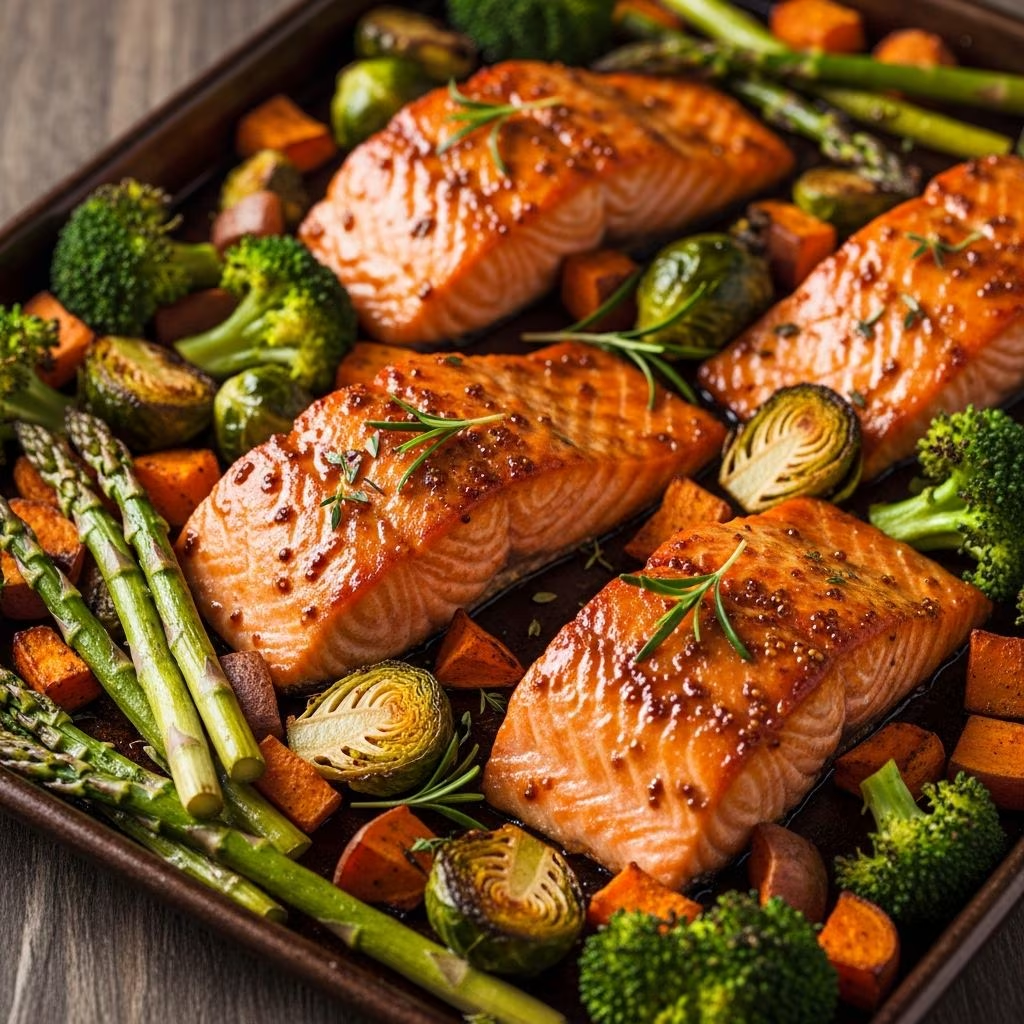
Sheet pan dinners have revolutionized the way home cooks approach weeknight meals, offering the convenience of minimal cleanup while delivering restaurant-quality results. The combination of maple syrup and Dijon mustard creates a glaze that transforms simple ingredients into an elegant, satisfying dinner that appears far more complicated than it actually is. This particular preparation brings together succulent salmon fillets with roasted vegetables, all cooked simultaneously on a single baking sheet.
Understanding the Magic Behind the Glaze
The foundation of this dish rests on a deceptively simple sauce that balances sweet and savory elements. Pure maple syrup provides natural sweetness that caramelizes during roasting, while Dijon mustard contributes tanginess and depth. The combination works exceptionally well with salmon’s rich, fatty texture, cutting through the richness and providing contrast. Garlic powder or minced fresh garlic adds aromatic complexity, while a touch of acidity from lemon juice brightens the overall flavor profile.
The beauty of this glaze lies in its versatility. Whether you prefer the classic pairing or want to experiment with additions like herbs de Provence, smoked paprika, or fresh thyme, the basic formula remains forgiving and adaptable. The maple syrup quantity matters less precisely than maintaining the roughly equal proportions of syrup to mustard, allowing home cooks to adjust to their taste preferences.
Essential Ingredients and Substitutions
Creating this dinner requires thoughtful ingredient selection, though many components offer flexibility based on availability and preference.
The Salmon Foundation
Four salmon fillets weighing 5 to 6 ounces each serve as the protein centerpiece. Skin-on fillets work beautifully, as the skin protects the delicate flesh during roasting while crisping slightly. Selecting fillets of similar thickness ensures even cooking across the sheet pan. Fresh salmon produces superior results compared to frozen varieties, though properly thawed frozen salmon works adequately.
Vegetable Selections
The vegetable components provide textural variety and nutritional balance. Classic options include Brussels sprouts halved lengthwise, sweet potatoes cut into half-inch cubes or thin wedges, and fresh green beans. Some preparations incorporate red potatoes quartered or asparagus spears arranged around the protein. These vegetables were selected because they roast at similar rates to salmon, achieving tenderness without overcooking or undercooking different components.
The choice between sweet and regular potatoes depends on flavor preference and dietary considerations. Sweet potatoes bring natural sweetness that complements the maple glaze, while red potatoes offer earthiness that balances the dish’s sweeter elements. Brussels sprouts provide a slightly bitter edge that cuts through richness, particularly valuable when using fattier cuts of salmon.
Glaze Components and Substitutions
Pure maple syrup remains the ideal sweetening agent, offering authentic flavor that refined sugar cannot replicate. Dijon mustard provides the tangy backbone, though whole-grain mustard offers a different texture and slightly milder flavor profile. Lemon juice adds brightness, though lime juice creates an interesting variation. Olive oil carries flavors and promotes even browning.
The Cooking Process Explained
Preparation and Preheating
Begin by preheating your oven to 425 degrees Fahrenheit, or 400 degrees for slightly gentler cooking if your salmon tends toward dry results. Line a rimmed sheet pan with parchment paper, which eliminates sticking and simplifies cleanup. Allow the parchment to extend slightly beyond the pan edges for easier handling.
Vegetable Foundation
While the oven reaches temperature, prepare vegetables. Halve Brussels sprouts lengthwise to create flat surfaces that caramelize beautifully. Peel and cube sweet potatoes into uniform half-inch pieces to ensure even cooking. Trim green beans and pat them dry. Arrange prepared vegetables on the sheet pan, leaving space in the center for salmon fillets.
Building the Glaze
In a small measuring cup or bowl, combine one-third cup olive oil with one-third cup maple syrup, three tablespoons Dijon mustard, half a teaspoon garlic powder, kosher salt, and freshly cracked pepper. Whisk these ingredients until they emulsify into a cohesive sauce. Reserve approximately half the glaze for the salmon, applying the remainder to vegetables.
Initial Roasting Phase
Pour half the glaze over arranged vegetables and toss gently with a wooden spoon or silicone spatula, ensuring even coating. Place the sheet pan in the preheated oven and roast for fifteen minutes. This initial phase allows vegetables to begin softening and developing caramelized edges without complete cooking.
Adding the Salmon
After fifteen minutes, remove the sheet pan from the oven carefully, as the pan surface will be extremely hot. Arrange salmon fillets skin-side down in the center of the sheet pan, positioning them on top of or beside the partially cooked vegetables. Brush the reserved glaze over each salmon fillet in a thin, even layer, covering the top surface completely.
Final Roasting and Finishing
Return the sheet pan to the oven for ten to twelve minutes, or until salmon flakes easily when tested with a fork. Cooking time varies based on fillet thickness and your specific oven’s characteristics. For thicker fillets approaching one and a half inches, the longer timeframe ensures complete cooking throughout without drying the exterior.
Some preparations include a brief broil, forty-five seconds to two minutes, immediately after the roasting phase concludes. This step crisps vegetable edges and creates a slightly caramelized glaze finish. However, broiling requires careful attention, as the proximity to direct heat can quickly overcook salmon.
Timing and Efficiency Considerations
This entire dinner, from ingredient preparation to plating, requires approximately forty minutes. Actual hands-on time totals roughly ten to fifteen minutes, with the remaining duration representing passive oven cooking. This efficiency makes the dish particularly valuable for weeknight preparation when time constraints are significant.
Advance preparation streamlines execution further. Vegetables can be cut and stored in the refrigerator up to one day ahead. The glaze can be prepared several hours in advance and refrigerated until needed. Salmon benefits from sitting at room temperature for ten minutes before cooking, which promotes more even heat distribution.
Customization and Flavor Variations
While the classic preparation achieves excellent results, numerous variations accommodate different preferences and ingredient availability. Adding Herbes de Provence seasoning, a French herb blend containing basil, fennel, lavender, and marjoram, introduces Mediterranean dimensions. Smoked paprika transforms the flavor profile toward southwestern territory. Fresh thyme or rosemary branches scattered across the sheet pan infuse woodsy aromatics.
Nut-based garnishes expand textural interest. Chopped pecans, pumpkin seeds, or walnuts scattered over the finished dish provide crunch that contrasts with tender salmon and soft vegetables. Pomegranate seeds introduce tartness and visual appeal.
Vegetable combinations remain flexible based on seasonal availability and personal preference. Carrots cut into batons roast beautifully alongside salmon. Broccoli florets, though requiring slightly increased cooking time, work adequately. Root vegetables like parsnips or beets add earthiness and subtle sweetness.
Nutritional Considerations and Health Benefits
This dish delivers substantial nutritional value alongside its satisfying flavors. Salmon provides omega-3 fatty acids, high-quality protein, and B vitamins including B-12 and niacin. These nutrients support cardiovascular health, cognitive function, and energy metabolism.
Roasted vegetables contribute fiber, antioxidants, and essential minerals. Sweet potatoes offer beta-carotene and potassium, while Brussels sprouts provide vitamin C and compounds with potential anti-inflammatory properties. Green beans contribute vitamin K and folate.
The maple syrup, while providing natural sweetness and minerals including manganese and zinc, remains calorie-dense, so portion awareness ensures balanced nutrition. The relatively modest amount per serving, typically two tablespoons distributed across four servings, prevents excessive sugar consumption.
Common Cooking Challenges and Solutions
Uneven Cooking
If vegetables finish cooking before salmon reaches doneness, remove the salmon temporarily and keep it covered with aluminum foil while vegetables complete roasting. Conversely, if salmon appears close to overcooking while vegetables remain firm, remove the fish and return vegetables for additional time.
Vegetable Browning
Vegetables occasionally brown excessively before achieving full tenderness. Reduce oven temperature by twenty-five degrees and extend cooking times accordingly. Alternatively, cut vegetables into larger pieces to slow cooking rates.
Salmon Dryness
Overcooked salmon becomes dry and loses appeal. Remove the sheet pan from the oven the moment salmon flakes easily, before flesh appears completely opaque. Residual heat continues cooking briefly after oven removal, so slight undercooking at removal ensures perfect doneness at serving.
Serving Suggestions and Accompaniments
This dinner plate achieves completeness without additional components, containing protein, vegetables, and flavorful glaze in proper proportions. However, several accompaniments complement the meal when desired.
A simple green salad with lemon vinaigrette provides freshness and additional vegetables. Crusty bread works exceptionally well for soaking up remaining glaze. Roasted grains like quinoa or wild rice add substance without overwhelming the plate. Steamed broccoli or cauliflower rice accommodates lower-carbohydrate preferences.
Make-Ahead Strategies
While best served immediately after cooking, this dinner accommodates advance preparation. Leftovers store in the refrigerator for three to four days in an airtight container. Reheating in a low oven (300 degrees) for ten to fifteen minutes restores warmth without further drying the salmon. Cold leftovers also work surprisingly well, particularly for lunch preparations.
Frequently Asked Questions
Can I use frozen salmon?
Properly thawed frozen salmon works adequately, though fresh salmon typically delivers superior texture and flavor. Thaw frozen fillets in the refrigerator overnight rather than using quick-thaw methods.
What if I don’t have maple syrup?
Honey provides similar sweetness though with different flavor notes. Agave nectar works in a pinch. Brown sugar mixed with a small amount of water creates a functional substitute, though the resulting glaze will lack maple’s distinctive character.
How do I prevent the glaze from burning?
Watch the sheet pan during the final roasting phase. If the glaze appears to darken excessively, reduce oven temperature by twenty-five degrees. The glaze should caramelize gently rather than char aggressively.
Can this recipe scale up for larger groups?
Yes. Double or triple all ingredients and use multiple sheet pans, arranging them on different oven racks. Rotate pans halfway through cooking to ensure even browning, as heat distribution varies between racks.
Is this dish suitable for specific diets?
This preparation accommodates keto diets by limiting maple syrup to a modest amount per serving and emphasizing protein and non-starchy vegetables. It works well for paleo approaches emphasizing whole, unprocessed foods. Gluten-free preparations require only confirming mustard and other condiments lack gluten additions.
References
- Sheet Pan Maple Mustard Salmon — Stoked at Home. https://stokedathome.com/sheet-pan-maple-mustard-salmon/
- Maple Mustard Salmon – Sheet Pan Dinner — Midwest Foodie Blog. https://midwestfoodieblog.com/maple-mustard-salmon-sheet-pan-dinner/
- Mustard Maple Salmon Sheet Pan Dinner — Karen Mangum Nutrition. https://karenmangum.com/mustard-maple-salmon-sheet-pan-dinner/
- Sheet Pan Mustard-Maple Salmon — Savory Online. https://www.savoryonline.com/recipes/sheet-pan-mustard-maple-salmon/