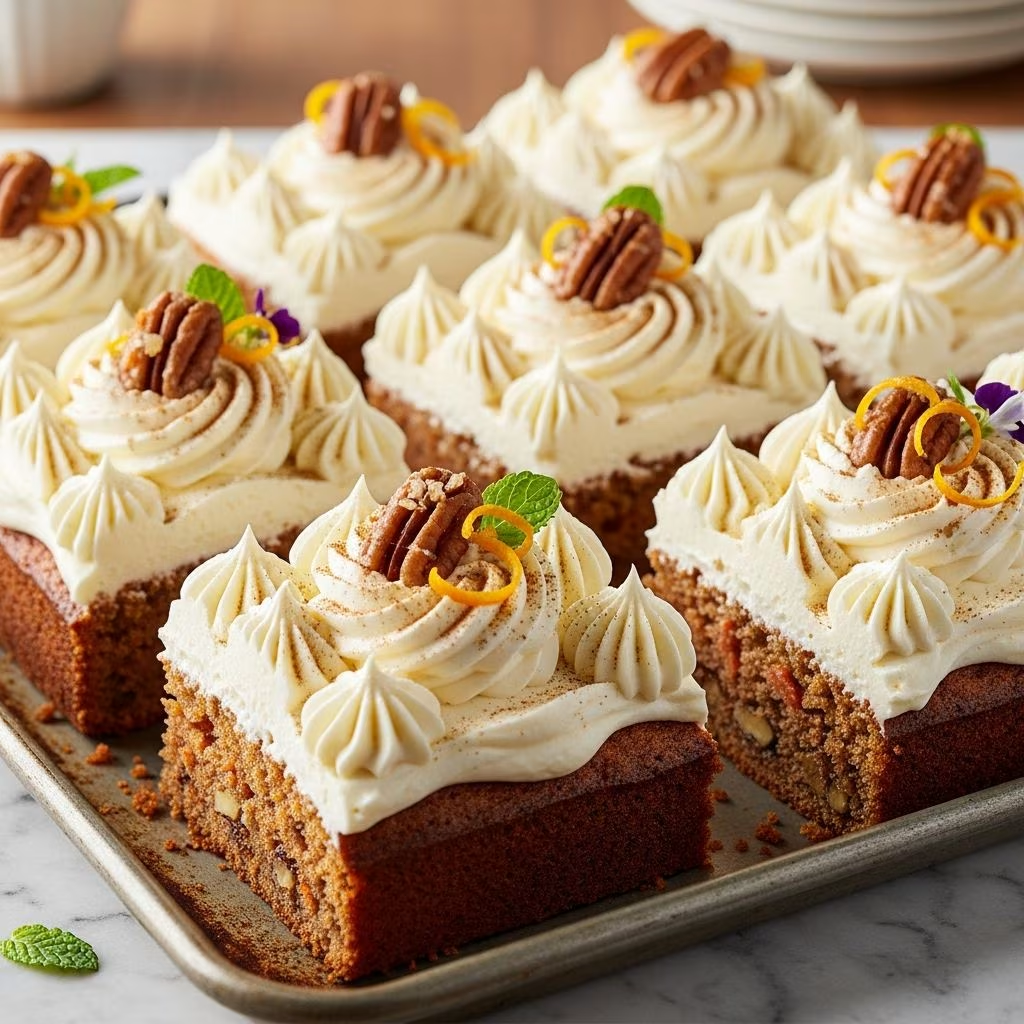
When you need a dessert that impresses a crowd without requiring hours in the kitchen, a sheet pan carrot cake becomes your secret weapon. This versatile recipe delivers tender, moist layers of spiced cake generously loaded with fresh shredded carrots, enhanced with crushed pineapple and nuts for added texture and depth. What truly sets this dessert apart is the cloud-like whipped cream cheese frosting that crowns the entire pan, creating a showstopper that tastes as incredible as it looks.
Sheet pan cakes have revolutionized the way home bakers approach entertaining. Rather than struggling with multiple cake layers, precise stacking, and complicated assembly, you simply pour the batter into one large pan and bake. The result is a cake that feeds 24 people and can be frosted and served directly from the pan. This practical approach makes sheet pan carrot cake the ideal choice for potlucks, office celebrations, family gatherings, and casual dinner parties.
Why Carrot Cake Deserves a Place on Your Dessert Rotation
Carrot cake occupies a unique position in American baking traditions. Unlike chocolate or vanilla cakes, which rely on one primary flavor profile, carrot cake is a composition of complementary tastes and textures. The natural sweetness of carrots combines with warm spices like cinnamon, nutmeg, and allspice to create complexity. The addition of pineapple brings subtle brightness and acidity that balances richness. Nuts contribute crunch that contrasts with the tender crumb.
This multifaceted flavor profile explains why carrot cake appeals to diverse palates. People who might find traditional cakes one-dimensional often gravitate toward carrot cake because it engages multiple sensory experiences with each bite. The vegetables themselves ground the cake in a sense of wholesome indulgence—there is actual nutrition in the carrots and fruit, which somehow makes the dessert feel less guilty despite the abundant butter and cream cheese in the frosting.
Assembling Your Ingredients for Success
Before you begin mixing, gather all components in one place. This mise en place approach prevents mid-baking scrambles and ensures you won’t accidentally forget a crucial ingredient.
For the cake base: You will need fresh carrots (approximately 1.5 pounds or 4.5 to 5 cups when shredded), all-purpose flour, sugar, eggs, neutral oil, unsweetened applesauce, water, vanilla extract, and a blend of warm spices. The applesauce serves a dual purpose—it adds moisture while reducing the amount of oil needed, creating a more tender crumb without excessive greasiness. The combination of cinnamon, nutmeg, and allspice should total roughly 2 to 3 tablespoons across all three spices.
You will also need leavening agents: both baking soda and baking powder work together to create the appropriate rise. Salt enhances all the flavors and shouldn’t be overlooked. Optional additions include crushed pineapple (which contributes moisture and subtle tang) and chopped nuts like pecans or walnuts (which add textural interest).
For the frosting: Room-temperature cream cheese and butter form the foundation. Powdered sugar provides sweetness and structure. Heavy whipping cream, when whipped to stiff peaks and folded in, transforms the frosting from dense to airy and luxurious. Vanilla extract and orange zest (if desired) add flavor dimensions.
The Art of Preparing Your Pan and Prepping Ingredients
Proper preparation determines whether your cake releases cleanly and bakes evenly. Preheat your oven to 350 degrees Fahrenheit at least 15 minutes before baking. Grease a half sheet pan (the standard 11 by 17-inch rimmed baking sheet) thoroughly with butter or non-stick spray, paying special attention to corners and edges where sticking frequently occurs.
For the carrots, trim both ends and rinse under cool water. You can peel them if desired, but the skin is edible and contains nutrients, so leaving the skin on is perfectly acceptable. Using a box grater, food processor, or microplane zester, shred the carrots into fine, consistent pieces. This uniformity ensures even moisture distribution throughout the batter and prevents large carrot chunks from creating dry pockets.
Measure your flour by spooning it into a measuring cup and leveling with a knife, or weigh it for greater accuracy. Sifting isn’t necessary for this recipe, though some bakers prefer to sift to eliminate lumps in the spices and leavening agents. If you skip sifting, simply whisk these dry ingredients together vigorously.
Mixing and Baking: Building Structure and Flavor
In a large mixing bowl, combine your sugar, eggs, oil, applesauce, water, and vanilla extract. Whisk these wet ingredients together thoroughly until they’re well incorporated and slightly pale. This step should take roughly 2 minutes and ensures even distribution of the leavening agents when combined with dry ingredients.
Add your whisked dry ingredients (flour, spices, baking soda, baking powder, and salt) to the wet mixture. Fold gently rather than vigorously beat. Aggressive mixing develops gluten, which can result in a dense, tough crumb. You want to fold just until no dry streaks of flour remain visible.
Fold in your shredded carrots, crushed pineapple (if using, and drain well to avoid excess moisture), and chopped nuts. Again, use gentle folding motions. Pour the batter into your prepared sheet pan, spreading evenly from corner to corner.
Bake for 25 to 27 minutes, checking for doneness by inserting a toothpick into the center—it should emerge with no wet batter clinging to it, though a few moist crumbs are acceptable. The cake surface should spring back lightly when touched. Remove from the oven and allow to cool completely in the pan. Cooling in the pan prevents the delicate crumb from breaking apart, and room-temperature cake is much easier to frost than warm cake (which would cause frosting to melt).
Creating the Whipped Cream Cheese Frosting
While the cake cools, prepare your frosting. Begin by ensuring both your cream cheese and butter are at room temperature—this is non-negotiable for smooth, creamy results. Cold cream cheese will create lumps that no amount of beating can remedy.
Using a stand mixer fitted with the paddle attachment or a handheld electric mixer in a medium bowl, beat the softened cream cheese and butter together on medium speed until smooth and light. This step should take approximately 2 to 3 minutes. Scrape down the sides of the bowl periodically to ensure all ingredients are incorporated.
Add your powdered sugar gradually—roughly 1 cup at a time—and continue beating on low speed. Gradual addition prevents a cloud of sugar from escaping the bowl and coating your kitchen. Once all sugar is incorporated, add vanilla extract and beat briefly to combine.
In a separate bowl, use a whisk or electric mixer to beat heavy whipping cream until stiff peaks form. This process takes several minutes but transforms the cream into a voluminous, stable foam. Gently fold this whipped cream into the frosting using a rubber spatula, stirring until no white streaks remain. This folding technique preserves the airiness you’ve worked to create. The final frosting should be fluffy, spreadable, and utterly luxurious.
Frosting Your Cake Like a Professional
Once your cake has cooled completely, spread the frosting evenly across the top using an offset spatula or the back of a spoon. You can frost the cake while it remains in the pan for easy serving, or remove it and frost the top and sides if you prefer a more formal presentation. For a pan-style presentation, cutting the frosted cake into neat squares while still in the pan creates individual portions that are easy for guests to grab.
If you want to elevate the visual appeal, consider garnishing the frosted cake with toasted chopped pecans, shredded orange zest, or even a light dusting of cinnamon. These additions enhance both flavor and appearance.
Storage and Make-Ahead Strategies
Carrot sheet cake keeps well when covered loosely with plastic wrap and stored in the refrigerator for up to 4 days. The cool temperature keeps the frosting firm and the cake moist. You can also freeze an unfrosted, cooled cake tightly wrapped in plastic wrap and aluminum foil for up to 3 months. Frost after thawing to ensure the frosting is at its fluffiest.
For make-ahead convenience, prepare the cake the day before serving. Cool completely, frost, and refrigerate overnight. The flavors actually meld and deepen during refrigeration, making this advance preparation beneficial rather than just convenient.
Troubleshooting Common Issues
Dense or dry cake: This often results from overmixing the batter, which develops gluten. Fold gently rather than stirring vigorously. Additionally, ensure you’re not overbaking—check for doneness a minute or two before the recipe suggests.
Frosting is too thick: If your frosting is difficult to spread, add heavy cream one tablespoon at a time and beat until you reach the desired consistency. Alternatively, ensure your cream cheese and butter were truly room temperature before mixing.
Cake sticks to pan: Allow the cake to cool completely before attempting removal. If it’s still warm, it will break apart. Ensure you’ve greased the pan thoroughly initially.
Frosting separates or becomes grainy: This typically indicates temperature problems—ensure all ingredients were room temperature before mixing. Never add cold cream cheese to warm frosting or vice versa.
Variations and Customizations
While the classic version is wonderful, you can adapt this recipe based on preferences or ingredients on hand. Substitute oil with melted coconut oil for a subtle coconut note. Replace half the all-purpose flour with whole wheat flour for earthier flavor and added nutrition. Add shredded pineapple or raisins directly to the batter for extra moisture and sweetness.
For the frosting, infuse it with orange or lemon zest for bright acidity. Add a tablespoon of maple syrup or honey for deeper, more complex sweetness. If serving guests with nut allergies, simply omit the nuts from both the cake and any garnish.
Why Sheet Pan Format Works
The practical advantages of sheet pan carrot cake cannot be overstated. A half sheet pan accommodates approximately 24 servings when cut into 2-inch squares—ideal for feeding groups without requiring multiple baking sessions. The wide, flat surface area allows even heat distribution, resulting in consistent baking. Frosting a flat cake is significantly simpler than frosting multiple layers. Transportation and serving are straightforward—the cake can be served directly from the pan or transferred to a platter for presentation.
Frequently Asked Questions
Can I prepare this cake in advance? Yes. Bake the unfrosted cake up to two days ahead, wrap tightly, and store in an airtight container. Frost no more than 24 hours before serving for best frosting texture.
What pan size should I use? A standard half sheet pan (11 by 17 inches) is ideal. A quarter sheet pan will result in a thicker cake and may require additional baking time.
Can I halve this recipe? Yes, though working with a properly sized 9 by 13-inch pan will be necessary. Reduce all ingredient quantities by half and reduce baking time to 18 to 22 minutes.
Is this recipe dairy-free? No—cream cheese and butter are essential to both the cake and frosting. Dairy-free substitutes rarely produce comparable results in traditional carrot cake.
How should I serve this cake? Sheet cake is best served at room temperature or slightly chilled. Cut into squares and serve on individual plates or napkins. Pair with coffee, tea, or milk.
References
- Carrot Cake Sheet Cake Recipe From Scratch — Tastes Better From Scratch. 2024. https://tastesbetterfromscratch.com/carrot-cake-sheet-cake/
- Light and Fluffy Carrot Sheet Cake with Cream Cheese Frosting — Crumbs Snatched. 2024. https://www.crumbsnatched.com/fluffiest-carrot-cake-ever/
- Carrot Sheet Cake with Whipped Cream Cheese Frosting — Mel’s Kitchen Cafe. 2024. https://www.melskitchencafe.com/carrot-sheet-cake-with-whipped-cream-cheese-frosting/
- Super Moist Carrot Sheet Cake with Cream Cheese Frosting — Neighbor Food Blog. 2024. https://neighborfoodblog.com/super-moist-carrot-sheet-cake-with-cream-cheese-frosting/