Understanding the Heritage and Tradition
Scottish shortbread represents one of the world’s most beloved yet deceptively simple baked goods. This iconic treat emerged during the 1700s in Scotland, initially crafted as a luxury delicacy reserved for momentous celebrations including weddings and holiday festivities. The name itself derives from the distinctive texture created when butter is incorporated into the dough, which “shortens” the gluten strands and produces the characteristic crumbly, melt-in-your-mouth consistency that defines authentic shortbread.
What sets Scottish shortbread apart from countless other butter-based cookies is its commitment to minimalism. Traditional recipes rely exclusively on three essential ingredients: premium butter, fine sugar, and quality flour. This triumvirate of components has remained virtually unchanged for centuries, proving that exceptional baking often requires restraint rather than complexity. The beauty of shortbread lies not in elaborate flavoring or sophisticated techniques, but in the precise balance of proportions and understanding of how these basic ingredients interact during mixing and baking.
The Fundamental Formula: Getting Proportions Right
Success in shortbread baking begins with understanding the mathematical relationship between ingredients. Professional bakers and culinary experts have established a proven ratio that serves as the foundation for consistent, reliable results: one part sugar, two parts butter, and three parts flour by weight. This golden formula ensures proper texture development and prevents common pitfalls that compromise the final product.
When converting this ratio into practical measurements, the typical yield involves using 100 grams of sugar, 200 grams of butter, and 300 grams of flour. However, recipes may be scaled up or down while maintaining these precise proportions. For instance, a standard home recipe might use one-half cup of sugar, one cup (two sticks) of softened butter, and two and one-half cups of all-purpose flour. The consistency of this ratio across various recipe sources demonstrates its proven effectiveness.
Ingredient Selection and Preparation
Butter: The Foundation of Excellence
Butter quality directly determines shortbread quality. Selecting salted or unsalted butter depends on personal preference and regional tradition, though both approaches yield excellent results. The critical factor involves using butter that is completely softened to room temperature before beginning the mixing process. Cold or partially softened butter resists proper incorporation, resulting in visible streaks and uneven texture throughout the finished cookies.
Room temperature butter should be pliable yet still maintain its shape, appearing smooth and creamy rather than melted or greasy. Some bakers prefer leaving butter at room temperature for 30 to 60 minutes before use, while others allow several hours for optimal softening. Environmental temperature significantly influences this timeline, with warmer kitchens requiring less waiting time than cool environments.
Sugar: Granulated vs. Alternatives
Traditional recipes call for granulated white sugar, which dissolves readily during mixing and creates the desired fine crumb structure. Some contemporary variations substitute powdered sugar (also called confectioner’s sugar or icing sugar) to achieve an even more delicate, tender result. Powdered sugar contains cornstarch in addition to finely ground sugar crystals, which affects both texture and moisture content in the final baked product.
The choice between granulated and powdered sugar represents a stylistic preference rather than a right-or-wrong decision. Granulated sugar produces classic shortbread with slightly firmer structure and more pronounced butter flavor, while powdered sugar yields an exceptionally tender, almost melt-away texture that some bakers consider superior.
Flour: The Structural Element
All-purpose flour forms the backbone of most shortbread recipes and provides adequate structure for traditional preparations. However, some advanced bakers incorporate cake flour alongside or instead of all-purpose flour to achieve an exceptionally light, tender crumb. Cake flour contains lower protein content than all-purpose flour, which restricts gluten development and produces a more delicate final texture.
If using only all-purpose flour, ensure proper measurement by spooning flour into your measuring cup and leveling it with a knife rather than packing the cup directly into the bag. Packed flour measurements result in too much flour relative to the recipe, creating dry, crumbly dough that fails to hold together properly.
Mixing Techniques and Critical Cautions
The Overmixing Problem
The most frequent cause of shortbread failure involves excessive mixing. Unlike many other cookie recipes that benefit from thorough creaming and aeration, shortbread requires a completely different approach. Over-aerating the butter by creaming it vigorously introduces too much air, which expands during baking and creates a cake-like crumb instead of the dense, tender, sandy texture that characterizes authentic shortbread.
Professional Scottish bakers consistently emphasize avoiding the creaming step entirely. Instead, simply soften the butter slightly to make it pliable, then combine it gently with sugar until just integrated. The mixture should not appear fluffy or light; it should maintain a relatively compact, uniform appearance.
Hand-Mixing vs. Mechanical Methods
Traditional preparation involves using a wooden spoon or spatula to combine ingredients in a large bowl. This hands-on approach provides excellent control and reduces the risk of overmixing since manual mixing naturally proceeds at a slower pace than electric machinery. Many experienced bakers swear by wooden spoon methods for this very reason.
Stand mixers and electric hand mixers can successfully produce shortbread, but they require careful attention and restraint. If choosing to use mechanical mixing, employ the paddle attachment rather than the whisk, and stop mixing the moment all ingredients are just incorporated. The dough should appear crumbly initially before transitioning to smooth dough through gentle hand-kneading.
The Final Dough Assembly
After combining butter and sugar, sift the flour directly into the mixture. Stir gently with a spoon until the mixture takes on a sandy, crumbly appearance. At this point, abandon the spoon and use your hands to gather the mixture, squeezing gently until the dough comes together in a smooth mass with no visible butter streaks or flour pockets. This transition from mechanical mixing to hand assembly provides tactile feedback and prevents the aggressive mixing that destroys shortbread texture.
Shaping and Pressing Methods
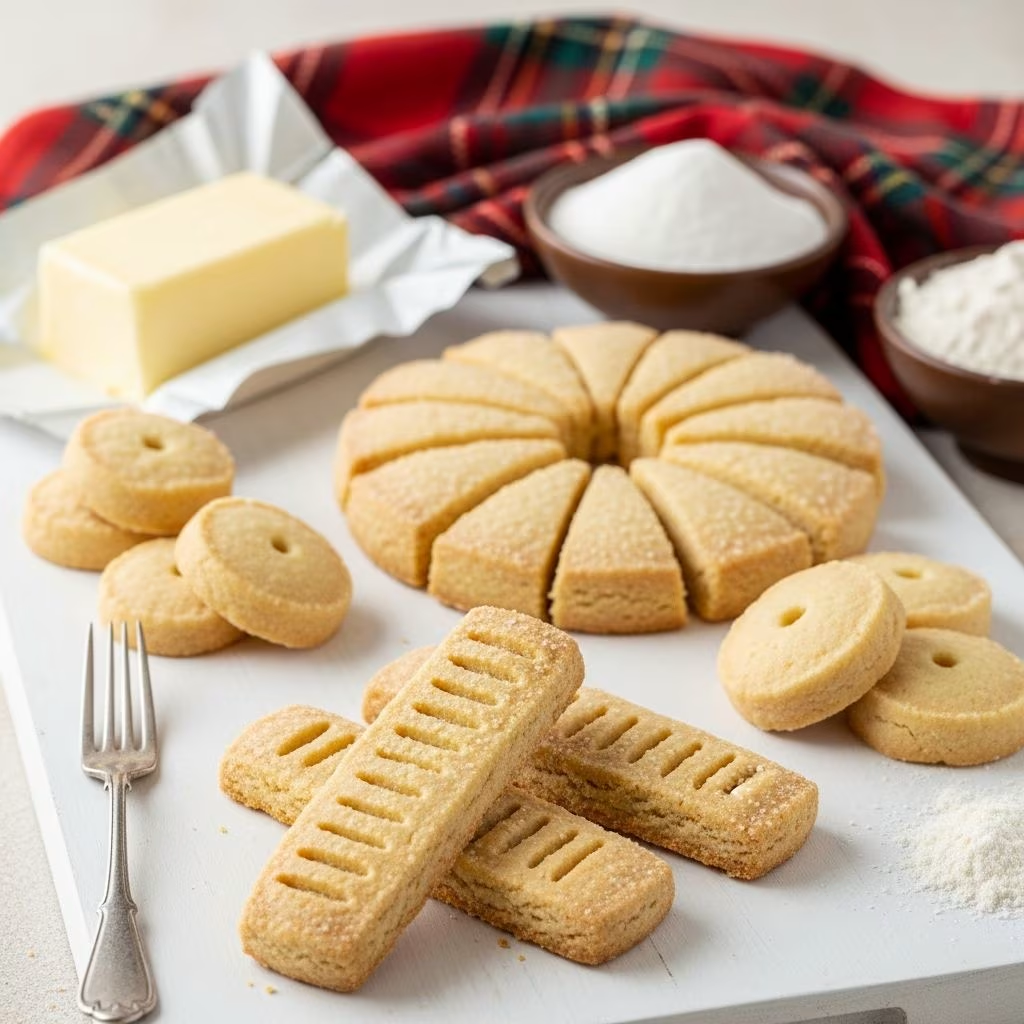
Traditional Scottish shortbread typically assumes one of several shapes. The most common approach involves pressing the dough into a rectangular baking pan, then cutting it into finger-like portions before or after baking. This method produces the classic appearance associated with Scottish shortbread and allows for uniform thickness and consistent baking results.
Alternatively, some bakers portion the dough into individual cookies using their hands or decorative molds. Round shortbread rounds, wedge-shaped pieces, or pressed cookies adorned with fork impressions represent valid presentation options that maintain authentic character while offering visual variety.
When pressing dough into a baking pan, ensure even thickness throughout to prevent some pieces from overbaking while others remain underdone. A thickness of approximately one-quarter to three-eighth inch produces ideal results—thin enough to achieve crispness yet substantial enough to develop the characteristic sandy texture.
Baking Science and Temperature Control
Oven Temperature Precision
Traditional Scottish shortbread bakes at relatively low temperatures compared to many other cookies. Most recipes call for oven temperatures between 300°F and 375°F (149°C to 190°C), with many experienced bakers preferring the lower end of this range. Lower baking temperatures allow the shortbread to cook gently and thoroughly without browning excessively or developing a hard, brittle texture.
Fan-assisted convection ovens require temperature adjustments of approximately 20°F (11°C) lower than conventional ovens due to enhanced heat circulation. A conventional oven set to 320°F (160°C) would correspond to approximately 300°F (150°C) in a fan-assisted oven.
Baking Duration and Doneness Assessment
Baking times typically range from 20 to 35 minutes depending on thickness, oven characteristics, and whether the shortbread remains in one large piece or has been pre-cut into individual portions. The shortbread is ready when the edges develop a pale golden color while the center remains predominantly pale or cream-colored. The top surface should appear set and firm to the touch, though not dark or caramelized.
Underbaked shortbread will be too soft and difficult to cut cleanly, while overbaked shortbread becomes hard and develops bitter flavors. The target is achieving the point where the shortbread has set sufficiently to hold its shape while remaining tender and crumbly. Allow the baked shortbread to cool in the pan for several minutes before cutting or removing to a cooling rack.
Troubleshooting Common Challenges
| Problem | Likely Cause | Prevention Strategy |
|---|---|---|
| Cake-like texture | Excessive mixing or creaming | Mix only until ingredients combine; avoid vigorous beating |
| Greasy or oily appearance | Butter too warm or melted | Use softened but cool butter; avoid letting dough become warm |
| Crumbly dough that won’t hold together | Too much flour or insufficient butter | Measure flour carefully; verify ingredient proportions |
| Hard or brittle texture | Oven temperature too high or baking time excessive | Lower oven temperature; reduce baking time by 5-minute increments |
| Uneven browning | Uneven thickness or hot spots in oven | Press dough to uniform thickness; rotate pan halfway through baking |
Storage and Shelf Life Considerations
Properly baked shortbread maintains exceptional quality for extended periods when stored correctly. Transfer completely cooled shortbread to an airtight container, where it will remain fresh and crispy for up to two weeks at room temperature. The high butter content provides natural preservation, preventing rapid staleness or mold development.
For longer-term storage, shortbread freezes successfully for several months. Wrap individual pieces in plastic wrap or parchment paper before placing them in a freezer-safe container. Thaw at room temperature for 15 to 30 minutes before serving to restore optimal texture and flavor.
Recipe Variations and Creative Additions
While traditional shortbread celebrates its simplicity, many bakers explore variations that respect the original formula while introducing subtle enhancements. Adding one-half to one teaspoon of vanilla extract provides gentle flavor complexity without overwhelming the butter-forward profile. One-quarter teaspoon of salt (if using unsalted butter) or a pinch of sea salt (if using salted butter) enhances sweetness perception and adds depth.
Some contemporary recipes incorporate a small amount of cake flour alongside all-purpose flour to create an exceptionally tender texture, or add finely grated lemon zest for brightness and aromatic interest. Traditionally, shortbread remains unadorned, but some bakers brush the top with egg wash before baking to achieve a subtle sheen.
Equipment Recommendations
Essential items for shortbread baking include a large mixing bowl, wooden spoon or silicone spatula, measuring cups and spoons, and a baking pan or cookie sheet. An 8-inch square pan produces the traditional shape, though rectangular 9×13-inch pans and round cake pans also work well. Parchment paper prevents sticking and simplifies cleanup without requiring grease or oil.
Optional but helpful items include a food scale for precise ingredient measurement, a stand mixer for hands-off convenience, and decorative cookie cutters or molds for shaping individual pieces. However, none of these items are necessary for producing excellent shortbread using only basic kitchen tools.
Frequently Asked Questions
Can I use margarine or oil instead of butter?
Butter is essential for authentic Scottish shortbread. Its unique flavor profile and solid fat content at room temperature cannot be successfully replicated by margarine or oil. Substitutions result in fundamentally different cookies that lack the characteristic richness and crumbly texture.
Why does my shortbread spread during baking?
Spreading indicates that the dough was too warm when baked, the oven temperature was too high, or the butter was not properly softened before mixing. Ensure the dough is cool before baking, verify your oven temperature with a separate thermometer, and use room-temperature rather than melted butter.
Is it necessary to dock (prick with a fork) the dough?
Docking before baking allows steam to escape and prevents large air pockets from developing, contributing to more even texture and a flatter, denser final product. While not absolutely necessary, docking represents traditional practice and improves consistency.
How thick should shortbread be for optimal results?
Approximately one-quarter to three-eighth inch thickness produces ideal balance between crispness and tenderness. Thinner shortbread becomes very brittle, while thicker pieces remain softer and cake-like.
References
- Traditional Scottish Shortbread Recipe — Bonni Bakery. 2024. https://bonnibakery.com/traditional-scottish-shortbread/
- Scottish Shortbread Cookies Historical Origin — Cravings Journal. 2024. https://cravingsjournal.com/scottish-shortbread-cookies/
- How to Make Shortbread: Easy Scottish Recipe — Christina’s Cucina. 2024. https://www.christinascucina.com/how-to-make-shortbread/
- Amazing Scottish Shortbread Recipe — Mel’s Kitchen Cafe. 2024. https://www.melskitchencafe.com/amazing-scottish-shortbread/
- One Shortbread Dough = 20 Recipes: Classic Formula — The View from Great Island. 2024. https://theviewfromgreatisland.com/one-cookie-dough-12-ways/