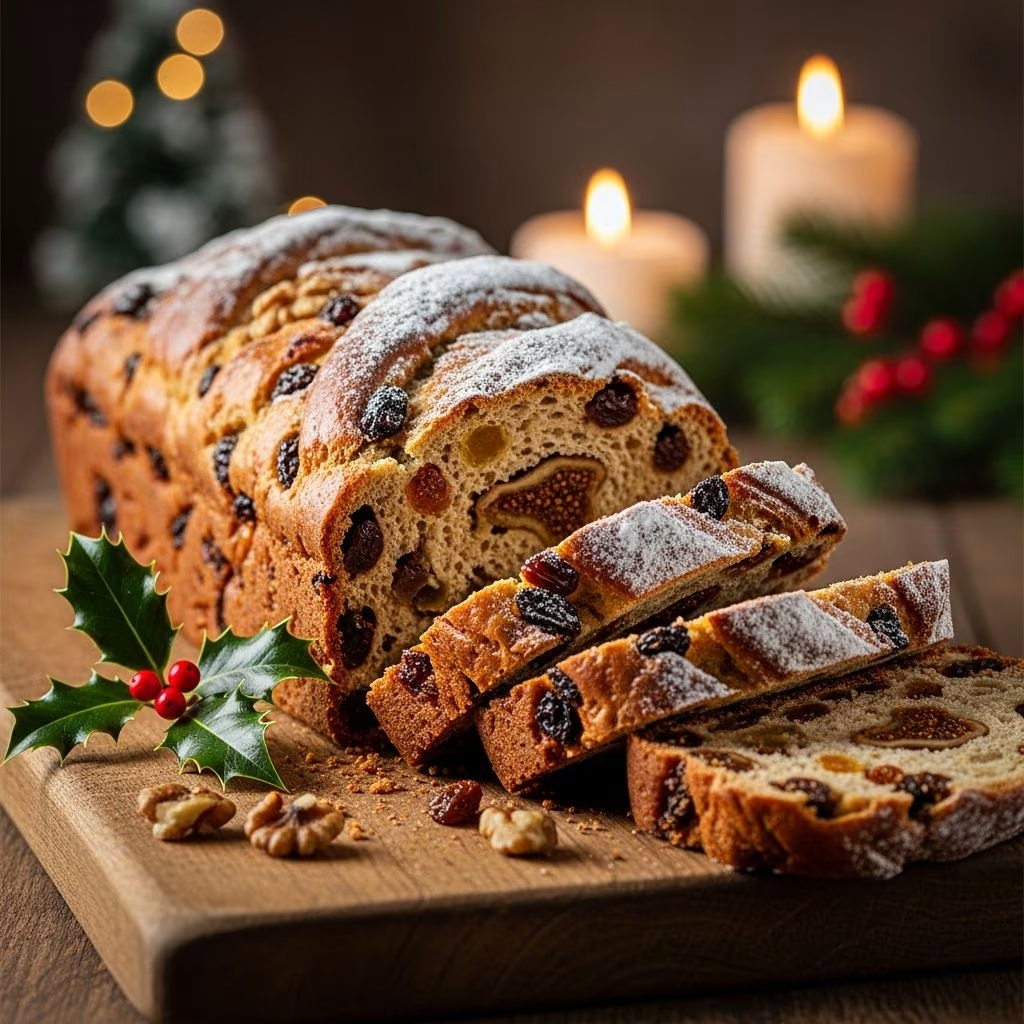
Immerse yourself in the comforting tradition of Schnitzbrot, a rustic German fruit bread that captures the essence of holiday celebrations. This enriched yeast loaf bursts with chewy dried fruits, crunchy nuts, and subtle spices, offering a dense yet tender texture ideal for slicing and sharing during winter festivities.
The Heritage of Schnitzbrot in German Baking Culture
Schnitzbrot traces its roots to Germany’s Swabian region, where it emerged as a practical way to preserve abundant dried fruits through the cold months. Unlike lighter holiday breads, this version emphasizes hearty, fruit-forward flavors, making it a staple in family gatherings and Christmas markets. Bakers historically soaked fruits overnight to plump them, ensuring moisture throughout the loaf. Its name, meaning ‘cut bread’ or ‘fruit bread,’ reflects the chopped dried ingredients central to its character.
Passed down through generations, Schnitzbrot embodies resourcefulness, transforming simple pantry staples into a luxurious treat. Regional variations might incorporate local nuts or rums for soaking, but the core remains: a slow-risen dough studded with nature’s preserved bounty. Today, it stands alongside stollen and hutzelbrot as a symbol of German yuletide baking, evoking warmth and nostalgia.
Essential Ingredients for Perfect Schnitzbrot
Crafting Schnitzbrot requires a balance of pantry essentials and thoughtful preparation. Focus on high-quality dried fruits for natural sweetness and chewiness.
- Dried Fruits: 12 ounces mixed dried fruits (prunes, apricots, pears, figs) plus 8 ounces dried apples, soaked and chopped for even distribution.
- Yeast Base: 1 package active dry yeast bloomed in 1/4 cup lukewarm water with 1 tablespoon sugar, creating a lively sponge with 1.5 cups scalded milk and 1.5 cups flour.
- Enricheners: 1/2 cup butter, 1 cup sugar, 2 beaten eggs for richness and tenderness.
- Flavor Boosters: 1 teaspoon salt, 1/2 teaspoon cinnamon, 3/4 cup raisins, 3/4 cup currants, and 1 cup chopped nuts (walnuts or hazelnuts) for texture contrast.
- Flour Backbone: Up to 7-8 cups unsifted all-purpose flour to achieve a soft, kneadable dough.
Optional additions like rum-soaked raisins or candied peels draw from related traditions, enhancing depth without overpowering the fruit profile.
Step-by-Step Guide to Baking Schnitzbrot
Patience is key in Schnitzbrot preparation, with overnight soaking yielding superior results. Plan ahead for a rewarding bake.
- Prepare Fruits: Cover dried fruits and apples with boiling water; soak overnight. Cook until soft (15 minutes), drain, and chop finely to integrate seamlessly into dough.
- Activate Yeast: Dissolve yeast in lukewarm water with sugar; rest 10 minutes until foamy. Combine with cooled scalded milk and 1.5 cups flour to form a sponge; let bubble.
- Cream Wet Ingredients: Beat butter and sugar until fluffy; incorporate eggs, then blend in sponge, fruits, salt, spices, raisins, currants, and nuts.
- Build Dough: Gradually add 3 cups flour, divide into quarters, and knead each portion individually on a floured surface, incorporating remaining flour as needed to prevent stickiness.
- First Rise: Combine all dough, oil a bowl, cover, and let double in a warm spot (1-2 hours).
- Shape and Second Rise: Divide into 4 loaves, place in greased pans, cover, and rise until doubled (1 hour).
- Bake: 400°F for 10 minutes, then 350°F for 45 minutes until golden and hollow-sounding when tapped.
Cool completely before slicing to allow flavors to meld. Yield: 4 medium loaves, serving 40 slices.
Pro Tips for Flawless Schnitzbrot Loaves
- Scald milk to 115-120°F for optimal yeast activity without killing it.
- Knead incrementally to fully incorporate fruits without tearing the dough.
- Use a kitchen scale for precise fruit chopping, ensuring uniform texture.
- For extra tenderness, incorporate a tangzhong method: cook a flour-milk slurry before adding to dough.
- Store wrapped in foil at room temperature for up to a week; flavors improve after 2-3 days.
Common pitfalls include over-kneading (tough crumb) or insufficient fruit draining (soggy loaf). Test doneness with an instant-read thermometer: internal temperature of 190-200°F.
Customizing Your Schnitzbrot with Variations
Adapt Schnitzbrot to preferences or availability while honoring its rustic spirit.
| Variation | Key Additions/Substitutions | Baking Adjustment |
|---|---|---|
| Nut-Free | Omit nuts; increase raisins by 1/2 cup | None |
| Spiced Rum | Soak fruits in 1/4 cup rum overnight | Reduce milk by 2 Tbsp |
| Citrus Twist | Add zest of 1 lemon/orange + 4 oz candied peel | Extra 5 min bake |
| Mini Loaves | Divide into 8 portions | Reduce bake to 30-35 min |
| Vegan | Aquafaba for eggs; plant butter/milk | Monitor rise closely |
These tweaks maintain the bread’s chewy, fruity essence while introducing new dimensions.
Pairing Schnitzbrot for Holiday Enjoyment
Schnitzbrot shines solo but elevates with thoughtful accompaniments. Slice thickly and serve with unsalted butter and honey for breakfast. Pair with mulled wine or hot chocolate during Advent. For dessert, top with quark cheese and fruit preserves. Its nutty sweetness complements sharp cheeses like aged gouda in charcuterie boards.
Freezing tip: Wrap tightly; thaw overnight for freshness up to 3 months.
Nutrition and Storage Insights
Per slice (1/40th loaf): Approximately 200 calories, rich in fiber from fruits (5g), healthy fats from nuts (8g), and complex carbs. Low in saturated fat if using minimal butter. Store in airtight containers; refrigeration extends life but may dry texture—prefer room temp.
Frequently Asked Questions (FAQs)
Can I use instant yeast for Schnitzbrot?
Yes, mix directly with flour; skip blooming step but ensure warm liquids.
Why soak fruits overnight?
Rehydrates for plump texture and prevents dough dryness.
How do I know if the dough has risen enough?
Doubled in size; gentle poke leaves slow-recovering indent.
Can Schnitzbrot be gluten-free?
Possible with GF flour blend + xanthan gum, but texture will be denser.
What’s the difference between Schnitzbrot and Stollen?
Schnitzbrot is fruit-heavier, less buttery; stollen features marzipan and powdered sugar dusting.
Why Schnitzbrot Deserves a Place in Your Holiday Traditions
Beyond its delectable taste, baking Schnitzbrot fosters connection—kneading dough becomes a meditative ritual, sharing loaves builds community. Its versatility suits gifting, brunches, or midnight snacks. Experiment confidently; each bake refines your mastery of this timeless German treasure.
References
- Schnitzbrodt (German Fruit Bread) Recipe — Food.com. Accessed 2026. https://www.food.com/recipe/schnitzbrodt-german-fruit-bread-69976
- German Sweet Christmas Bread — Fake Food Free. Accessed 2026. https://www.fakefoodfree.com/german-sweet-christmas-bread/
- Stollen (German Christmas Bread) — Curious Cuisiniere. Accessed 2026. https://www.curiouscuisiniere.com/stollen-german-christmas-bread/
- Classic Christmas Bread – Stollen Recipe — Our Gabled Home. Accessed 2026. https://ourgabledhome.com/traditional-christmas-stollen-easy-recipe/
- German Christmas Stollen Recipe — International Desserts Blog. Accessed 2026. https://www.internationaldessertsblog.com/german-christmas-stollen-recipe/
- German Christmas Stollen Recipe — YouTube (Chris’s Recipe). Accessed 2026. https://www.youtube.com/watch?v=HAis6GPsJT8
- Hutzelbrot (German Fruit and Nut Bread) — The Daring Gourmet. Accessed 2026. https://www.daringgourmet.com/hutzelbrot-german-fruit-and-nut-bread/