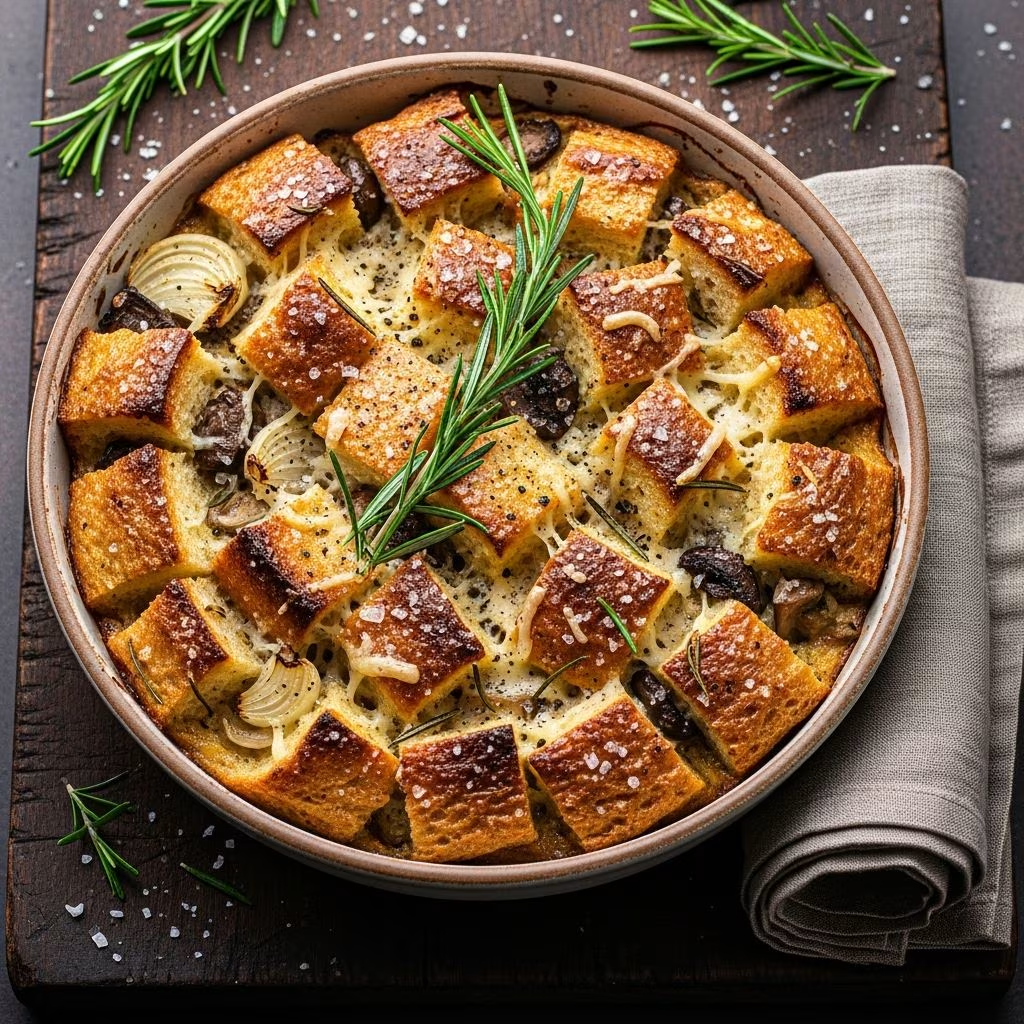
Bread pudding has long been associated with desserts—sweet, indulgent creations topped with caramel sauce or whipped cream. However, this versatile dish transforms dramatically when you remove the sugar and introduce savory elements. A savory rosemary bread pudding represents a sophisticated evolution of this traditional comfort food, combining the textural appeal of cubed bread soaked in a rich custard base with herbaceous aromatics and melted cheese. The result is a dish that occupies the same culinary space as traditional stuffing, yet offers a more refined, creamy interior that distinguishes it from conventional bread-based side dishes.
The beauty of this preparation lies in its versatility and make-ahead convenience. Unlike many dinner party dishes that demand last-minute attention, savory bread pudding can be assembled hours or even a day in advance, refrigerated, and baked when needed. This characteristic makes it an ideal selection for hosts juggling multiple dishes or preparing for entertaining.
The Essential Foundation: Selecting and Preparing Your Bread
Bread selection significantly impacts the final outcome of your pudding. The ideal candidates are slightly stale or day-old loaves with enough structure to absorb the custard mixture without disintegrating into mush. Ciabatta bread, with its open crumb structure and subtle flavor, proves particularly effective. Alternatively, French baguettes, sourdough, or rustic country breads deliver excellent results by providing textural contrast between the crispy exterior portions and the custard-soaked interior.
Begin by cutting your bread into uniform one-inch cubes, removing most of the crusts to ensure even texture throughout the finished dish. Some cooks prefer to pre-dry the bread cubes in a low oven at 325 degrees for approximately 15 minutes before assembly. This preliminary drying step eliminates excess moisture from the bread’s surface, allowing it to absorb the egg mixture more effectively during the soaking period rather than retaining surface moisture that could create an undesirable soggy exterior.
Constructing the Flavor Profile: Herbs, Aromatics, and Seasonings
Rosemary serves as the signature herb in this preparation, contributing its distinctive piney, slightly peppery notes that complement both cheese and eggs beautifully. You may use either fresh rosemary leaves, finely minced to approximately 2 tablespoons, or dried rosemary at half the quantity, depending on availability and preference. Fresh rosemary delivers more nuanced flavor, while dried rosemary offers concentrated intensity.
Beyond rosemary, aromatic vegetables like onions and leeks create depth and complexity. Sautéing one medium chopped onion or 2-3 thinly sliced leeks in butter or olive oil until softened and golden—typically 5 minutes—develops their natural sweetness and mellows their pungency. This caramelization process transforms raw onion’s sharp bite into something far more elegant and approachable.
The seasoning foundation requires restraint and balance. Salt and white pepper represent the essential additions, though many recipes incorporate subtle quantities of onion powder or garlic powder for layered savory notes. Dijon mustard, added in small quantities to the custard base, adds complexity without introducing pronounced mustard flavor.
The Custard Base: Creating the Binding Agent
The custard mixture determines your pudding’s texture—whether it will be creamy and rich or lighter and more delicate. The typical ratio involves whisking together six eggs with two cups of dairy, creating sufficient liquid to saturate the bread while remaining thick enough to bind components together. Dairy options include:
- Heavy cream—produces the richest, most indulgent result
- Half-and-half—balances richness with slight lightness
- Whole milk combined with heavy cream—offers flexibility for dietary preferences
- A mixture of milk and cream—provides moderate richness with a lighter texture
The eggs serve dual purposes: they bind the ingredients together through protein coagulation during baking, and they create the characteristic custardy texture when combined with dairy and heated gently. Whisking eggs thoroughly ensures even distribution and integration with the dairy components.
Incorporating Cheese: Depth and Textural Complexity
Cheese represents a critical component, contributing salt, umami, and richness. Parmesan cheese, finely grated and divided into portions, remains a classic choice offering sharp, complex flavors that intensify during baking. Alternative cheeses worth exploring include Jarlsberg, aged white cheddar, or Gruyère, each contributing different flavor characteristics.
The typical quantity ranges from 1.5 to 2 cups of shredded cheese, split between mixing into the bread-custard combination and topping the assembled dish. This distribution ensures cheese distribution throughout while creating a golden, cheese-crusted exterior that bakes until bubbly and brown.
The Assembly Process: Building Layers and Ensuring Even Distribution
Proper assembly prevents uneven cooking and textural inconsistencies throughout the finished dish. Begin by coating your 9×11-inch or 9×9-inch baking vessel with cooking spray or butter to prevent sticking. Layer approximately half the bread-custard mixture into the bottom, then sprinkle half of the reserved cheese over this layer. Top with the remaining bread mixture, distributing it evenly, then crown with the final cheese portion.
The pre-assembly refrigeration period—typically 30 minutes to overnight—allows the bread to gradually absorb custard and the flavors to meld. This step proves particularly important as it prevents the finished pudding from drying out during baking, creating instead a creamy, custardy center beneath the golden cheese-topped crust.
Baking Temperatures and Timing Guidelines
Baking temperature significantly influences results. Most recipes recommend either 325 degrees for extended gentle cooking or 350-375 degrees for faster baking. The gentler 325-degree approach requires approximately 45 minutes to 1 hour and produces exceptionally creamy interiors with careful monitoring. Higher temperatures accelerate cooking to 50-60 minutes, developing deeper browning and slightly firmer texture.
Doneness indicators include a golden-brown exterior, puffiness indicating the egg proteins have set, and a knife inserted into the center emerging clean (though slight melted cheese residue is acceptable). Baking times vary based on your specific oven, baking dish composition, and the depth of your mixture, necessitating visual monitoring during the final minutes.
Flavor Variations and Creative Customization
While rosemary defines the classic version, numerous flavor profiles merit exploration. Some preparations incorporate kalamata olives, which contribute briny complexity. Ham cubes or diced crispy bacon introduce smokiness and textural contrast. Mushrooms—particularly cremini or shiitake varieties—add earthy umami without dominating the delicate custard base. Thyme, sage, or combinations of Mediterranean herbs offer different aromatic experiences while maintaining the savory-herbaceous identity.
Serving Suggestions and Complementary Pairings
Savory bread pudding functions exceptionally well as an elegant side dish for holiday dinners, dinner parties, or special brunches. Its rich, satisfying nature complements roasted poultry, beef, or ham beautifully. The custardy texture and cheese richness make it substantial enough to serve alongside lighter protein options like baked white fish, creating balance in the overall meal composition.
For brunch service, this dish transitions seamlessly between sweet and savory courses, offering substance without overwhelming the palate. Its make-ahead convenience makes it particularly valuable for entertaining scenarios where coordination of multiple components creates logistical challenges.
Storage and Reheating Considerations
Assembled but unbaked bread pudding maintains quality in the refrigerator for up to 24 hours when properly covered with plastic wrap. Baked pudding stores refrigerated for approximately three days in an airtight container. Reheating in a 350-degree oven for 15-20 minutes restores initial texture and warming throughout without further drying the interior. Microwave reheating, while faster, risks uneven heating and textural degradation.
Frequently Asked Questions
Can I prepare this dish completely in advance?
Yes. Assemble the pudding, cover with plastic wrap, and refrigerate up to 24 hours before baking. This extended soaking period actually enhances the final texture by allowing complete bread saturation with the custard base.
What bread types work best?
Slightly stale ciabatta, French baguettes, sourdough, or rustic country breads perform optimally. Avoid soft sandwich breads that absorb liquid too quickly and disintegrate easily.
Can I use fresh herbs instead of dried rosemary?
Absolutely. Use twice the quantity of fresh rosemary as you would dried. Finely mince fresh rosemary and incorporate it into the sautéed aromatics or custard base.
What cheese options work besides Parmesan?
Jarlsberg, aged white cheddar, Gruyère, Swiss, and combinations thereof all yield delicious results. Avoid soft cheeses like brie, which may separate from the custard when baked.
How do I prevent a dry pudding?
Ensure adequate refrigeration time for custard absorption, monitor baking carefully to avoid overcooking, and consider covering the pudding loosely with foil if browning too quickly.
Can this recipe accommodate dietary restrictions?
Yes. Gluten-free bread substitutes work well given the custard’s binding properties. Dairy-free custard bases using plant-based milk and binders may work with adjusted ratios and careful monitoring.
References
- Celebrations at Home Blog – Rosemary & Parmesan Savory Bread Pudding Recipe — Celebrations at Home. 2024. https://celebrationsathomeblog.com/savory-bread-pudding-recipe/
- Aunt Millie’s – Savory Rosemary Bread Pudding — Aunt Millie’s Bakery. 2024. https://auntmillies.com/recipes/savory-rosemary-bread-pudding
- Broma Bakery – Rosemary Olive Savory Bread Pudding — Broma Bakery. 2024. https://bromabakery.com/savory-rosemary-olive-bread-pudding/
- Terri Steffes – Savory Bread Pudding with Onion and Rosemary — Terri Steffes. 2018. https://www.terristeffes.com/2018/11/savory-bread-pudding-with-onion-and.html
- A Hint of Rosemary – Savory Breakfast Bread Pudding — A Hint of Rosemary. 2024. https://ahintofrosemary.com/?p=38134