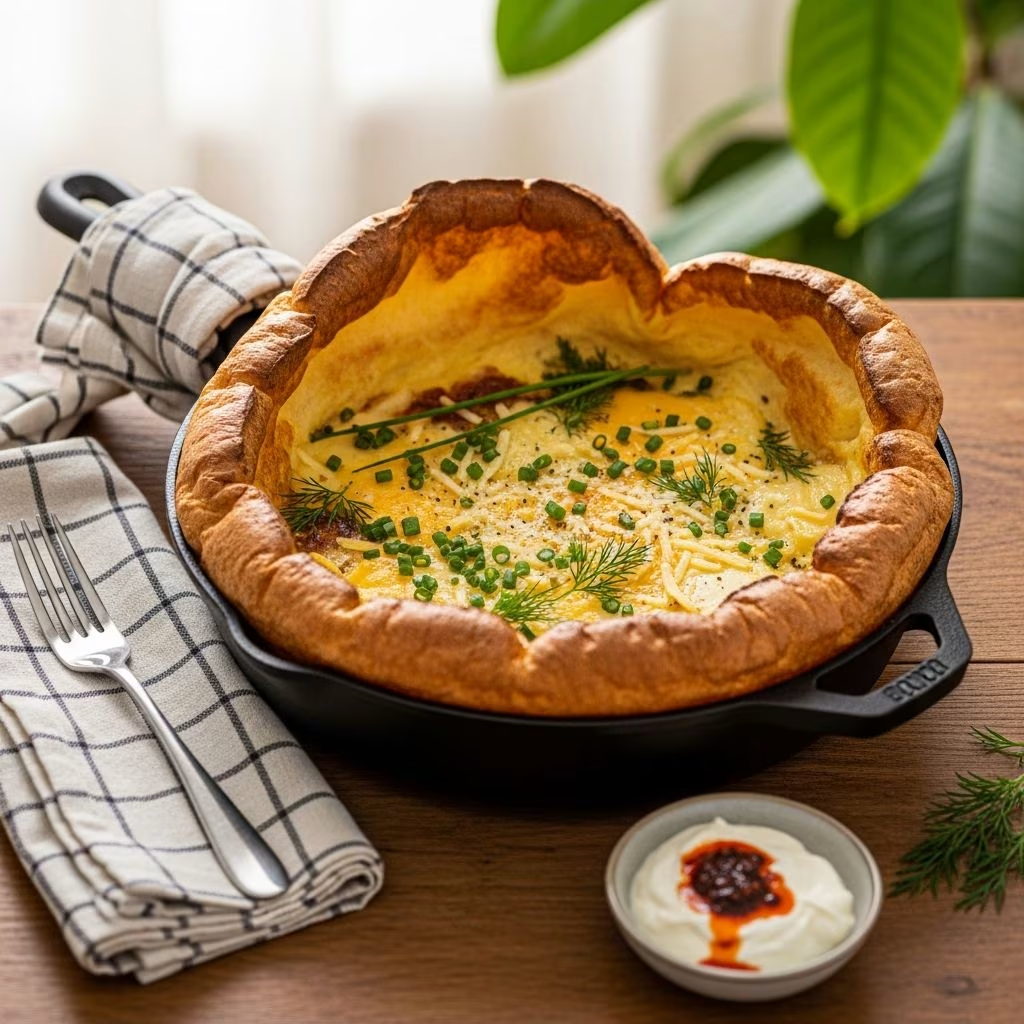
When it comes to breakfast dishes that combine elegance with surprising simplicity, few creations can rival the Dutch baby pancake. This oven-baked marvel transforms humble ingredients into a dramatic presentation that emerges from the oven dramatically puffed and golden. Adding a savory cheese element elevates this classic dish from a simple breakfast into restaurant-quality brunch fare worthy of your most important entertaining occasions.
Understanding the Dutch Baby Foundation
The Dutch baby pancake, also known as a German pancake, represents a unique category of baked breakfast dishes. Unlike traditional pan-fried pancakes that require flipping and careful temperature management, the Dutch baby relies on the oven’s heat and the chemical properties of eggs to achieve its signature dramatic rise. This distinction makes it an ideal choice for home cooks seeking to impress without requiring advanced technique.
The magic behind a Dutch baby lies in its simplicity. A basic batter consisting of just five core ingredients—eggs, flour, milk, butter, and salt—transforms in the oven’s intense heat. As the batter bakes, the eggs cook and trap steam, creating the characteristic puff that rises above the pan’s edges. The result resembles a cross between a popover and a crepe, with a custardy, custard-like center and crispy, wrinkled edges that provide textural contrast.
Why Cheese Transforms This Dish
While sweet variations featuring powdered sugar and fresh berries have long dominated Dutch baby recipes, the savory cheese interpretation opens entirely new possibilities for meal planning and entertaining. Incorporating cheese into the batter or as a topping creates a richer, more substantial dish suitable for lunch or dinner service, not merely breakfast.
Cheese serves multiple functions in a savory Dutch baby preparation. It adds umami depth to the batter, contributes to browning through the Maillard reaction, and provides richness that complements complementary ingredients like herbs, cured meats, or sautéed vegetables. The cheese melts into pockets throughout the pancake, creating flavor distribution that makes each bite satisfying and complex.
Essential Equipment and Preparation
Success with a cheese Dutch baby begins long before the batter enters the oven. Proper equipment selection and thorough preheating set the foundation for consistent results.
Cast Iron Skillet Superiority: A 10 to 12-inch cast iron skillet represents the ideal cooking vessel for Dutch babies. Cast iron’s superior heat retention and distribution ensures even browning and consistent rise. The cookware should be preheated in the oven for at least 8 to 10 minutes, allowing the metal to reach uniform temperature throughout.
Oven Temperature Mastery: Dutch babies require high oven temperatures, typically between 425°F and 450°F, to generate sufficient steam for proper puffing. The exact temperature influences timing slightly, with higher temperatures shortening bake time and lower temperatures extending it. Invest in an oven thermometer to verify your oven’s actual temperature, as many home ovens run hot or cold.
Room Temperature Ingredients: Eggs and milk at room temperature blend more smoothly and incorporate air more effectively than cold ingredients. Remove these components from refrigeration 15 to 20 minutes before preparation, or place eggs in warm water for 5 minutes to expedite tempering.
Crafting the Cheese-Infused Batter
The batter preparation determines the final texture and flavor profile of your cheese Dutch baby. Following proper technique ensures a smooth, lump-free mixture that bakes evenly.
The Blender Method: Using a blender to combine ingredients creates the smoothest possible batter in minimal time. This approach incorporates air into the mixture, contributing to lift during baking. Begin by blending eggs alone for approximately one minute until they appear pale and foamy, then add flour, milk, cheese, salt, and optional seasonings. Blend for an additional 30 seconds to ensure complete incorporation without overdeveloping gluten.
Cheese Selection and Integration: Opt for cheeses that melt smoothly and distribute evenly throughout the batter. Gruyère provides nutty complexity and melts beautifully, while sharp cheddar offers boldness. Swiss cheese contributes mild creaminess, and Emmental adds subtle sweetness. Avoid very soft cheeses like fresh mozzarella or chèvre, which can create separated pockets rather than integrating into the batter.
For optimal results, finely grate or crumble cheese into small, uniform pieces that blend readily into the batter without creating dense clumps. Pre-shredded cheese often contains anti-caking agents that inhibit smooth melting; freshly grated cheese performs significantly better.
Flavor Foundation Ingredients: Beyond cheese, consider layering additional savory elements directly into the batter:
- Fresh cracked black pepper for subtle heat
- Dried herbs such as thyme or oregano for aromatic depth
- Smoked paprika for gentle smokiness
- Nutmeg in small quantities for subtle warmth
- Finely minced fresh chives or parsley for bright herbaceousness
The Preheating and Butter Integration Process
Proper butter melting and pan preparation directly impact the final exterior texture and browning.
Place 3 to 4 tablespoons of unsalted butter in your preheated cast iron skillet and return to the oven. Allow the butter to melt completely and continue heating for one additional minute, until it becomes fragrant and develops a pale golden color. The butter should coat the entire bottom surface and climb partway up the sides of the skillet, creating a barrier that promotes browning and prevents sticking.
Carefully remove the hot skillet from the oven using oven mitts or a kitchen towel. Tilt the pan to distribute the hot butter evenly across all surfaces, including the sides. This step proves critical, as the butter-coated skillet creates the characteristic crispy, golden exterior that distinguishes a well-executed Dutch baby.
Work efficiently once the skillet emerges from the oven, as the butter cools quickly. Pour the prepared batter directly into the center of the hot pan without stirring or swirling. The batter will begin setting immediately upon contact with the hot surface, initiating the rising process.
The Critical Baking Phase
Baking technique dramatically influences the final outcome, and resisting the urge to peek inside the oven proves essential.
Initial High-Temperature Phase: Return the skillet to the oven at full temperature (425-450°F) and bake without opening the oven door for the first 15 minutes. During this phase, the batter rises dramatically as eggs cook and trap steam. Opening the oven door releases heat and disrupts the rising process, resulting in an underdeveloped pancake that fails to achieve proper puff.
Temperature Reduction and Final Baking: After 15 minutes, reduce the oven temperature to 350°F and continue baking for 10 to 15 additional minutes, depending on your oven’s characteristics. This phase allows the center to cook through without over-browning the already-set edges. The pancake is finished when the edges appear deeply golden and any visible cheese on the surface shows slight browning.
Post-Oven Behavior: As the Dutch baby cools outside the oven, expect a modest deflation from its dramatic peak. This is completely normal and does not indicate failure. The pancake will still maintain significant height and thickness, creating a platform suitable for various toppings.
Topping and Serving Strategies
The cheese Dutch baby serves as a blank canvas for complementary toppings that enhance rather than overwhelm the savory base.
Protein Additions: Crispy bacon pieces, sautéed ham, or smoked salmon create luxurious protein-forward presentations. These elements can be folded into the batter before baking or scattered across the finished pancake for visual impact and textural variation.
Vegetable Complements: Sautéed mushrooms, caramelized onions, roasted cherry tomatoes, or fresh arugula add nutritional value and flavor dimension. These ingredients should be added after baking to preserve their individual textures and prevent sogginess.
Finishing Elements: A small dollop of crème fraîche or sour cream provides cool creaminess that balances the warm, cooked pancake. Fresh herbs, a light drizzle of quality truffle oil, or a shower of finely grated Parmesan add final touches of sophistication.
Troubleshooting Common Issues
| Problem | Likely Cause | Solution |
|---|---|---|
| Pancake fails to rise adequately | Oven temperature too low; ingredients too cold; oven door opened during baking | Verify oven temperature with thermometer; use room-temperature ingredients; resist opening oven |
| Uneven browning with pale spots | Skillet not evenly preheated; butter not fully distributed | Preheat skillet longer; ensure butter coats entire pan surface |
| Pancake burns on edges before center cooks | Temperature too high; insufficient temperature reduction | Lower initial temperature by 25°F; reduce temperature more promptly |
| Batter separates or appears streaky | Insufficient blending; cheese particles too large | Blend longer; use finely grated cheese; ensure ingredients well-combined |
| Cheese burns or leaks from pancake | Excessive cheese quantity; large cheese pieces | Reduce cheese by one-quarter; ensure very fine grating |
Ingredient Variations and Creative Adaptations
Once comfortable with the basic cheese Dutch baby technique, experimentation opens numerous creative directions. The fundamental formula remains consistent while allowing personalization based on available ingredients and flavor preferences.
Herb-Forward Variations: Combine multiple dried herbs—perhaps thyme, oregano, and marjoram—for Mediterranean-inspired flavor profiles. Fresh herb options include basil, dill, or tarragon, which should be added after baking to preserve their delicate flavors and aromatic qualities.
Spice-Driven Approaches: Cayenne pepper, smoked paprika, or curry powder create globally-inspired variations. Begin with conservative quantities and adjust based on preference, as concentrated spices can become overpowering.
Cheese Combinations: Blending complementary cheeses creates sophisticated flavor complexity. Try combining sharp cheddar with gruyère, or pair Swiss cheese with a small quantity of pungent blue cheese for bold, distinctive character.
Making Ahead and Storage Considerations
Dutch babies achieve optimal quality when served immediately after removal from the oven. However, understanding storage options accommodates practical entertaining scenarios.
Finished Dutch babies can be held at room temperature for up to one day when covered loosely with foil or cloth. Reheating in a 350°F oven for 10 to 15 minutes partially restores textural quality, though the initial crispy exterior softens somewhat.
Prepared but unbaked batter can be refrigerated for up to 8 hours, though blended batter containing cheese should be used within 4 hours for optimal results. Allow refrigerated batter to return to room temperature before using, as cold batter bakes less evenly and rises less dramatically.
Frequently Asked Questions
Can I prepare a cheese Dutch baby without a cast iron skillet? While cast iron proves ideal, any oven-safe skillet with similar heat-retention properties can work. Avoid nonstick surfaces, which may not develop proper browning or support adequate rise.
What if my oven runs hot or cold? Invest in an oven thermometer and adjust temperatures accordingly. A hot oven may require reducing temperature by 25°F, while a cold oven may need a 25°F increase.
Can I make multiple Dutch babies simultaneously? Prepare batter for one pancake at a time, as the batter must be poured immediately into a hot, buttered skillet. Letting batter sit before baking degrades rise and final texture.
How do I prevent the pancake from sticking to the pan? Generous butter application combined with thorough pan preheating prevents sticking. Avoid nonstick cooking spray, which can create sticky residue.
References
- Dutch Baby Pancakes — Most Hungry. 2024. https://mosthungry.com/dutch-baby-pancakes/
- Dutch Baby Pancake Recipe — Sally’s Baking Addiction. 2024. https://sallysbakingaddiction.com/dutch-baby-pancake-recipe/
- Dutch Baby Pancake Recipe — Pamela Salzman. 2024. https://pamelasalzman.com/dutch-baby-pancake-recipe/
- 5-Ingredient Dutch Baby Pancake — Bigger Bolder Baking. 2024. https://www.youtube.com/watch?v=6kA-UH1nGN4
- Dutch Baby (German Pancakes) VIDEO — Natasha’s Kitchen. 2024. https://natashaskitchen.com/dutch-baby-german-pancakes/
- Dutch Baby Pancake — 101 Cookbooks. 2024. https://www.101cookbooks.com/dutch-baby-pancake/
- German Pancake – Dutch Baby Pancake Recipe — What’s Cooking America. 2024. https://whatscookingamerica.net/eggs/germanpancake.htm