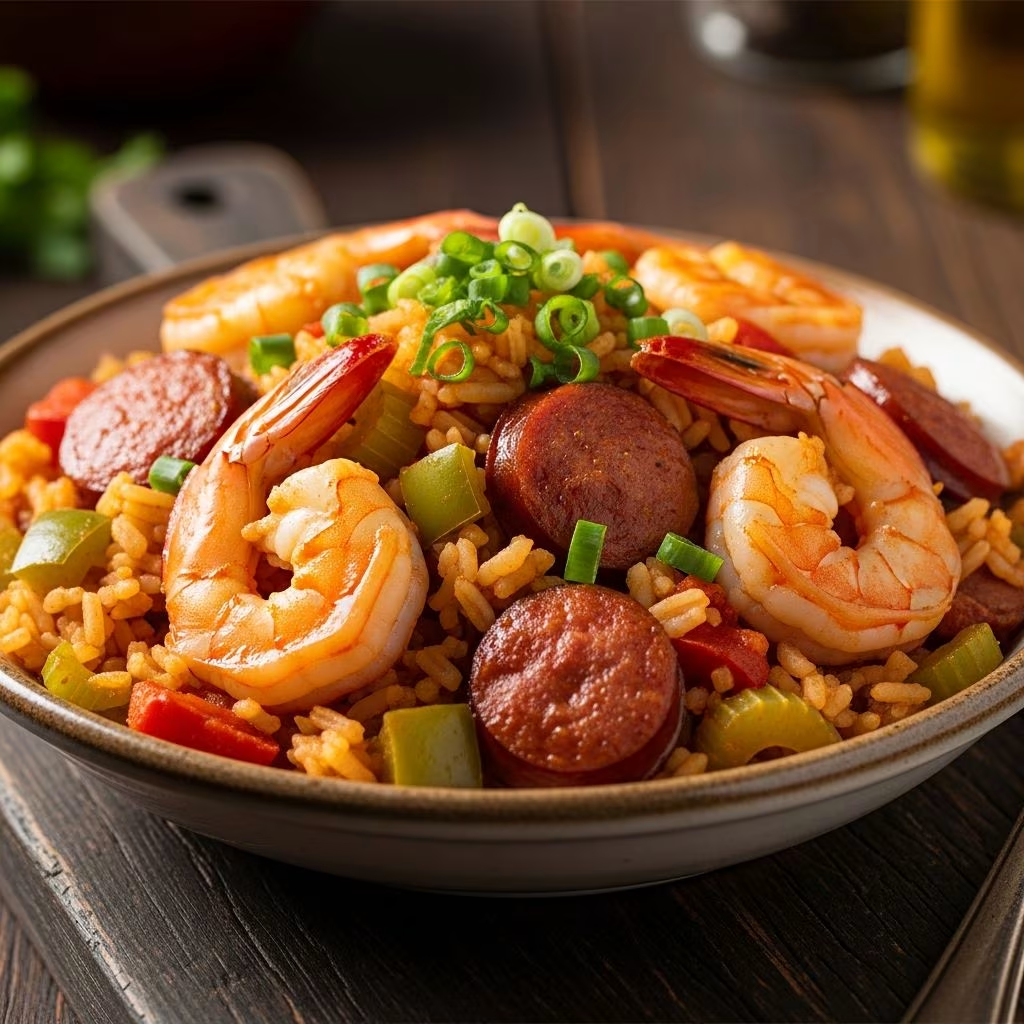
Jambalaya represents one of the most iconic dishes from Louisiana’s culinary tradition, blending influences from French, Spanish, and African cooking styles into a single harmonious meal. The dish has evolved over centuries, becoming a beloved staple that graces tables throughout the American South and beyond. At its core, jambalaya is a versatile one-pot creation that brings together proteins, vegetables, and rice in a single vessel, creating layers of flavor that develop through patient cooking and careful seasoning.
The combination of sausage and shrimp creates a particularly dynamic version of this classic dish. The smoky, rich qualities of andouille or other smoked sausages complement the delicate sweetness of fresh shrimp, while the aromatics and spices tie these elements together into a cohesive whole. This particular preparation method has become popular among home cooks seeking to capture restaurant-quality results in their own kitchens.
Understanding Jambalaya’s Origins and Cultural Significance
Jambalaya emerged from the cultural melting pot of Louisiana, where European settlers, African slaves, and Native Americans contributed their culinary traditions to create something entirely new. The dish’s name itself carries uncertain origins, with historians proposing various etymologies connecting to Spanish, French, and African languages. What remains clear is that jambalaya represents a uniquely American creation, rooted in the specific geography and history of the Louisiana region.
The traditional preparation involves slowly cooking proteins and vegetables with rice, allowing the ingredients to infuse one another with flavor while the rice absorbs all the accumulated juices and seasonings. This method produces what many practitioners describe as a thicker rice stew rather than a soup, distinguishing jambalaya from other rice-based dishes in the regional repertoire. The careful balance of heat, timing, and ingredient selection separates authentic jambalaya from casual approximations of the dish.
Essential Ingredients for Sausage and Shrimp Jambalaya
Successful jambalaya begins with quality ingredients selected with purpose. Each component plays a specific role in building the final flavor profile, and understanding these roles allows cooks to make informed substitutions or adjustments based on personal preferences or dietary requirements.
Proteins: The Foundation of Flavor
Andouille sausage serves as the traditional choice for jambalaya preparation. This smoked sausage, originally created in France but perfected in Louisiana, brings a distinctive smoky depth and slight heat to the dish. The sausage should be cut into uniform slices, typically around one-quarter inch thick, ensuring even cooking throughout the one-pot preparation. If andouille proves unavailable, other fully-cooked smoked sausages such as kielbasa or similar varieties can substitute effectively, though they may impart slightly different flavor characteristics.
Fresh shrimp completes the protein profile, introducing a briny sweetness that balances the richness of the sausage. Large shrimp work particularly well in jambalaya, as they maintain their texture better during the cooking process and provide substantial bites that satisfy the palate. The shrimp should be peeled and deveined before cooking, though some recipes include the addition of shrimp during the final minutes of cooking to prevent overcooking and maintain optimal texture.
Aromatics and Flavor Builders
The aromatic vegetables form the flavor foundation upon which all other elements build. Onions, green bell peppers, and celery create what Louisiana cooks recognize as the holy trinity, roughly equivalent to the French mirepoix. These vegetables should be diced uniformly to ensure even cooking and consistent flavor distribution throughout the dish. Some regional variations include green onions or scallions, added both during the cooking process and as a fresh garnish at the end, contributing layers of onion flavor ranging from deep and caramelized to bright and sharp.
Garlic adds pungent depth, while fresh parsley provides herbal brightness that cuts through heavier flavors. Bay leaves impart subtle earthiness without dominating the palate.
Spices: Building Complexity
The spice blend distinguishes jambalaya from simpler rice dishes. Paprika contributes color, depth, and gentle smokiness without heat. Ground cumin adds warmth and earthiness reminiscent of distant spice routes. Cayenne pepper introduces heat, though the amount should reflect personal tolerance levels. Dried thyme provides herbal complexity, while small quantities of ground cloves add mysterious warmth in the background.
Stock and Rice Selection
Chicken broth serves as the liquid medium that cooks the rice and extracts flavors from all other ingredients. Using low-sodium broth allows the cook to control the final salt level more precisely. Long-grain white rice or brown rice both work in jambalaya, though they produce notably different results. White rice creates a lighter, fluffier finished dish, while brown rice imparts nuttiness and creates a denser texture. Brown rice requires longer cooking time, necessitating adjusted liquid ratios and monitoring to prevent the rice from drying out prematurely.
Step-by-Step Preparation Techniques
Initial Protein Cooking
Begin by heating oil or butter in a large, heavy-bottomed pot over medium to medium-high heat. Slice the andouille sausage into uniform pieces and add to the pot, allowing it to cook until the edges brown slightly and fat renders into the cooking medium. This step, typically requiring 3-5 minutes, accomplishes multiple goals: it creates fond on the pot bottom that will deepen overall flavor, renders fat that serves as the cooking medium for vegetables, and begins developing the complex flavors that will characterize the finished dish.
Aromatic Development
With the sausage cooked and set aside, add the diced onions, bell peppers, and celery to the same pot without washing away the browned bits. Cook these vegetables over medium heat for approximately 5 minutes, stirring occasionally, until they begin to soften and become fragrant. Add minced garlic and fresh parsley during the final minute of vegetable cooking, allowing the garlic to bloom in the hot oil without burning.
Spice Blooming
Add the spice blend (paprika, cumin, cayenne, thyme, and cloves) to the vegetables, stirring constantly for 1-2 minutes. This technique, known as blooming or tempering spices, causes the volatile compounds in dried spices to become more potent and better distributed throughout the dish. The pot should smell intensely aromatic at this stage—a sign that the spices are releasing their essential flavors.
Rice Integration
Add the dry rice to the spiced vegetables, stirring well to coat each grain with the oil and rendered fat. Continue cooking for 1-2 minutes, toasting the rice slightly and further developing its flavor. Some recipes include tomato paste or diced tomatoes at this stage, adding acidity and depth to complement the spices.
Liquid Addition and Simmering
Pour the chicken broth over the rice mixture and return the cooked sausage to the pot. Bring the entire contents to a boil over medium-high heat, then reduce to low, cover with a tight-fitting lid, and maintain at a gentle simmer. The timing depends on rice variety: white rice typically requires 18-20 minutes, while brown rice may need 40-50 minutes. Resist the urge to stir frequently, as this disrupts the cooking process and can result in mushy rice.
Shrimp Addition and Final Cooking
After the rice has cooked for most of its required time and has begun absorbing the liquid, add the prepared shrimp and green onions (if using fresh garnish varieties). Cover again and continue cooking for 3-5 minutes, until the shrimp turns pink throughout and the rice reaches tender consistency while remaining separate.
Common Challenges and Solutions
| Challenge | Cause | Solution |
|---|---|---|
| Rice remains hard after cooking time elapses | Insufficient liquid or inadequate cooking time | Add additional warm broth and continue cooking covered until rice softens |
| Rice becomes mushy or oversaturated | Excessive liquid or too-frequent stirring | Use less broth in subsequent batches; resist stirring during simmering |
| Shrimp becomes rubbery and tough | Shrimp added too early or cooked too long | Add shrimp only during final minutes; alternatively, add after rice finishes cooking |
| Flavors taste bland or underdeveloped | Insufficient spice amounts or poor-quality spices | Taste dish before serving; adjust cayenne, paprika, and salt as needed; verify spice freshness |
| Bottom layer burns while top remains undercooked | Heat too high or liquid insufficient | Reduce heat to lowest setting; add more broth if rice appears dry |
Customization and Variation Strategies
While traditional jambalaya recipes maintain specific ingredient lists, the dish adapts well to various modifications based on ingredient availability, dietary preferences, or regional influences. Some cooks add diced chicken to create a tri-protein version. Others incorporate okra during the final cooking stages, where it provides thickening and subtle vegetable notes. Vegetarians might replace the meat proteins with additional vegetables such as mushrooms, eggplant, or additional peppers.
The rice variety offers another point of customization. Wild rice blends create nuttier, more textured results. Jasmine rice produces lighter, more delicate finished dishes. The liquid medium might incorporate fish stock for added seafood depth or vegetable broth for lighter preparations. Hot sauce enthusiasts can increase cayenne quantities or drizzle finished bowls with their preferred bottled varieties.
Frequently Asked Questions
Can jambalaya be prepared in advance?
Yes, jambalaya actually improves when made a day ahead, as the spices and flavors continue developing overnight. Reheat gently on the stovetop with a splash of broth, stirring occasionally, until warmed through.
How should jambalaya be stored?
Keep covered jambalaya in the refrigerator for up to four days. Freeze for longer storage, though shrimp tends to toughen slightly when frozen. Consider preparing the dish without shrimp, freezing the base, then adding fresh shrimp when reheating.
What wine pairs well with jambalaya?
Medium-bodied red wines or dry rosés complement the dish’s spice profile. White wines with good acidity can work if preferred, particularly those with slight sweetness to balance heat.
Can the dish be made in a slow cooker or pressure cooker?
Slow cooker preparation requires significant adaptation due to the extended cooking time causing rice to overcook. A pressure cooker works effectively when using adjusted liquid ratios and reduced cooking times.
What distinguishes jambalaya from gumbo?
Jambalaya contains rice cooked within the same vessel, while gumbo typically serves thickened sauce over separately cooked rice. Gumbo often includes okra or file powder as thickening agents, while jambalaya relies on absorbed broth.
Serving and Presentation Suggestions
Serve jambalaya hot in wide bowls or over smaller portions of rice if preferred. Fresh green onion tops add color contrast and onion brightness. Cornbread or crusty bread complements the rice-based dish, providing texture contrast and vehicle for soaking up remaining sauce. Offer hot sauce on the side for guests preferring additional spice beyond what the recipe provides.
Jambalaya feeds crowds efficiently, making it ideal for family dinners or entertaining. A single pot serves 6-8 people comfortably, simplifying cleanup while delivering impressive, restaurant-quality results. The forgiving nature of the recipe accommodates ingredient substitutions and technique variations, welcoming both experienced cooks and kitchen newcomers to the jambalaya tradition.
References
- Creole and Cajun Cooking — Smithsonian Magazine. 2023. https://www.si.edu/
- Louisiana Cultural Heritage: Food Traditions — Library of Congress. 2024. https://www.loc.gov/
- Rice Cooking Methods and Techniques — USDA Food and Nutrition Service. 2024. https://www.fns.usda.gov/