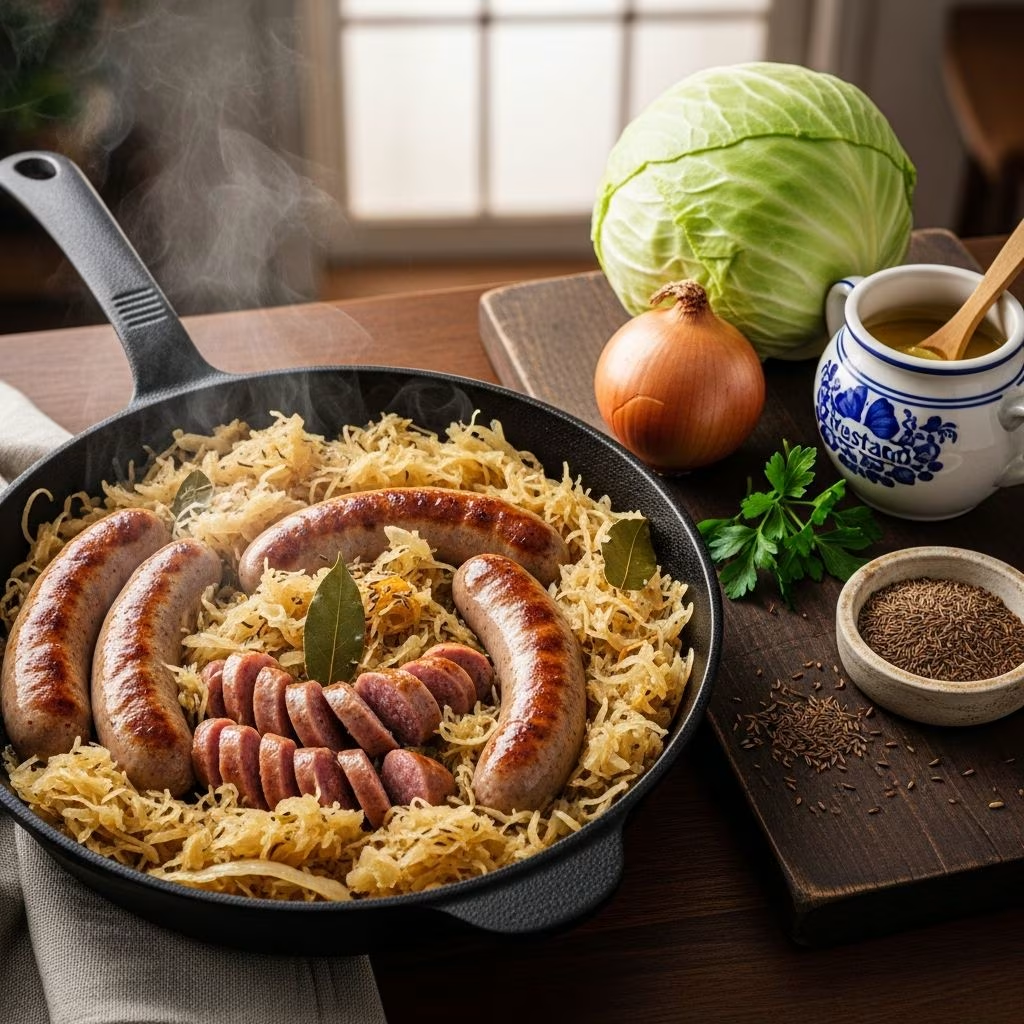
Sausage and sauerkraut represent one of the most enduring and beloved combinations in home cooking, bridging culinary traditions across Central Europe and North America. This humble pairing transforms simple ingredients into a deeply satisfying meal that combines savory, tangy, and rich flavors in perfect harmony. The beauty of this dish lies not only in its accessibility but also in its remarkable versatility—whether you’re cooking for a weeknight dinner or preparing a meal for guests, this classic can be executed through various methods to suit your lifestyle and kitchen equipment.
Understanding the Core Ingredients
The foundation of any successful sausage and sauerkraut preparation begins with selecting quality ingredients. The sausage serves as the protein centerpiece, traditionally using smoked varieties that bring their own depth of flavor to the dish. Kielbasa and Polish-style sausages work exceptionally well, offering a robust taste that complements the fermented cabbage beautifully. When choosing sausage, consider whether you prefer beef, pork, or mixed varieties—each brings distinct characteristics to your final dish.
Sauerkraut, the fermented cabbage component, provides acidic brightness and probiotic benefits. The fermentation process not only preserves the cabbage but also develops complex flavors that become more pronounced when cooked with other ingredients. Fresh sauerkraut packed with its brine offers superior flavor compared to heavily processed alternatives. When purchasing sauerkraut, you’ll encounter both drained and juice-packed varieties; the choice depends on your cooking method and preferred consistency.
Beyond these two anchoring ingredients, aromatics like onions and apples elevate the dish significantly. Granny Smith apples, with their tart character, balance the richness of sausage while complementing sauerkraut’s tanginess. Yellow or sweet onions provide natural sweetness and depth when cooked slowly with other components. Optional seasonings including caraway seeds, juniper berries, Dijon mustard, and dill create additional layers of traditional European flavor.
Technique Comparison: Three Distinct Cooking Methods
Modern home cooks benefit from multiple approaches to preparing this classic dish, each offering distinct advantages:
Stovetop Skillet Method
The traditional skillet approach provides immediate results and direct control over the cooking process. This method begins by heating oil in a large skillet over medium heat until shimmering. Sausage pieces, typically cut into ½ to 1-inch rounds or left whole depending on preference, are then added to achieve caramelization on their exterior surfaces. This browning step develops crucial flavor compounds through the Maillard reaction, creating a savory foundation for the entire dish.
Once sausage reaches a golden-brown state, aromatics enter the pan. Diced onions soften gradually, releasing their natural sugars and developing sweetness that balances fermented elements. At this stage, drained sauerkraut combines with the sausage and onions, absorbing rendered fat and creating a cohesive mixture. The entire skillet-bound preparation typically requires 10 to 15 minutes of cooking to allow flavors to meld while maintaining the sauerkraut’s characteristic texture. Stovetop cooking produces results in approximately 20 minutes total, making it ideal for quick weeknight preparations.
Slow Cooker Method
The slow cooker transforms this dish into a true set-and-forget preparation, perfect for planning ahead or minimizing active cooking time. This method capitalizes on extended, gentle heating to develop deeper flavor integration. All ingredients combine in the slow cooker bowl—cut sausage, undrained sauerkraut with its brine, diced onion, apple pieces, and optional seasonings like mustard, caraway, or dill seeds.
The slow cooker’s gentle environment allows flavors to meld thoroughly while maintaining ingredient texture. Cooking on high heat typically requires 2 to 3 hours, while low settings extend the process to 4 to 6 hours. The extended cooking time permits the sauerkraut’s acidity to soften slightly while allowing sausage fat to permeate the entire mixture, creating richness throughout. This method accommodates larger quantities comfortably, making it suitable for family dinners or meal preparation purposes.
Pressure Cooker and Instant Pot Method
Modern pressure cooking devices like the Instant Pot offer a middle ground between quick skillet cooking and extended slow cooking. This method begins with the sauté function to brown sausage pieces thoroughly—typically divided into two batches to ensure proper contact with the pot bottom. Browning occurs at medium-high or high settings for approximately 3 minutes per batch before transferring browned pieces to a holding bowl.
With sausage reserved, the pot accommodates sautéed aromatics including diced onion and apple. Caraway seeds, juniper berries, and salt season this mixture for about five minutes until softened. Adding wine—traditionally a dry white variety like Riesling—and scraping the pan bottom removes flavorful browned bits accumulated during sausage browning. The sauerkraut, chicken broth, and reserved sausage then combine in the pot before sealing and pressure cooking on high for 12 to 15 minutes depending on ingredient quantities.
This approach delivers results in approximately 30 to 40 minutes total, offering significantly faster cooking than slow methods while potentially developing deeper flavors than quick skillet preparation.
Ingredient Variations and Customizations
| Component | Traditional Options | Flavor Profile |
|---|---|---|
| Sausage Type | Kielbasa, Polish, Smoked varieties | Savory, Rich, Smoky |
| Apple Variety | Granny Smith, Honeycrisp, Braeburn | Tart to Sweet-Tart Balance |
| Sweetener | Brown sugar, Honey, Apple juice | Complexity, Depth, Mellowing |
| Mustard Style | Dijon, Whole-grain, Yellow | Sharp to Mild, Textural Variation |
| Seasonings | Caraway, Juniper, Dill, Thyme | Earthiness, Herbal Notes, Complexity |
Customization opportunities abound within this framework. Some cooks introduce sweet elements through brown sugar or honey, creating contrast against sauerkraut’s inherent tartness. Others emphasize mustard’s sharp characteristics through Dijon or whole-grain preparations, adding depth and slight heat. Vegetable additions beyond traditional onions and apples might include diced bell peppers, mushrooms, or potatoes, transforming the dish into a more complete one-pot meal.
Preparation Techniques for Optimal Results
Achieving consistent excellence in sausage and sauerkraut preparation involves understanding fundamental cooking principles and applying them thoughtfully:
- Cut sausage uniformly to ensure even cooking and consistent texture throughout the dish
- Brown sausage pieces thoroughly to develop complex flavors before combining with other ingredients
- Sauté aromatics separately to develop their natural sweetness before adding sauerkraut
- Preserve rendered sausage fat in the cooking vessel—this carries essential flavor throughout the dish
- If using drained sauerkraut, reserve some brine to adjust liquid levels and maintain proper consistency
- Layer flavors by adding seasonings at different cooking stages rather than all at once
- Allow adequate cooking time for flavors to marry; rushing this process results in disconnected tastes
- Taste and adjust seasonings near the end of cooking when all components have developed
Serving Suggestions and Complementary Sides
Sausage and sauerkraut serves effectively as a standalone meal but truly shines when paired thoughtfully with complementary sides. Crusty bread or hearty rolls provide textural contrast and vehicle for soaking up flavorful cooking liquid. Mashed potatoes offer creamy richness that balances the dish’s acidity and savory intensity. Roasted root vegetables including carrots, parsnips, or beets add earthiness and nutritional substance.
For lighter accompaniments, simple salads with vinaigrette dressing echo the sauerkraut’s tangy character while providing fresh vegetable contrast. Rye bread, reflecting Central European traditions, pairs authentically with this preparation. Beverage pairings might include crisp pilsner-style beers, dry ciders, or unoaked white wines that cut through the richness while enhancing fermented flavors.
Storage and Make-Ahead Strategies
Sausage and sauerkraut develops deeper flavor complexity after a day or two of refrigeration, making it an excellent make-ahead option. Store the cooled dish in airtight containers for up to four days in the refrigerator. Reheating occurs gently over medium-low heat on the stovetop or in a microwave-safe bowl, adding small quantities of broth or water if the mixture has thickened excessively.
This dish also freezes successfully for up to three months. Thaw overnight in the refrigerator before reheating to maintain ingredient texture and quality. The extended freezer storage makes this preparation ideal for batch cooking and future meal planning.
Frequently Asked Questions
Can I use fresh cabbage instead of fermented sauerkraut?
Fresh cabbage offers a different character—less tangy and missing the complexity fermentation provides. While technically possible, traditional sauerkraut is strongly recommended for authentic flavor and the beneficial probiotics fermentation delivers.
Should I drain sauerkraut before cooking?
This depends on your cooking method and desired consistency. Slow cooker and pressure cooker methods benefit from the additional liquid sauerkraut brine provides. Skillet preparations typically work better with drained sauerkraut, though reserving some brine for consistency adjustment is wise.
What sausage types work best?
Pre-cooked smoked sausages including kielbasa, Polish kielbasa, and similar varieties are ideal. Avoid fresh raw sausages requiring extensive cooking, as they may not achieve proper caramelization within this dish’s timeframe.
How do I prevent the dish from becoming too acidic?
Sweet elements including apples, honey, or brown sugar naturally balance fermented acidity. Starting with milder sauerkraut varieties also helps, as does adding sweeter sausage types rather than very smoky varieties.
Can I add other vegetables?
Absolutely. Diced bell peppers, mushrooms, potatoes, or carrots integrate well into any cooking method. Add them at appropriate times—harder vegetables earlier in cooking, delicate vegetables toward the end to maintain texture.
Conclusion: A Timeless Classic Worth Mastering
Sausage and sauerkraut transcends cultural boundaries and generations as a culinary preparation that satisfies through its uncomplicated elegance and depth of flavor. Whether prepared through traditional stovetop methods, convenient slow cooker approaches, or modern pressure cooking techniques, this dish delivers consistent satisfaction. The combination of savory sausage, tangy fermented cabbage, sweet apple notes, and aromatic seasonings creates complexity that belies the preparation’s fundamental simplicity. By understanding core ingredients, mastering multiple cooking approaches, and thoughtfully implementing customizations, home cooks can develop confidence and skill in executing this classic. Whether serving family meals or impressing dinner guests, sausage and sauerkraut remains an accessible, delicious choice that celebrates culinary traditions while accommodating modern cooking preferences.
References
- Instant Pot Sauerkraut and Sausage — Dad Cooks Dinner. Accessed April 2026. https://www.dadcooksdinner.com/pressure-cooker-kielbasa-and-sauerkraut/
- Slow Cooker Sausage And Sauerkraut — Fit Slow Cooker Queen. Accessed April 2026. https://fitslowcookerqueen.com/slow-cooker-sausage-sauerkraut/
- Sweet and Sour Sauerkraut and Kielbasa — Hillshire Farm Official Recipes. Accessed April 2026. https://www.hillshirefarm.com/recipes/dinner/sweet-and-sour-sauerkrat-and-kielbasa
- Sausage and Sauerkraut — The Domestic Man. January 3, 2013. https://thedomesticman.com/2013/01/03/sausage-and-sauerkraut/
- Sausage and Sauerkraut — Our Best Bites. Accessed April 2026. https://ourbestbites.com/sausage-and-sauerkraut/