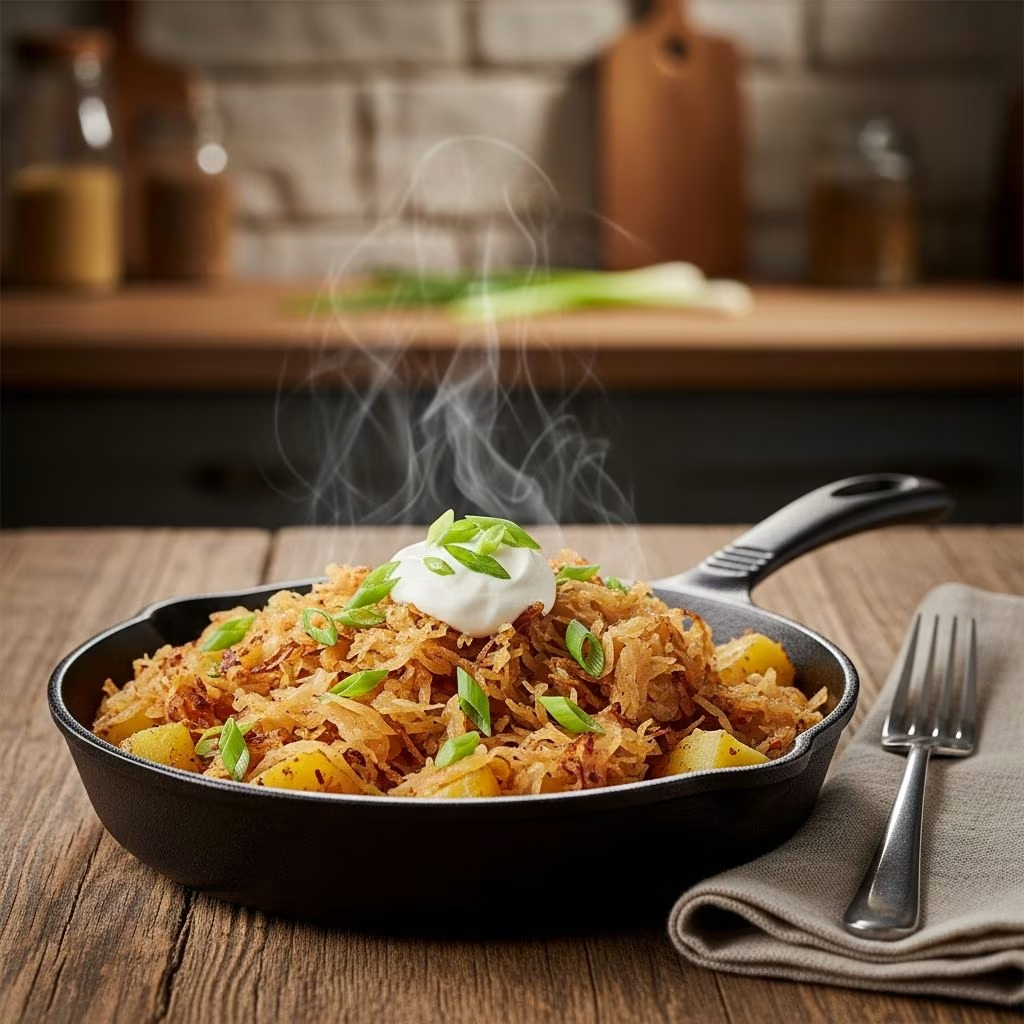
The combination of fermented cabbage and starchy vegetables creates a surprisingly harmonious dish that satisfies both the palate and the appetite. This one-skillet preparation method has become a staple in kitchens seeking straightforward, nourishing meals without excessive cleanup. The natural tanginess of fermented vegetables pairs exceptionally well with the earthiness of potatoes, creating layers of flavor that develop as ingredients meld together during cooking.
Understanding the Core Components of This Dish
A successful sauerkraut and potato skillet relies on understanding how each ingredient contributes to the final result. The foundation begins with potatoes, which provide structural integrity and absorb surrounding flavors while developing a golden crust through proper sautéing techniques. The fermented cabbage brings both acidic brightness and probiotic elements that enhance digestibility. Additional vegetables and proteins transform a simple side dish into a complete, satisfying meal suitable for any weeknight dinner.
The Role of Potatoes in Skillet Cooking
Potatoes serve multiple functions within this preparation. Their starchy composition helps thicken the surrounding liquid while creating textural contrast when properly browned. The choice of potato variety significantly impacts cooking time and final texture. Waxy potatoes like red varieties maintain their shape during extended cooking, while higher-starch russets may break down more readily, creating creamier results. Cutting potatoes into uniform pieces ensures even cooking throughout the skillet.
Sauerkraut Selection and Preparation
The quality of fermented cabbage determines much of the dish’s flavor profile. Commercially prepared sauerkraut varies significantly in salt content, sourness, and processing method. Some recipes call for rinsing and draining the fermented vegetables to reduce sodium levels, while others preserve the liquid for added depth and moisture. Fresh, unpasteurized varieties containing live cultures provide enhanced nutritional benefits compared to heat-treated alternatives. The fermentation process creates beneficial lactic acid bacteria that support digestive health.
Essential Ingredients and Their Functions
| Ingredient | Quantity (Base Recipe) | Primary Function |
|---|---|---|
| Potatoes (cubed) | 2.5-4 cups | Structure and bulk |
| Sauerkraut | 2-4 cups | Flavor and fermentation |
| Cooking oil or butter | 2-3 tablespoons | Browning and fat-based flavor |
| Onion (diced) | 0.5-1 cup | Aromatic base layer |
| Protein (optional) | 1-2 pounds | Satiety and additional flavor |
| Seasonings | To taste | Depth and balance |
Protein Options and Flavor Integration
While this skillet works beautifully as a vegetarian dish, protein additions elevate it into a more complete main course. Polish kielbasa sausage represents the traditional choice, its smoky and slightly spiced profile complementing fermented vegetables perfectly. Ground meat offers a budget-friendly alternative that distributes throughout the dish more evenly. Plant-based meatballs provide options for those following vegetarian or vegan lifestyles without sacrificing satisfaction. The cooking method allows protein to infuse the surrounding ingredients with its rendered fats and flavors while reaching proper temperature.
Flavor-Building Seasonings and Aromatics
Beyond salt and black pepper, several seasonings enhance this preparation significantly. Garlic powder, whether used alone or combined with minced fresh garlic, deepens savory notes. Paprika contributes both color and subtle smokiness. Whole grain mustard adds complexity and cuts through richness, while onion powder intensifies the vegetable base. Fresh herbs like parsley provide brightness when sprinkled at serving time. Caraway seeds, traditional in Eastern European cuisine, complement sauerkraut’s fermented character.
Step-by-Step Preparation Methods
The Traditional Stovetop Approach
Begin by heating oil or butter in a large skillet over medium heat. Add diced onions and allow them to soften and develop light golden coloring, approximately 3-4 minutes. Introduce diced potatoes, stirring frequently to promote even browning on multiple surfaces. This stage typically requires 8-10 minutes of cooking time. Season potatoes generously with salt and pepper to enhance their natural flavors.
Once potatoes develop a golden exterior, introduce any protein selections. Sliced kielbasa or pre-cooked meatballs require only 2-3 minutes to heat through and release their flavors into the surrounding oil. Add bell peppers at this stage if including them, allowing them to briefly soften. Finally, introduce the sauerkraut and any reserved fermentation liquid, stirring to combine all components thoroughly. Reduce heat to medium or medium-low and allow the mixture to simmer for 5-10 minutes, permitting flavors to meld and moisture to reduce to desired consistency.
Alternative Oven-Based Preparation
For hands-off cooking, an oven method provides excellent results with minimal attention. Preheat your oven to 400°F. Brown potatoes and onions in an oven-safe skillet over medium-high heat on the stovetop for approximately 5-7 minutes. Arrange diced vegetables in an even layer, then distribute sauerkraut and any protein across the surface. Add approximately one-third cup of reserved fermentation liquid along with seasonings. Cover the skillet with a lid or aluminum foil and transfer to the preheated oven. Bake for 10-14 minutes until potatoes reach fork-tender consistency and the dish reaches uniform temperature throughout.
Timing and Temperature Management
Total preparation time from start to serving typically ranges from 25-40 minutes depending on chosen method and ingredient sizes. Proper heat management ensures potatoes cook through without burning. Medium heat allows potatoes to soften adequately while developing desirable browning. Frequent stirring during the initial cooking stage promotes even browning but should decrease as fermented cabbage incorporates to avoid excessive breaking down of vegetables. The dish reaches completion when potatoes yield easily to a fork but maintain structural integrity.
Ingredient Variations and Adaptations
Vegetable Additions and Substitutions
Bell peppers in various colors add sweetness and visual appeal, requiring no special preparation beyond seeding and dicing into similar-sized pieces. Carrots contribute natural sweetness and additional texture, though they require slightly longer cooking than other vegetables. Green beans provide a lighter vegetable option that cooks quickly. Mushrooms add umami depth and meaty texture when sautéed alongside potatoes. Celery introduces subtle anise notes that complement fermented cabbage beautifully.
Protein Variations
Beyond kielbasa and meatballs, bacon pieces provide smoky flavor and crispy texture when rendered before other ingredients are added. Ground pork or beef can be browned and crumbled into the mixture, distributing throughout more evenly than larger protein pieces. Turkey sausage offers a leaner alternative to pork varieties. For vegetarian preparations, firm tofu cubes pressed and pan-fried develop crust while absorbing surrounding flavors. Tempeh provides nutty flavor and firm texture supporting the dish’s heavier components.
Flavor Profile Adjustments
Those preferring less tanginess can rinse sauerkraut before incorporating it, removing some acidic bite while retaining fermented character. Adding a teaspoon of honey or brown sugar gently balances brightness against sweetness. Whole grain mustard stirred through the mixture at the end adds complexity without overwhelming delicate fermented flavors. Fresh dill or caraway seeds amplify traditionally Eastern European characteristics. Smoked paprika intensifies smokiness without additional protein ingredients.
Frequently Asked Questions
Can this dish be prepared in advance?
Yes, this skillet meal reheats beautifully. Prepare the complete dish, allow it to cool to room temperature, then refrigerate in an airtight container for up to four days. Reheat gently over medium heat with a tablespoon of water or broth added to restore moisture. The flavors often deepen during storage as ingredients continue melding together.
Is this recipe suitable for freezing?
Absolutely. Cool the prepared dish completely before transferring to freezer-safe containers. It maintains quality for approximately three months. Thaw overnight in the refrigerator before reheating. The texture of potatoes may soften slightly after freezing, but flavor remains excellent.
What if I prefer crispy potatoes rather than tender ones?
Reduce the total cooking time by 5-7 minutes or increase heat to medium-high during the initial browning stage. Skip covering the skillet, allowing moisture to evaporate more rapidly. Check potatoes frequently toward the end of cooking to achieve your preferred texture.
Can this be made dairy-free?
Certainly. Use olive oil instead of butter and ensure any protein selections are free from dairy products. All other traditional ingredients are naturally dairy-free, making this adaptation straightforward.
How many servings does this recipe produce?
The base recipe using 2.5-4 cups potatoes and 2 cups sauerkraut serves approximately 4-6 people as a main course or 6-8 as a side dish, depending on portion preference and accompanying foods.
Nutritional Considerations and Health Benefits
Fermented sauerkraut contains significant amounts of vitamin C, particularly when unpasteurized. The fermentation process creates lactic acid bacteria supporting digestive function. Potatoes provide complex carbohydrates and resistant starch, particularly when cooled after cooking. The combination of vegetables and fermented components creates a dish supporting diverse microbiome populations. This preparation method minimizes nutrient loss compared to boiling, as most vitamins and minerals remain in the skillet rather than being discarded with cooking water.
Storage and Make-Ahead Strategies
Prepare component ingredients in advance by cutting potatoes, onions, and other vegetables the evening before cooking. Store each component separately in airtight containers to prevent flavor transfer. Pre-cook potatoes partially the day before if desired, reducing stovetop cooking time considerably. Measure and combine dry seasonings in small containers for quick addition during cooking. These preparation strategies make weeknight assembly remarkably efficient.
Serving Suggestions and Complementary Dishes
This versatile skillet pairs beautifully with crusty bread for soaking up flavorful juices. A simple green salad with vinaigrette provides freshness and textural contrast to heavier skillet components. Rye bread reflects traditional Eastern European pairings and adds distinctive flavor. A dollop of sour cream or plain yogurt at serving time adds creaminess and cooling contrast. Pickled vegetables provide additional fermented elements and visual appeal.
Equipment Requirements and Kitchen Tips
A large skillet with adequate capacity prevents crowding and allows proper browning. Cast iron retains heat exceptionally well, supporting even cooking and browning. Stainless steel provides easy cleaning and prevents reactivity with acidic fermented vegetables. A wooden spoon or silicone spatula prevents scratching non-stick surfaces while providing good stirring control. Measuring tools ensure consistent results across multiple preparations.
References
- Sauerkraut Potato Skillet — Dei Fratelli. 2024. https://deifratelli.com/sauerkraut-potato-skillet/
- Kielbasa Sauerkraut & Potatoes Skillet Recipe — MidgetMomma. 2024. https://www.midgetmomma.com/kielbasa-sauerkraut-potatoes-skillet/
- Sausage Potato & Sauerkraut Skillet — Bitz & Giggles. 2024. https://bitzngiggles.com/sausage-potato-sauerkraut-skillet/
- Skillet Kielbasa and Sauerkraut Recipe — Wyse Guide. 2024. https://www.wyseguide.com/skillet-kielbasa-and-sauerkraut/
- Skillet Kielbasa and Sauerkraut with Potatoes — SueBee Homemaker. 2024. https://suebeehomemaker.com/kielbasa-and-sauerkraut/