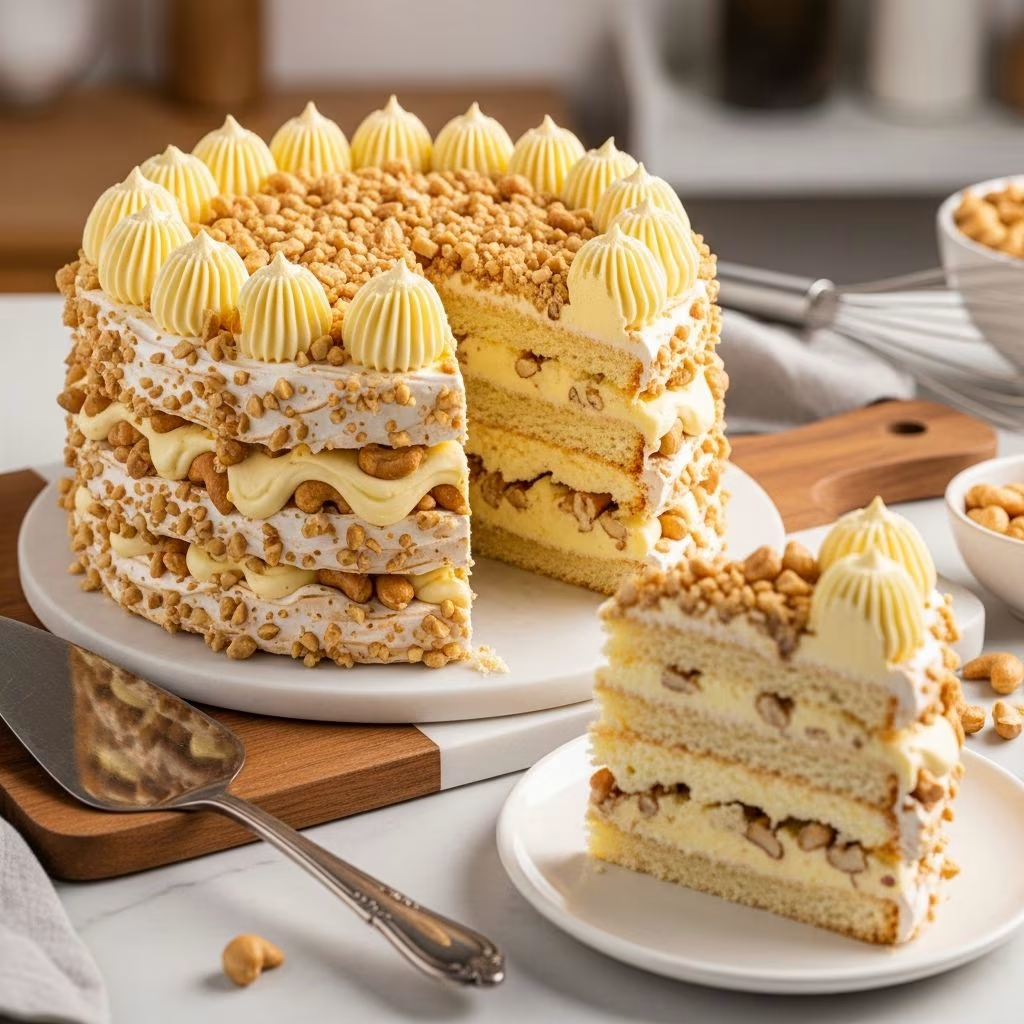
The Sans Rival cake stands as a pinnacle of dessert innovation, combining delicate meringue layers studded with toasted cashews and lush French buttercream into a symphony of textures and flavors. Originating in the Philippines with influences from French pastry traditions, this cake earns its name—meaning ‘without rival’—through its irresistible chewiness, crunch, and sweetness.
Origins and Cultural Significance
Sans Rival emerged in the Philippines during the 1920s or 1930s, possibly inspired by French dacquoise but uniquely adapted with local cashews instead of hazelnuts. Bakers in Pampanga, known as the culinary capital, refined it into a celebratory staple for weddings and fiestas. Its evolution reflects Filipino ingenuity, blending European techniques learned abroad with native ingredients.
Unlike crisp meringues, Sans Rival layers often feature a chewy quality from careful baking, providing contrast to the nutty crunch and creamy frosting. This balance makes it a favorite across generations, often frozen for longevity and thawed for serving.
Essential Ingredients for Authentic Flavor
Creating Sans Rival requires precision in selection. Key components include:
- Cashews: Toasted and chopped for crunch; Philippine varieties offer superior nuttiness.
- Egg whites: Room temperature for stable meringue; about 10 for standard batches.
- Cream of tartar: Stabilizes whites, preventing collapse.
- Granulated sugar: Fine for meringue; additional for buttercream syrup.
- Egg yolks: For rich French buttercream; cooked safely to 155°F.
- Unsalted butter: Softened cubes for smooth frosting.
- Vanilla extract: Enhances depth; bean paste for premium touch.
Variations incorporate saffron, cardamom, or rum, nodding to regional twists like Goan or Swedish adaptations.
Preparing the Cashew Meringue Layers
The foundation of Sans Rival lies in its meringue. Start by preheating the oven to 320°F and lining sheets with greased parchment.
- Toast cashews at 350°F until golden, then chop roughly—about 1 cup yields perfect distribution.
- Whisk room-temperature egg whites to foamy on medium-high speed.
- Add ¾ tsp cream of tartar; beat to soft peaks.
- Gradually incorporate 1 cup sugar until stiff, glossy peaks form.
- Fold in cashews gently to preserve air.
- Pipe or spread into 4 even rectangles, 2 inches apart; smooth tops.
- Bake 20-25 minutes until set but chewy, not brittle. Cool completely.
Tips: Use a stand mixer for efficiency; avoid overfolding to prevent deflation. Dual sheets accommodate larger batches.
Crafting French Buttercream Perfection
Parallel to meringue baking, prepare buttercream using a double-boiler method for safety and silkiness.
- Simmer water in a pot.
- Whisk 10 egg yolks, ⅔ cup + 2 tsp sugar, 1 tbsp vanilla, and salt in a stainless bowl.
- Cook over steam to 155°F/68°C, stirring constantly to avoid scrambling.
- Whip on high 6-8 minutes until cool, pale, and ribbony.
- Add 2 cups cubed, softened butter gradually until thick and creamy.
- Chill if needed; re-whip before use.
Alternatives include Italian meringue buttercream with hot sugar syrup poured into yolks at 235-240°F, or simpler yolk-sugar blends.
Assembly: Layering for Elegance
Assemble on a cake board for stability:
- Anchor first meringue with a buttercream dab.
- Spread generous layers between each of 4-6 rectangles.
- Crumb-coat sides and top thinly; chill 30 minutes.
- Frost exterior smoothly; press chopped cashews onto sides.
- Optional: Pipe rosettes or drizzle caramel.
Chill assembled cake 1-2 hours or freeze up to weeks. Thaw in fridge for clean slices.
Storage and Serving Suggestions
| Storage Method | Duration | Tips |
|---|---|---|
| Refrigerator | 3-5 days | Air-tight container; cover exposed meringue. |
| Freezer | 1-2 months | Wrap tightly; thaw overnight in fridge. |
| Room Temp | 1 day max | Humid climates shorten viability. |
Serve chilled in thin wedges to highlight textures. Pair with coffee or tropical fruits for contrast.
Common Pitfalls and Pro Tips
Meringue Issues:
- Weeping: Overbeaten whites or high humidity—dry thoroughly post-baking.
- Cracks: Oven too hot; use low temp for chewiness.
Buttercream Fixes:
- Curdled: Warm gently while whipping; cold butter causes separation.
- Runny: Insufficient cooling; chill and re-whip.
Scale recipes: Halve for smaller cakes. Experiment with pistachios or almonds for twists, maintaining cashew essence.
Nutritional Considerations
A slice (1/12th) offers ~450 calories, rich in proteins from eggs/nuts but high in fats/sugars. Portion control suits indulgent occasions.
Frequently Asked Questions
Can I make Sans Rival gluten-free?
Yes, inherently gluten-free; confirm no cross-contamination in nuts.
How far ahead can I prepare it?
Up to 2 months frozen; ideal for events.
Vegetarian or vegan options?
Traditional uses eggs; aquafaba substitutes meringue experimentally.
Why French buttercream over American?
Cooked yolks yield stable, silky texture resistant to melting.
Best nut alternative?
Pistachios mimic flavor; toast similarly.
Advanced Variations
Elevate with:
- Mango infusion: Puree in buttercream for tropical twist.
- Chocolate layers: Cocoa in meringue, ganache drizzle.
- Spiced profiles: Cardamom-saffron buttercream for exotic flair.
These adaptations preserve core identity while innovating.
References
- How to Make the Best Sans Rival Cake — The Unlikely Baker. 2023. https://theunlikelybaker.com/sans-rival/
- Bolo Sans Rival or Sans Rival Cake Recipe — My Diverse Kitchen. 2010. https://www.mydiversekitchen.com/bolo-sans-rival-sans-rival-cake-recipe
- Sans Rival Filipino Food Month — By Amber’s Hands. 2013-03-22. https://www.byambershands.com/2013/03/22/sans-rival-filipino-food-month/
- Filipino Sans Rival Cake — Tessa Huff, Baker’s Notes (Substack). 2023. https://tessahuff.substack.com/p/filipino-sans-rival-cake
- Sans Rival Swedish Almond Praline Cake — Swedish Spoon. N/A. http://swedishspoon.com/sans-rival/