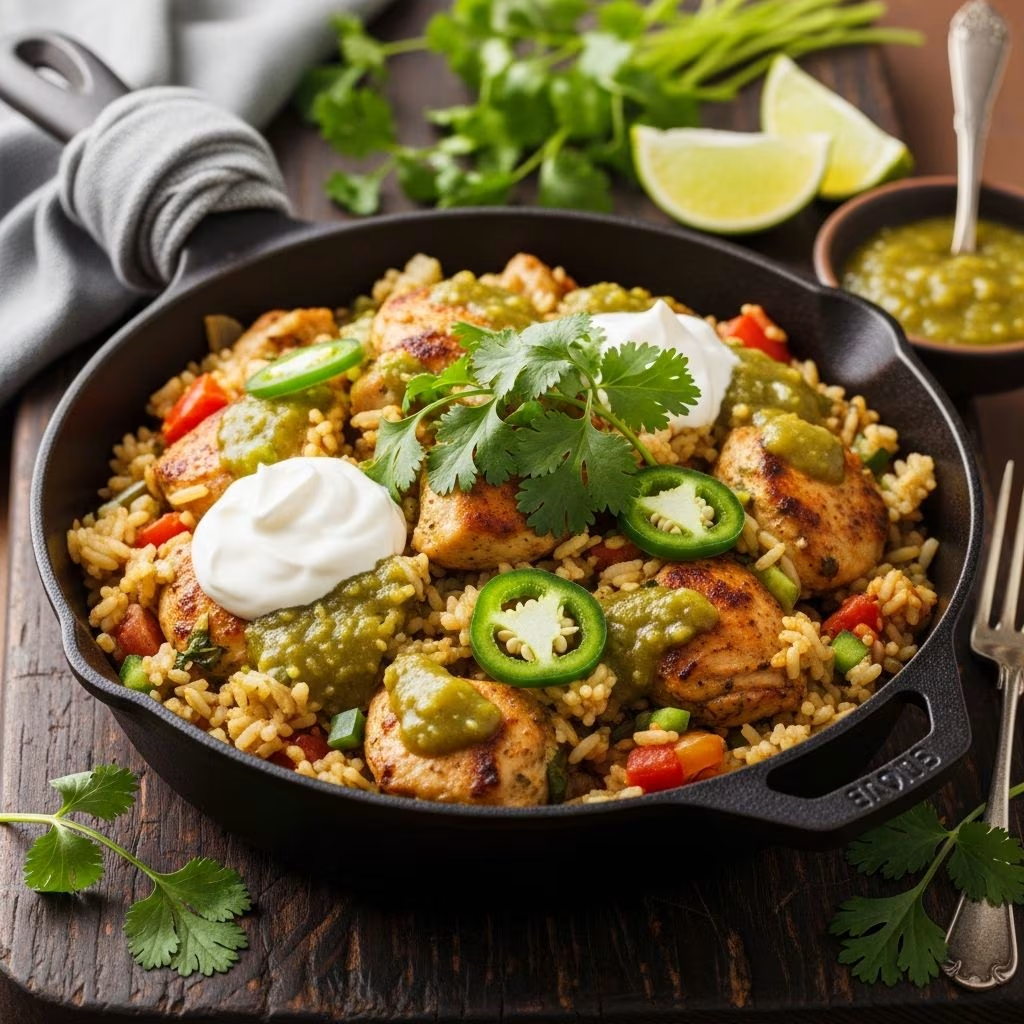
When time is limited and hunger is calling, a dish that combines protein, grains, and vegetables in a single pan becomes invaluable to home cooks everywhere. The salsa verde chicken and rice skillet represents exactly this kind of practical, satisfying solution. This versatile one-pot meal delivers authentic flavors while minimizing cleanup and cooking complexity. Whether you’re feeding a busy family on a weeknight or seeking a straightforward dish that impresses without demanding hours in the kitchen, this skillet approach offers reliable results.
Understanding the Foundation of This Dish
At its core, this skillet meal revolves around the interaction between tender poultry, absorbent rice, and the distinctive tangy character of salsa verde. The beauty of this combination lies in its simplicity and the way each component enhances the others. Unlike traditional recipes that require multiple pots and careful timing coordination, this skillet method allows all elements to cook together, allowing flavors to meld while maintaining individual textures.
The fundamental principle behind successful one-pot cooking involves managing moisture levels and heat distribution carefully. By combining liquid from broth with the moisture content of salsa verde, you create an environment where rice can absorb seasoned liquid evenly. The chicken, partially seared before the final cooking phase, continues cooking gently within this flavorful environment rather than overcooking from prolonged direct heat.
Essential Ingredients for Success
Building this dish begins with gathering quality ingredients that work harmoniously together. The following components form the backbone of this recipe:
- Poultry: Most recipes call for either boneless chicken breasts or chicken thighs, depending on preference for lean versus more flavorful cuts. Thighs offer additional moisture and richness, while breasts provide a lighter option.
- Rice: Long-grain white rice remains the standard choice, as its structure resists clumping when combined with liquid. Avoid instant varieties, which break down too quickly and create mushiness.
- Salsa Verde: This green sauce provides both moisture and distinctive flavor. Jarred varieties offer convenience, though homemade versions amplify freshness.
- Broth: Chicken broth contributes savory depth and necessary liquid for rice cooking. Some recipes substitute water for a lighter result or include vegetable broth for alternative flavor profiles.
- Aromatics: Onions and garlic establish a flavorful base, caramelizing slightly during the initial searing phase.
- Seasonings: Cumin, salt, and black pepper form the aromatic backbone, while optional additions include cilantro, green chiles, and cheese.
- Optional Additions: Corn, black beans, cauliflower, and bell peppers add nutrition, color, and textural variety without compromising the dish’s simplicity.
Preparation Techniques That Maximize Flavor
The cooking method significantly influences the final result. The searing step deserves particular attention because it develops flavor compounds through the Maillard reaction, creating complex, caramelized notes that enhance the entire dish. Rather than fully cooking the chicken during this phase, the goal involves browning the exterior while leaving the interior partially raw. This approach prevents the meat from drying out during the extended simmering that follows.
Begin by heating oil in a large skillet over medium-high heat until it shimmers noticeably. This temperature ensures immediate browning rather than steaming. Season your chicken pieces generously with salt and pepper, then arrange them in a single layer without crowding. Allow each piece to develop a golden crust before flipping, taking approximately 1-2 minutes per side depending on thickness and heat intensity. The chicken will look underdone at this stage, but this is intentional rather than a mistake.
After removing the seared chicken, some recipes suggest deglazing the skillet with a small amount of broth to capture the flavorful brown bits stuck to the bottom. This step requires scraping with a wooden spoon and combining these concentrated bits with the liquid, distributing them throughout the final dish.
Combining Ingredients and Managing the Cooking Process
Once your chicken is temporarily set aside, the foundation for your remaining ingredients comes together. Add aromatics like diced onions and minced garlic to the same skillet, cooking until they soften and become translucent, typically requiring 2-3 minutes. This aromatic base absorbs the remaining fat and develops deeper flavor through gentle cooking.
Next, introduce the rice, stirring constantly for about a minute. This toasting process coats each grain in oil and heat, contributing subtle nutty flavors and helping rice grains remain distinct rather than sticking together. Pour in your salsa verde and broth, stirring thoroughly to combine and scraping up any remaining flavorful bits from the pan bottom.
Return the partially cooked chicken to the skillet, stirring to distribute evenly. Bring the liquid to a rolling boil, which typically takes 2-3 minutes. Once boiling actively, immediately reduce heat to low, cover with a tight-fitting lid, and allow the mixture to simmer gently. During this covered phase, steam cooks the rice and finishes cooking the chicken simultaneously.
Timing and Texture Management
| Component | Cooking Time | Doneness Indicator |
|---|---|---|
| Chicken (initial sear) | 2-3 minutes total | Golden brown exterior, uncooked interior |
| Rice (covered simmer) | 15-20 minutes | Tender, all liquid absorbed |
| Total Recipe | 25-30 minutes | Rice tender, chicken fully cooked, minimal liquid remaining |
Most recipes suggest cooking covered for approximately 15-20 minutes. The exact timing depends on your skillet’s thickness, stove burner efficiency, and rice variety. Check progress after 15 minutes by lifting the lid briefly and observing whether liquid remains visible. If significant liquid persists and the rice still feels crunchy, replace the lid and continue cooking for another few minutes.
Some cooks prefer stirring the rice halfway through cooking to ensure even heat distribution and prevent sticking. Others maintain that undisturbed cooking produces fluffier results. Both approaches work; choose based on your equipment and experience level.
Finishing Touches and Serving Considerations
Once the rice reaches tender consistency and liquid is largely absorbed, remove the skillet from heat. If using cheese, sprinkle it over the top while the dish remains hot, then cover briefly to allow residual heat to melt it completely. Fresh cilantro, sliced avocado, diced red onion, or lime wedges add brightness and freshness immediately before serving.
This skillet meal serves 4-6 people depending on portion sizes and whether side dishes accompany it. The dish reheats easily, making it suitable for meal prep or leftovers. Store covered in the refrigerator for up to three days, adding small amounts of water or broth when reheating to restore moisture lost during storage.
Variations and Customization Options
The fundamental recipe structure accommodates numerous variations based on dietary preferences and ingredient availability. Adding corn and black beans increases fiber and creates a more complete protein when combined. Incorporating diced green chiles intensifies the Southwestern character while adding subtle heat. For vegetable-forward versions, cauliflower rice substitutes for traditional rice, reducing carbohydrates while maintaining the dish’s essential character.
Those seeking additional protein might include chorizo cooked alongside the chicken or stir in beans just before serving. Spice levels adjust through hot salsa verde selection or the addition of jalapeños, serrano peppers, or cayenne powder. Cheese varieties beyond Pepper Jack include Monterey Jack for milder profiles or queso fresco for a crumbly texture contrast.
Nutritional Profile and Dietary Considerations
This skillet meal provides balanced macronutrients when prepared with proper ingredient choices. The chicken supplies complete protein necessary for muscle maintenance and tissue repair. Rice contributes carbohydrates that fuel energy and satiety, while salsa verde adds vitamins, particularly from tomatillos and peppers. Optional vegetables further enhance micronutrient density without significantly altering preparation methods or cooking time.
For those monitoring sodium intake, using low-sodium broth and controlling salt additions during seasoning reduces overall sodium content. The dish adapts well to gluten-free requirements since rice naturally contains no gluten. Those following dairy-free approaches simply omit cheese without compromising overall satisfaction.
Frequently Asked Questions
Can I use boneless chicken thighs instead of breasts?
Yes, chicken thighs actually offer advantages in one-pot cooking. Their higher fat content prevents drying out during extended cooking, and they provide richer flavor. Use the same cooking method, though thighs may require slightly longer to cook through completely.
What if my rice is still crunchy after the recommended cooking time?
Add 1/4 cup additional broth or water, cover again, and simmer for 3-5 minutes longer. Some rice varieties require extended cooking, and altitude affects water boiling points, potentially slowing cooking speeds.
Can I prepare this dish without cheese?
Absolutely. The dish stands independently without cheese, though it provides richness and binding quality. If omitting cheese, ensure salsa verde quantity is adequate to prevent dryness.
How should I store leftovers?
Transfer cooled portions to airtight containers and refrigerate for up to three days. Reheat gently on the stovetop over medium-low heat, adding water or broth to restore moisture. Microwaving works in a pinch but may create uneven heating.
Can I prepare this in advance?
Partial preparation works well—measure and combine dry ingredients, prep vegetables, and store separately in containers. Cook the full recipe only when ready to eat, as the dish best maintains texture when freshly prepared.
Kitchen Equipment Recommendations
A large skillet with a well-fitting lid remains essential for successful execution. Cast iron skillets distribute heat evenly and retain warmth effectively, though stainless steel or non-stick varieties work equally well. The vessel should have at least 3-quart capacity to prevent overflow when ingredients and liquid combine. A sturdy wooden spoon or silicone spatula for stirring and a tight-fitting lid that traps steam complete the necessary equipment list.
Conclusion
The salsa verde chicken and rice skillet exemplifies how straightforward cooking methods and quality ingredients combine to create satisfying, flavorful dishes. Its appeal extends beyond convenient preparation to encompass genuine deliciousness and adaptability to various tastes and dietary needs. Whether you’re establishing a regular rotation for busy evenings or discovering a new favorite family meal, this one-pot approach delivers reliable results that encourage repeat preparation.
References
- Salsa Verde Chicken and Rice — Kevin & Amanda. Accessed 2026. https://www.kevinandamanda.com/salsa-verde-chicken-and-rice/
- Salsa Verde Chicken and Rice Skillet — Easy Family Recipes. Accessed 2026. https://easyfamilyrecipes.com/salsa-verde-chicken-and-rice-skillet/
- Salsa Verde Chicken and Rice — Recipe Runner. Accessed 2026. https://reciperunner.com/salsa-verde-chicken-and-rice/
- Salsa Verde Chicken & Rice Skillet — One Balanced Life. Accessed 2026. https://onebalancedlife.com/salsa-verde-chicken-rice-skillet/
- One Pan Salsa Verde Chicken and Rice — Lexi’s Clean Kitchen. Accessed 2026. https://lexiscleankitchen.com/one-pan-salsa-verde-chicken-rice/
- Cheesy Salsa Verde Chicken and Rice – One Pan Meal — Iowa Girl Eats. Accessed 2026. https://iowagirleats.com/5-ingredient-cheesy-salsa-verde-chicken-rice/