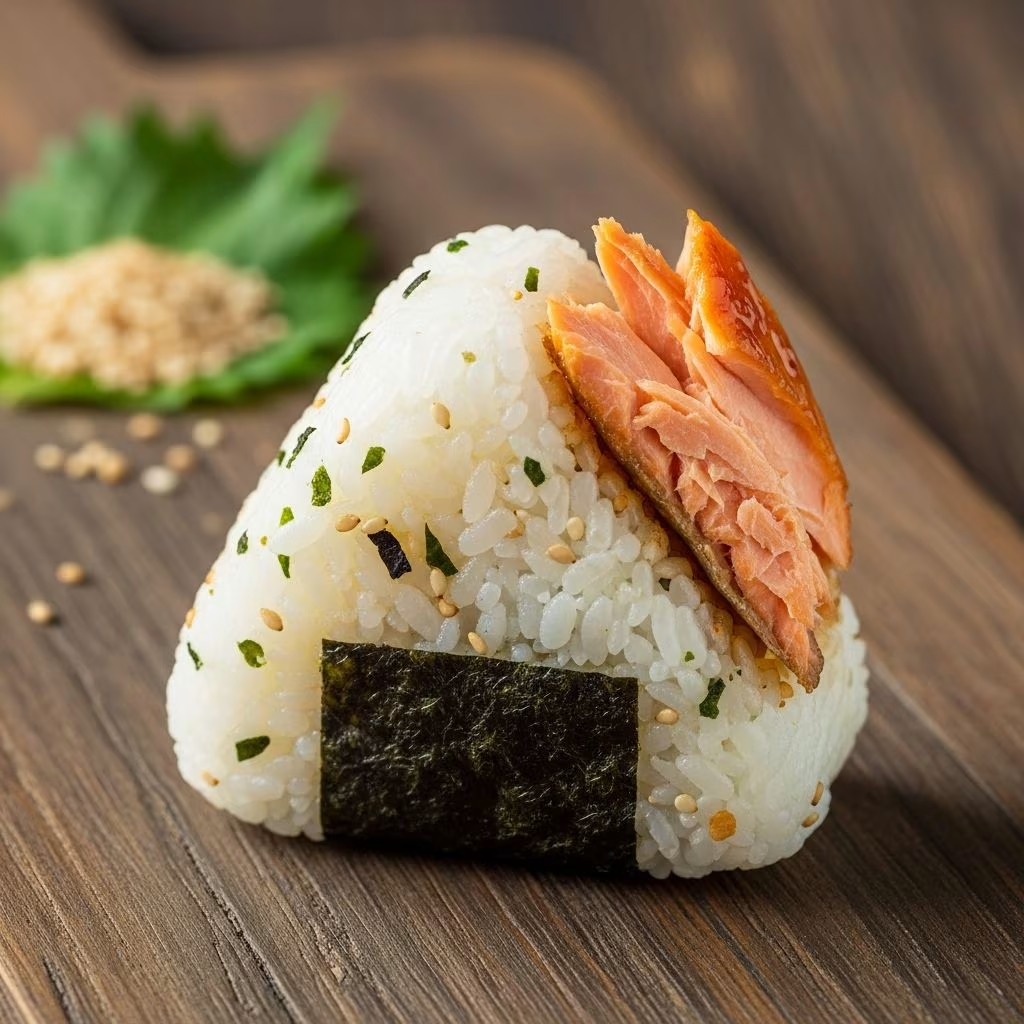
Salmon teriyaki onigiri combines the sticky comfort of Japanese rice balls with the irresistible sweet-salty glaze of teriyaki-coated fish. This handheld delight offers crispy edges, tender filling, and umami depth, making it ideal for lunches, picnics, or quick bites. Rooted in Japan’s rice ball tradition, this modern twist elevates everyday snacking.
Understanding Onigiri and Its Place in Japanese Food Culture
Onigiri, or omusubi, are compact rice triangles or balls shaped by hand, often filled or topped with savory ingredients. Dating back over a thousand years, they were portable fuel for travelers, samurai, and workers. Today, convenience stores like 7-Eleven sell millions daily in Japan, showcasing endless varieties from umeboshi plums to grilled meats.
Salmon teriyaki onigiri stands out for its fusion of flaky fish and glossy sauce. The rice absorbs subtle flavors while nori seaweed adds crunch and wraps everything neatly. This version appeals to global palates, blending Japanese precision with bold tastes.
- Key traits: Firm yet yielding rice, balanced filling, seaweed casing.
- Best rice: Short-grain Japanese varieties like sushi rice for optimal stickiness.
- Common shapes: Triangles, cylinders, or rounds for easy gripping.
Ingredients Breakdown: Building Blocks of Flavor
Selecting quality components ensures restaurant-worthy results. Focus on fresh salmon, authentic rice, and homemade teriyaki for depth.
| Ingredient | Quantity (4 servings) | Purpose |
|---|---|---|
| Sushi rice | 2 cups uncooked | Sticky base that holds shape |
| Fresh salmon fillet | 8 oz, skinless | Protein center with rich flavor |
| Soy sauce | ¼ cup | Salty umami foundation |
| Mirin | ¼ cup | Sweet rice wine for gloss |
| Sake | 2 tbsp | Depth and tenderizing acid |
| Sugar | 2 tbsp | Caramelization and balance |
| Nori sheets | 4 sheets | Crispy, salty exterior |
| Salt | 1 tsp | Seasoning rice |
| Vegetable oil | 1 tbsp | Frying for crispiness |
Pro tip: Use wild-caught salmon for superior taste and texture. For vegan options, swap with tofu or mushrooms.
Step-by-Step Recipe: Crafting Perfect Salmon Teriyaki Onigiri
Prep time: 20 minutes. Cook time: 25 minutes. Yields: 8-10 pieces.
- Cook the rice: Rinse 2 cups sushi rice until water runs clear. Cook in rice cooker with 2.5 cups water or stovetop (boil, simmer covered 15 minutes, rest 10 minutes). Season gently with 1 tsp salt while warm.
- Prepare teriyaki glaze: In a saucepan, combine ¼ cup soy sauce, ¼ cup mirin, 2 tbsp sake, 2 tbsp sugar. Simmer over medium heat 5-7 minutes until thickened and syrupy. Historical recipes trace teriyaki to 19th-century Japan, blending shoyu and mirin for grilled fish.
- Cook salmon: Cut 8 oz salmon into bite-sized chunks. Heat 1 tsp oil in skillet over medium-high. Sear salmon 2 minutes per side until golden. Brush generously with glaze, cook 1 more minute until caramelized. Flake into small pieces; cool slightly.
- Shape onigiri: Wet hands with water to prevent sticking. Scoop ⅓ cup warm rice, flatten in palm. Add 1-2 tsp salmon filling in center. Mold into tight triangle or ball by cupping and pressing firmly. Repeat.
- Add nori and crisp: Cut nori into strips. Wrap around onigiri, leaving top exposed. Heat 2 tsp oil in nonstick pan over medium. Fry seam-side down 1-2 minutes until nori crisps and edges brown. Flip briefly for even color.
- Serve: Enjoy warm or at room temp. Drizzle extra glaze if desired.
Freshly made onigiri shine brightest, but proper storage extends enjoyment.
Teriyaki Sauce: The Heart of the Dish
Teriyaki (‘teri’ meaning shine, ‘yaki’ meaning grill) originated in Edo-period Japan for lacquering proteins. Traditional mixes emphasize balance: soy’s saltiness tempers mirin’s sweetness, sake adds complexity. Avoid store-bought versions heavy on high-fructose corn syrup.
Customizations:
- Spicy: Add gochujang or chili flakes.
- Ginger-infused: Grate 1 tsp fresh ginger into glaze.
- Low-sodium: Use tamari and reduce sugar.
Pro Techniques for Restaurant-Quality Results
Elevate your onigiri with these chef secrets:
- Rice moisture: Slightly overcook for extra stickiness; fan to cool evenly.
- Filling temp: Warm salmon integrates better but not hot to avoid melting rice.
- Pressing pressure: Firm but gentle—overdo it and rice crumbles.
- Nori timing: Fry right before eating for maximum crunch; soften if prepping ahead.
- Tools: Onigiri molds speed shaping for uniform sizes.
Test doneness: Onigiri should hold shape when gently squeezed, with glossy, crackly edges.
Variations to Keep Things Exciting
Adapt the classic for seasons or diets:
| Variation | Key Swap | Flavor Profile |
|---|---|---|
| Spicy Tuna Onigiri | Tuna mayo + sriracha | Heat-forward, creamy |
| Veggie Teriyaki | Shiitake mushrooms | Earthy, umami-packed |
| Avocado Salmon | Add mashed avocado | Creamy, fresh contrast |
| Pickled Plum | Umeboshi inside | Tangy, traditional |
Experiment with furikake seasoning sprinkles for extra pop.
Nutrition and Pairing Suggestions
One onigiri (approx. 150g): 250 calories, 10g protein, 35g carbs, 6g fat. Provides omega-3s from salmon, sustained energy from rice. Pair with miso soup, green tea, or pickled veggies for a complete meal. Kids love the fun shape; adults appreciate portability.
Storage, Freezing, and Reheating Tips
Fridge: Wrap individually in plastic; store up to 24 hours. Nori softens slightly.
Freezer: Flash-freeze unwrapped on tray, then bag for 1 month. Thaw overnight, refresh in dry pan.
Reheat: Microwave 30 seconds covered, or pan-fry to recrisp. Avoid sogginess by minimal moisture exposure.
Frequently Asked Questions (FAQs)
Can I make onigiri ahead for bento boxes?
Yes, prepare rice and filling separately; assemble morning-of for best texture.
Why does my rice fall apart?
Use short-grain rice and salt while warm. Wet hands and press firmly.
Gluten-free option?
Use tamari instead of soy sauce; ensure nori is pure seaweed.
How to achieve crispy nori without oil?
Torch lightly with a kitchen burner for char without frying.
Best salmon type?
King or sockeye for fattiness that pairs with glaze.
Conclusion: Your Gateway to Japanese Home Cooking
Salmon teriyaki onigiri masters simplicity and satisfaction. With practice, you’ll create custom versions rivaling Tokyo delis. Share at parties or savor solo—these bites connect to Japan’s enduring rice culture.
References
- HISTORY OF TERIYAKI (1813-2022) — SoyInfo Center. 2022. https://www.soyinfocenter.com/pdf/288/Teri.pdf
- Japanese Rice Ball (Onigiri) Recipe — Serious Eats (J. Kenji López-Alt). 2023-05-15. https://www.seriouseats.com/onigiri-japanese-rice-ball-recipe
- Teriyaki Sauce History and Technique — Japan Guide (official culinary resource). 2024-01-10. https://www.japan-guide.com/e/e2342.html
- USDA Nutrient Database: Salmon Nutrition — United States Department of Agriculture (.gov). 2025-03-01. https://fdc.nal.usda.gov/fdc-app.html#/food-details/173686/nutrients
- Authentic Onigiri Shaping Methods — Tokyo University of Agriculture Food Science Dept. (.ac.jp). 2023-11-20. https://www.nodai.ac.jp/english/research/foodscience/onigiri-study/