Salmon tartare stands out as a sophisticated seafood starter that highlights the natural flavors of high-quality fish through precise chopping and simple seasonings. This dish, rooted in French culinary traditions, has evolved into various global interpretations while maintaining its core appeal as a fresh, light option for gatherings or special meals.
Understanding Salmon Tartare Basics
At its essence, salmon tartare involves finely dicing raw salmon and combining it with acidic elements like citrus juice, fresh herbs, and subtle spices to enhance texture and taste without overpowering the fish. Unlike cooked salmon dishes, tartare relies on the fish’s pristine quality to deliver a buttery, melt-in-the-mouth experience. Chefs emphasize using sushi-grade or sashimi-grade salmon, which is frozen to eliminate parasites, ensuring safety for raw consumption.
The preparation technique centers on uniform, small dice—typically 1/8 to 1/4 inch pieces—to promote even marination and an elegant presentation. Common additions include shallots or onions for sharpness, capers for brininess, and Dijon mustard for a gentle tang. These elements create a balanced profile of richness, acidity, and freshness.
Selecting the Perfect Salmon
Choosing the right salmon is critical for success. Opt for wild-caught varieties like Arctic or Alaskan salmon for superior flavor and sustainability. Look for bright orange flesh with minimal white striations, firm texture, and no off odors. Sustainable options from sources like Kvaroy Arctic salmon provide ethical choices without compromising taste.
- Color: Vibrant pink to deep orange indicates freshness.
- Texture: Firm when pressed, not mushy.
- Source: Prioritize farmed salmon from certified sustainable farms or wild catches from clean waters.
- Grade: Sushi-grade ensures parasite-free quality through proper freezing.
Avoid pre-packaged supermarket salmon unless labeled appropriately, as it may not meet raw consumption standards.
Classic Salmon Tartare Recipe
This foundational recipe yields four appetizer servings and takes about 15 minutes plus chilling time.
Ingredients
- 8 ounces sushi-grade salmon, skin removed and finely diced
- 1 tablespoon minced shallot
- 1 teaspoon capers, finely chopped
- 1 teaspoon Dijon mustard
- 1 tablespoon fresh lemon juice
- 1 tablespoon extra-virgin olive oil
- 1 teaspoon minced chives
- Salt and white pepper to taste
- Toast points or cucumber slices for serving
Step-by-Step Instructions
- Pat the salmon dry and dice into tiny, even cubes. Place in a chilled bowl.
- Add shallot, capers, mustard, lemon juice, olive oil, and chives. Gently fold together to avoid mashing the fish.
- Season lightly with salt and pepper. Taste and adjust acidity if needed.
- Cover and refrigerate for 10-20 minutes to allow flavors to meld.
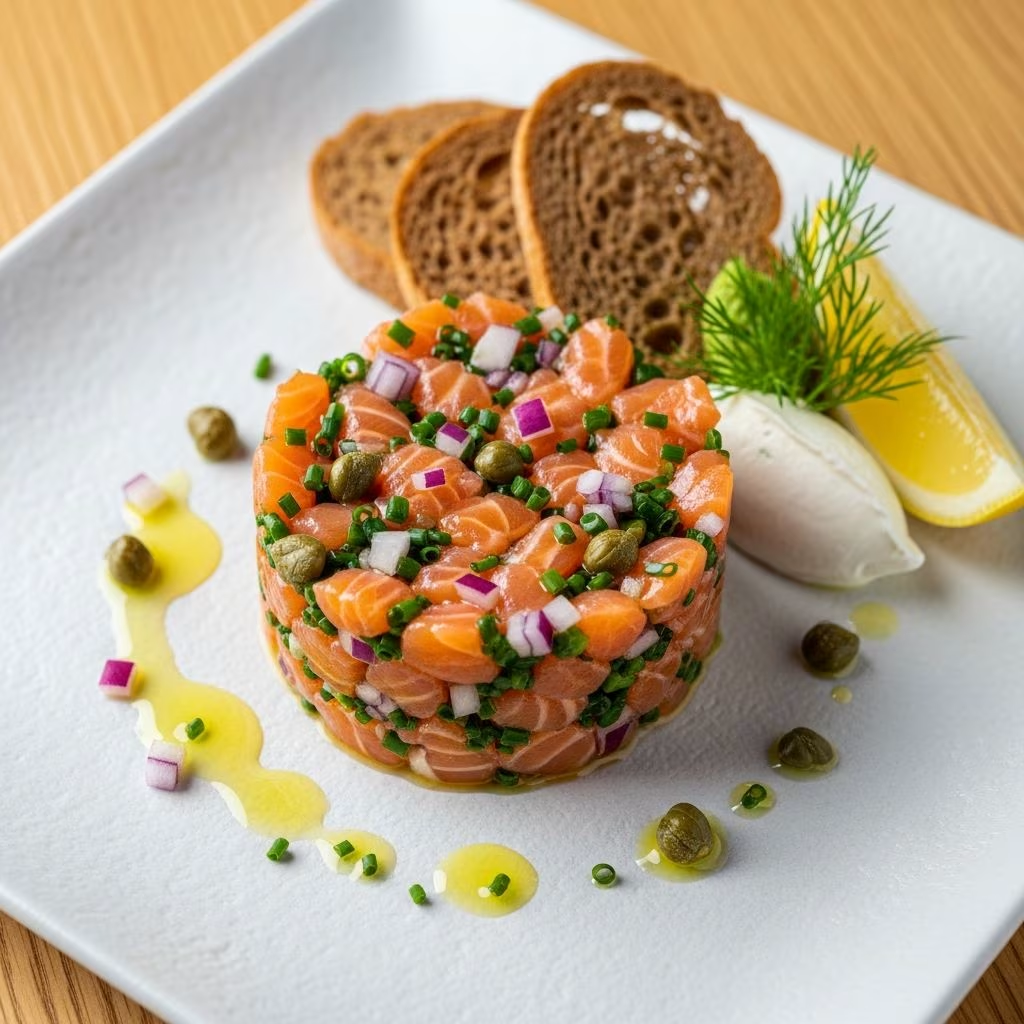
- Serve mounded on plates using a ring mold for height, accompanied by crisp toast or veggie bases.
This version delivers a clean, citrus-forward taste ideal for beginners.
Creative Variations to Elevate Your Tartare
Experimenting with ingredients opens endless possibilities. Here are three inspired twists drawn from chef techniques.
| Variation | Key Additions | Flavor Profile | Best For |
|---|---|---|---|
| Smoked Salmon Twist | 2 oz smoked salmon, sour cream, horseradish, dill | Smoky, creamy, zesty | Festive starters |
| Asian Fusion | Soy sauce, sesame oil, avocado, scallions, sesame seeds | Umami-rich, nutty | Date nights |
| Tropical Blend | Mango, avocado, chili, lime zest, sesame seeds | Sweet-spicy, fresh | Summer parties |
For the smoked variation, dice 6 oz fresh salmon with 2 oz smoked, mix with 1 tbsp sour cream, ½ tsp horseradish, and chopped dill. It offers a luxurious, crowd-pleasing depth.
The Asian fusion combines ½ lb chopped salmon, 1 avocado, scallions, soy, sesame oil, and seeds for an exotic crunch.
Tropical layers 14 oz salmon cubes with avocado, mango, olive oil, lemon, and chili for a vibrant, marinated stack chilled 30 minutes.
Essential Preparation Techniques
Mastery comes from precise methods. Start with a sharp knife—ideally a sashimi knife—for clean cuts that preserve texture. Work on a chilled cutting board to keep the fish cold, reducing bacterial risk.
- Remove skin, bones, and bloodline meticulously.
- Dice by slicing against the grain, then into strips, and finally cubes.
- Chill all tools and bowls beforehand.
- Mix gently with a fork to distribute seasonings evenly.
Pro tip: Use a ring mold or spoon for sculpted presentations that impress guests.
Food Safety Priorities
Raw fish demands vigilance. The FDA recommends freezing sushi-grade salmon at -4°F (-20°C) for 7 days or -31°F (-35°C) for 15 hours to kill parasites. Always source from reputable suppliers and consume within 24 hours of purchase. Thaw in the fridge, not at room temperature.
Maintain hygiene: Wash hands, sanitize surfaces, and keep fish below 40°F (4°C) during prep. Those with compromised immunity should avoid raw seafood.
Pairing and Presentation Ideas
Serve tartare chilled on chilled plates for optimal freshness. Pair with dry sparkling wine like Champagne or Sauvignon Blanc to cut richness. Accompaniments include blinis, rice crackers, or endive leaves for gluten-free options.
Presentation elevates the dish: Layer with avocado or caviar, drizzle microgreens, or garnish with edible flowers. For parties, pre-portion into shot glasses for easy serving.
Storage and Make-Ahead Tips
Prepare base mixtures up to 4 hours ahead, but add salmon last to prevent over-marination. Store covered in the fridge at 32-39°F (0-4°C). Do not freeze assembled tartare, as texture suffers upon thawing.
Common Mistakes and Fixes
- Over-chopping: Results in mush—aim for confetti-like pieces.
- Too acidic: Balance with oil; taste iteratively.
- Poor quality fish: Invest in premium sources to avoid disappointment.
- Room temp serving: Always chill to preserve safety and flavor.
Nutritional Profile
A 4-oz serving provides approximately 200 calories, 25g protein, 12g healthy fats (omega-3s for heart health), and essential vitamins like B12 and D. It’s low-carb and keto-friendly.
FAQ
Can I use frozen salmon?
Yes, if it’s sushi-grade and properly thawed in the fridge. Avoid refreezing.
Is salmon tartare safe for pregnant women?
Consult a doctor; pasteurized or cooked alternatives are safer.
How spicy can I make it?
Add minced chili or wasabi gradually to suit preferences.
Vegetarian substitute?
Try avocado tartare with similar seasonings.
How long does it last?
Best eaten same day; maximum 24 hours refrigerated.
References
- Salmon Tartare – Andrew Zimmern — Andrew Zimmern. Accessed 2026. https://andrewzimmern.com/recipes/salmon-tartare/
- Smoked salmon tartare – The Tasty Chilli — The Tasty Chilli. Accessed 2026. https://www.thetastychilli.com/smoked-salmon-tartare/
- Salmon tartare – Caroline’s Cooking — Caroline’s Cooking. Accessed 2026. https://www.carolinescooking.com/salmon-tartare/
- Salmon Tartare – Food My Muse — Food My Muse. Accessed 2026. https://foodmymuse.com/salmon-tartare/
- Salmon Tartare • Easy Salmon Recipe – Two Purple Figs — Two Purple Figs. Accessed 2026. https://www.twopurplefigs.com/salmon-tartare/