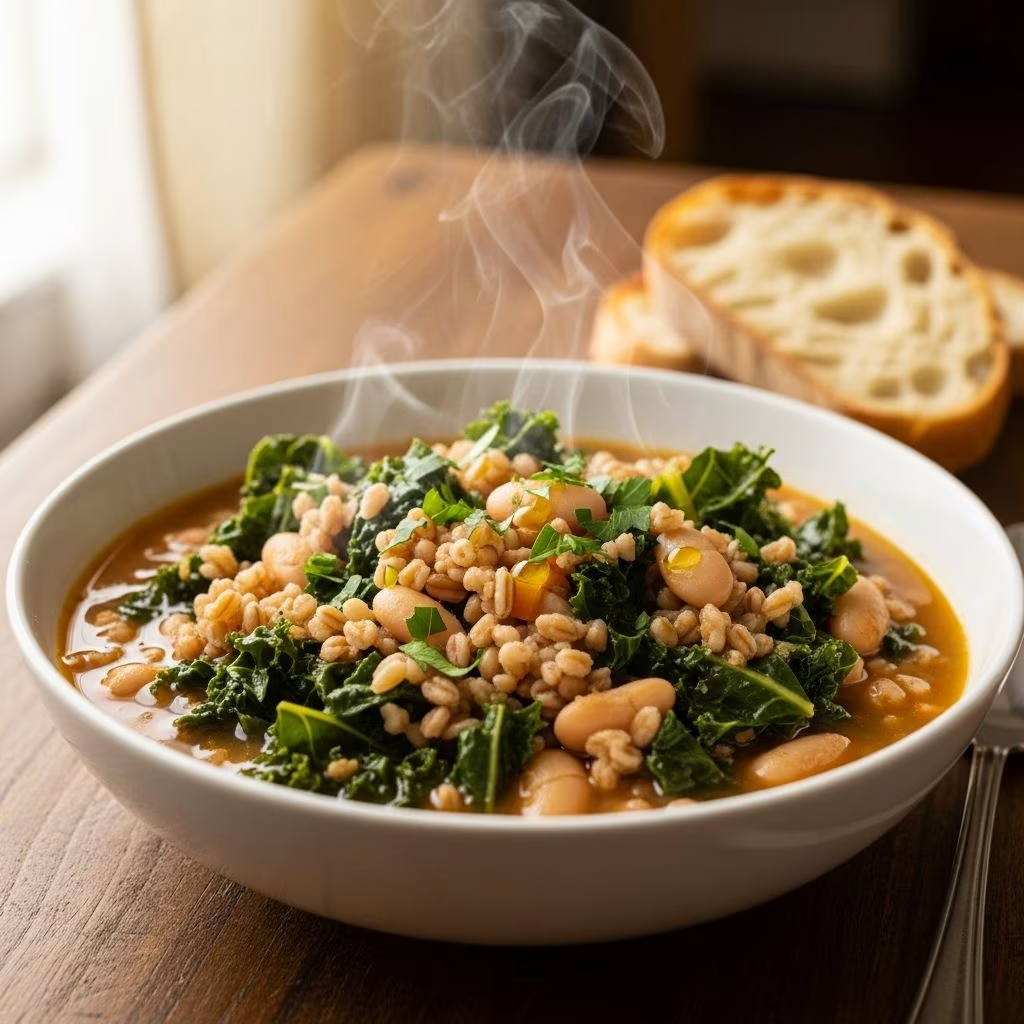
Embrace the essence of rustic Italian cuisine with this vibrant stew that combines the chewiness of farro, the creaminess of white beans, and the earthiness of kale. This dish stands as a testament to simple, wholesome ingredients transforming into a meal that’s both nourishing and deeply satisfying. Perfect for chilly evenings or as a make-ahead lunch option, it delivers layers of flavor from fresh herbs, garlic, and a touch of acidity to brighten every bite.
Why This Stew Deserves a Spot in Your Kitchen
Farro, an ancient grain with a nutty profile, pairs seamlessly with protein-rich white beans and nutrient-dense kale, creating a balanced dish that’s naturally vegan-adaptable. Unlike lighter soups, this stew thickens naturally as it simmers, offering comfort without heaviness. Its versatility shines through customizable add-ins like cheese rinds or smoked meats, making it ideal for various dietary needs.
Health enthusiasts appreciate its high fiber content from farro and beans, which supports digestion, while kale provides vitamins A, C, and K. A single serving can contribute significantly to daily nutrient goals, all while tasting indulgent. Prep time hovers around 15 minutes, with cooking taking under an hour, fitting busy schedules effortlessly.
Essential Ingredients for Authentic Flavor
Gather these pantry staples and fresh produce to build a robust base. Quantities serve 6-8 generously, allowing for leftovers.
- 1 cup pearled farro, rinsed thoroughly to remove excess starch
- 2 cans (15 oz each) white beans like cannellini or great northern, drained and rinsed
- 1 bunch lacinato or curly kale, stems removed and leaves chopped into bite-sized pieces (about 4-6 cups)
- 1 large yellow onion, finely diced
- 2-3 carrots, peeled and sliced into half-moons
- 2 celery stalks, diced
- 4-6 garlic cloves, minced
- 1 can (14.5 oz) fire-roasted diced tomatoes, undrained for added depth
- 6 cups vegetable broth (low-sodium preferred)
- 3 tablespoons extra-virgin olive oil
- 2 teaspoons Italian seasoning or a mix of dried thyme, rosemary, and oregano
- 1 bay leaf (optional for subtle aroma)
- Salt and black pepper to taste
- Fresh lemon juice (1-2 tablespoons) for finishing
- Optional garnishes: grated Parmesan or vegan alternative, fresh parsley, chili flakes
Pearled farro cooks faster than whole grain varieties, ensuring tenderness without sogginess. White beans add creaminess; for extra silkiness, blend a portion before adding. Kale wilts beautifully, retaining texture if added late in cooking.
Step-by-Step Cooking Guide
Follow these instructions for foolproof results. Use a large Dutch oven or heavy pot for even heat distribution.
- Sauté the Aromatics: Heat olive oil over medium heat. Add onion, carrots, and celery. Cook 8-10 minutes until softened and fragrant, stirring occasionally. Introduce garlic and Italian seasoning; sauté 1 minute more to unlock flavors without burning.
- Incorporate Grains and Liquids: Stir in rinsed farro, coating it in oil. Pour in broth, tomatoes with juice, and bay leaf. Bring to a gentle boil, then reduce to simmer. Cover partially and cook 20-25 minutes until farro is al dente.
- Add Beans and Greens: Mix in white beans and chopped kale. Simmer uncovered 10-15 minutes until kale tenderizes and stew thickens. If desired, add a Parmesan rind during this phase for umami richness.
- Finish and Season: Remove from heat. Discard bay leaf. Stir in lemon juice and a drizzle of olive oil. Taste; adjust salt, pepper, or acidity. Let rest 5 minutes for flavors to meld.
Total time: 45-50 minutes. The stew improves overnight, as flavors deepen.
Nutrition Breakdown and Health Benefits
This stew is a powerhouse of whole foods. Per serving (about 1.5 cups):
| Nutrient | Amount | % Daily Value* |
|---|---|---|
| Calories | 320 | 16% |
| Protein | 14g | 28% |
| Fiber | 12g | 43% |
| Vitamin A | 4500 IU | 90% |
| Iron | 4mg | 22% |
*Based on 2000-calorie diet. Values approximate; vary by exact ingredients. Farro offers complex carbs for sustained energy, while beans provide plant protein. Kale boosts antioxidants, aiding immunity. Low in saturated fat, it’s heart-friendly per USDA guidelines on plant-based diets.
Customizations for Every Palate
Adapt this base recipe to preferences:
- Vegan Version: Skip cheese; use nutritional yeast for cheesiness.
- Meat Lovers: Add diced pancetta or Italian sausage during sauté step for smokiness.
- Gluten-Free: Swap farro for quinoa or brown rice.
- Spicy Kick: Include Aleppo pepper or red pepper flakes.
- Creamier Texture: Blend 1/3 of the stew post-cooking.
- Slow Cooker Method: Sauté aromatics first, then cook on low 4-6 hours.
Storage tips: Refrigerate up to 5 days or freeze portions for 3 months. Reheat with a splash of broth to restore consistency.
Pairing Suggestions to Elevate Your Meal
Complement the stew’s robustness:
- Bread: Crusty sourdough or garlic toasts for dipping.
- Salad: Simple arugula with citrus vinaigrette for contrast.
- Wine: Light Chianti or crisp Sauvignon Blanc.
- Side: Roasted root vegetables for extra heartiness.
For a full spread, serve alongside herb-infused polenta.
Common Questions Answered
Can I use canned farro?
Yes, but reduce cooking time to 10 minutes as it’s pre-cooked. Rinse to avoid excess salt.
Is this stew freezable?
Absolutely. Farro holds shape well; thaw overnight before reheating.
What if I don’t have farro?
Substitute barley, spelt, or lentils for similar chew and nutrition.
How do I make it thicker?
Mash some beans or simmer longer uncovered to reduce liquid.
Is kale interchangeable with spinach?
Yes, spinach wilts faster—add in last 3 minutes.
Expert Tips for Perfection
Achieve restaurant-quality results:
- Rinse farro until water clears to prevent gumminess.
- Use low-sodium broth to control seasoning.
- Fresh herbs like rosemary elevate over dried.
- Taste incrementally; acidity from tomatoes/lemon balances richness.
- For meal prep, portion into jars for grab-and-go ease.
This stew embodies seasonal eating, highlighting winter greens and grains. Experiment confidently—its forgiving nature welcomes tweaks.
Seasonal Variations Throughout the Year
Adapt to available produce:
| Season | Swaps/Add-Ins |
|---|---|
| Fall | Squash chunks, sage |
| Winter | More root veggies, preserved lemon |
| Spring | Fresh peas, dill |
| Summer | Zucchini, basil |
These keep the dish fresh and exciting.
References
- Dietary Guidelines for Americans, 2020-2025 — U.S. Department of Agriculture and U.S. Department of Health and Human Services. 2020-12-01. https://www.dietaryguidelines.gov/sites/default/files/2020-12/Dietary_Guidelines_for_Americans_2020-2025.pdf
- Nutrient Data Laboratory Food Composition Databases — Agricultural Research Service, USDA. 2023-05-15. https://fdc.nal.usda.gov/
- Ancient Grains: Health Benefits and Culinary Uses — Whole Grains Council (Oldways). 2022-09-10. https://wholegrainscouncil.org/whole-grains-101/ancient-grains
- Kale: Nutrition and Health Benefits — National Institutes of Health, Office of Dietary Supplements. 2024-02-20. https://ods.od.nih.gov/factsheets/VitaminK-HealthProfessional/