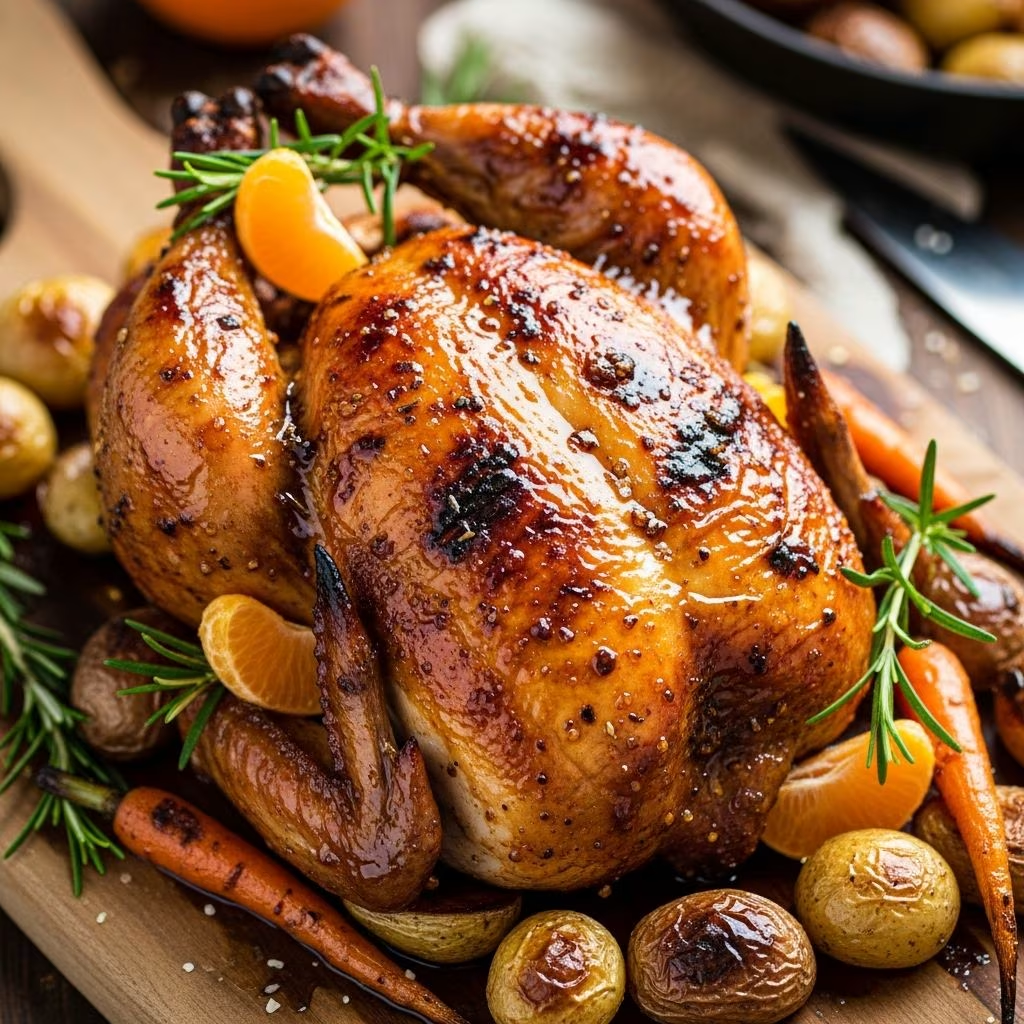
Transform ordinary whole chickens into mouthwatering masterpieces with a technique that delivers crispy, caramelized skin and incredibly tender meat. This method relies on a robust spice rub, extended marination, and precise low-temperature roasting to mimic the allure of professional rotisserie birds right in your home oven.
Why Low-and-Slow Roasting Delivers Superior Results
The magic behind this dish lies in its unconventional approach: baking at a gentle 250°F for five full hours. This low-and-slow process allows heat to penetrate deeply, breaking down connective tissues for fall-off-the-bone tenderness while the exterior develops a sticky, seasoned crust. Unlike high-heat methods that can dry out the meat, this ensures even cooking and locks in juices.
Scientific principles support this: collagen in chicken skin and meat converts to gelatin slowly at lower temperatures, enhancing moisture retention and texture. Home cooks rave about the juicy interior contrasting with the flavorful, crackly exterior, often comparing it favorably to deli counter favorites.
Essential Ingredients for the Perfect Spice Blend
The hallmark of sticky roast chicken is its bold seasoning mix, which infuses every bite with smoky, spicy, and savory notes. Start with high-quality, fresh spices to maximize potency.
- Salt (4 tsp): Draws out moisture for crispy skin and amplifies all flavors.
- Paprika (2 tsp): Provides color and subtle smokiness.
- Onion powder (1 tsp): Adds savory depth without fresh chopping.
- Dried thyme (1 tsp): Herbal earthiness that complements poultry.
- White pepper (1 tsp): Mild heat with a cleaner finish than black pepper.
- Black pepper (½ tsp) and cayenne (½ tsp): Balanced kick for warmth.
- Garlic powder (½ tsp): Umami boost without raw garlic’s sharpness.
- Optional additions: Brown sugar (2 tbsp) for caramelization or olive oil for extra adhesion.
Quartered onions (2 total, one per chicken) go inside the cavity, steaming gently to keep the bird moist and aromatic. Use two 4-pound whole chickens for optimal portioning.
Step-by-Step Preparation Guide
Preparation takes under 30 minutes, but plan ahead for marination. Follow these steps meticulously for best outcomes.
- Mix the rub: Combine all dry spices in a bowl. Stir thoroughly to distribute evenly.
- Prep the chickens: Remove giblets, rinse cavities under cold water, and pat completely dry with paper towels. Excess moisture prevents crisping.
- Apply seasoning: Generously rub the mixture inside cavities, under skin where possible, and all over the exterior. Use about half per chicken for thorough coverage.
- Stuff and seal: Insert quartered onion into each cavity. Place in resealable bags or wrap tightly in plastic. Refrigerate 4-24 hours—overnight yields deepest flavor penetration.
- Oven setup: Preheat to 250°F. Position chickens on a rack in a roasting pan to allow air circulation. Crumple foil balls under legs if they touch the pan to prevent steaming.
- Roast undisturbed: Bake uncovered for 5 hours until internal temperature hits 180°F in the thigh. Resist peeking to maintain oven heat.
- Rest and serve: Let stand 10 minutes tented with foil. Carve and enjoy the sticky, golden skin.
Pro Tips for Flawless Execution
- Scale for size: For chickens over 4 pounds, increase temp to 350°F and cook 20 minutes per pound.
- Make-ahead magic: Season and freeze prepped birds; add 1-2 hours to cook time from frozen.
- Prevent sticking: Line pan with foil or use a rack; the rub’s sugars can caramelize aggressively.
- Variations: Double rub for turkey, add orange quarters for citrus notes, or use on parts (adjust time to 2-3 hours).
- Safety note: Verify doneness with a thermometer; low temp ensures pasteurization over extended time.
Nutrition and Serving Suggestions
One 4-pound chicken (about 8 servings) provides approximately 250-300 calories per serving, rich in protein (25g+), B vitamins, and minerals like selenium. Skin adds healthy fats but can be removed for leaner meals.
Pair with roasted vegetables, mashed potatoes, coleslaw, or cornbread for a complete feast. Shred leftovers for salads, tacos, soups, or casseroles—its flavor holds up excellently.
| Serving Idea | Prep Time | Why It Works |
|---|---|---|
| Chicken Tacos | 15 min | Shredded meat absorbs bold spices in tortillas with slaw. |
| Chicken Salad | 10 min | Mixes with mayo, celery, grapes for creamy contrast. |
| Soup Base | 20 min | Bones make rich broth; pick meat for hearty stew. |
| Sheet Pan Veggies | 45 min | Roast alongside for one-pan ease. |
Frequently Asked Questions
Can I use this recipe for chicken parts?
Yes, rub parts generously and roast at 250°F for 2-3 hours until 180°F internal temp. Skin-on thighs and breasts shine brightest.
What if I don’t have time to marinate overnight?
4-6 hours minimum works well; even immediate roasting delivers good results, though less intense flavor.
Is the oven door peeking harmful?
Absolutely—opening drops temperature, extending cook time and risking uneven results. Set a timer and walk away.
How do I get extra-crispy skin?
Pat dry meticulously pre-rub, use a wire rack, and consider a brief 450°F broil at the end (watch closely).
Can this go in a slow cooker?
Not ideal for crispy skin, but possible on low for 6-8 hours. Finish under broiler for texture.
Storage and reheating tips?
Refrigerate up to 4 days or freeze 3 months. Reheat covered at 300°F or shred into dishes.
Common Mistakes to Avoid
Overlooking dryness: Always pat the bird dry. Skipping the rack: Leads to soggy bottoms. Insufficient seasoning: Use full amounts; it mellows during cooking. Rushing the roast: Patience is key for tenderness.
Scaling Up for Crowds or Meal Prep
Double or triple the recipe using multiple pans or a larger oven. Prep several at once, freeze, and bake as needed for effortless dinners. This is budget-friendly—whole chickens cost less per pound and yield versatile protein.
Experiment with spice tweaks: More cayenne for heat, smoked paprika for BBQ vibes, or herbs like rosemary for variety. The base method is forgiving and adaptable.
Health Considerations and Customizations
For lower sodium, reduce salt by half and rely on herbs. Air-fryer adaptation: Cook at 250°F equivalent (adjust time) for oil-free crispiness. Gluten-free, keto, paleo-friendly as is.
Track nutrition precisely with apps, adjusting for skin removal or portion size. It’s a nutrient-dense option for balanced diets.
References
- Roast Sticky Chicken-Rotisserie Style — DVO Cook’n Recipe Organizer. 2018-02-16. https://www.dvo.com/newsletter/weekly/2018/2-16-238/meal2.html
- The BEST EVER Roast Sticky Chicken Recipe — Living On A Dime. N/A. https://www.livingonadime.com/best-roast-sticky-chicken-recipe/
- Roasted Rotisserie Style Sticky Chicken — Norine’s Nest. N/A. https://www.norinesnest.com/roasted-rotisserie-style-sticky-chicken/
- Oven Roasted Rotisserie Style Chicken — Olive & Mango. N/A. https://www.oliveandmango.com/oven-roasted-rotisserie-style-chicken/
- How to Make Rotisserie Style Roast Sticky Chicken — Allrecipes YouTube. N/A. https://www.youtube.com/watch?v=FClyO29hmjg
- Mimi’s Rotisserie Style Sticky Chicken — Deep South Dish. 2010-04-01. https://www.deepsouthdish.com/2010/04/mimis-rotisserie-style-sticky-chicken.html