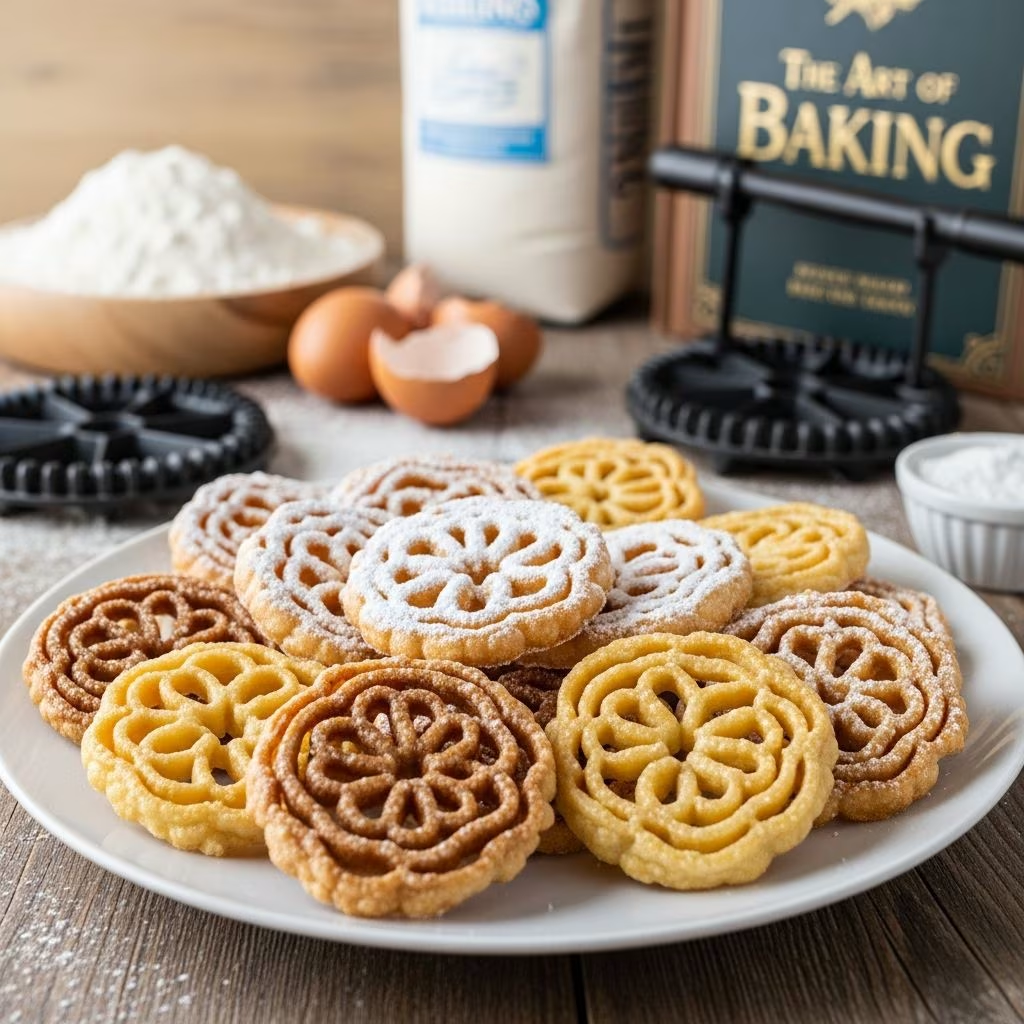
These elegant, lace-like cookies, known as rosettes, bring a touch of Scandinavian tradition to any gathering. Formed by dipping a special iron into a light batter and frying until crisp, they offer a delightful crunch coated in sweet powdered sugar. Ideal for holiday seasons or special occasions, rosettes captivate with their intricate shapes and subtle flavor.
The Heritage of Rosette Cookies
Rosette cookies trace their roots to Northern Europe, particularly Sweden, Norway, and Finland, where they emerged in the 16th century. Originally crafted for weddings, festivals, and Christmas celebrations, their flower-like designs symbolized joy and prosperity. Families passed down these recipes through generations, using simple pantry staples to create something extraordinary. Today, they remain a cherished holiday staple, evoking nostalgia and warmth.
The technique involves a unique rosette iron—a metal mold shaped like flowers, stars, or snowflakes—heated in oil and coated with batter. This method ensures the batter adheres perfectly, frying into delicate webs that are neither too thick nor too fragile. Their popularity spread beyond Scandinavia, appearing in American holiday baking traditions among immigrant communities.
Essential Tools for Success
To achieve professional results, gather these key items:
- Rosette iron: Available in various shapes; choose one with a long handle for safety.
- Deep fryer or heavy pot: For maintaining steady oil temperature.
- Thermometer: Critical for hitting 350-375°F (175-190°C).
- Slotted spoon or spider strainer: To lift cookies from oil.
- Bamboo skewer or chopstick: For gently loosening cookies from the iron.
- Paper towels or wire rack: For draining excess oil.
- Fine-mesh sieve: For dusting powdered sugar evenly.
Invest in a quality iron, as cheaper versions may warp or stick. Many sets include multiple shapes for variety.
Perfecting the Batter: Recipes and Ratios
The batter’s thin, crepe-like consistency is crucial—too thick, and cookies become doughy; too thin, and they disintegrate. Start with a base of eggs, milk (or alternatives like almond milk), flour, sugar, and vanilla. Whisk vigorously for smoothness, resting 30 minutes to relax the gluten.
Here’s a classic recipe yielding about 3 dozen cookies:
| Ingredient | Amount |
|---|---|
| Eggs | 2 large |
| Milk (whole or 2%) | 1 cup |
| Sparkling water (optional for lightness) | 1/2 cup |
| Granulated sugar | 1-2 Tbsp |
| Vanilla extract | 1 tsp |
| All-purpose flour | 1 cup |
| Salt | 1/4 tsp |
| Optional: Nutmeg or cardamom | Pinch |
Beat wet ingredients first, then gradually incorporate dry ones until lump-free. Strain if needed. For variations, try adding 2 Tbsp fresh lemon juice for tang or almond milk for a nutty twist.
Step-by-Step Frying Guide
- Heat the oil: Fill a deep pot with 4-6 inches of neutral oil (vegetable, canola, or nut oil). Reach 350-375°F (175-190°C). Submerge the iron for 10-15 seconds to preheat.
- Dip the iron: Lift, dry quickly, and dip into batter up to but not over the top edge. Excess batter causes sticking.
- Fry immediately: Submerge in hot oil. Fry 20-30 seconds per side until golden. Use skewer to loosen edges.
- Drain and cool: Transfer to paper towels, hollow side down. Repeat, re-heating iron each time.
- Dust generously: Once cool, sift powdered sugar over both sides for that signature snowy finish.
Maintain oil temperature to avoid greasy or burnt results. Work in batches for rhythm.
Troubleshooting Common Issues
Even seasoned bakers face challenges. Here’s how to fix them:
- Cookies stick to iron: Ensure iron is hot and dry; dip only to the edge. Batter too cold? Let it warm slightly.
- Batter falls off: Increase flour slightly or chill batter 15 minutes.
- Soggy texture: Oil not hot enough—aim for steady 365°F. Drain thoroughly.
- Uneven browning: Rotate iron midway; overcrowding drops temperature.
- Not crispy next day: Store uncovered or in single layer; humidity softens them.
Practice on one iron makes perfect. If batter thickens, thin with milk.
Flavor Twists and Modern Adaptations
While traditional rosettes shine plain, experiment safely:
- Citrus zest: Add orange or lemon peel for brightness.
- Spices: Cardamom, cinnamon, or nutmeg for warmth.
- Chocolate dip: Melt dark chocolate, dip half the cookie post-cooling.
- Gluten-free: Swap flour with a 1:1 gluten-free blend; test consistency.
- Vegan: Use aquafaba for eggs, plant milk, and oil instead of butter.
For holidays, shape like snowflakes or stars. Pair with coffee or hot cocoa.
Storage, Serving, and Pairing Ideas
Best enjoyed fresh, rosettes crisp up to 2 days in an airtight container at room temp. Avoid stacking to prevent sugar smudging. Freeze unfrosted cookies up to a month; dust before serving.
Serve on platters with other cookies, or as garnish for desserts. Pair with mulled wine, tea, or fruit salads for contrast. At parties, they add visual pop to cookie exchanges.
Nutrition Snapshot
Per cookie (approximate, based on classic recipe):
| Nutrient | Amount |
|---|---|
| Calories | 45 |
| Total Fat | 2g |
| Carbs | 6g |
| Sugar | 2g |
| Protein | 1g |
Low-calorie treats due to minimal batter; oil absorption varies by technique. Not suitable for oil-free diets.
Frequently Asked Questions
What if I don’t have a rosette iron?
Purchase online or at kitchen stores; alternatives like mini waffle irons yield similar results but lack shape.
Can I bake rosettes instead of frying?
Traditional frying crisps best; baking at 400°F yields softer versions—brush with oil and watch closely.
How many cookies from one batch?
3-4 dozen, depending on iron size and dip depth.
Why use sparkling water in some recipes?
It adds air bubbles for extra lightness and crispiness.
Are rosettes gluten-free adaptable?
Yes, with dedicated flour blends; ensure iron is clean to avoid cross-contamination.
Scaling Up for Crowds
For events, double batter but fry in shifts to keep oil hot. Prep batter ahead (up to 2 hours chilled). Enlist helpers: one dips, one fries, one dusts. Yield: 100+ cookies from doubled recipe. Gift in tins lined with parchment for lasting freshness.
These cookies bridge generations, turning kitchens into festive hubs. With practice, you’ll master the rhythm, creating edible art that delights all.
References
- Chef Anna Olson’s Rosette Cookie Recipe — Oh Yum with Anna Olson. 2023. https://www.youtube.com/watch?v=1qVJ3TasftI
- How to Make Scandinavian Rosettes — Pinch My Salt. Accessed 2023. https://pinchmysalt.com/scandinavian-rosettes-recipe/
- Holiday Rosette Cookies — The Two Bananas. Accessed 2023. https://thetwobananas.com/holiday-rosette-cookies/
- Swedish Rosettes — Marissa’s Recipes & Ideas. Accessed 2023. https://www.marissa.co/swedish-rosettes/
- Best Rosette Recipe — Tony Fitzgerald Photography. 2023-09-01. https://tonyfitzgeraldphotography.com/2023/09/01/best-rosette-recipe/
- Best Rosettes Cookie Recipe — Party Pinching. Accessed 2023. https://partypinching.com/best-rosettes-cookie-recipe/