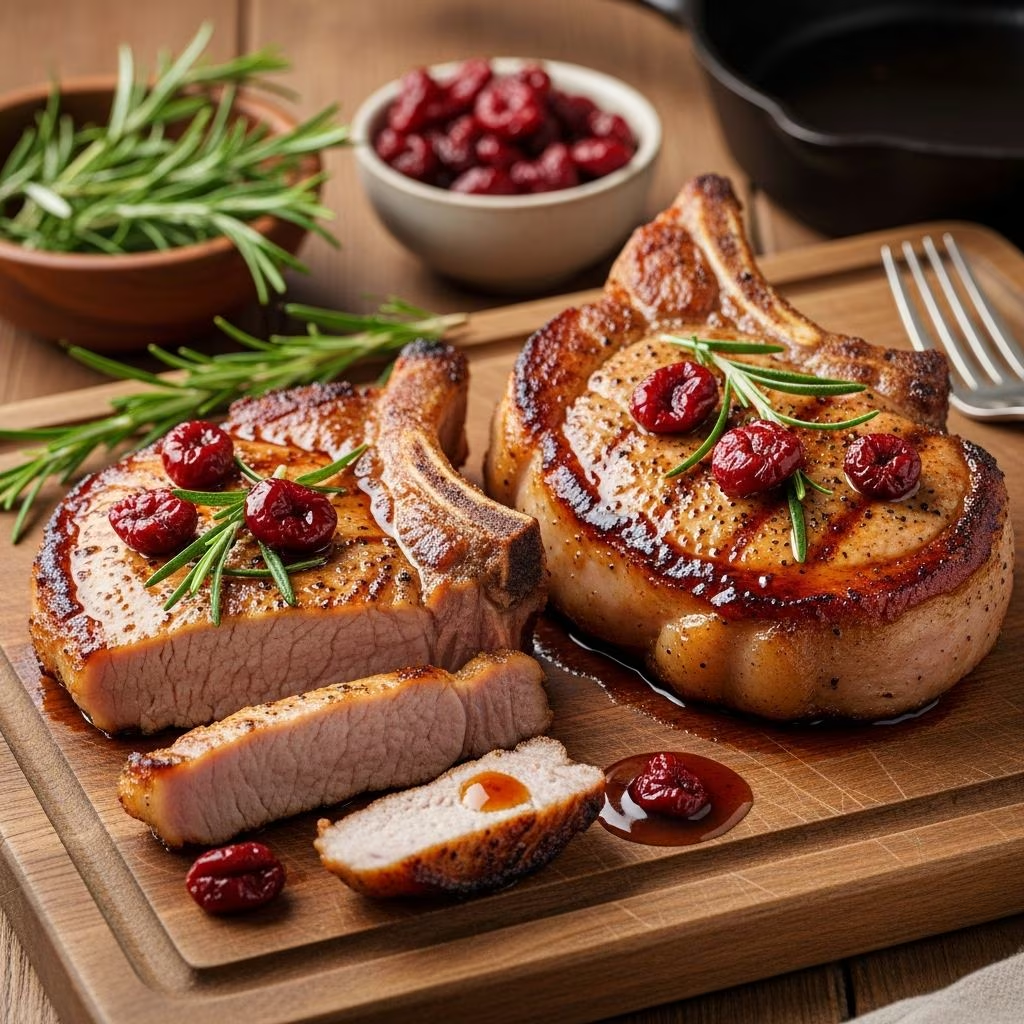
Creating an impressive dinner that feels restaurant-quality yet comes together quickly is a culinary goal many home cooks pursue. This particular preparation of pork chops showcases how thoughtful ingredient selection and proper technique can elevate a straightforward cut of meat into something memorable. The combination of aromatic rosemary with the natural tartness and sweetness of dried cherries creates a sophisticated flavor profile that appeals to diverse palates.
Understanding the Appeal of This Flavor Combination
The pairing of pork with cherries represents a time-honored culinary tradition that spans multiple cuisines and cooking traditions. Pork’s mild, slightly fatty nature provides an ideal canvas for both acidic and sweet components. Dried cherries, in particular, offer concentrated flavor that develops during the drying process, delivering notes of tartness balanced with natural sugars. When combined with the piney, herbaceous qualities of rosemary, these elements create a sauce that is neither too heavy nor too light, striking a balance that makes it suitable for various occasions.
The aromatic profile of fresh rosemary brings complexity that dried versions cannot fully replicate. As rosemary heats in the cooking liquid, its essential oils release gradually, infusing the sauce with flavor layers that emerge throughout the cooking process. This gradual flavor development means the final dish tastes more developed and nuanced than if all components were simply combined at once.
Selecting Quality Ingredients for Maximum Impact
The success of this dish depends significantly on ingredient selection. Here are the key components and what to look for:
- Pork Chops: Choose boneless center-cut pork chops approximately ¾ to 1 inch thick. This thickness allows for proper browning on the exterior while maintaining a tender, juicy interior. Organic, humanely-raised pork often has superior flavor and texture compared to conventionally-raised alternatives.
- Dried Cherries: Look for unsweetened or minimally sweetened varieties. Premium dried cherries maintain a deep burgundy color and offer a balanced flavor profile without artificial additions. They should be soft enough to plump when heated but firm enough not to disintegrate during cooking.
- Fresh Rosemary: This herb should be fragrant and vibrant green. Avoid rosemary that appears dry or brown. Fresh sprigs provide superior flavor compared to dried versions, though quality dried rosemary can substitute if fresh is unavailable.
- Cooking Liquid Base: A combination of chicken broth and red wine creates the foundation for the sauce. Choose a mid-range wine that you would drink—cooking wine or inferior quality bottles will negatively impact the final result.
- Olive Oil: Extra virgin olive oil, used for browning the pork, imparts a subtle fruity undertone that complements the dish’s overall flavor profile.
Preparation Techniques and Timing Considerations
This dish can be completed in approximately 30 minutes from start to finish, making it ideal for weeknight entertaining or family dinners. Understanding the timing and sequence of steps ensures components finish cooking simultaneously.
Initial Setup and Mise en Place
Before beginning the actual cooking, gather and prepare all ingredients. This practice, known as mise en place, prevents scrambling during the cooking process. Measure the broth, wine, and other liquids. Pit and prepare the dried cherries. Strip rosemary leaves from stems if using whole sprigs, or have sprigs ready for easy removal later. Pat the pork chops dry with paper towels—moisture on the surface prevents proper browning.
The Browning Phase
Heat olive oil in a large skillet over medium-high heat until shimmering but not smoking. The pork chops should sizzle immediately upon contact with the pan. Sear without moving for 3-4 minutes per side, allowing a golden-brown crust to develop. This Maillard reaction creates complex flavors that enhance the final dish. Remove the pork to a plate temporarily.
Building the Sauce
In the same skillet, combine the broth, wine, brown sugar, dried cherries, and rosemary. If using a thickening agent like cornstarch, dissolve it in water first before adding to the liquid mixture. Stir well to incorporate all elements, then return the pork chops to the pan. The liquid should partially cover the meat. Cover the skillet and reduce heat to medium or medium-low.
The Cooking Process Explained
Once the pork chops are nestled in the sauce, the actual cooking time is minimal. Simmer for 15-20 minutes, depending on the thickness of your chops and your stove’s characteristics. The internal temperature should reach 145°F (63°C) for optimal juiciness and food safety.
During this simmering phase, the dried cherries rehydrate and become plump, distributing their flavor throughout the liquid. The rosemary slowly infuses the sauce, and the wine’s alcohol content largely evaporates, leaving behind its depth of flavor. The sauce naturally reduces and concentrates as moisture evaporates.
If you prefer a thicker, more syrupy sauce, remove the pork chops once they are cooked through and continue simmering the sauce for an additional 3-5 minutes. This additional reduction concentrates the flavors and creates a glossier sauce that clings more readily to the pork. If the sauce reduces too much, it can be adjusted with additional broth.
Plating and Presentation Strategies
The visual presentation of this dish elevates its appeal. Arrange each pork chop on a plate and spoon the cherry-studded sauce over the top, ensuring each serving includes several whole cherries. The deep burgundy color of the sauce against the golden-brown pork creates an appealing contrast.
This dish pairs elegantly with several side options. Creamy mashed potatoes provide a neutral base that allows the sauce to shine. Roasted root vegetables such as carrots, parsnips, or root vegetables offer both visual interest and complementary flavors. A fresh green salad with a light vinaigrette provides brightness and acidity that balances the richness of the pork and sauce.
Ingredient Variations and Substitutions
While this recipe is designed around specific ingredients, several reasonable substitutions exist for various dietary preferences or ingredient availability:
| Original Ingredient | Substitution Option | Flavor Impact |
|---|---|---|
| Red Wine | Additional broth or apple cider | Slightly less complexity but still pleasant |
| Dried Cherries | Dried cranberries or dried apricots | More tartness or subtle sweetness respectively |
| Fresh Rosemary | Dried rosemary (use ½ amount) or thyme | Different herbal character but still complementary |
| Pork Chops | Chicken breasts or duck breasts | Lighter or richer results depending on choice |
| Brown Sugar | Honey or maple syrup | Slightly different sweetness notes |
Nutritional Considerations
Pork chops provide high-quality protein essential for muscle maintenance and repair. Dried cherries contribute fiber, antioxidants, and beneficial phytonutrients. The sauce made with broth is relatively low in calories while delivering substantial flavor. The olive oil used for cooking provides heart-healthy monounsaturated fats.
The overall dish is reasonably balanced nutritionally, offering protein, some carbohydrates from the fruit and sugar, and healthy fats. Portion control remains important, as the sauce contains concentrated sugars from both the brown sugar and dried cherries.
Storage and Make-Ahead Options
This dish stores well in the refrigerator for up to three days. Leftover pork chops with their sauce can be reheated gently over low heat to prevent drying out the meat. Alternatively, shred leftover pork and combine with the sauce to create a filling for sandwiches or grain bowls.
The dish can be partially prepared ahead of time. The sauce components can be measured and combined several hours before cooking. The pork chops should be prepared fresh to ensure optimal texture, but they can be brought to room temperature 30 minutes before cooking to ensure more even cooking throughout.
Wine Pairing Suggestions
The flavors in this dish pair particularly well with wines that offer both body and acidity. A medium-bodied red wine such as Merlot complements the cherry sauce without overwhelming the pork. Pinot Noir provides elegance and subtle earthiness that enhances the rosemary notes. For white wine preferences, a fuller-bodied Chardonnay with oak aging offers enough richness to stand up to the sauce’s complexity.
Frequently Asked Questions
Can I make this with bone-in pork chops?
Yes, bone-in chops work well and may provide additional flavor. Increase cooking time by approximately 5 minutes to ensure even cooking through thicker sections.
What if I don’t have red wine?
You can substitute with additional broth, apple cider, or even balsamic vinegar for tartness and depth. Each creates a slightly different but still delicious result.
How do I prevent overcooked, dry pork chops?
Avoid cooking past 145°F internal temperature. Use a meat thermometer for accuracy. Remember that the residual heat continues cooking even after removal from the pan.
Can this recipe be doubled for entertaining?
Absolutely. Use a larger skillet or cook in batches. Keep finished portions warm while completing the cooking process.
Are dried and fresh cherries interchangeable?
They can be substituted, but dried cherries provide more concentrated flavor and better texture in this application. If using fresh, reduce the quantity slightly as they contain more water.
References
- Pork Chops with Cherries, Fresh Rosemary and Roasted Rosemary Potatoes and Cabbage and Carrot Coleslaw — Maryann Ridini Spencer / Simply Delicious Living. 2015. https://maryannridinispencer.com/pork-chops-with-cherries-fresh-rosemary-and-coleslaw/
- Pork Chops with Rosemary Cherry Sauce — Circulon Cookware. https://circulon.com/blogs/recipes/pork-chops-with-rosemary-cherry-sauce
- Pork Chops with Dried Cherry Sauce — GladdMD. https://gladdmd.com/improve-your-health/recipes/pork-chops-with-dried-cherry-sauce-1
- USDA FoodData Central: Pork, Fresh, Loin, Center Rib, Chops with Bone, Separable Lean and Fat, Cooked, Broiled — U.S. Department of Agriculture. https://fdc.nal.usda.gov/
- Safe Minimum Internal Temperature Chart — U.S. Department of Agriculture Food Safety and Inspection Service. https://www.fsis.usda.gov/food-safety/safe-food-handling-and-preparation/food-safety-basics/safe-minimum-internal-temperature-chart