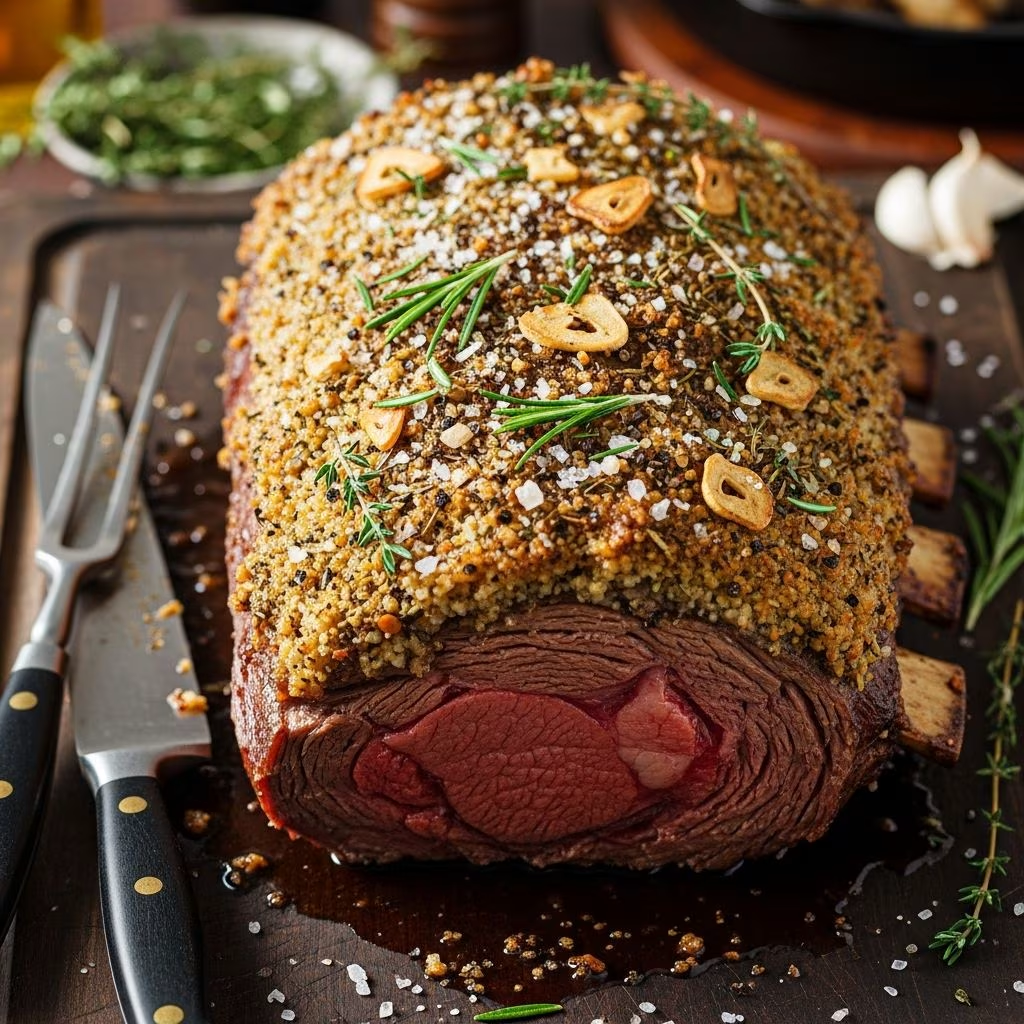
Prime rib stands as a pinnacle of beef roasts, celebrated for its rich marbling and tender texture. When coated with a robust blend of rosemary, Dijon mustard, and garlic, it transforms into a showstopping dish ideal for holidays, celebrations, or intimate gatherings. This guide explores everything from selecting the ideal cut to perfecting the crust and serving with complementary sauces.
Selecting the Perfect Prime Rib Roast
Choosing the right prime rib is foundational to success. Opt for a bone-in standing rib roast, typically weighing 4 to 8 pounds, which serves about one pound per person. Bone-in varieties enhance flavor through natural juices and provide structural support during roasting. Look for USDA Prime or Choice grades, featuring generous marbling that promises succulence.
- Bone-in vs. Boneless: Bone-in offers superior flavor infusion and even cooking; boneless suits smaller kitchens but may dry out faster.
- Size Guidelines: 4-5 lbs for 4-6 people; 6-8 lbs for 8-12 guests.
- Visual Checks: Creamy white fat cap, bright red meat, no graying edges.
Allow the roast to temper at room temperature for 1-2 hours before preparation. This ensures uniform cooking and a crisp exterior.
Crafting the Signature Rosemary-Dijon Rub
The magic lies in the crust—a paste of fresh herbs, mustard, and aromatics that seals in juices while imparting bold flavors. Dijon mustard provides tang and emulsification, rosemary adds piney earthiness, and garlic delivers pungency.
Essential Ingredients for the Rub
| Ingredient | Quantity (for 5-6 lb Roast) | Role |
|---|---|---|
| Fresh Rosemary, chopped | 2-3 tbsp | Primary herb for aroma |
| Dijon Mustard | 1/3-1/2 cup | Binds and tenderizes |
| Garlic Cloves, minced | 4-6 | Deep savory base |
| Olive Oil | 1.5-2 tbsp | Smooths paste |
| Kosher Salt & Black Pepper | 1-2 tsp each | Seasoning foundation |
| Optional: Thyme, Paprika | 1-2 tbsp / 1 tsp | Layered complexity |
Combine in a food processor for a uniform paste. For best results, prepare a day ahead and refrigerate, allowing flavors to meld. Pat the roast dry, season with salt and pepper, then slather generously on all sides, including under any fat cap. Refrigerate uncovered overnight for enhanced crust formation via dry brining.
Mastering the Roasting Technique
Low-and-slow roasting at precise temperatures yields pink, juicy interiors. Preheat oven to 450°F (230°C) for an initial high-heat sear that promotes browning via the Maillard reaction.
- Setup: Place roast bone-side down on a rack in a heavy roasting pan. Add beef broth to the pan bottom for moisture and au jus base.
- Initial Blast: Roast at 450°F for 15-25 minutes to form crust.
- Low Roast: Reduce to 325-350°F (165-180°C). Cook 12-15 minutes per pound for medium-rare (internal 130-135°F).
- Monitor: Use an instant-read thermometer inserted into the thickest part, avoiding bone.
Doneness Guide:
- Rare: 120°F – Cool red center
- Medium-Rare: 130-135°F – Warm red, juiciest
- Medium: 140°F – Pink and firm
- Rest: Tent with foil for 20-30 minutes; temperature rises 5-10°F.
Aim for medium-rare to preserve tenderness. Total time for a 5-6 lb roast: 2-3 hours.
Elevating with Accompaniment Sauces
No prime rib is complete without a sauce. Pan drippings form the base for au jus or reductions.
Red Wine Reduction
Sauté shallots and garlic in butter, deglaze with Cabernet Sauvignon or Pinot Noir, reduce with broth, finish with mustard and butter for gloss. Simmer 15-20 minutes until syrupy.
Garlic Butter Mushrooms
Sauté mushrooms with onions, garlic, stock, and butter. A earthy counterpoint.
These sauces amplify the roast’s flavors without overpowering.
Perfect Pairings and Side Dishes
Balance the richness with fresh, vibrant sides.
- Starches: Horseradish mashed potatoes, Yorkshire pudding.
- Veggies: Roasted Brussels sprouts, glazed carrots.
- Wines: Cabernet Sauvignon or Bordeaux blends cut through fat.
For holidays, add creamed spinach or green bean casserole.
Advanced Variations and Grilling Method
Adapt for preferences:
- Smoked: Add smoked paprika; finish on grill.
- Reverse Sear: Low roast at 250°F to 120°F, then sear at 500°F.
- Grilled: Indirect heat at 250-300°F, rotate for even char. Ideal for oven-free holidays.
These tweaks maintain crust integrity while varying texture.
Troubleshooting Common Issues
| Problem | Cause | Solution |
|---|---|---|
| Overcooked/Dry | High heat too long | Use thermometer; rest properly |
| No Crust | Wet surface | Dry brine overnight |
| Uneven Cook | Cold start | Temper 1-2 hours |
| Bitter Herbs | Over-chopped | Pulse gently |
Patience prevents pitfalls.
Nutritional Insights and Serving Tips
A 3-oz serving offers 25g protein, B-vitamins, zinc. Pair mindfully for balanced meals. Slice against the grain, 1/2-inch thick, bone-side up for presentation.
Frequently Asked Questions
What if I don’t have a meat thermometer?
Essential for precision; press test unreliable for large roasts. Invest in one.
Can I prepare ahead?
Yes, rub 1-2 days ahead; roast same day.
Boneless adjustments?
Reduce time by 15-20%; tie for shape.
Vegetarian alternative?
Use cauliflower steak with same rub.
Storage leftovers?
Refrigerate 3-4 days; reheat gently in 250°F oven.
This comprehensive approach ensures your herb-crusted prime rib becomes a tradition. Experiment confidently with these techniques for flawless results every time.
References
- Rosemary-Crusted Prime Rib – Foley Food and Wine Society — Foley Food and Wine Society. 2023. https://www.foleyfoodandwinesociety.com/recipes/rosemary-crusted-prime-rib-with-cabernet-sauvignon-reduction-sauce/
- Dijon Rosemary Crusted Prime Rib Roast with Pinot Noir Au jus — Simply Scratch. 2022. https://www.simplyscratch.com/dijon-rosemary-crusted-prime-rib-roast-with-pinot-noir-au-jus/
- Dijon-Herb Prime Rib Roast With Garlic Butter Mushrooms — Omaha Steaks. 2024. https://www.omahasteaks.com/blog/recipes/dijon-herb-prime-rib-roast-with-garlic-butter-mushrooms/
- dijon, rosemary + garlic crusted prime rib roast — Modest Marce. 2021. http://www.heymodestmarce.com/modest-marce/2rnrkddk7j8x4rbf8t4nwht3lddcfg